
 Membership
 Network
 Regional Sites & Affiliates


 Events
 Participate
 Resources
 Training
 Credentials
 Government


 Content Channels
 Tools
Tools


 Business Overview




More than Spray & Wipe
Cleaning green in the age of COVID-19
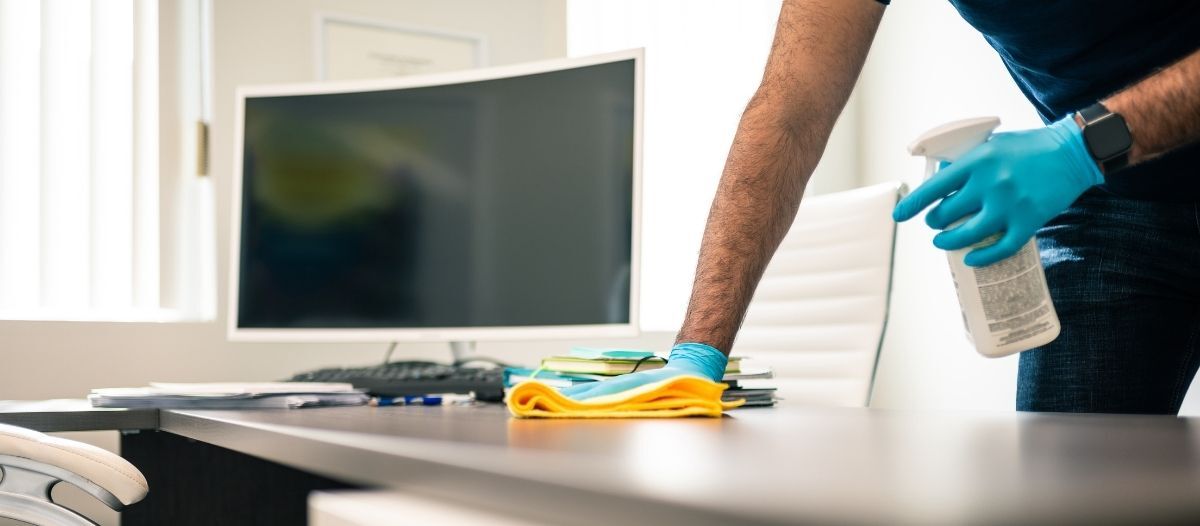
In June 2020, an article in Bloomberg Law caught the attention of several leaders in the professional cleaning industry and possibly those in FM.
The article, "Rush to Disinfect Offices Has Some Environmental Health Experts Worried," discussed how businesses and building managers are taking a variety of steps to ensure their facilities are not only clean but also thoroughly disinfected.
The article states cleaning is typically performed once per day in most facilities, in the evening, when the building is closed. However, in larger locations, lobbies and such amenities as elevator buttons and other high-touch areas may be cleaned and disinfected every three hours. Restrooms might be cleaned and disinfected every four hours (twice during the day) and again in the evening.
Now, however, because of the COVID-19 pandemic, cleaning and disinfecting frequencies in all these areas have been considerably ramped up . These and other surfaces are being cleaned and disinfected up to eight times per day.
The use of large quantities of disinfectants has undoubtedly resulted in a boom for many chemical manufacturers in the professional cleaning industry. Just as it was hard for consumers to find household disinfectants once dealing with the pandemic became a reality, many of these chemical manufacturers found they could not keep up with the demand for many types of cleaning solutions, most specifically, disinfectants.
This is understandable. There were many uncertainties about the virus in March and April of this year. FMs were doing everything possible to protect the health of building tenants and keep their doors open and their facilities operating.
However, as the Bloomberg article pstated the use of all these disinfectants can have several negative ramifications on cleaning workers, building users and the environment.
These are "hugely toxic chemicals," said Claudia Miller, an immunologist, allergist, and co-author of the book Chemical Exposures: Low Levels and High Stakes. "We're creating another problem for a whole group of people, and I'm not sure we're actually controlling infections."
To understand what Miller means, lets it is important to take a closer look at what disinfectants are. First, there are no "green" disinfectants available in the U.S. In Canada and some other countries, disinfectants can be green certified if they meet specific criteria and standards, verifying that they have a reduced impact on the user and the environment when compared to traditional disinfectants.
Not so in the U.S. Instead, the Environmental Protection Agency (EPA) "registers" disinfectants. Independent testing verifies the product’s ability to kill the pathogens they are designed to kill or deactivate if used as instructed by the manufacturer. While the disinfectant’s impact on the user and the environment is noted, it is not the primary consideration of the testing.
The EPA categorizes disinfectants as pesticides. Pesticides kill, and that is what a disinfectant is designed to do. Further, this categorization applies to EPA's new N-List of disinfectants. These are disinfectants that have been tested – or retested - and proven to be effective against SARS-CoV-2, the pathogen that causes COVID-19.
"These chemicals [disinfectants] have passed tests to show they are effective against the pathogen, but this doesn't mean that they have been approved because they're considered safe with regard to human health," according to scientist Lesliam Quirós-Alcalá, an assistant professor at Johns Hopkins Bloomberg School of Public Health.
This is putting many FM in a quandary as they have operated their properties using environmentally preferable cleaning products and systems for years. Most want to stay green and wonder what their options are to remain a green facility.
First, is disinfecting needed?
Before investigating this predicament, FMs must explore the bigger question: Is disinfecting necessary?
The answer, quite unfortunately, is yes and no.
When it comes to high-touch areas in a facility - those touched by many people during the day - then yes, these surfaces need to be cleaned and disinfected.
FMs are dealing with germs that can cause disease. According to the Centers for Disease Control and Prevention (CDC), this can include feces (both human and animal), salmonella, E. coli, norovirus, and the germs that can trigger different types of infections. The CDC stated that, "a single gram of human feces—which is about the weight of a paper clip—can contain 1 trillion germs."
These high touch surfaces do need to be cleaned and disinfected. However, many, if not most other surfaces do not. The CDC also stated:
“Most, if not all… surfaces need to be cleaned only with soap and water … depending on the nature of the surface and the degree of contamination. The actual physical removal of microorganisms and soil by wiping or scrubbing is probably as important if not more so-than any antimicrobial effect of the [disinfectant] cleaning agent.”
Also, on May 7, 2020, the CDC stated that, "most surfaces and objects just need normal, routine cleaning to ensure they do not promote the spread of disease." Moreover, as to the coronavirus specifically, the CDC added:
“So, for those areas not classified as high touch, disinfectants may not be necessary or at most, need only be used sparingly.”
Green cleaning options
What options are available to help kill germs and pathogens and still protect the environment?
Continue using green-certified cleaning solutions. These are tried-and-true products have proven effective and have a reduced impact on the environment. However, how they are used and applied is essential. If using microfiber cleaning cloths, be sure the cloth is changed frequently. If floor mops are being used, either flat or traditional mop heads, make sure the cleaning solution and mop heads are changed frequently, as often as after each room is cleaned.
Investigate Electrostatic Disinfecting. Electrostatic cleaning systems are not new. They were invented in the 1930s and used to apply paint and coatings onto surfaces. However, they have had a rebirth since the pandemic began because they can also be used to spray (mist) large surface areas at one time.
For instance, after cleaning and disinfecting surfaces, new formulations have been developed to be used with electrostatic sprayers that prevent the build-up of pathogens on immediate and surrounding areas for up to 90 days.
According to Dr. Lukasz Porosa, a research chemist with Viaclean Technologies, "It’s the sprayers using this formulation [that] forms a shield, what can be called a surface protectant, over surfaces. This also means that fewer cleaning chemicals may be necessary, helping to reduce cleaning's impact on the environment."
Look into biotechnology
One of the biggest advances in green cleaning is referred to as biotechnology. Also known as enzymatic cleaning solutions, this is a technology that uses biological systems and living organisms to create or develop products used for many purposes, including cleaning. This biotechnology has been around since the 1970s, however, it was not until the 1990s that they were used in professional cleaning.
When applied to surfaces, these products can break down soils, grease, and oil, essentially eliminating them. However, in the process, they have little impact on the environment, either as they are used or manufactured. Further, they help eliminate odors, and, like most enzymatic cleaners, continue to work for several hours after application. Plus, because they are typically made from agricultural-byproducts, they also help promote sustainability.
Other products stemming from biotechnology are also under development and include those that can be used to target specific viruses, potentially those that cause COVID-19. These also should have negligible impact on the user and the environment.
FMs are in incredibly challenging times. They want to keep their facilities open and the people using them healthy, but not give up all the advances they have made in the past two decades at eliminating some of the more harmful aspects of traditional cleaning.
In time, it is possible that this overuse of disinfectants was essentially a knee-jerk reaction to the coronavirus. FMs can now step back, evaluate cleaning options, and determine where disinfectants are necessary and where they are not. Ultimately, this can help stop the spread of the infection as it protects building user health and the environment.

Michael Wilson is vice president of marketing and packaging for AFFLINK, providing clients with innovative process and procurement solutions to drive efficiencies in today’s leading businesses.
References
Top image by Getty Images.
Read more on Sustainability and Risk Management or related topics Sustainable Facility and Occupant Health
Explore All FMJ TopicsRelated articles
-
Smart Building Control Systems
The foundation for a grid-interactive buildingBy Andre Marino09.25.2024 -
Smart Building Innovation
Cutting costs & carbon footprints without compromiseBy Andrew Butterworth09.12.2024 -
Chart the Path
Building sustainable cities & a sustainable futureBy Izzat Ali Khan & Aykean Forde12.16.2024