 Membership
 Network
 Regional Sites & Affiliates


 Events
 Participate
 Resources

 Training
 Credentials
 Government


 Content Channels
 Tools
Tools


 Business Overview




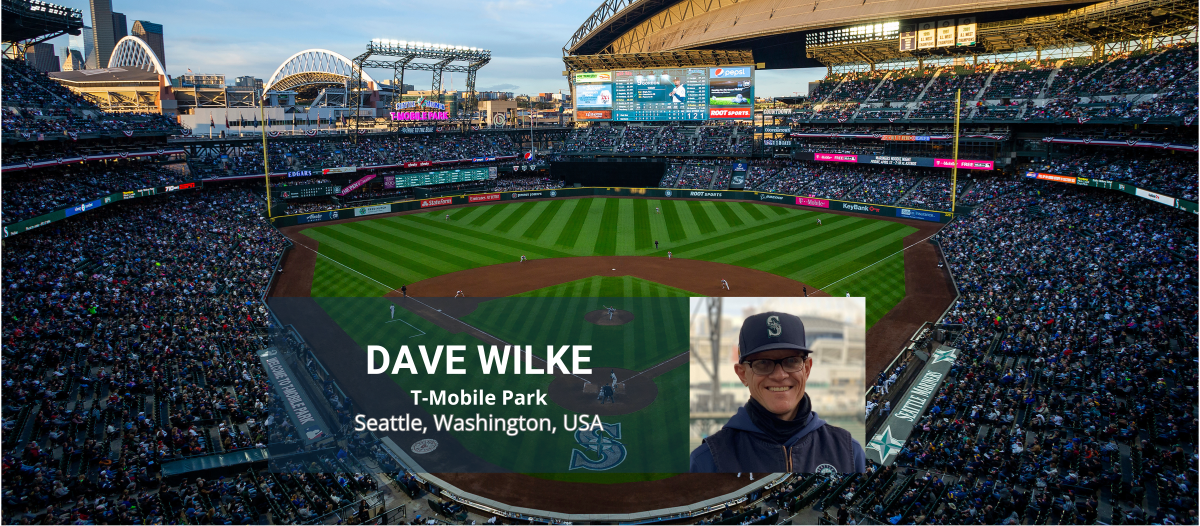
In the heart of Seattle, Washington in the U.S. Pacific Northwest, lies one of the most pristine parks in Major League ball. Opened in July of 1999, T-Mobile Park, home to the Seattle Mariners, is known as one of the most sustainable parks in the league. IFMA member Dave Wilke and his FM staff are in charge of ensuring all parts of the ballpark, from the field to its retractable canopy, are operational and ready for the Mariners to play ball.
 Tell us about yourself and how you got into FM.
For my first official FM job, I was fortunate to land the job as the facilities director for a local school district. For 10 years, I oversaw three schools totalling385,000 square feet, 100 acres of connected campuses, $160m in capital projects and construction and an entire island of deeply invested stakeholders. I had spent the previous 12 years working at churches and camps, which was after seven years as an electrician. Trade work gave me experience in all phases and scale of commercial and industrial projects, and in the process, cultivated a deep appreciation for the physical structure and operational bones of a building. Once that mindset of system-based operations and knowing, or wanting to know, how something works or is assembled, it was impossible for that not to be part of every role I have had since. I spent three years as the director of facilities at the Woodland Park Zoo which was a broader role with a larger purview. I have been with the Seattle Mariners at T-Mobile Park for a little over a year as the director of facilities. This still fairly new role has been a balance of managing engineering and maintenance (E&M) as well as deep involvement with construction, planning and development.
What is day-to-day life like at T-Mobile Park?
It’s been a changing landscape since the day I started in late October of 2019. Generally speaking, we have about 300 people in the ballpark a day, but those numbers have been anything but consistent since March. We have a lot of external events that cover a huge portion of the park, but that has been nonexistent since March and like most we don’t anticipate a significant return to “normal” activity till who knows when in 2021.
Busy days have followed the same trend as everything else since March. This season, a busy day would include a double header (two baseball games played the same day, back-to-back) and a 400 person private corporate event. Some of the busiest days wind up being the best. It’s pretty nice when a day is so busy that when you turn around it’s seven hours later, you’ve solved multiple issues, and are prepped for the next wave of craziness. That makes for a tiring but very rewarding day.
Why is T-Mobile Park unique and what kind of unique challenges do you face?
This is my first role in a place like this, and it’s quite different from the campuses I’ve overseen with dozens buildings on them. There’s a convenience in having everything under one huge rolling roof, but it also means all those things are big and their management can get big and quite expensive with lots of moving parts. That said, I have always appreciated that FM is pretty much infinitely scalable. A building is a building and even highly specialized facilities are still just unique takes on the same primary idea and they’re still all managed by the same basic principles.
Managing the diverse spaces and variety of activities is likewise scaling up within the resident staff’s abilities and capacity, while balancing the use of solid vendor and contractor support. The bigger and more complex a building and its operation, the more friends you have to bring to the party. We have great longstanding relationships with outside support that bolster our highly skilled experts within the E&M and other departments at the park. We have a truly excellent E&M staff with multiple tradespeople that have been at the park from effectively day one. That continuity and knowledge of place and processes is invaluable and impossible to duplicate.

How much space do you manage and how is it used?
There’s about 1 million square feet of the park itself and another 600,000k in parking and ancillary structures. Prior to 2020, T-Mobile Park hosted more than 400 non baseball events a year with all the engineering support necessary for anything from small parties, to huge concerts and full facility holiday attractions with an eight-week run. Oh yeah and we play baseball here too, which I’ve only experienced in a very surreal sort of way.

Tell us about your FM team.
We have a great team. Wendy Walz is our FM, and she and I have an extremely capable and committed crew that we are privileged to lead. We have a staff of journeyman tradespeople electricians, plumbers and HVAC techs. We also have a solid group of general maintenance folks that bring unique and valuable skills to the team. We’re also continuously working to develop a broader lens, so that through the use of CMMS and other notification/communication tools we can effectively enlist the bulk of our onsite building staff to be extensions of our team and keep us informed and responsive.
 What is the biggest FM challenge you have faced and how did you find a solution?
The whole world of COVID-19 prep and response has undoubtedly been one of the toughest things to work through that I’ve experienced. It’s the simple lack of knowing what’s next. As a an organization, I think we have had excellent response , and demonstrated real leadership and innovative ways to deal with this dilemma. Those responses and systems have allowed us to maintain good operational integrity through the pandemic, but it’s exhausting. Not knowing what’s next or what will snowball while you’re not looking is not a fun way to operate. How has COVID-19 changed the way you and your team operate your T-Mobile Park?
In short, it’s changed everything, and what seems normal is still a long way from what it used to be. We have had the opportunity to make some really good plans and implement building access controls and measures that have made life better than it has been and will sustain into the return to normal.
What are some FM challenges you face at the ballpark that are common across the FM industry?
We still have the same pressing issues that every facility has, again it’s just scale. We get clogged toilets and air handlers that lockup just like smaller facilities, but we do benefit from a depth of staff and expertise where there’s nothing much that we can’t face and solve.

What do you like best about what you do?
I do dearly love when things work the way plans and strategy foresees, and for the most part, we tend to operate in that space at the ballpark. To be fair, I also like when there’re a hundred things going on, all generally within plan but also a little on the edge. It can be pretty fun when you’re managing a lot of stuff and it’s all flowing mostly smoothly. There is also a lot of satisfaction in solving issues as they arise, and knowing there’s a team of highly experienced and extremely capable to solve any problem.
Read more on My Facility
Explore All FMJ Topics