 Membership
 Network
 Regional Sites & Affiliates


 Events
 Participate
 Resources

 Training
 Credentials
 Government


 Content Channels
 Tools
Tools


 Business Overview





My Facility: Gene Frazier
Norman Y. Mineta San Jose International Airport
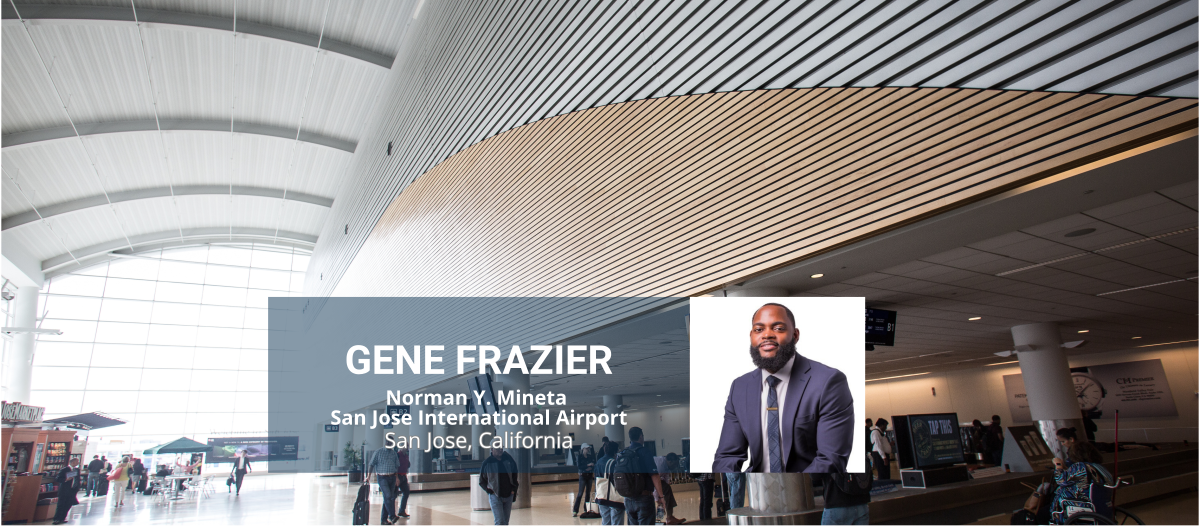
Opened in 1948, the Norman Y. Mineta San Jose International Airport welcomed 15.6 million passengers through its gates in 2019. With loosening COVID-19 restrictions in the travel industry, IFMA member Gene Frazier and the airport’s FM team are tasked with providing a safe, sanitized environment for its incoming and outgoing guests and tenants — all while maintaining a 1,000-acre complex with unique needs.
Tell us about yourself and how you got into FM.
I earned my bachelor’s degree in political science from Howard University and a master’s degree in public administration from the University of New Orleans.
After completing my undergraduate degree, I began working for a university helping students with budgeting and overall college affordability. I was also pursuing my graduate degree in public administration with a concentration in public finance and budgeting. My combination of experience and education afforded me a facility management opportunity within the aviation industry, and I began working for a private facility and assets management company as their facility operations manager.
Although my introduction to FM and aviation came from my knowledge and experience with budgeting, the challenge of being responsible for such large and complex assets is what truly intrigued me. After working in the first aviation facility, I had the opportunity to transition to another airport as their superintendent of facilities, facing an even greater challenge of maintaining assets that were beyond their initial life span.
Here in the tech hub of the world, I’m excited to be exploring new technologies to incorporate in our facility operations.
 What is day-to-day life like at the airport?
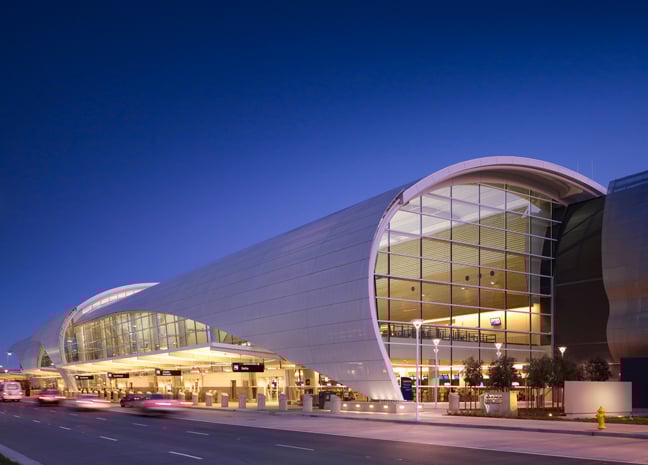
At the apex of our operations, the Norman Y. Mineta San Jose International Airport (SJC) was processing close to 26,000 passengers a day. While the pandemic has impacted our passenger count, we are seeing roughly 9,000 customers traveling through our facility daily.
Our days consist of a mix of corrective and preventive maintenance. Our day-shift and swing-shift personnel focus heavily on responding to issues that arise from our tenants and customers. On a busy day our department could be inundated with calls about malfunctions to our passenger boarding bridges, bag jams in our baggage handling system, electrical outages impacting our airfield lighting system, requests for room temperature adjustments and so much more.
With reduced traffic after hours, our graveyard shift is better able to implement our preventive maintenance program for our mechanical systems, along with general upkeep for our airfield to support operations for the following day, such as rubber removal, mowing and signage cleaning, for example.
 Tell us about the airport and its unique challenges.
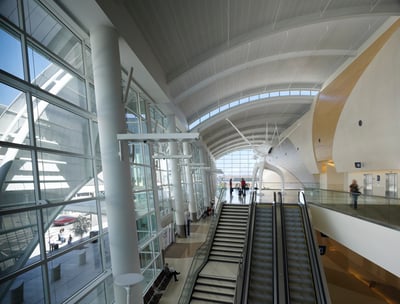
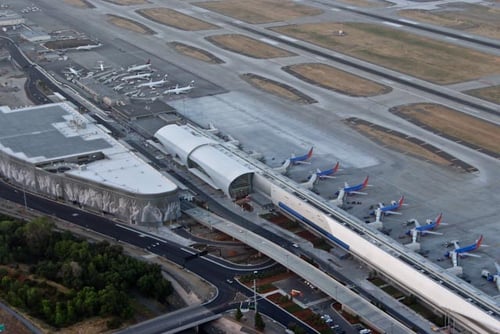
SJC has been around for more than 70 years; however, most of the facilities we have today are much newer. The oldest of our two terminals was constructed in the early 1990s, but was dramatically expanded and refurbished in 2010. Also in 2010, SJC opened its newest passenger terminal, Terminal B, which was expanded in 2019 to include six new gates.
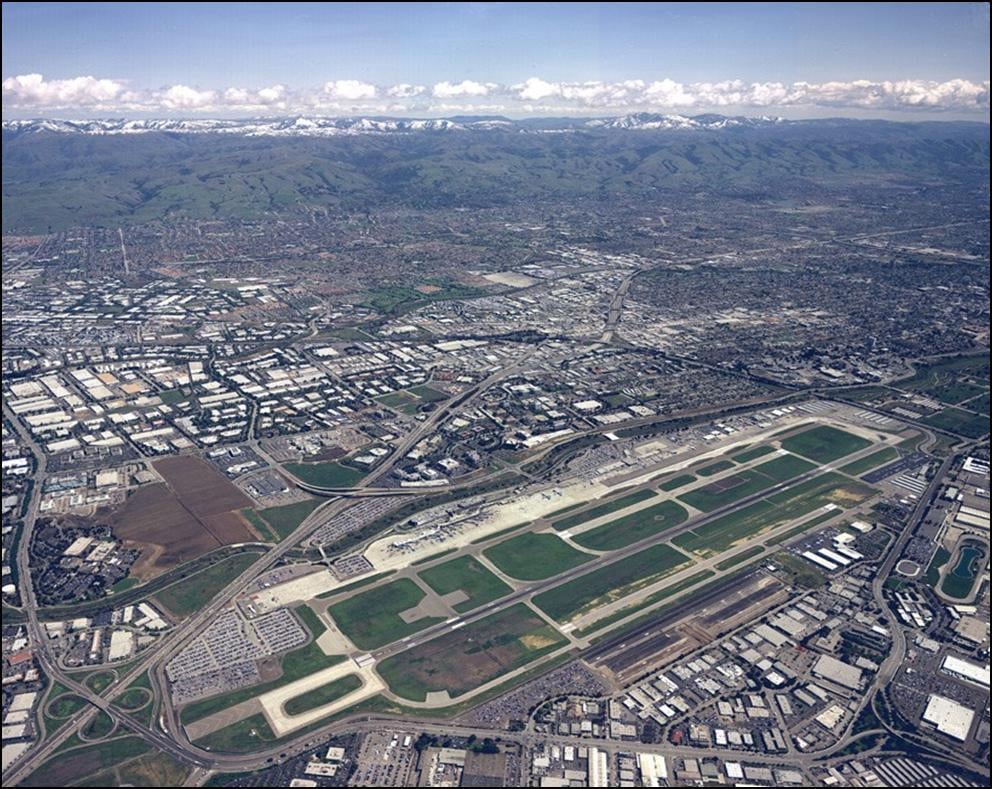
Of course, airport facilities include more than just buildings, and our airfield is just as important to our operation. Many people don’t realize how much goes into building and maintaining an airfield — it’s not just strips of pavement. Runways are multilayered structures that require drawings just as or more complex than a lot of buildings. My team is then required to maintain those runway structures in adherence to strict FAA standards.
How much space do you manage and how is it used?
SJC sits on about 1,000 acres, with two 11,000 ft. runways, 36 gates (all with jet bridges), plus one gate for remote hardstands (Gate 7a). SJC also has two parking structures (one of which primarily serves as a consolidated rental car facility), a new garage on the way and five surface parking lots.
Tell us about your FM team.
I lead a highly skilled group spanning several disciplines that all play a major role in maintaining our airfield to ensure our airline partners can operate in a secure and safe environment. Our electrical, engineering, painting and maintenance divisions are responsible for maintaining the overall integrity of our airfields, which includes our lighting systems, signage, pavement markings, runways, grounds and passenger boarding bridges. In addition to supporting these airside operations, our team is vital to our customers’ traveling experience.
Our custodial vendor and HVAC team maintains the facility’s cleanliness, indoor air quality and overall terminal comfortability. All of our divisions are led by our building management administrator, Adrian Flores, and our Maintenance Superintendent, Susan Frazier, who both organize and prioritize our maintenance efforts.
 What is the biggest FM challenge you have faced & how did you find a solution?
Like all facilities throughout the world, the biggest challenge we have faced has been the pandemic. It has caused us to reevaluate our previous operations and implement new procedures geared toward ensuring the health and safety of our occupants. We followed CDC guidance and increased our sanitizing and disinfecting efforts to include electrostatic spraying of all hold rooms, ticket counters and gate equipment. We deployed additional hand sanitizing stations throughout the terminal, installed UV lighting technology to our escalators and are currently looking to incorporate needlepoint bipolar ionization (NPBI) technology to our HVAC system.
Since the onset of the pandemic, we’ve incorporated other measures such as floor stickers, signage, furniture configuration, digital wayfinding and other tools to help people maintain proper social distancing. Hand sanitizer stations throughout the airport have been a popular and valuable resource for our customers. We introduced a COVID-19 testing site in partnership with Alaska Airlines, Hawaiian Airlines and Southwest Airlines, which required substantial effort to secure functional space for the new operation.
 How has COVID-19 changed the way you & your team operate?
Although many changes are not visible, travelers will experience many of the improvements that were made over the past year in response to COVID-19. For example, we’ve incorporated new technology such as UV-C lighting on all escalators to sanitize the handrails for each user, as well as new custodial equipment to sanitize the air and increase air flow inside our terminals. Just last month, we introduced new bins with Microban Technology at our TSA checkpoints.
Efforts such as these helped SJC be the first California airport to earn GBAC Star Facility Accreditation for our commitment to cleanliness and safety. Cleanliness will be an increasing challenge as traffic rebounds, but our teams have done a great job during the pandemic, we are prepared and committed to keep up a high standard.
How does security shape the way you are able to perform your day-to-day duties?
Safety and security are the top priorities at any airport. There are rules and requirements set forth by governing bodies such as the TSA, FAA and the county, which influence how our team must upkeep our facilities.
What are some FM challenges you face at the airport that are common across the FM industry?
Similar to most in the FM industry, the current climate is causing us to do more with less. Our operations have become leaner with the reduction in both staffing and budget; however, our building and mechanical systems continue to age requiring increased maintenance and repair. The challenge of identifying ways to extend these systems beyond their normal expected lifespan is what I believe is a common reality facing many FMs.
What do you like best about what you do?
I enjoy looking at ways to incorporate technology into our facility operations and pushing the envelope to optimize efficiencies in our facility offerings to our customers.
References
Photos courtesy of the San Jose International Airport.
Read more on My Facility
Explore All FMJ Topics