 Membership
 Network
 Regional Sites & Affiliates


 Events
 Participate
 Resources

 Training
 Credentials
 Government


 Content Channels
 Tools
Tools


 Business Overview




Navigating the Hybrid Workplace
Evolving FM strategies for remote & on-site teams
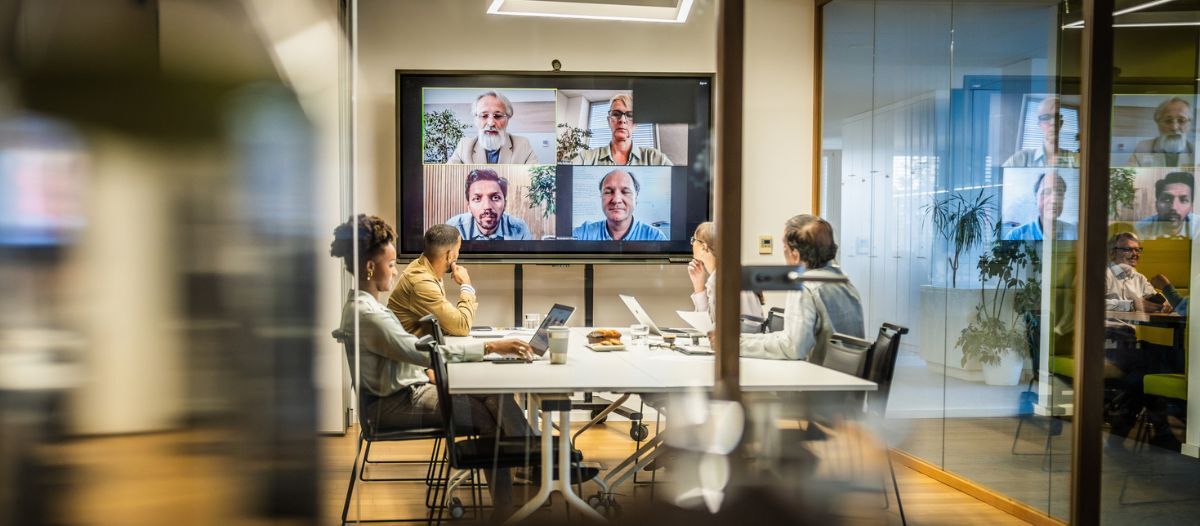
The hybrid workplace blends remote and on-site work, so people can choose how and where they do their best work. It is not a perk anymore; it is the default for many remote-capable roles.
The pace of change since 2020 has been dizzying. COVID-19 pushed organizations to rethink work schedules and redesign office policies almost overnight. Facility managers were at the center of that shift, ensuring buildings and people stayed in sync.
Today, hybrid is not a stopgap; it is a new baseline. Gallup has tracked this rise for remote-capable roles and consistently finds that hybrid is the dominant model among those who can work away from the office at least part of the time, outpacing both fully remote and fully on-site arrangements.
The proof is in the numbers:
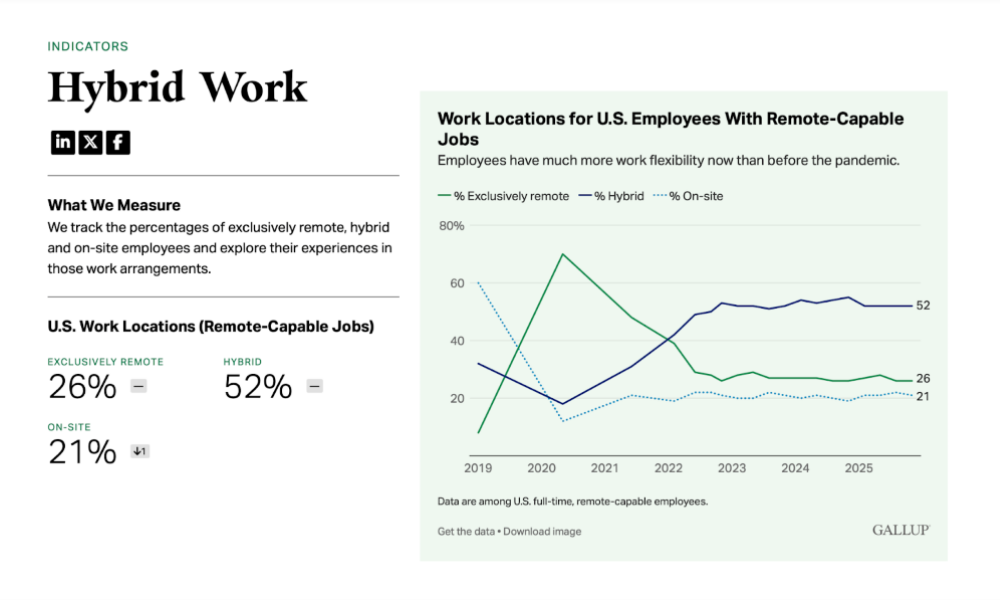 Image source
For facility managers, that means offices are no longer static containers. They are living systems with seasonal rhythms. They cannot just set and forget, as they must listen and adjust.
Challenges of hybrid work models
Hybrid work gives organizations more flexibility, but it also reshapes how offices function day to day. As FMs are navigating flexible workplaces, they also face the following challenges: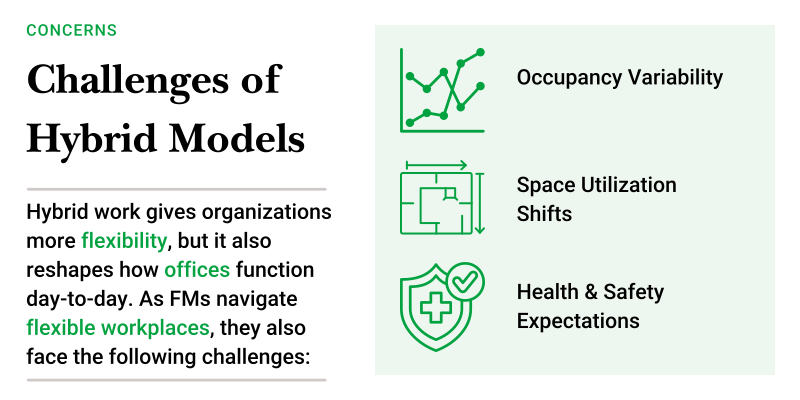
-
The headline challenge is variability. If Tuesday looks like a sold-out concert and Friday feels like a quiet library, space plans can quickly break. Managing fluctuating occupancy rates requires a new playbook: cleaning schedules must have flexibility; security coverage must ebb and flow; HVAC and lighting must match real headcount, not old assumptions.
-
Space utilization is next in line. Many offices were designed for assigned seating and predictable patterns. Hybrid introduces a mix of collaboration bursts with heads-down work and video calls that pop up at all hours. Rooms get used differently, and desks do not need to be one-size-fits-all. Even circulation paths matter when more people hop between zones.
-
Safety and health standards remain a concern. People expect clear air and clean surfaces. Guidance has evolved; so have the tools. Ventilation, filtration and air quality monitoring play a bigger role than before the pandemic. Standards like ASHRAE 241 on controlling infectious aerosols are part of the FM toolkit now, and practical advice on ventilation strategies continues to be updated by public health resources (see CDC Ventilation in Buildings).
Not every organization, however, faces the same pain points. Cases in point:
-
A financial firm might focus on secure, reservable rooms and access control.
-
A biotech company cares about labs and cold storage, not to mention specialized equipment that offers little room for flexibility.
-
A 200-person nonprofit might juggle a single floorplate with hot-desking.
-
A global enterprise tunes dozens of buildings across regions with different norms.
The core questions are similar, but the answers change by industry and scale.
FMs report that the biggest shift is toward weekly or even daily variations rather than fixed allocations. Smart sensors and occupancy analytics have become standard tools for understanding how spaces are actually being used versus how planners think they are being used. The gap between assumption and reality can be humbling.
FM strategies for hybrid workspaces
Meeting the demands of hybrid work takes more than policy changes; it requires a more flexible approach to the workplace itself.
To make the office worth the commute, FMs should focus on space utilization, employee experience and tech trends in the workplace.
1. Set space planning in place
Smart hybrid strategies begin with space planning that can turn on a dime. Think modular furniture, mobile whiteboards, movable partitions and other flexible setups. These can pivot a lounge into a workshop room in an afternoon.
Multipurpose areas help, too. A cafe can double as a town-hall venue. A quiet area can support deep work in the morning and transform into a project war room later the same day.
2. Harness the power of technology
Technology is the backbone. Sensor networks that monitor occupancy and environmental conditions help FMs tune building systems in real time. Demand-controlled ventilation and light harvesting with smart plug loads trim energy without hurting comfort. All these make up an IoT facility management.
Leveraging digital tools can make hybrid models work seamlessly. By using technology to see who is actually in the office, where they are and what spaces they need, FMs can turn guesswork into real-time action. The same is true when employees are working remotely.
On the operations side, integrated workplace management systems (IWMS) work wonders. Reservation tools and digital signage make sure people find the right space at the right time.
3. Keep workplace experience in mind
Workplace experience sits alongside safety and space. Hybrid makes the office compete with the convenience of home. Why commute? What is in the building that employees cannot get at the kitchen table? FMs who have made this work understand why people choose the office over home.
Investing in high-quality collaboration zones, wellness areas, free stockrooms and technology-enabled meetings gives employees a reason to commute. The office should offer experiences and resources that cannot be replicated at home.
Tactically, these zones can look like acoustically separated focus rooms, well-equipped project studios, reliable video conferencing in every size of room and amenities that get used: mothers' rooms, quiet wellness spaces, lockers and grab-and-go options that fit staggered schedules.
FM case studies & best practices
Many organizations have tried different ways to make hybrid work efficient and effective. They have tested different models, technologies, policies and strategies to figure out what works.
Dropbox Virtual First and Studios Dropbox adopted a Virtual First model and built collaboration-forward Studios that employees reserve for project sprints, off-sites and team-building rather than daily desk work. They paired this with clear booking norms and tech-enabled spaces to create a predictable, high-value in-person experience.
Microsoft invested in hybrid-ready meeting spaces, including Signature Teams Rooms designed to put in-room and remote participants on equal footing. The layout, camera framing, sound and other design elements all aim to reduce the office-presence appeal that trips up hybrid collaboration.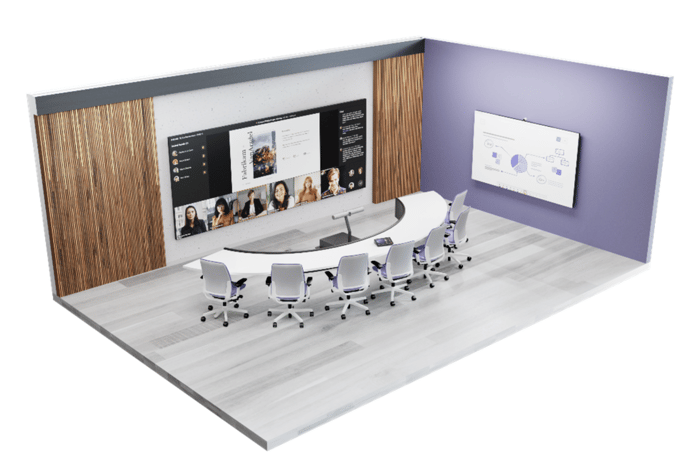
Across those and many similar stories, a few best practices keep showing up.
Hot-desking and space planning:
-
roll out hot-desking with clear guardrails
-
use reservation systems with lead times and no-show policies
-
provide wayfinding so teams can easily locate each other
-
right-size meeting rooms based on actual usage data
-
convert underused large rooms into smaller collaboration spaces
Data-driven operations:
-
use occupancy analytics to guide cleaning, security and energy schedules
-
base decisions on real data, not assumptions
Standardized meeting technology:
-
standardize meeting technology across all rooms
-
ensure every meeting space works the same way
Workplace norms & behavior:
-
set clear behavioral norms for different zones
-
designate quiet zones for focused work
-
create collaboration zones for group activities
-
establish hybrid meeting etiquette so remote voices are included
 Impact of hybrid work on sustainability & cost
Hybrid work does not just change where people work. It reshapes how organizations use space, energy, budgets and more. This begs the question: Does the office have a future?
In a hybrid world, the answer depends on how well organizations capture sustainability gains through smarter footprints and more efficient operations. When managed strategically, a hybrid model can reduce emissions and regulate energy use. It can lower costs while optimizing operations.
Hybrid work could positively impact a business in several ways:
Sustainability gains through smarter footprints
Hybrid can be a sustainability accelerator when managed well. Fewer commuting days can mean fewer tailpipe emissions. Smaller or better-utilized office footprints can reduce energy use. The gains are not automatic, though. They depend on decisions about space and schedules, not to mention the building systems.
It is best to explore the environmental side of remote and hybrid work. Various research studies found net benefits when organizations right-size offices and manage energy smartly, even after accounting for increased home energy use. A new study by Cornell and Microsoft revealed that remote workers can have a 54 percent lower carbon footprint compared with on-site workers.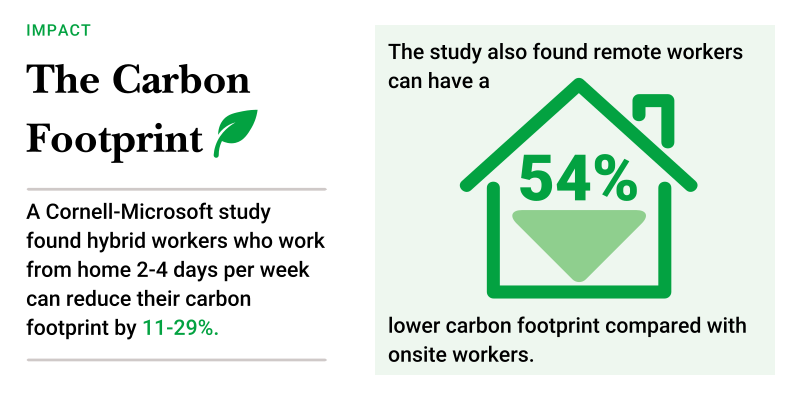
It is best to promote energy efficiency in facility management. When organizations optimize their real estate footprint based on actual usage patterns, they can reduce energy consumption while maintaining or even improving employee satisfaction. Sustainability works best when baked into workplace strategy from the start rather than bolted on later.
Shifting cost structures in hybrid models
On the cost side, many occupiers are consolidating or reconfiguring to cut underused space.
Surveys show a steady trend toward footprint reduction or redesign in large portfolios as companies adapt to new usage patterns.
Energy savings follow when people pair efficient layouts with smart controls. But expect new costs too: cybersecurity for distributed teams, robust video infrastructure, occupancy tech and change management. The trick is to shift spend from static capacity to flexible capability — less on rows of empty desks, more on systems that flex with demand.
Demand-based operations as a practical win
One practical move is demand-based operations. This entails aligning HVAC, cleaning and maintenance, as well as security with actual occupancy instead of fixed schedules. It is common-sense efficiency, and in a hybrid model, it is where a lot of savings hide.
For example: In a hybrid setup managing a large print shop, only part of the warehouse or office may be in use on certain days. As such, FM can adjust systems based on how many people are on site and where they are working instead of running a full HVAC schedule. Doing so lets the organization support flexible work patterns while avoiding the cost of powering and maintaining empty space.
Conclusion
Hybrid is here to stay, and that is good news for FMs. It invites creativity and demands data. It rewards teams that test, learn, tweak and repeat.
Businesses have moved from fixed allocations to living systems, from one-size-fits-all to rooms and services that flex hour by hour. Along the way, hybrid opens doors to lower emissions, smarter spend and better employee experiences, all rolled into one.
When steering this shift, make sure to measure what matters and design spaces people want to use. Likewise, build a tech stack that helps buildings listen and respond. Ultimately, the tools are getting better, and the playbooks are getting sharper.

Brooke Webber is a passionate advocate for a people-first strategy in HR. Her major focus areas are workplace psychology and employee listening, where she has already accumulated five years of writing experience.
References
Top image By Getty Images.
Read more on Leadership & Strategy and Workplace or related topics Space design and planning , Planning and Design and Influencing
Explore All FMJ TopicsRelated articles
-

Artificial Intelligence in FM
The stakeholder’s perspectiveBy Dr. Jake Smithwick & Dr. Kenneth Sullivan & Nneka Ubi05.01.2024 -

Mastering Change in Hybrid Environments
Insights from global operational leadersBy Meg Swanson09.02.2024 -

Plugged In
Solving the data disconnect in real estate and FMBy Amanda Muzzarelli & James Waddell07.01.2024