
 Membership
 Network
 Regional Sites & Affiliates


 Events
 Participate
 Resources

 Training
 Credentials
 Government


 Content Channels
 Tools
Tools


 Business Overview





No Drain, No Downtime
Transforming cooling tower maintenance with underwater robotics
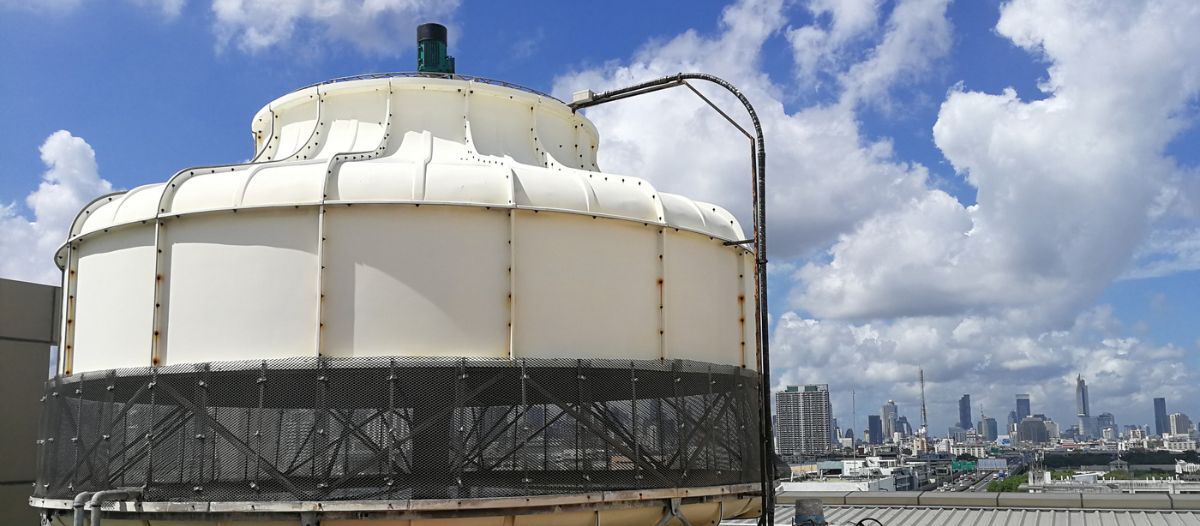
Cooling towers are essential to heat rejection in commercial buildings, health care facilities, industrial plants and data centers, yet basin cleaning remains one of the most disruptive maintenance tasks in the cooling chain. Conventional cleaning usually requires draining the basin, isolating equipment, entering a wet and contaminated space, removing settled sludge, washing down surfaces, refilling the system and restoring water treatment control.
Underwater robotic cleaning changes that sequence by removing sediment while the basin remains filled. This approach can reduce outage time, lower worker exposure, conserve treated water and give facility managers another option for maintaining tower hygiene without relying on long shutdown windows.
Traditional cooling tower cleaning is often planned around outage opportunities rather than ideal maintenance intervals. The work typically involves basin isolation, lockout and tagout controls, confined-space precautions where applicable, sludge removal, washdown, refill, chemical rebalancing and performance verification before the system is returned to service. In high-availability facilities, the operational consequences of this sequence can be significant because cooling capacity may be reduced during the work window. Where cleaning is deferred to avoid disruption, sediment accumulation can increase and basin conditions may become more difficult to manage over time.
Lowering inefficiencies & risks
Underwater robotic cleaning addresses the physical removal step in a different way. Instead of draining the basin, a remotely operated unit is deployed directly into the water to vacuum and collect settled material. Because the basin remains filled, the process can reduce or eliminate the drain-down and refill cycle that defines conventional cleaning. In many applications, this shortens the isolated maintenance window and makes cleaning easier to schedule during overnight or otherwise constrained periods. The result is not universal for every installation, but the method can materially reduce disruption where access and basin geometry are suitable.
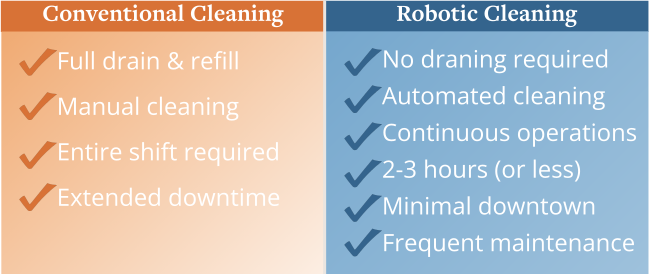 Worker safety is another important consideration. Manual cleaning exposes technicians to slippery surfaces, wet sludge, biological contaminants, cleaning chemicals and, in some cases, confined-space conditions. Even where a task is well controlled, the environment is physically demanding and requires careful supervision. Robotic cleaning reduces direct human exposure by allowing operators to work from outside the basin, often with live video support or remote-control interfaces. A documented industrial case report described a no-man-entry approach that reduced worker exposure while improving cleaning productivity when compared with earlier manual practice.
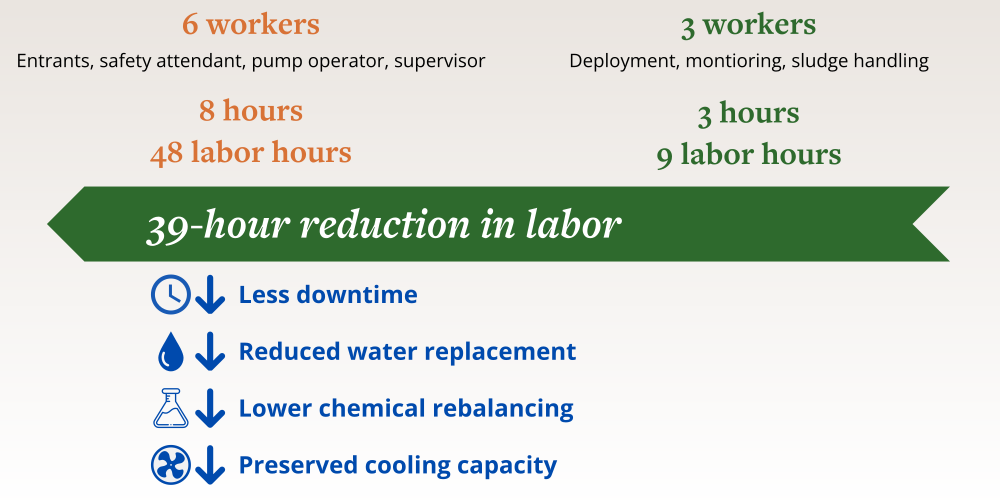
Labor demand also changes. A conventional basin clean may require multiple technicians, attendants, pump operators and supervisory support across a full shift. A robotic clean usually involves a smaller crew focused on deployment, monitoring, sludge collection and disposal. The difference depends on the site and the service model, but the potential reduction in labor hours can be substantial. For example, six workers over eight hours represent 48 labor hours, while three workers over three hours represents nine labor hours. That comparison does not include the value of avoiding a full drain-down, lowering refill requirements or reducing the time spent restoring chemical balance after cleaning.
 Continuity & conservation
Beyond immediate results, robotic cleaning supports reliable water quality and system performance. Removing sediment reduces the organic load that fuels microbial growth and helps stabilize water treatment programs. Vacuum extraction physically removes sludge from the system rather than simply dislodging it to float around. Many systems also filter and return the water to the basin during cleaning, maintaining water balance. Robotic cleaning complements but does not replace disinfection and testing protocol compliance mandates. A cleaner basin improves conditions for chemical treatment and helps avoid the efficiency penalties that come with fouled heat-transfer surfaces.
Operational continuity is often the deciding factor for adoption. Facilities such as hospitals, data centers, laboratories and process plants may have limited tolerance for extended cooling outages. Because robotic cleaning can be performed with the basin still full, the loss of cooling capacity is often lower than with a conventional drain-and-clean sequence. Shorter cleaning windows can make it easier to clean more frequently, reduce dependence on rare outage opportunities, and lower the risk that contamination will build up because maintenance was postponed.
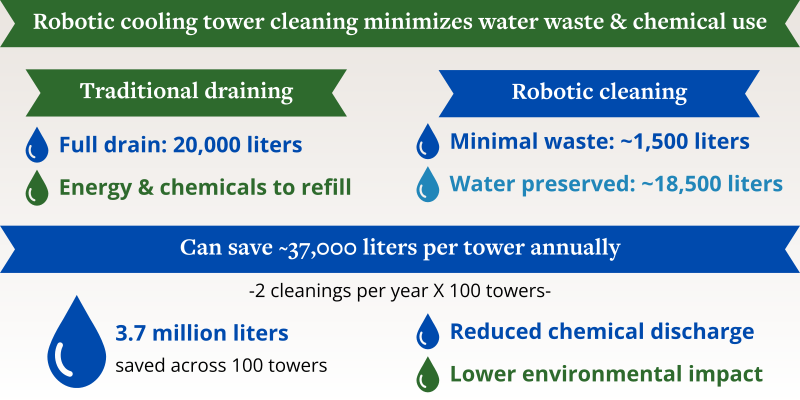
Water conservation is an additional consideration. Draining a tower basin discards treated water and usually requires new water, chemicals and energy to restore the system to service. Robotic cleaning can preserve most of the basin water by removing mainly the concentrated sludge stream. If a basin holds 20,000 liters and the cleaning process generates about 1,500 liters of waste, roughly 18,500 liters are retained during that event. At two cleanings per year, the preserved volume would be about 37,000 liters for one tower — or about 3.7 million liters across 100 towers. For organizations with sustainability goals, these reductions in water use and chemical discharge represent a major environmental gain achieved without compromising maintenance quality or performance.
|
Aspect |
Traditional cleaning |
Robotic cleaning |
|
Cleaning window |
Full drain-down plus manual sludge removal; often longer outages. |
In-situ cleaning in a filled basin; typically a shorter maintenance window. |
|
Worker exposure |
Technicians work in wet, slippery, contaminated spaces. |
Operator remains outside the basin; entry-related risk is reduced. |
|
Labor demand |
Multiple workers are often required for pumping, washing and supervision. |
A smaller crew can supervise the robot and waste handling. |
|
Water use |
Large water loss from draining and refilling the tower. |
Most treated tower water can be preserved during cleaning. |
|
Operational impact |
Higher disruption to cooling service and occupant-facing operations. |
Lower disruption and easier scheduling in many applications. |
Table 1. Comparison of traditional drain-and-clean versus underwater robotic cleaning.
A side-by-side comparison helps show where the method may be useful. Traditional cleaning usually requires full drain-down, greater worker exposure inside the cell, a larger labor commitment and more water replacement. Robotic cleaning typically shortens the maintenance window, keeps operators outside the basin, reduces crew size and preserves a greater share of treated water. The most appropriate approach still depends on site conditions, maintenance objectives, local regulatory requirements and the quality of the operating procedure used for the task.
Asset condition and basin design should also be considered before adoption. Facilities with heavy scaling, damaged coatings, obstructed suction points or unusual basin geometry may still require supplementary manual intervention or repairs. The evaluation should therefore consider not only whether the robot can remove settled material, but also whether the broader cleaning objective includes inspection, coating work, hardware replacement or treatment-system adjustment. Framing the decision this way helps FM teams avoid treating robotics as a universal substitute for every maintenance activity associated with tower hygiene.
FMs considering underwater robotic cleaning should begin with a site‑specific assessment. Key factors include cooling tower size, access constraints, sludge characteristics, cleaning frequency and the operational impact of shutdowns. Facilities with high uptime sensitivity, large basin volumes or challenging entry conditions are often the strongest candidates for early adoption.
Next, confirm alignment with local health and water‑treatment requirements.
 Robotic cleaning does not eliminate obligations related to disinfection, testing, documentation or Legionella control; rather, it modernizes the physical cleaning step within an established compliance framework. Standard operating procedures should clearly define pre‑cleaning treatment, cleaning steps, sludge removal and disposal, post‑cleaning verification and responsibilities across FM teams, water‑treatment specialists and service providers.
The delivery model should be evaluated with the same discipline. Some organizations may pilot the method through specialist contractors, while others may consider equipment ownership if they manage multiple towers or clean on a frequent cycle. In either case, decision-makers benefit from tracking comparable metrics such as cleaning duration, labor-hours, water loss avoided, sludge volume removed, downtime reduced and post-cleaning inspection findings. These measures help convert a maintenance trial into an objective comparison against conventional practice.
Underwater robotic cleaning does not eliminate the need for disciplined water treatment or regulatory compliance. Its value lies in improving one of the most difficult and disruptive elements of tower maintenance: physical sludge and deposit removal. For facility managers seeking to reduce shutdown time, improve worker protection, conserve water and maintain more consistent cleaning intervals, robotic cleaning is an increasingly practical, standard-aligned solution.

Billy Ching is a critical facilities engineering specialist with experience supporting data center and complex building operations in Equinix Hong Kong Limited. Based in Hong Kong, his work focuses on infrastructure reliability, operational risk reduction and sustainable maintenance practices for mission-critical cooling and electrical systems. He is involved in evaluating technologies that improve safety, resilience and life cycle performance in the built environment.

Johnny Ng is an operations and critical facilities leader with experience managing high-availability infrastructure environments in Equinix Hong Kong Limited. His work includes operational risk management, preventive maintenance strategies and continuous improvement programs for cooling and power systems. He focuses on practical engineering approaches that support uptime, safety and sustainability across diverse facility portfolios in the Asia-Pacific region.
References
ASHRAE. (2021). ANSI/ASHRAE Standard 188-2021: Legionellosis: Risk management for building water systems. Atlanta, GA: ASHRAE.
National Environment Agency Singapore. (n.d.). Guidelines on cleaning and disinfection of cooling towers for the control of Legionella bacteria.
U.S. Environmental Protection Agency. (2023). WaterSense at Work: Section 6.3 - Cooling towers.
Top image via Getty Images.
Read more on Sustainability and Facility Operations or related topics Water , Sustainable Facility and Operational and Capital Budgeting
Explore All FMJ TopicsRelated articles
-

Smart Building Control Systems
The foundation for a grid-interactive buildingBy Andre Marino09.25.2024 -
Smart Building Innovation
Cutting costs & carbon footprints without compromiseBy Andrew Butterworth09.12.2024 -
Chart the Path
Building sustainable cities & a sustainable futureBy Izzat Ali Khan & Aykean Forde12.16.2024