
 Membership
 Network
 Regional Sites & Affiliates


 Events
 Participate
 Resources

 Training
 Credentials
 Government


 Content Channels
 Tools
Tools


 Business Overview





Operational Excellence
The strategic engine driving organizational success

Operations management is no longer confined to factory floors, production schedules or routine administrative processes. It has evolved into one of the most influential strategic functions within modern organizations, shaping competitiveness, resilience, customer satisfaction and long-term business sustainability. As organizations navigate digital transformation, economic uncertainty, global supply chain disruptions, climate challenges and increasing stakeholder expectations, operational excellence has become a defining characteristic of successful enterprises.
The organizations leading today's markets are not necessarily those with the largest budgets or the most recognized brands. Instead, they are the organizations capable of delivering exceptional value through efficient, agile and intelligent operations. Every business function from procurement and logistics to facility management, customer service, manufacturing, health care and infrastructure depends on well-designed operational systems that consistently deliver quality while optimizing resources.
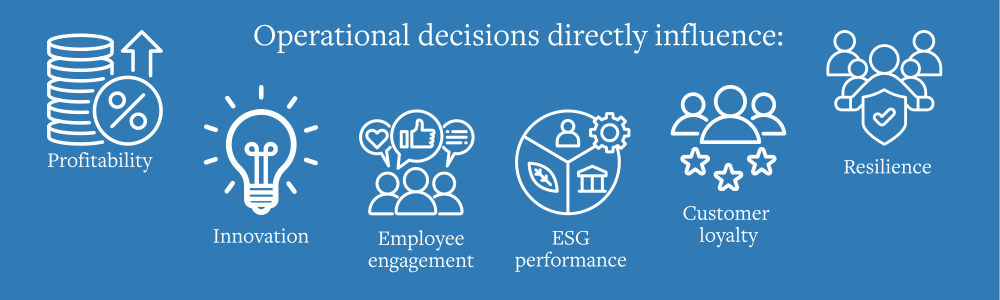
Operations management has therefore become a boardroom discussion rather than merely an operational responsibility. Senior executives recognize that operational decisions directly influence profitability, innovation, employee engagement, ESG performance, customer loyalty and organizational resilience. The focus has shifted from simply doing things efficiently to continuously improving how value is created across the entire enterprise.
 As businesses enter the era of Industry 5.0, where human intelligence collaborates with advanced technologies such as AI, robotics, digital twins and predictive analytics, operations management is transforming into a strategic capability that enables organizations to anticipate change instead of merely responding to it. This transformation is redefining the role of operational leaders as architects of sustainable growth and competitive advantage.
The evolution of operations management
The concept of operations management has undergone remarkable transformation over the past century. Historically, its primary objective was to maximize production efficiency by reducing costs, improving output and standardizing manufacturing processes. During the industrial era, operational success was measured by production volumes, labor productivity and equipment utilization. However, globalization, technological innovation and rapidly changing customer expectations fundamentally changed the business environment. Organizations realized that operational efficiency alone could no longer guarantee long-term success. Customers demanded higher quality, faster delivery, personalized experiences and environmentally responsible products and services.
Consequently, operations management expanded beyond manufacturing to encompass every process that creates organizational value. Today, hospitals optimize patient flow through operational excellence, airlines improve passenger experiences through predictive scheduling, banks automate financial services using intelligent workflows and FM companies leverage IoT technologies to optimize building performance.
Modern operations management integrates strategy, technology, people, sustainability, risk management and continuous improvement into one cohesive system. Rather than operating as isolated departments, organizations now view operations as interconnected ecosystems where every process influences organizational performance. This evolution has elevated operations managers from process supervisors to strategic business leaders responsible for aligning operational capabilities with long-term corporate objectives.
The pillars of modern operations management
 Successful operations management rests upon several interconnected pillars that collectively drive organizational performance.
-
Process optimization ensures workflows eliminate unnecessary activities while maximizing productivity and quality. Organizations continually analyze and redesign processes to reduce waste, improve speed and enhance customer value.
-
Quality management is where delivering consistent excellence becomes a competitive differentiator. Modern quality systems emphasize prevention rather than inspection, embedding quality into every operational activity rather than correcting mistakes after they occur.
-
Resource optimization involves maximizing people, assets, energy, materials and financial resources. Organizations adopt data-driven resource planning to improve operational efficiency while reducing operational costs.
-
Customer-centricity has also become an essential operational principle. Every operational decision is increasingly evaluated based on its impact on customer satisfaction, service quality, responsiveness, and overall experience.
-
Agility and adaptability enable organizations to respond rapidly to changing market conditions, technological disruptions, and emerging risks. Agile operations support faster innovation, quicker decision-making and greater resilience during periods of uncertainty.
Together, these pillars establish a foundation for operational excellence that extends far beyond traditional efficiency metrics.
Digital transformation & smart operations
 Digital transformation has fundamentally redefined operations management. Traditional manual processes are rapidly being replaced by intelligent, connected and automated operational ecosystems capable of generating real-time insights and predictive decision-making. IoT enables organizations to continuously monitor equipment performance, environmental conditions, energy consumption, occupancy levels, and asset health through interconnected sensors. This real-time visibility allows managers to identify operational inefficiencies before they escalate into costly failures.
Cloud computing has democratized access to operational information by enabling centralized monitoring across multiple facilities and geographic locations. Decision-makers can now access live operational dashboards from anywhere, improving responsiveness and collaboration. Digital twins represent another transformative innovation. By creating virtual replicas of physical assets, buildings, manufacturing facilities and infrastructure, organizations can simulate operational scenarios, evaluate maintenance strategies, optimize energy consumption and predict equipment failures without disrupting actual operations.
Workflow automation further enhances efficiency by eliminating repetitive administrative tasks, accelerating approvals, reducing human errors and improving service delivery. Intelligent workflow systems streamline procurement, maintenance requests, compliance monitoring and operational reporting while allowing employees to focus on higher-value activities. Smart operations are no longer optional. They are becoming the operational backbone of organizations seeking sustainable growth in increasingly competitive markets.
Lean thinking, Six Sigma & continuous improvement
Operational excellence cannot be achieved through technology alone. It requires a culture of continuous improvement where organizations consistently challenge existing processes and pursue better ways of working. Lean methodology focuses on eliminating activities that do not create value for customers. Waste may exist in many forms, including excessive inventory, unnecessary movement, waiting times, overproduction, defects, transportation and underutilized human potential. By systematically identifying and removing these inefficiencies, organizations improve productivity while reducing costs.
Six Sigma complements Lean by reducing process variation and improving quality through structured, data-driven methodologies. Organizations employing Six Sigma use statistical analysis to identify root causes of operational problems and implement sustainable improvements that enhance consistency and customer satisfaction. Continuous improvement extends beyond formal methodologies. It becomes an organizational mindset where employees at every level contribute ideas, identify inefficiencies and participate in operational innovation. Organizations embracing continuous improvement foster learning cultures that encourage experimentation, collaboration and knowledge sharing.
 Sustainability as an operational strategy
Sustainability has become an essential component of modern operations management. Organizations increasingly recognize that environmental responsibility and operational efficiency are mutually reinforcing rather than conflicting objectives. Operational sustainability involves optimizing energy consumption, conserving water resources, minimizing waste generation, reducing greenhouse gas emissions and promoting circular economy principles throughout operational activities.
FMs play a particularly significant role in advancing sustainability by implementing energy-efficient systems, renewable energy technologies, smart lighting, water conservation initiatives, waste segregation programs and green procurement strategies. ESG expectations from investors, regulators and customers further reinforce the importance of sustainable operations. Organizations capable of embedding sustainability into operational decision-making strengthen their reputation, improve regulatory compliance, reduce long-term operational costs, and enhance stakeholder confidence. The transition toward net-zero operations, carbon neutrality, and resource efficiency is increasingly driven by operational leadership rather than environmental departments alone.
AI, IoT, robotics & predictive analytics
Emerging technologies are transforming operations management from reactive decision-making to predictive intelligence. AI enables organizations to analyze massive volumes of operational data, identify hidden patterns, optimize scheduling, forecast demand, detect anomalies, and recommend corrective actions with unprecedented accuracy. Predictive analytics uses historical and real-time information to forecast equipment failures, maintenance requirements, staffing needs, inventory levels and customer demand. Instead of responding after problems occur, organizations intervene proactively, minimizing downtime and improving operational reliability.
Robotics has expanded beyond manufacturing into logistics, healthcare, warehousing, cleaning services, and facility management. Collaborative robots now work alongside human employees, increasing productivity while improving workplace safety. Autonomous operational systems are emerging across industries, enabling intelligent buildings, automated warehouses, driverless logistics, and self-optimizing production systems. These technologies improve operational precision while reducing repetitive manual tasks.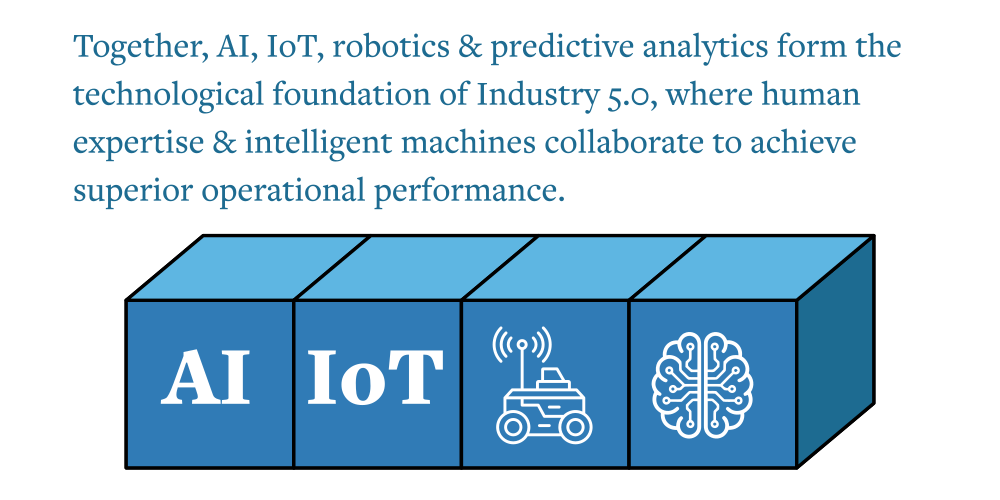
Risk management & operational resilience
Recent global disruptions have highlighted the importance of operational resilience. Organizations can no longer assume stable operating environments. Pandemics, cyberattacks, geopolitical conflicts, supply chain disruptions, climate events and regulatory changes have demonstrated the need for robust operational preparedness. Operational resilience extends beyond emergency response. It involves designing systems capable of anticipating risks, absorbing disruptions, adapting quickly and recovering efficiently while maintaining essential services.
Comprehensive risk management includes supplier diversification, cybersecurity, preventive maintenance, business continuity planning, workforce preparedness, emergency response procedures and scenario-based planning. Organizations that integrate resilience into daily operations are better positioned to maintain customer confidence, protect revenue streams, and sustain competitive advantage during uncertain conditions.
People, leadership & organizational culture
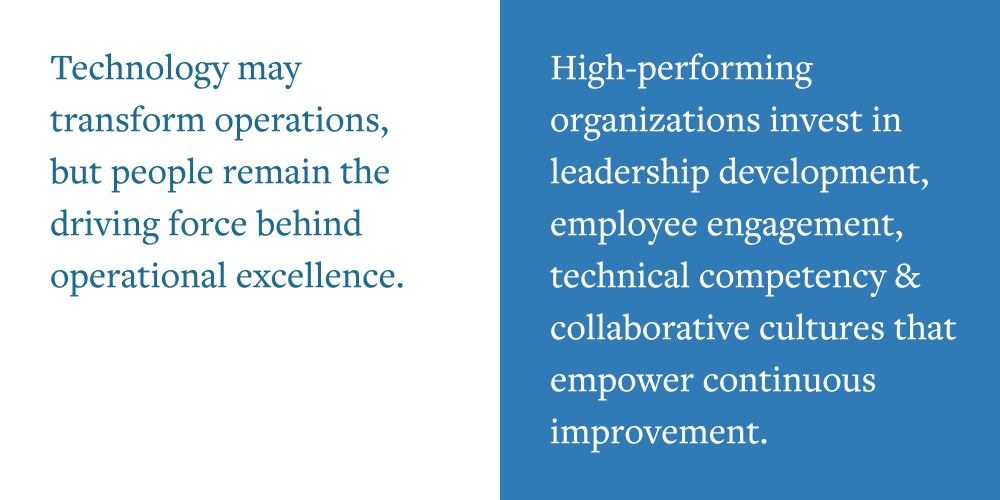 Operational leaders today require far more than technical expertise. They must inspire teams, manage change, foster innovation, develop talent, communicate effectively and make strategic decisions using both data and human judgment. Industry 5.0 reinforces the importance of human-centric operations where technology augments rather than replaces human capabilities. Employees become knowledge workers who leverage digital tools to solve complex problems, improve customer experiences and create organizational value. Organizations that cultivate learning cultures, encourage cross-functional collaboration and empower frontline employees consistently outperform those relying solely on technology investments.
Measuring operational performance through meaningful KPIs
Operational excellence requires accurate measurement. Organizations cannot improve what they do not measure. Modern KPIs extend beyond productivity metrics to include customer satisfaction, service quality, operational efficiency, asset reliability, employee engagement, safety performance, sustainability outcomes, energy consumption, waste reduction and ESG performance.
Advanced operational dashboards integrate data from multiple business systems to provide executives with real-time visibility into organizational performance. Rather than relying solely on historical reports, leaders can identify trends, detect emerging risks, and make informed decisions based on current operational intelligence. Meaningful KPIs encourage accountability while aligning daily activities with long-term strategic objectives.
Operations management in FM
FM has become one of the strongest examples of modern operations management in practice. Buildings are no longer static physical assets; they are intelligent environments supporting productivity, sustainability, health, safety and organizational performance. Modern FMs oversee integrated operations involving maintenance, workplace experience, energy management, water conservation, waste management, security, cleaning, space optimization, indoor environmental quality, compliance and sustainability reporting.
Smart facilities increasingly utilize IoT sensors, building management systems (BMS), predictive maintenance platforms, AI-driven energy optimization, occupancy analytics and digital twins to improve operational performance while reducing costs. As organizations pursue net-zero commitments and ESG objectives, FMs are strategic contributors to business performance rather than solely operational service providers.
The future of operations management
The future of operations management will be defined by intelligence, sustainability, resilience and human-centered innovation. Hyperautomation will connect robotic process automation, AI, machine learning and intelligent workflows into fully integrated operational ecosystems. Autonomous decision-support systems will optimize resources in real time while digital twins continuously simulate operational improvements. Sustainability will become embedded within every operational decision rather than treated as a separate initiative. Circular economy principles, carbon accounting, renewable energy integration, and climate resilience will increasingly influence operational strategies.
Industry 5.0 will strengthen collaboration between humans and intelligent technologies, enabling organizations to achieve higher productivity while maintaining creativity, ethics and employee well-being. Organizations capable of embracing these transformations will not only improve operational efficiency but also strengthen innovation, resilience, customer trust and long-term competitiveness.
Operational excellence as a leadership imperative
Operations management has evolved into one of the most powerful strategic disciplines shaping organizational success in the 21st Century. It influences every aspect of business performance from financial outcomes and customer satisfaction to sustainability, innovation, resilience and organizational culture. The organizations that will lead the future are not those that simply operate more efficiently, but those that continuously rethink how value is created, delivered and improved. They recognize that operational excellence is not a one-time initiative or a collection of isolated improvement projects; it is a leadership philosophy embedded across every process, every employee and every strategic decision.
As digital technologies accelerate and stakeholder expectations evolve, operational leaders must embrace innovation while maintaining a strong focus on people, sustainability and resilience. AI, predictive analytics, smart facilities and autonomous operations will undoubtedly redefine the future of work, but their greatest value will come from organizations that combine technological capability with visionary leadership.
Operational excellence is no longer measured solely by efficiency or cost reduction. It is measured by an organization's ability to consistently deliver value, adapt to change, create sustainable growth and build resilience in an increasingly uncertain world. In this era, operations management is not simply about managing processes, it is about shaping the future of the enterprise itself.

Izzat Ali Khan, SFP, FMP, is the general manager at EFSiM Facilities Services. A seasoned FM professional, he is passionate about creating a positive impact in business through sustainability. He focuses on integrating sustainability and innovation in businesses to build the FM industry and make the world a better place to live.
References
Top image via Getty Images.
Read more on Leadership & Strategy and Quality or related topics Performance Measures , Quality Management and Quality Improvement
Explore All FMJ TopicsRelated articles
-

Artificial Intelligence in FM
The stakeholder’s perspectiveBy Dr. Jake Smithwick & Dr. Kenneth Sullivan & Nneka Ubi05.01.2024 -

Mastering Change in Hybrid Environments
Insights from global operational leadersBy Meg Swanson09.02.2024 -

Plugged In
Solving the data disconnect in real estate and FMBy Amanda Muzzarelli & James Waddell07.01.2024