 Membership
 Network
 Regional Sites & Affiliates


 Events
 Participate
 Resources
 Training
 Credentials
 Government


 Content Channels
 Tools
Tools


 Business Overview



Preparing for the Surge
Facility readiness lessons from the 2026 FIFA World Cup
A hotel enters the weekend fully booked.
The rooms are ready. Staffing schedules are set. Public spaces have been cleaned and inspected. From the outside, the property appears prepared.
But the real test begins when demand arrives.
As guests move through the property, systems operate longer, public areas require more attention and operational teams are asked to maintain the same standards under very different conditions.
The 2026 FIFA World Cup provided a highly visible reminder of this reality.
 During the tournament's opening week alone, more than 1.3 million spectators attended matches, with average attendance exceeding 65,000 per game. Daily attendance records were broken within the first week of competition.
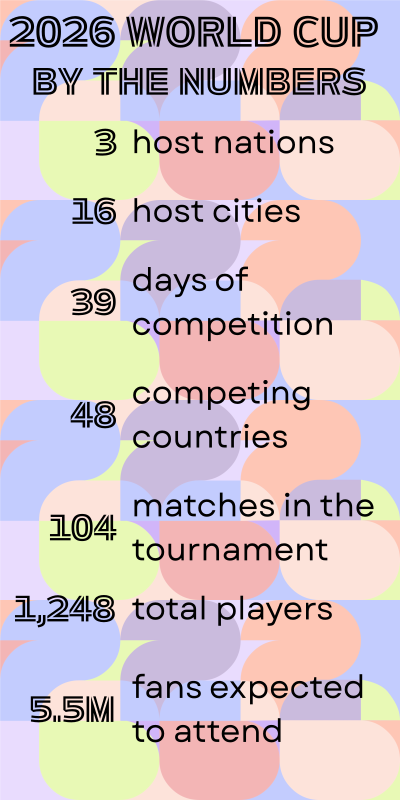 While those figures reflect activity inside the stadiums, they also hint at the broader operational demands placed on the facilities, services and infrastructure supporting visitors throughout host cities. Hotels, restaurants, retailers and entertainment destinations faced the challenge of accommodating increased activity while maintaining the experience customers expected.
For facility managers, periods like this provide a practical test of readiness. While visitors experience the front-of-house environment, facility teams are responsible for the infrastructure, staffing, capacity and operational coordination that make those experiences possible.
One of the most common misconceptions is that major events are primarily a crowd-management challenge. In reality, they are an operational readiness challenge.
Few organizations will experience demand at World Cup scale, but similar pressures emerge during conventions, festivals, seasonal travel periods and major sporting events. The specific circumstances may differ, but the operational challenge remains remarkably consistent: demand increases faster than normal operating patterns were designed to support.
Four areas tend to have an outsized influence on facility performance during periods of elevated demand: reliability, staffing, capacity and customer experience.
 Most guests do not think about the systems operating behind the scenes.
A comfortable lobby, a functioning elevator and a clean restroom are simply part of the experience they expect. The infrastructure supporting those conditions rarely receives attention unless something stops working.
Mechanical equipment, HVAC systems, elevators, electrical infrastructure, refrigeration equipment, plumbing systems and sanitation systems support daily operations without attracting attention. During periods of increased activity, these systems are often asked to perform under conditions that differ significantly from normal operating patterns.
Before periods of elevated demand, FMs often focus on the systems whose failure would create the greatest operational impact. In many environments, that review extends beyond equipment condition alone. Backup power systems, vendor response capabilities, spare parts availability and maintenance staffing levels can all influence how effectively a facility responds when issues arise. A system may be functioning properly today while still presenting operational risk if recovery options are limited once demand increases.
Deferred maintenance items are reviewed, preventive maintenance schedules are evaluated, and potential single points of failure are addressed before demand increases.
The objective is not simply to ensure equipment is operating today, but to ensure facilities can continue operating reliably when conditions become more demanding.
Reliable performance rarely comes from a single decision. It comes from preparation long before demand arrives.
 Unlike equipment, staffing capacity cannot be expanded instantly when demand increases.
Additional support must be identified, scheduled and deployed, often while existing teams are already managing increased activity.
This is one reason staffing pressures tend to emerge faster than many organizations expect. As facilities become busier, the same teams are often responsible for supporting a growing number of operational demands without a corresponding increase in available resources.
Increased activity affects more than headcount. Scheduling challenges often become more pronounced during these periods as well. Employee absences, extended operating hours and increased service expectations can create gaps that are difficult to fill on short notice. Even well-staffed facilities may discover that workload distribution becomes as important as total staffing levels.
Cleaning frequencies increase. Service requests accumulate more quickly. Public spaces require additional attention. Preventive maintenance, inspections and routine facility tasks must still be completed while teams respond to a higher volume of day-to-day demands.
The challenge is not simply having enough people available. It is ensuring the right resources are available in the right places at the right times. A facility may appear adequately staffed on paper while still struggling to keep pace with changing operational demands throughout the day.
Readiness planning should include an honest assessment of whether current staffing levels can support projected activity and where supplemental resources may be required. Organizations that perform well during major events typically make those decisions earlier than expected, understanding that additional support becomes more difficult to secure once demand has already arrived.
 A facility can appear fully prepared until demand begins testing its assumptions. Nothing is technically broken. The operation simply begins working harder to achieve the same result.
Service expectations remain unchanged, but the margin for error becomes smaller. Resources that felt sufficient under normal conditions are suddenly stretched across a larger volume of activity.
Capacity planning often focuses on occupancy. Operational pressure usually appears elsewhere first. Facilities may remain well within their physical limits while support systems, service workflows and circulation patterns experience growing strain.
Capacity constraints often emerge where multiple operational functions intersect. Elevator wait times increase, restrooms require more frequent servicing and loading areas process higher volumes. A lobby may comfortably accommodate additional visitors while housekeeping, waste management, maintenance teams or other support functions experience growing pressure behind the scenes.
The challenge is not always a lack of space. More often, it is the ability to move people efficiently, maintain service levels and support increased activity without disrupting operations.
Organizations that recognize these pressure points early are often better prepared to respond. Temporary operational adjustments, revised service schedules and targeted support resources can help facilities accommodate increased activity without requiring permanent changes.
The ability to adapt as conditions change can be just as important as physical capacity itself. In many environments, flexibility becomes a significant operational advantage.
 A first-time visitor forms an impression long before evaluating a product, service or brand. Clean public areas, organized entrances and consistently maintained facilities create confidence that the organization is well run.
During periods of elevated demand, maintaining these fundamentals becomes more difficult precisely when they matter most. Increased activity creates more opportunities for facility issues to surface at the same time visitors are deciding how they feel about the experience itself.
Most visitors never think about the work happening behind the scenes. They simply experience the outcome. When facilities are clean, functional and well maintained, attention stays focused on the experience itself. When they are not, facility issues can quickly become part of the story.

Before periods of elevated demand, facility leaders should ask a few simple questions.
-
Are critical systems prepared for increased usage?
-
Can staffing levels support projected activity?
-
Where are the most likely operational bottlenecks?
-
Are vendors, response plans and customer-facing areas ready to perform under added pressure?
Facility readiness is not a single initiative. It is the result of multiple operational disciplines working together.
Reliable infrastructure, sufficient staffing, operational capacity and customer experience are often discussed separately. But during periods of elevated demand, they become closely connected.
A staffing shortage can affect cleanliness standards; infrastructure issues can influence customer experience; and capacity constraints can place additional pressure on both people and systems. As activity increases, decisions made in one area often create consequences in another.
The World Cup demonstrates how quickly those connections become visible when activity increases. Operational pressure rarely affects a single system or department. It affects entire organizations.
While few events occur on the same scale, demand surges are inevitable. The organizations that prepare early are often best positioned to maintain performance when conditions change.

Vince Kiel is the Founder and CEO of National Facilities Direct. Over the course of his career, he has founded and scaled more than 30 companies spanning facility services, logistics, infrastructure, technology and operational support. His work focuses on helping organizations improve operational performance, strengthen service delivery and navigate periods of growth and change through disciplined execution and scalable systems.
References
Top image via Getty Images.
Read more on Facility Operations and Leadership & Strategy or related topics Operations and Maintenance Planning and Strategic Planning
Explore All FMJ Topics