Membership
 Network
 Regional Sites & Affiliates


 Events
 Participate
 Resources

 Training
 Credentials
 Government


 Content Channels
 Tools
Tools


 Business Overview





Putting the Well in Well-being
Redefining the tenant experience with fitness amenities
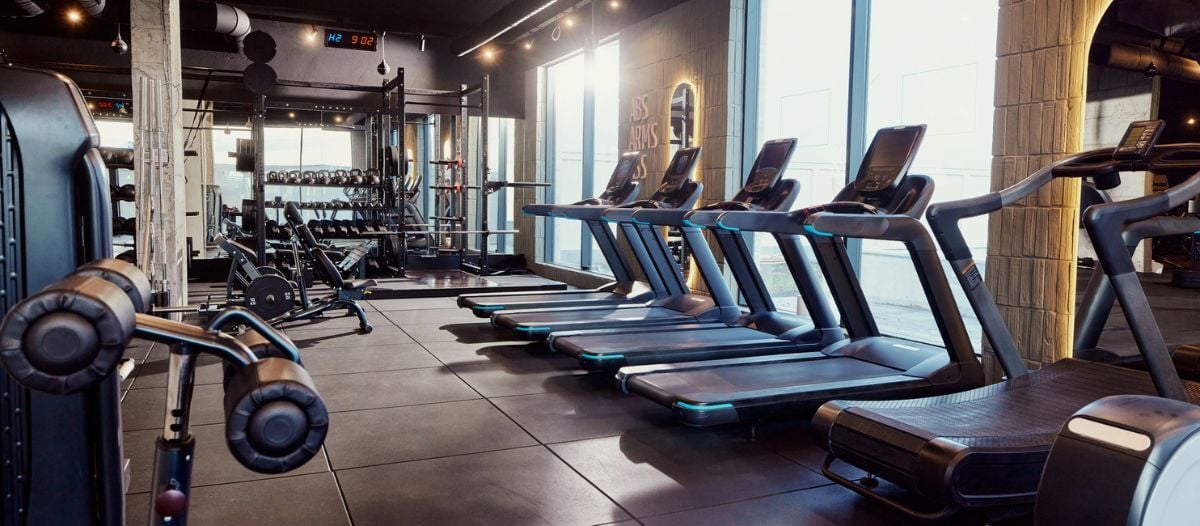
Over the last decade, the commercial real estate industry has experienced steady evolution. But in the years following the pandemic, it has undergone a much more profound transformation — one that is reshaping what tenants value, how buildings differentiate and what drives long-term occupancy. At the center of this shift is a surprising yet increasingly influential factor: on-site fitness and wellness amenities.
Once considered optional perks or check-the-box features, fitness centers, wellness programming and community-building activities have become some of the strongest differentiators in today’s tenant-driven property market. As companies compete for talent, support hybrid workforces and bring employees back to the office with more intentionality, they are placing greater emphasis on the environments where their teams work. Buildings that support physical, mental and social well-being are emerging as clear winners.
A shift has unfolded across properties.
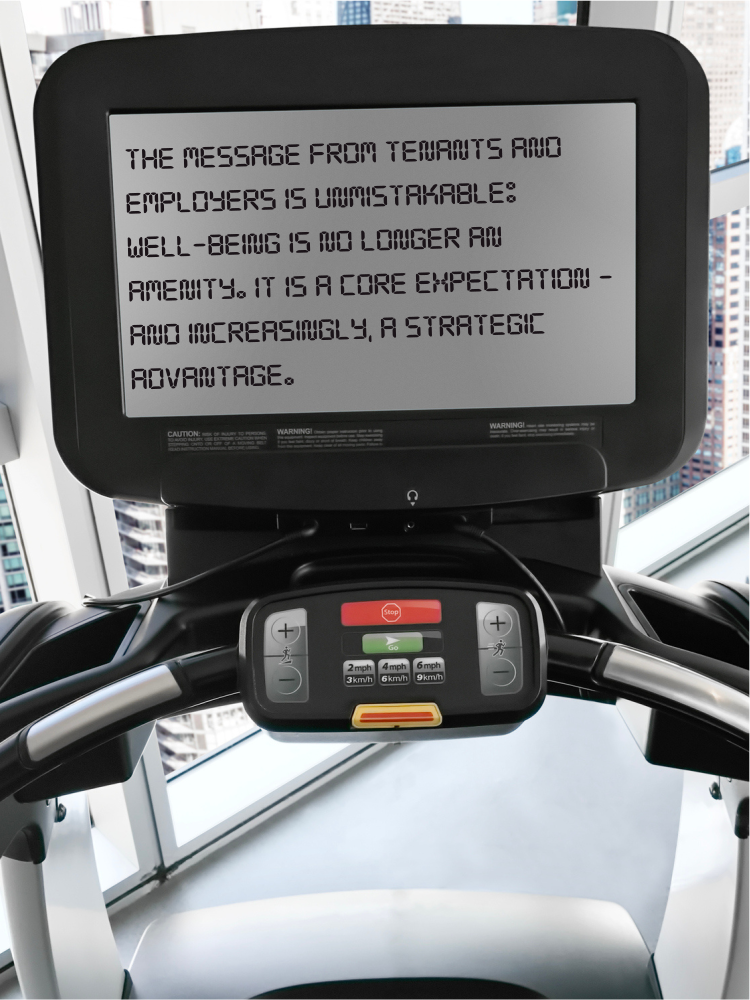
Fitness amenities have moved from nice to need to have
Prior to 2020, fitness centers in commercial buildings typically fit into one of two categories: fully featured corporate gyms in large headquarters buildings or modest, functional exercise rooms within multitenant properties. While appreciated, these amenities rarely drove leasing decisions.
That changed in 2026.
Tenants now routinely ask to see fitness centers during tours. They inquire about group classes, wellness programs, outdoor activity areas and hybrid fitness offerings. Companies relocating or renewing leases consider the quality of a building’s wellness ecosystem in much the same way they evaluate parking ratios, commute access and technology infrastructure.
This shift stems in part from changing workforce expectations. Employees are more aware of their well-being needs and more insistent that employers support them. Employers, in turn, are searching for ways to help reduce burnout, support mental health and enhance workplace satisfaction.
Wellness has become a central focus for organizations, not a fringe benefit. When companies look for space, they are looking for environments that reflect their culture and values. A thriving, accessible wellness program signals a commitment to people.
The result is a marketplace where the presence, quality and activation of fitness amenities meaningfully influence tenant perception and decision-making.
Why today’s tenants expect more & why buildings must adapt
Several forces are converging to push well-being to the forefront of leasing conversations.
1. The shift to hybrid work
With employees splitting time between home and office, the office must now offer what the home cannot: social connection, collaboration and unique experiences. A fitness center with robust programming helps deliver that value.
2. New expectations focused on balance & mental health
Stress, burnout and mental health challenges have increased across the workforce in recent years. Access to movement, mindfulness and community support is now seen as essential — not optional.
3. Talent recruitment & retention pressures
Corporate tenants know that prospective employees evaluate workplace experience. Buildings that support well-being help employers compete more effectively for talent.
4. Tenants want environments that energize, not drain
An amenity-rich, well-being-focused building feels different the moment someone walks in. Natural light, active spaces, green areas and fitness offerings contribute to a more positive, productive work environment.
5. Companies expect property owners to be partners in well-being
As organizations broaden their wellness strategies, they look for buildings that can support and amplify those efforts.
These expectations are reshaping the commercial real estate sector, elevating the importance of amenities that, five years ago, were seen as a bonus rather than a requirement.
The emergence of well-being-centric buildings
With these shifting expectations, a new class of property has emerged: the well-being-centric building. These buildings differentiate not by offering occasional perks but by embedding well-being into the core tenant experience.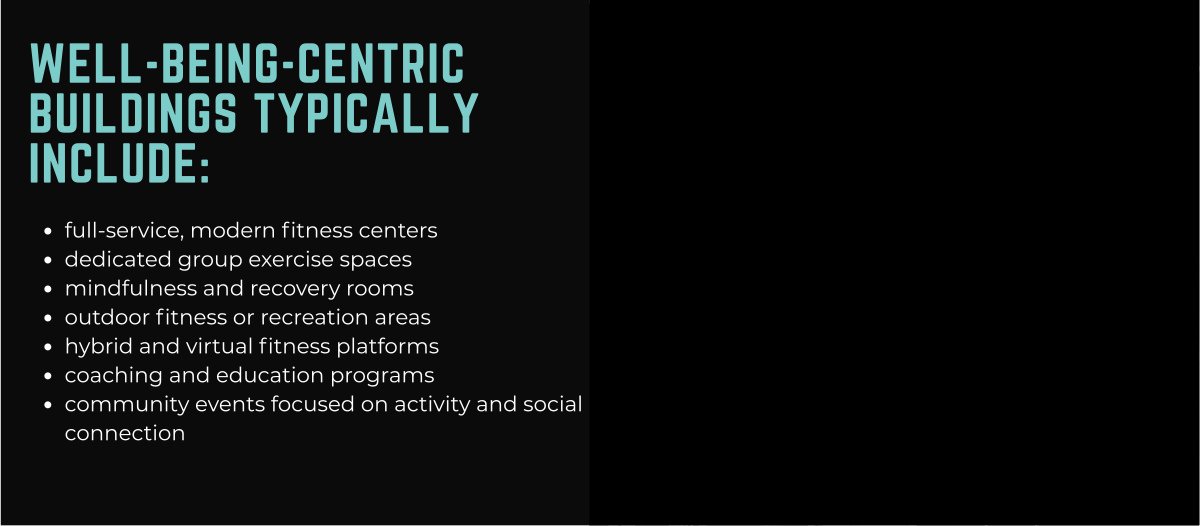
Crucially, these buildings view wellness not as a room, but as a strategy. The most successful buildings activate wellness throughout the property. In other words, they extend offerings beyond the four walls of the fitness center and into common spaces, rooftops, courtyards and tenant suites.
The result is an environment where movement is easy, social interaction is natural and tenants feel consistently supported.
Activation matters more than equipment
However, buildings cannot rely on equipment alone. A beautiful facility without activation is a wasted opportunity. The differentiator today is not hardware — it is programming, hospitality and community-building.
Fitness centers come to life through engaging group exercise options like yoga, personal training, strength training, cycling, HIIT and mobility classes. These not only support health but create energy and routine.
Hybrid and virtual content can help tenants participate in workouts from home or during travel — ensuring continuity and inclusivity.
Creative community programming like “Coffee and Climb” morning sessions, “Trails and Mocktails” outdoor walks, lobby pop-up stretch breaks, mindfulness micro-sessions, seasonal wellness challenges and open house “try-it” events can help turn a fitness center into something more meaningful — a hub of community and connection.
Staffed fitness centers where professionals greet tenants, offer equipment orientation, answer questions and provide one-on-one support dramatically improve comfort levels, especially for those intimidated by fitness environments.
Thoughtful design, cleanliness, friendly staff and clear signage can foster a sense of welcome and belonging in any fitness center.
Programming is where fitness amenities demonstrate real value — both for tenants, who experience well-being daily, and for property owners, who see higher engagement and stronger retention.
Creative amenities are creating competitive advantage
While high-quality fitness spaces are foundational, some of the most compelling differentiators come from unexpected amenities tailored to local tenant lifestyles.
For example, in coastal regions, surfboard storage areas, bike repair and secure cycling zones, and outdoor training platforms for functional workouts serve as competitive advantages.
On the other hand, in more urban campuses, rooftop yoga series, walking clubs connecting tenants to local neighborhoods and indoor “mindfulness pods” for decompression offer unique experiences.
These enhancements are often small investments, but they signal something significant: that the building understands its tenants and designs experiences around them.
Creative touches make buildings memorable — and memorable experiences drive loyalty.
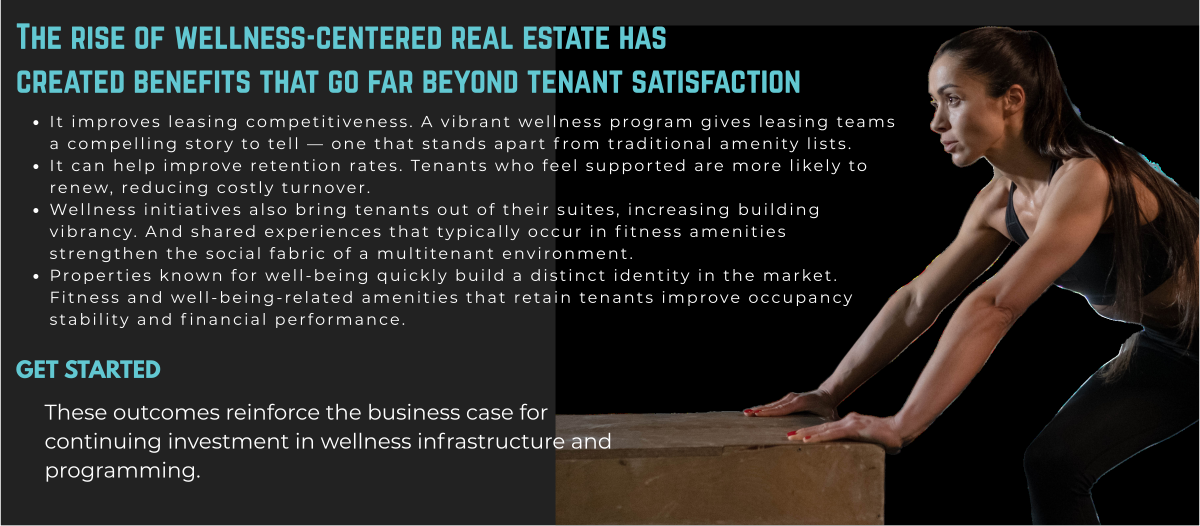
How wellness amenities strengthen property performance
Taking action
What can FM and property teams do to modernize or elevate their wellness offerings?
-
Start by leading with a clear wellness strategy. Fitness amenities should be aligned with tenant demographics, corporate cultures and building identity — not installed as afterthoughts.
-
Design spaces that encourage movement and inclusivity. Consider multiple modalities: strength, cardio, mobility, stretching, mindfulness and outdoor recreation.
-
Integrate hospitality into every interaction. A clean, welcoming environment with friendly staff sets the tone for user comfort and engagement.
-
Prioritize activation from the start. Classes, events, coaching and pop-up activities drive awareness and adoption.
-
Create multiple pathways for involvement. Ensure that both seasoned gym-goers and total beginners feel comfortable participating.
-
Leverage hybrid and virtual options. Support tenants regardless of where they work on a given day.
-
Stay adaptable. Solicit user feedback and adjust offerings — class schedules, programming themes or equipment needs — based on tenant preferences.
-
Measure impact. Track utilization, tenant engagement, satisfaction, retention and feedback. Over time, these indicators show not only program success but also property value.
Why this moment matters for CRE leaders
The commercial real estate sector is at an inflection point. Traditional drivers of occupancy — location, floorplates, amenities — still matter. But tenants increasingly differentiate properties based on experience. Buildings that help people feel healthier, more energized, more connected and more supported will hold a distinct advantage.
In this new era, well-being is inseparable from workplace experience. Fitness and wellness amenities are becoming essential components of how buildings define themselves in the market.
As employers refine hybrid policies and as employees seek environments that enrich their days, well-being-centric buildings will stand out — not just for what they offer, but for how those offerings make people feel.
The rise of well-being-centric buildings signals a fundamental reshaping of the tenant experience. Fitness centers, wellness programming and community-building offerings are no longer supplementary amenities. They are powerful differentiators that influence leasing decisions, strengthen tenant relationships and enhance long-term asset performance.
The opportunity for FMs and property leaders is clear: embrace the movement now and lead the market rather than follow it.
The buildings that will thrive in the future are those that invest in people today. Wellness is not a trend. It is becoming the foundation of the workplace experience.

Ann Wyatt is the vice president and chief client success leader at HealthFitness.
Read more on Workplace and Occupancy & Human Factors or related topics Occupant Services , Wellness and Well-being and Space design and planning
Explore All FMJ Topics