
 Membership
 Network
 Regional Sites & Affiliates


 Events
 Participate
 Resources

 Training
 Credentials
 Government


 Content Channels
 Tools
Tools


 Business Overview




Read the Signs
7 red flags that equipment safety is compromised

Even in organizations where safety is a top priority, critical warning signs often go unnoticed until an accident occurs. When equipment safety systems fail, or are quietly bypassed, the results can be costly and dangerous. Clear warning signs indicate when operational risk is rising faster than many organizations realize. Each red flag represents a gap in an organization’s functional safety plan, wherein control measures are misaligned or no longer effective.
By identifying and addressing these gaps before an incident occurs, organizations can strengthen functional safety, reduce unplanned downtime and sustain compliance. Embedding regular validation, testing and operator feedback into the risk management cycle turns safety from a static checklist into a dynamic, continuously improving system.
 Safety system design excludes operational input
Risk assessments and designs often move forward without input from the personnel who interact with the equipment daily.
 In one test facility, engineers designed a safety system that automatically shut down the entire operation whenever test material needed to be loaded. Operators could have highlighted a practical concern had they been involved earlier in the design: a full shutdown would cause thermal conditioning systems to drift out of specification, adding significant time to restore conditions to acceptable limits before testing could resume. The original equipment design created pressure on operators to bypass the safety system entirely rather than accept repeated delays. A solution intended to protect workers instead encouraged unsafe workarounds.
Risk assessments benefit from input from a wide range of personnel who interact with the equipment. Beyond early consultations, organizations with cultures in which workers feel empowered to raise safety concerns at any point lead to safe equipment and environments.

Safety integration gets skipped when equipment or processes change
When introducing new equipment, processes or software, attention often centers on meeting immediate operational needs without evaluating impacts on safety systems. Any modification can create unforeseen hazards and cause systems to behave in ways the original safety functions did not anticipate.
These conflicts may not surface until the system is in regular use. A replacement sensor has different response characteristics. New software alters operation sequences. Increased production throughput means hazards occur more frequently than the original risk assessment assumed. Each change resolves a local problem, but the cumulative effect can gradually erode the level of protection the safety design was intended to provide.
The underlying issue is treating safety integration as something that happens only when equipment is first installed. Safety reviews are necessary with every change to revalidate original assumptions and identify new hazards. Future-oriented safety design enables easier change management. Extra conduit runs, spare sensor locations or additional logic capacity at the design stage allow later modifications without significant rework. These measures may seem conservative up front, but they reduce risks and costs.
 “Set & forget” replaces active safety management
Safety systems installed during initial buildout or major upgrades often do not receive ongoing validation, structured testing schedules or performance monitoring. Organizations rely on what was put in place without adapting to changing conditions, creating a false sense of security.
The pattern is predictable: systems are commissioned, operations begin and attention shifts to production demands, leading to preventive maintenance schedules slipping. This makes operators, not maintenance personnel, more likely to notice equipment degradation first.
 The safety functions used least are often most vulnerable to this mindset. Emergency stops, infrequently accessed interlocks and other last-line-of-defense measures are usually assumed to be functional because they rarely actuate during regular operation. Without periodic proof testing, hidden, dangerous failures can sit undetected for months or years. Safety functions that would destroy equipment or halt production if tested under full operating conditions, such as emergency stops on large motors, still need regular proof testing. Virtual commissioning and digital twin tools enable testing in simulated environments, allowing validation of the safety system logic without the destruction that complete end-to-end testing would cause. The system’s physical safety functions are then tested separately to comply with international testing standards.
Behind this validation gap is a structural issue: many organizations lack clearly identified technical ownership for ongoing safety system performance. No single person or role is explicitly accountable for ensuring proof tests happen on schedule, documenting results and triggering corrective action when tests reveal failures. Having machine-specific functional safety plans that are distinct from general Occupational Safety and Health Administration (OSHA) compliance requirements can assign this technical ownership, define proof-testing intervals based on equipment criticality and failure modes, and establish the documentation standards that make safety system performance verifiable rather than assumed.

Deferred maintenance & poor documentation create blind spots
Another serious warning sign is treating preventive maintenance and documentation around safety systems as afterthoughts. These records are frequently outdated, incomplete or nonexistent.
 The risk intensifies during unplanned downtime. Maintenance personnel troubleshooting a line stoppage often implement workarounds without considering the impact on safety functions. A sensor is jumped out to bypass a persistent fault. Wiring inside a control panel no longer matches the schematics, but there is no record of what changed or why. These modifications resolve the immediate production issue while silently eliminating protections or adding risks. “Temporary” workarounds almost always become permanent. Every field modification that lacks documentation and a safety review to determine whether it should be made permanent or replaced becomes an unknown safety hazard. Subsequent operations and assessments proceed under the false assumption that the original design and protections remain intact.
Regular documentation audits are essential. Organizations need a paper trail demonstrating that required safety tests and maintenance were performed. Just as important, periodic checks comparing that documentation against the real system, including panels, wiring and devices in the field, help catch undocumented changes that can quietly negate safety functions. This discipline is important for real-world risk reduction and is central to demonstrating compliance and managing liability during an incident investigation.

Bypassing safety controls has become normalized
Bypasses often stem from safety systems designed without operational input. When safety measures create excessive false alarms, interrupt workflow efficiency or shut down entire systems when only a partial shutdown is needed, operators will find workarounds to maintain productivity. Operators circumventing safety controls signals a misalignment between system design and operational reality.
Like maintenance workarounds, bypasses quickly become permanent. Without a formal risk assessment that reviews how the bypass affects the overall safety system, the facility operates with an undocumented, unvalidated safety configuration. One example is when a fire occurred in a facility, the field bypass switches on and an interlock remained in place.
Well-designed alarm strategies counter this risk by using graduated levels such as alerts that escalate to alarms, then to shutdowns as conditions worsen. Historical trending visible to operators shows developing issues before they become critical, helping them distinguish actual problems from nuisance alarms. By tuning alarms this way, organizations reduce alarm fatigue and the temptation to bypass safety controls, keeping critical protective functions fully active.
Closing the feedback loop between operational reality and system design is another mitigation strategy. Operators interacting with equipment daily recognize first when safety measures do not align with actual workflow patterns. Yet, this strategy benefits the organization only if operators feel genuinely empowered to raise safety concerns.
 No feedback loop exists to learn from alarms & near-misses
Safety systems rarely perform optimally from day one. Initial calibration errs on the side of caution, generating false positives that reveal where assumptions diverge from operational reality. The critical question is whether facilities treat this as valuable training data or background noise.
 Most organizations react to individual incidents based on severity but never analyze patterns across alarm data, near-miss reports and operator complaints. This reactive stance misses the opportunity to refine safety system performance through systematic learning. Research shows organizations with structured near-miss management programs see measurable reductions in accidents, yet without conscious logging and analysis, organizations cannot distinguish between genuinely dangerous conditions and calibration issues that erode operator trust.
Modern analytical tools and artificial intelligence (AI) make it practical to improve these probabilities over time. By deliberately capturing alarm events, analyzing triggering conditions and feeding results back into logic rules, organizations can progressively reduce false positives while maintaining protective functions. This approach treats the initial operational period as a training phase rather than assuming the as-installed configuration represents the final state. Effective feedback loops transform operational data into continuous safety system improvements.
 Systems & organizations do not keep pace with new safety technologies
Safety systems are often frozen in the configuration they had at initial buildout. Decades-old sensors and logic controllers continue guarding equipment that has been upgraded, reconfigured or repurposed multiple times. Meanwhile, modern safety sensors can detect hazards at far finer granularity, and today’s controllers can support partial shutdowns, richer diagnostics and automatic self-testing that validates system integrity without constant manual checks.
The main barrier usually is not hardware cost; it is attention. Safety upgrades compete with production priorities, and without someone explicitly responsible for tracking how the safety technology marketplace is evolving, facilities default to “it’s still working” as the decision rule. Components that quietly run past their designed service life can become latent dangerous failures. They appear functional until the day they are not.
Regular, structured assessments by people who understand current safety technologies can turn this from a hidden liability into an advantage. Organizations that deliberately refresh their sensors, logic and diagnostics close safety gaps while gaining more targeted shutdowns, faster troubleshooting and higher uptime. Modernizing safety is not simply about compliance, but about integrating smarter, more resilient operations.
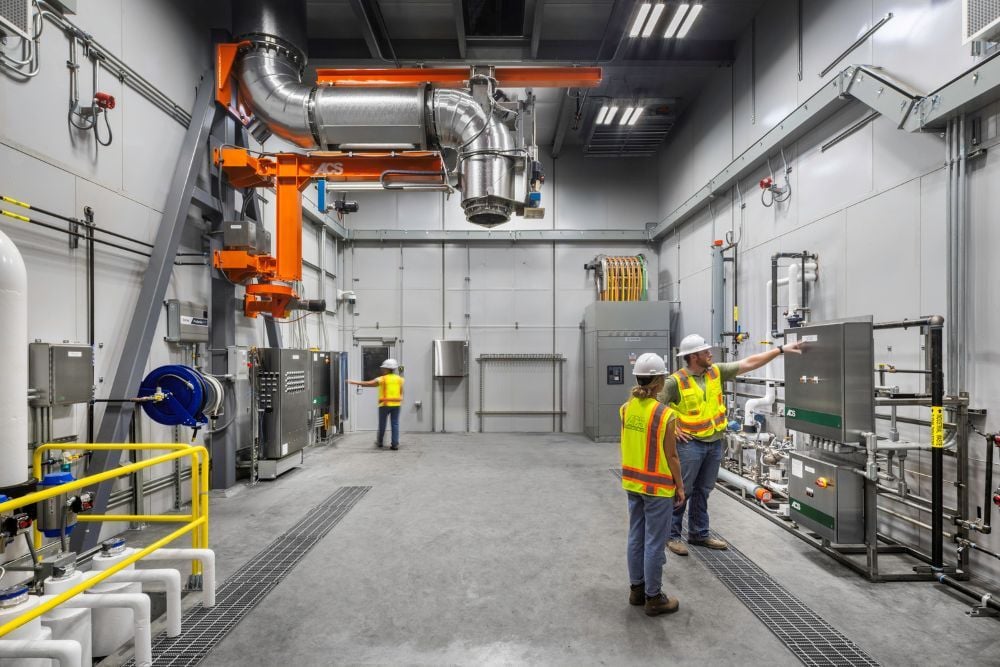
Including operator feedback early prevents safety systems from becoming operational bottlenecks. Image courtesy of ACS.
Building a safety culture that sustains system integrity
Culture ultimately determines whether safety measures are implemented rigorously, maintained consistently or bypassed routinely, making it the root cause that either amplifies or mitigates all seven red flags. When experienced personnel leave, institutional knowledge about why safety systems were designed in specific ways disappears. New staff then make modifications that seem reasonable but compromise protections in ways they do not recognize. Without organizational commitment from leadership and clear technical ownership at the operational level, safety systems drift from functional protections toward neglected liabilities.
A practical first step is conducting a comprehensive safety system assessment that evaluates the technical implementation and the organizational framework supporting it. This assessment determines who holds technical responsibility for safety systems, what documentation exists, whether assigned personnel have control systems expertise and how installed equipment compares with available technology. When conducted by someone with current market knowledge of safety system capabilities, this assessment reveals immediate gaps and whether the organization has the structure to address them systematically rather than reactively.

Dan Idzikowski's responsibilities as a Senior Instrumentation and Controls Engineer are to design, program, and commission process and automation control systems using PLCs and HMIs. Designs begin with high level system flow diagrams and P&IDs through instrumentation and control device selection and end with schematic development and control panel design. His key objectives for the design and programming in a project are system reliability, availability, and controllability while maintaining personnel safety as the foremost thought. In a similar fashion he develops HMIs that contain large amounts of easy to consume information and data with an intuitive work flow.

Matt Thiel stands as a seasoned professional at the forefront of facility and equipment planning and integration, executing client projects with exceptional precision and expertise. Specializing in the careful specification and procurement of cutting-edge test systems and equipment, he also plays a key role in developing strategic facility workflows and layouts to optimize operational efficiency. With a hands-on approach, Thiel manages and executes commissioning processes, ensuring that each project not only meets but exceeds acceptance criteria. His unwavering commitment to excellence and meticulous attention to detail make him an invaluable asset, consistently delivering results that surpass expectations in the ever-evolving landscape of project execution.
Read more on Risk Management or related topics Occupant Safety
Explore All FMJ TopicsRelated articles
-
A New Approach
Improving business continuity with alarm managementBy Brad Freeman09.09.2024 -

Beware of Growing Cyberthreats
Why it’s time for stronger facility cybersecurityBy Andrew Harris & Eric Headington10.30.2024 -

Going Up?
Keeping elevators safe & compliantBy Dave Myers & Doug Taylor11.06.2024