
 Membership
 Network
 Regional Sites & Affiliates


 Events
 Participate
 Resources

 Training
 Credentials
 Government


 Content Channels
 Tools
Tools


 Business Overview





Real Talk
COVID-19, social equity & custodial workers
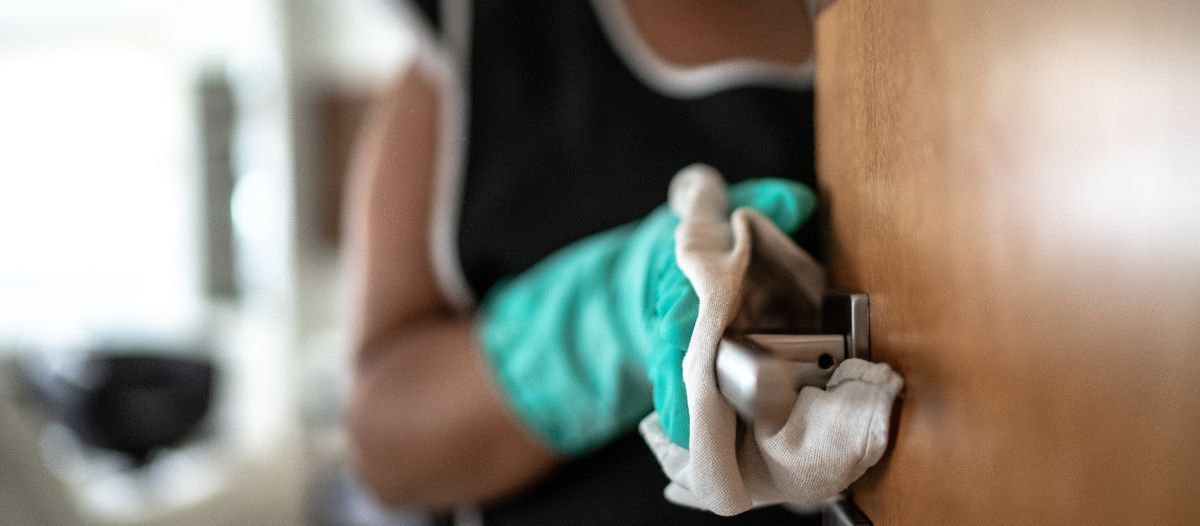
Facility managers may not realize the many struggles and issues cleaning workers have endured over the last half century. Even now, much of what has transpired is underreported. But the fact is, custodial workers cleaning all types of facilities, from offices and schools to convention centers, have had to fight for fairness and social equity for decades. One early battleground was Silicon Valley during the 1960s into the 1990s.
At that time, computer companies were getting off the ground. They quickly built manufacturing and research centers to accommodate the hundreds and then thousands of people who wanted to get on board the “technology train.” It would later make Silicon Valley what it is today.
By 1992, it was estimated that 12,110 custodial workers were cleaning and maintaining these facilities. Interesting, virtually the same number, 12,690 computer engineers, were working in these buildings, according to the Santa Clara County Employment Development Department in 1998.
At that time, custodial workers were either in-house cleaning workers, hired directly by the building owners or FMs to provide cleaning services, or they were the employees of building service contractors (BSCs), private companies providing cleaning and maintenance services. Some were unionized, others were not.
After a while, some BSCs started replacing their employees with subcontracted janitors, now known as outsourcing. This proved to be a very lucrative move for these BSCs. It soon spread throughout California and, in time, much of the U.S.
As employees, janitors in the 1970s were paid about US$10 per hour, plus they received benefits, including health insurance. By replacing the employees with subcontracted janitors, BSCs paid them about US$5.50 per hour and ended most benefits, including health insurance.
Such significant savings allowed BSCs to compete more aggressively against the larger contractors who still treated their staff as employees and paid them higher wages. In time, however, these subcontracted or outsourced janitors started to complain about this new working arrangement. Among their complaints were the following:
While there were high demands on their work, the janitors were often only given rags and water to clean.
Sometimes, there were no paper towels for cleaning; managers would take napkins from office cafeterias and give them to workers to clean.
Cleaning equipment was often in poor condition; when equipment broke down, repairs were slow to happen.
Sometimes checks would bounce. Janitors were instructed to wait a few days and deposit their checks again. This put many subcontracted janitors in a precarious financial position.
Those that complained about the demands, the inadequate cleaning equipment, or the checks that bounced, were given less-desirable jobs to perform.
Cultural differences surfaced. Some cleaning workers complained that the BSC owners and managers showed little respect.
By the 1990s, many of these workers took their grievances to local unions, the media and the companies housed in the buildings they cleaned. Most were not aware of this situation until it was made public.
Soon, organizations such as Justice for Janitors, now integrated into the Service Employees International Union (SEIU), organized workers in the professional cleaning industry. While social equity for janitors is proving to be an ongoing journey, many of these early issues have been addressed and rectified.
Green cleaning, janitors & COVID-19
Over the last 30 years, the industry has learned how many of the solutions used in professional cleaning can be harmful to the cleaning worker. Early studies reported that some traditional (non-green) cleaning solutions emit harmful fumes, including volatile organic compounds (VOCs). One study from the University of Bergen in Norway reported that for women using aerosol-powered spray cleaning products, “[the] regular use of cleaning sprays — as little as once a week — may cause a decline in lung function that’s comparable to smoking 20 cigarettes per day.”
Studies like this resulted in some manufacturers re-engineering cleaning solutions so that they have a reduced impact on the user and the environment. Further, certification organizations such as Green Seal developed standards and guidelines for manufacturers to follow. These provided necessary guidance, so manufacturers knew what ingredients to use — and not use — and what manufacturing processes were needed to develop environmentally preferable cleaning products.
However, COVID-19 put a damper on some of the progress made. From the start of the crisis, most building owners, managers and cleaning professionals were not sure how to address the growing menace. The only products available in their arsenal were disinfectants — and plenty of them.
As cleaning teams inch their way through the pandemic, they now realize they have been overusing disinfectants, often using them unnecessarily. A term was even coined for this overuse: indiscriminate disinfection.
A study published in the Journal of Allergy and Clinical Immunology, discussing the possible overuse of disinfectants due to the coronavirus, concluded:
The increased use of disinfectant wipes and disinfecting liquids was significantly related to poorer asthma control. These findings are consistent with previous studies conducted primarily in occupational [work] settings showing increased exposure to disinfectants related to increased asthma symptoms.
A key reason for this is traditional disinfectants contain quats, or sodium hypochlorite. While these ingredients can kill (eliminate) pathogens on surfaces, including the pathogen that triggers the coronavirus, large amounts pose a risk to human health and the environment.
Frontline cleaning workers who were tasked to use these disinfectants have the potential of harming their health. Further, custodial workers were asked to clean potentially contaminated surfaces regularly, increasing their risk of contracting the disease.
The result is that a new social equity issue has emerged.
Whereas in the 1970s, cleaning workers were subjected to low pay, inadequate cleaning tools, and not always respected, today, due to COVID, they are subjected to potentially contaminated surfaces and large amounts of disinfectants, which are known to be harmful to health, especially if overused or misused.
Addressing this social equity issue
In the U.S., there are no “green” disinfectants. While their impact on the user and the environment is a consideration, the Environmental Protection Agency (EPA), which evaluates disinfectants marketed in the U.S., primarily looks to see that the product is effective as claimed by the manufacturer when used per the manufacturer’s instructions. If so, it then can become EPA-registered.
Building owners, FMs and custodial workers must realize there are disinfecting choices. Disinfectants with safer active ingredients are just as effective but with less impact on the cleaning worker and the environment. Among these ingredients are:
-
hydrogen peroxide
-
citric acid
-
lactic acid
-
ethyl alcohol (also called ethanol or just alcohol)
-
isopropyl alcohol
-
peroxyacetic acid
-
sodium bisulfate
-
hypochlorous acid
It is not enough to just switch to using safer disinfectants to help protect the health of cleaning workers and promote social equity. FMs should also consider:
SOPs: High turnover in the professional cleaning industry means organizations often must quickly fill positions. To accomplish this, there must be up-to-date, readily available standard operating procedures (SOPs). View SOPs as written instructions that include cleaning schedules, building-specific cleaning duties, cleaning resources and where to find them, and key facility contact information. Effective SOPs help cleaning workers onboard quickly and perform their cleaning tasks properly as well as safely, protecting their own health in the process.
Training: Proper and ongoing training shows cleaning workers how much their job, duties and health are valued. This includes training on the proper use of all cleaning solutions; safety training along with the proper use of PPE; instruction on how to rinse cleaning solutions off surfaces; and properly dispose of cleaning liquids, as well as their containers.
Ergonomics. Cleaning is considered high-risk, with an estimated 40,000 cleaning worker injuries every year. A number of these occur because the equipment provided is not ergonomically designed. Ergonomically engineered cleaning equipment protects the health and safety of the cleaning worker using the equipment.
Thoughts on the future
As difficult as it has been, the pandemic can be viewed as a training ground. This is one of the few benefits that has emerged for the professional cleaning industry. Cleaning teams are learning how to use cleaning products, including disinfectants, effectively without harming the health of the cleaning worker. It has also helped the industry and occupants realize how valuable cleaning workers are. They keep facilities open and operating and building occupants healthy. The industry and occupants must honor and respect their value and treat them accordingly.

Doug Gatlin is a recognized expert in the design, development, and deployment of voluntary market transformation programs and has held senior leadership positions with the U.S. Green Building Council’s LEED Program and the U.S. Environmental Protection Agency’s ENERGY STAR Program. He is now CEO of Green Seal, a global nonprofit organization and leading ecolabel for cleaning and facility-care products and services.
References
Top image by Getty Images.
Zlolniski, Christian. “Labor Control and Resistance of Mexican Immigrant Janitors in Silicon Valley.” Human Organization 62, no. 1 (2003): 39–49. Accessed August 17, 2021. http://www.jstor.org/stable/44126977.
“1992 Immigrants and Labor Standards: The Case of California Janitors.” In U.S.-Mexico Relations: Labor Market Interdependence. Jorge A. Bustamante, Clark Reynolds, and Raul A. Hinojosa-Ojeda, eds. pp. 429–448. Stanford, California, Stanford University Press.
Cleaning the Buildings of High-Tech Companies in Silicon Valley: The Case of Mexican Janitors in Sonix, by Christián Zlolniski, The Center for Comparative Immigration Studies (CCIS), University of California, San Diego. Working Paper 17, May 2000.
Eldeirawi K, Huntington-Moskos L, Nyenhuis SM, Polivka B. Increased disinfectant use among adults with asthma in the era of COVID-19. J Allergy Clin Immunol Pract. 2021;9(3):1378–1380.e2. doi:10.1016/j.jaip.2020.12.038.
Read more on Sustainability and Leadership & Strategy or related topics Communication Management and Environmental, Social and Governance (ESG)
Explore All FMJ TopicsRelated articles
-
Smart Building Control Systems
The foundation for a grid-interactive buildingBy Andre Marino09.25.2024 -
Smart Building Innovation
Cutting costs & carbon footprints without compromiseBy Andrew Butterworth09.12.2024 -

Chart the Path
Building sustainable cities & a sustainable futureBy Izzat Ali Khan & Aykean Forde12.16.2024
