
 Membership
 Network
 Regional Sites & Affiliates


 Events
 Participate
 Resources

 Training
 Credentials
 Government


 Content Channels
 Tools
Tools


 Business Overview





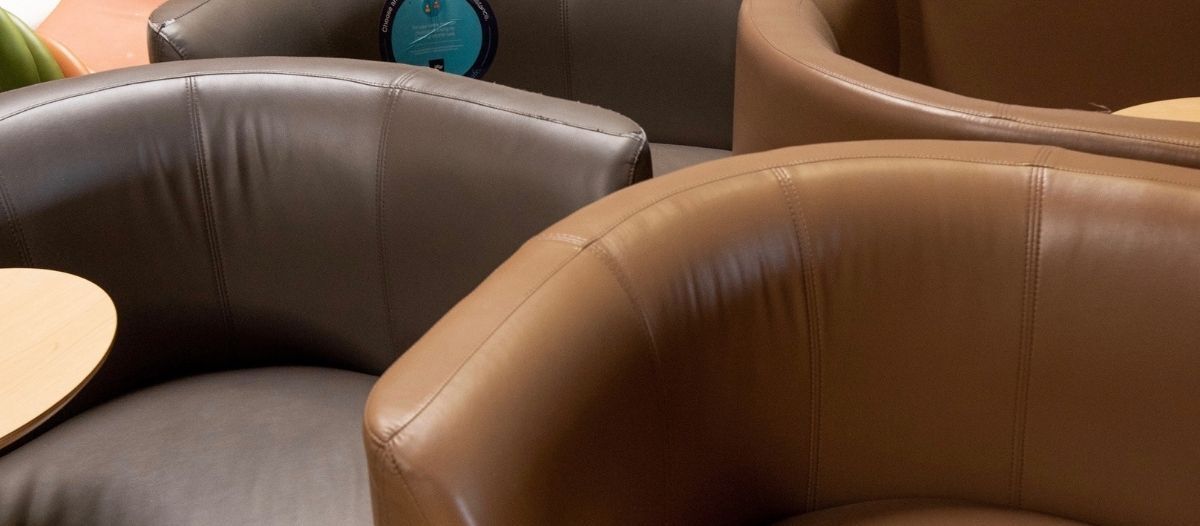
Sustainability is taking hold as a corporate mandate – leaders and their employees want to believe that every step is being taken to be environmentally correct. As a result, facility managers face tough challenges – especially where furniture is concerned. Costly purchase cycles, lengthy production timetables, expensive delivery logistics, continuous wear and rigorous COVID-19-era cleaning procedures which lead to rapid obsolescence are the bane to an FM’s workload. But dump-and-replace is rapidly becoming an unacceptable practice for many innovative and sustainability-minded FMs. While challenging, furniture re-use and renewal has begun to catch on as a preferred practice. Consider setting two goals: 20 percent re-upholstered furniture in every move/re-stack and 80 percent renewed in every refresh.
The key is the “re”
As offices go back online, workplaces face new demands from C-suites and the rank and file. They want it all. An expectation for sustainable approaches. Adherence to tight budgets. Distancing – and in sharp contrast, collaboration and the space to do it safely. The character of home with the collegiality of shared space. Comfortable, inviting upholstered furniture that can be sanitized and cleaned on a regular basis.
FMs at some of the most innovative and recognized corporate sustainability brands are taking it all in stride, creating win-win scenarios by diverting used furniture from landfills and establishing themselves – and their organizations -- as sustainability superheroes.
The answer to unlocking at least part of this challenge is furniture renewal, refurbishment, re-upholstery and re-use. By embracing the “re,” FMs can help their companies reach their own corporate social responsibility goals, answer staff expectations, abide by design standards, and in many cases save time and money. Organizations have made commitments to renewable furniture programs and are diverting hundreds of pieces of furniture from landfills. New resources will also make the complicated process of managing the renewable and used furniture marketplace easier.
Harsh, cold, mountainous reality
FMs are unified in declaring their personal commitment to the environment. However, the enormities of commercial furniture waste are difficult to comprehend. According to Clear-Office founder Brandi Susewitz, “Only 1 percent of office furniture has a second life.”
For perspective:
-
9.8 million tons of furniture went into US landfills in 2017 – almost double the 1990 volume and almost five times the 1960 volume
-
70 percent to 80 percent of what the furniture industry produces goes to landfill
-
In 2017, US$9.9 billion worth of secondhand furniture was sold compared to US$480 billion in new furniture
-
Solid waste landfills are the third largest source of human-related methane emissions in the US
-
Two million tons of US furniture is incinerated annually for energy – releasing carbon dioxide (C02) and nitrous oxide (N2) into the atmosphere
-
Waste furniture has a direct link to climate change; landfills emit methane when organic wastes such as food scraps, wood and fabric decompose – thus furniture in a landfill leads to increased production of methane, a leading cause of climate change
Challenges are many … but so are opportunities
Renewing existing furniture in a commercial setting is tough. While some challenges have been longer term, as the pandemic continues and workplaces evolve, new issues are arising.
-
Designer demand: Designers usually want fresh and innovative. User groups involved in moves, re-stacks and updates expect “current.” Designers can insist on “all new” and relish the chance to spec the latest collections. Re-using existing furniture pieces, models and designs require a higher degree of creativity and innovation but can still be visually and functionally powerful. FMs should tell design teams and their furniture dealerships to get creative early in the process by designating a percentage of the project as renewed, re-used or re-upholstered. Use these goals: 20 percent renewed furniture in every move/re-stack and 80 percent renewed in every refresh.
-
Money myopia: In the end money talks. Budgets demand the lowest cost, and cost evaluations are frequently limited to purchase costs rather than life cycle costs. Lifespan extensions – like re-upholstery, are seldom considered in determining an amortization timeframe. Also, environmental benefits and reputational impact costs are rarely considered. For example, making and shipping a single piece of furniture emits an estimated 90 kilograms of carbon, the equivalent of flying a Boeing 747 for an hour. Measure these costs as well.
-
Logistics log jams: There is a common perception that it is sometimes easier to buy new: just place an order and fill a dumpster. One small upside from the pandemic – renew/re-upholstery lead times and logistics are comparably easier and take less time than buying new – where some manufacturers are delivering new orders on six-or eight-month timetables. Dealerships or large-scale re-upholstery firms can help facilitate and project manage a renewal project from beginning to end. There are many furniture renewal and re-upholstery resources that can keep projects local and minimize turnaround times. Logistics and delivery timetables – and their considerable carbon footprints – should be taken into consideration.
-
Corporate confusion: Many companies’ corporate sustainability goals do not go deep or specific enough to cover furniture. No CSR manager or FM would ever declare they are against the environment. Most vehemently claim to be green champions. Corporate environmental mandates should extend to facility furniture, and be measurable (e.g., 20 percent of the furniture in every move/re-stack should be renewed or re-upholstered, with an 80 percent renewed furniture goal for every refresh). Setting furniture renewal standards and expectations from the highest managerial levels would give FMs new measures to weigh in their planning processes – and the support they need to set and adhere to these goals.
-
Eco education: Understanding the circular economy – especially in the furniture space – is incredibly difficult. With so many pieces, styles, raw materials and sources, manufacturing processes, cleaning approaches, wear and durability expectations, and waste processes, understanding the life cycle of any single piece of furniture is tough to discover and compare. But new resources are in development.
-
Pandemic pressures: FMs are facing a massive upheaval in expectations during and after the pandemic. How are FMs getting people back in offices after the peak of the pandemic and making the office worth the commute? Striking a balance between distancing and collaboration in office layouts will present a difficult balance and impact furniture planning. Re-upholsterers can help by designating fabrics and seam location recommendations that can withstand traffic and stand up to the rigors of COVID-19 cleaning.
-
Health expectations: Keeping all surfaces, including fabrics, sanitary will put furniture and FMs to the test. Cleaning chemicals designed to prevent viruses may not be as surface- and fabric-friendly as those originally specified.
-
Invisible waste stream: Finally, the end-of-life furniture waste stream has been invisible or at best, deniable. Alternatives to landfills are tougher to find. Many donation avenues are closed due to the pandemic, and once sofas, chairs or cubicles are off the loading dock, even with the best of intentions, they are out of mind.
In contrast to first-use furniture entering the waste stream, the process of re-upholstery requires much less production and transportation. Thus, it produces significantly fewer emissions. For example, the Carbon Footprint Analysis by Carbon Footprint Ltd. found that refinishing the furniture in 100 hotel rooms produced 1.245 tons of carbon dioxide, compared to 125.33 tons created in the replacement of all the furniture.
What can FMs do?
No one suggests this problem is an FM’s to manage alone. However, each FMs is in an excellent position to make several meaningful impacts. When magnified to an industry-wide sustainable furniture mandate, FMs can lead the way to a reduction in the waste stream:
-
Commit to 10 to 20 percent re-upholstery and renewed furniture for every move, refurb and re-stack
-
For each five- to seven-year refresh cycle, commit to 80 percent re-upholstery and renewed furniture
But FMs should not stop with setting goals alone.
FMs can work across companies and industries. Share best practices and resources. Carry the message to upper management by showcasing how each of these renew commitments impacts timetables, lifecycle budgets, employee pride and appreciation, and dramatically impacts corporate/financial community reputation.
FMs should also consider showcasing work with the employee base by sharing the impact renewed furniture is making on the environment – a commitment that almost 80 percent of all millennial employees' support – which as a result, improves company loyalty. By educating constituents and showcasing not only the results of a renewed furniture project, but also the impact of the waste savings and impact on the business and the planet, FMs will build value and appreciation for their efforts.
Helpful resources
FMs should work in close partnership with their dealerships as strong resources in helping to include renewed and re-upholstered furniture in inventories. FMs and their dealerships can access a variety of newer tools, certifications, standards and resources to have quantified comparative data to make more informed decisions. LEED certification already exists, while the Well Health-Safety seal is improving health-focused confidence in the spaces created by FMs. Other new tools are available from:
-
The Plastic Industry Association – the Resin Identification Code (RIC) can identify the specific type of resin used in plastic products
-
National Upholstery Association -- nationalupholsteryassociation.org
-
The REMADE Institute – A research, development and investment organization helping to eliminate and/or mitigate the barriers to greater material recycling, recovery, remanufacturing and re-use.
-
The Office Furniture Recyclers Forum (OFRF) – a trade association for office furniture recycling, refurbishing and remanufacturing sponsored by the Office Furniture Dealers Alliance of The Business Products Industry.
Another emerging tool is the Environmental Product Declaration (EPD), based on standards set by the International Organization for Standardization, are transparent, objective reports that communicate what a product is made of and how it impacts the environment across its entire life cycle. A verified EPD can earn credits for LEED v4 and other green building rating systems. EPDs enable comparisons between products fulfilling the same function. Companies implement EPDs to improve their sustainability goals, and to demonstrate an environmental commitment to constituents.
FM’s furniture renewal super power
Spiderman’s Uncle Ben once wisely shared with Peter Parker, “With great power comes great responsibility.” FMs have it within the framework of their roles to take on this level of great responsibility. Working within and across industries to raise the renewable furniture banner to improve reputation and morale, celebrate design, save time and money – all while being better planetary citizens is within FM’s reach.
Key areas for FMs to focus their efforts:
-
Goal setting: Make intentional choices to renew, refurbish and re-upholster – start with 20 percent re-upholstery on moves and restacks, and 80 percent for cyclical refreshes. Raise renewable furniture as a solution and resource for reaching a company’s sustainability goals. Reach out to the company’s sustainability managers to establish goals and measure outcome. Share those numbers and apply them to corporate sustainability goals. Delivering news about vastly reducing its carbon footprint will be considered heroic.
-
Planning/scheduling: Managing the full life cycle of a furniture portfolio requires long-term planning and preparation. Planning for the end of a piece of furniture’s life at the beginning will pay dividends throughout. Test fabrics for wear and cleaning protocols before an order. Match fabrics to use … and abuse. Most commercial furniture is high-end. By scheduling and building in a re-upholstery phase, FMs can double the life of that piece and amortize its value over more than a decade. Building in regular maintenance and periodic deep cleaning will also extend furniture’s lifetime.
-
Budget: Take the long view of the cost of a piece of furniture. Do not limit the budget to purchase price. Understand all its costs – from purchase to maintenance and sanitation, to renewal and disposal. At least consider intangible values, as well as renewal and recycling of materials which have impacts on morale and company reputation.
-
Inventory documentation & tracking: Inventory the furniture portfolio. Establish a trackable system with bar codes or labels. Use that database to understand the performance and needs of each piece and the entire inventory. Recognize its vulnerabilities to cleaning, wear and performance. Use it to set cleaning and repair protocols. Establish renewal windows and even recognize its end-of-life timeframe – leading to donation, sale or recycling. Use information about its carbon footprint to understand its deeper value and cost – FMs can both justify and maximize those costs over the lifetime of the piece.
-
Communications: FMs have a great opportunity to use communications as a powerful tool to demonstrate the value of a renewable furniture commitment. Leverage allies in the sustainability department. If senior management is skeptical, demonstrate cost and time savings and showcase larger intangible values. Create a story for the sustainability annual report documenting the cost savings, time savings and diversion of materials from the waste stream. Celebrate wins with the staff. Use intranets, newsletters and bulletin boards to tell the story. Apply for sustainability grants or awards. Create a tent card to sit on the coffee table of a newly re-upholstered collaboration nook to showcase the renewable assets of the furniture in the room. Take pride in the renewable furniture commitment.
-
Handling pressures: A renewable furniture commitment may not be a popular idea with some audiences – particularly at the start, forcing FMs to defend the decision. Master the rationale. Rally allies in the company’s sustainability commitment. Use facts and measurements to defend the commitment. Quickly, even adversaries will see its value.
Making the 20 percent/80 percent commitments for re-upholstered/renewable furniture is not the easy path, but it carries many benefits. While there will always be naysayers, there will also be more allies, especially the more they understand the facts. These facts will make FMs into superheroes.

Kriss Kokoefer is president and owner of Kay Chesterfield, Inc., a 100-year-old commercial re-upholstery company. It is a woman-owned business and a Certified B Corporation, working toward a healthier environment, stronger communities, and the creation of more high-quality jobs with dignity and purpose. Kokoefer has a passion for meaningful and achievable sustainability in workplace design. She has more than 20 years of expertise in the contract furniture, architecture and design businesses. She maintains longtime involvement in IIDA and is a contributing member of the National Association of Upholsterers.
References
Top image provided by Kay Chesterfield Inc.
waste360.com/waste-reduction/how-steelcase-s-initiatives-support-circular-economy
epa.gov/lmop/basic-information-about-landfill-gas
https://recyclingworksma.com/furniture-and-equipment-reuse-guidance/
qagroup.us/making-sustainable-furniture-choices-business/
https://www.linkedin.com/pulse/ageless-evergreensustainability-isnt-luxury-its-necessity-touch/
Read more on Sustainability or related topics Carbon Footprint , Furniture, fixtures and equipment (FF&E) and Asset Management
Explore All FMJ TopicsRelated articles
-

Smart Building Control Systems
The foundation for a grid-interactive buildingBy Andre Marino09.25.2024 -

Smart Building Innovation
Cutting costs & carbon footprints without compromiseBy Andrew Butterworth09.12.2024 -

Chart the Path
Building sustainable cities & a sustainable futureBy Izzat Ali Khan & Aykean Forde12.16.2024