
 Membership
 Network
 Regional Sites & Affiliates


 Events
 Participate
 Resources
 Training
 Credentials
 Government


 Content Channels
 Tools
Tools


 Business Overview




Revolutionizing FM Outsourcing
AI applications & case studies

In the facility management industry, strategic, sustainable FM can assist in achieving the 17 United Nations Sustainable Development Goals (SDGs) across organizations. Outsourcing sustainable FM leads to better business decisions and helps reduce energy, water and waste in building maintenance.
However, the FM outsourcing sector faces challenges in applying these SDGs, making clear support essential for effective adoption. How does FM outsourcing contribute to the SDGs? This framework guides future research and helps measure FM's added value. An AI-based FM outsourcing system also relates to the SDGs, aiming to inspire FM professionals with new ideas about relationships among stakeholders.
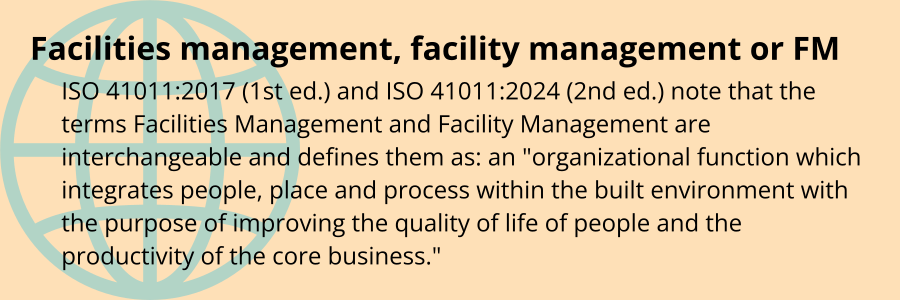 UN SDGs The International Organization for Standardization (ISO) has released more than 25,000 standards and documents that provide important guidance on better business and sustainable decisions based on global collaboration. It is crucial to connect the sustainable buildings with sustainable FM including design, construction and FM for better solutions based on life cycle assessments. There is a shift toward long-term thinking in business decisions, focusing on practices that consider social, environmental and economic benefits. The FM sector can support various issues of the 17 Sustainable Development Goals at the organizational level by using data-driven management technologies.
ISO/UNDP PAS 53002:2024 - Guidelines for contributing to the SDGs provides current insights into the relationship between ISO standards and the SDGs.
ISO 41000 series
ISO technical committee (ISO/TC 267) was established in 2012 by 26 member countries (17 participating members and nine observing members) to be responsible for progressing the international FM standards initiative. As of May 2026, the ISO/TC 267 has now published 10 FM international standards and technical reports and has five more publications (including two revisions of existing publications to second editions) under development.
Also as of May 2026, the ISO 41000 series of FM standards includes 54 countries (36 participating members and 18 observing members) and envisages the future of FM as contributing to a more productive, sustainable and liveable built environment for all.
Of specific relevance is ISO/TR 41019:2024, “FM’s role in sustainability, resilience and adaptability,” published on 26 June 2024. This ISO project was led by Australia, and the report was identically adopted by Standards Australia in January 2025 (AS ISO/TR 41019:2025).
ISO/TR 41019:2024 is intended to provide concise and practical guidance for busy built environment professionals and stakeholders on FM practices and contributions on larger issues, including climate change, net zero emissions, the circular economy and others. Additionally, the annexures provide SDG alignment matrix, a 10-step process, practical examples, links to related standards and a bibliography of 96 resources for more details.
Responsible use of AI
The Royal Institution of Chartered Surveyors (RICS) has released its first global professional standard for the responsible use of artificial intelligence (AI) in surveying practice across the natural and built environment sector. This standard sets requirements across four areas:
-
governance and risk management
-
professional judgment and oversight
-
transparency and communication
-
responsible development of AI
Sustainable FM incorporating SDGs
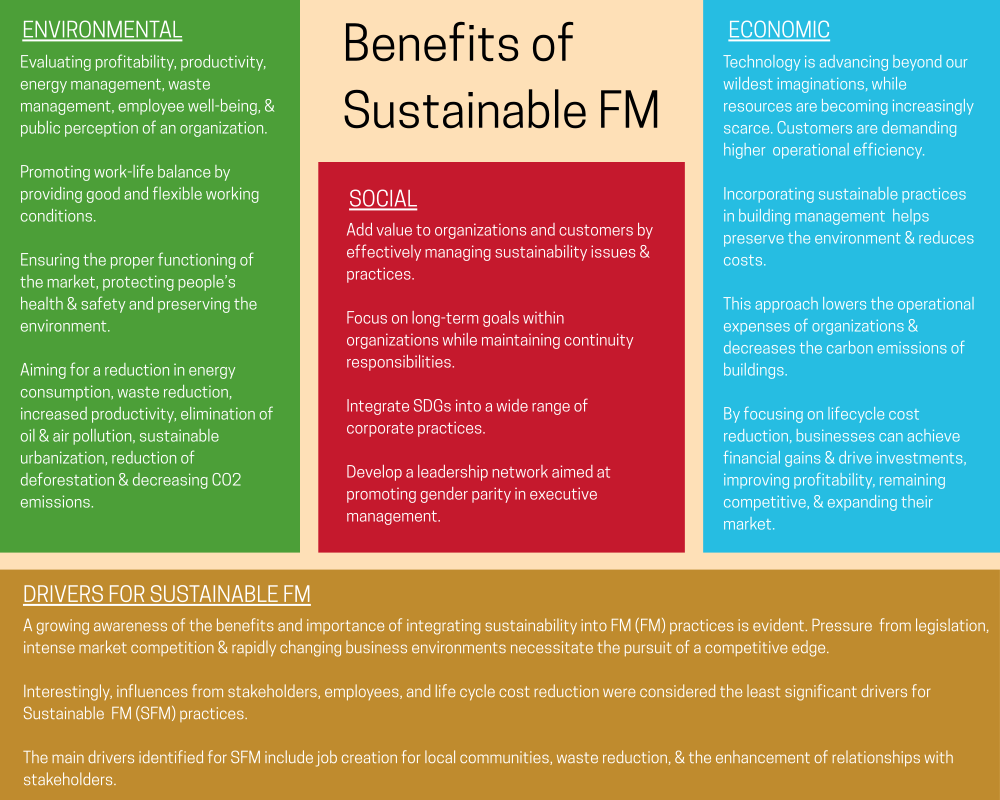
Table 1 links sustainable FM to the 17 Sustainable Development Goals (SDGs). Table 2 shows the connection between the SDGs and ISO standards, while Table 3 lists the benefits of sustainable FM.
Table 1. The role of FM in achieving the SDGs (Source: United Nations, 2015; IFMEC, 2018).
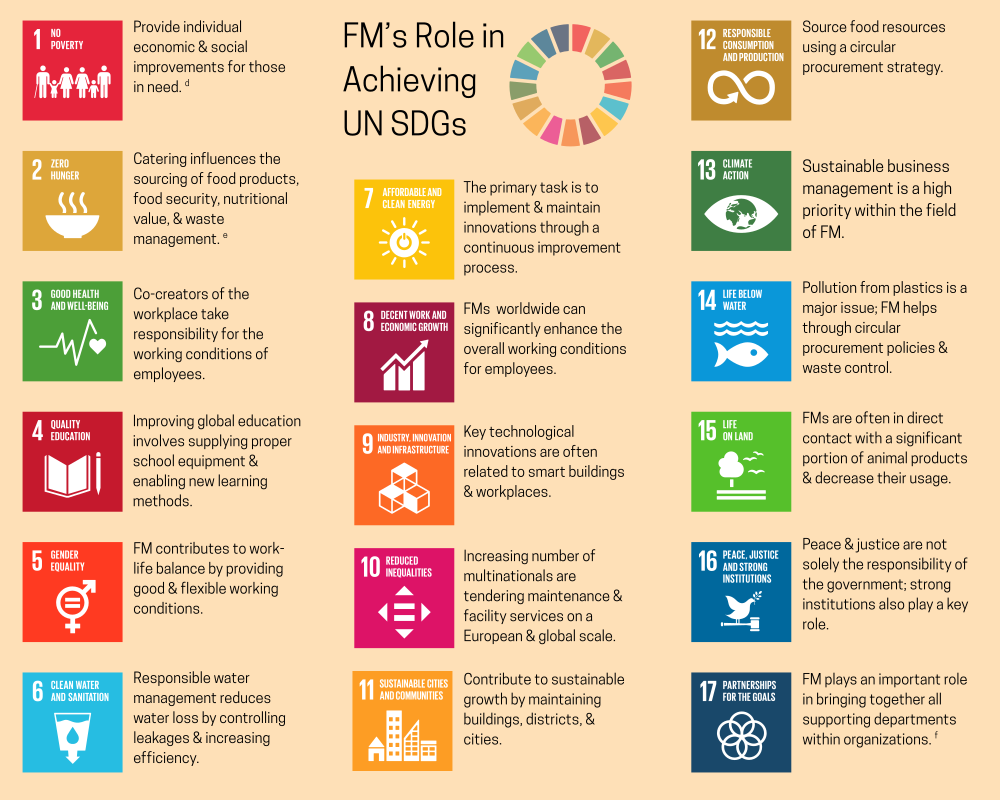
Table 2. Interpretation of SDGs to ISO standards (source: United Nations, 2015 a, International Organization for Standardization, 2018 b).
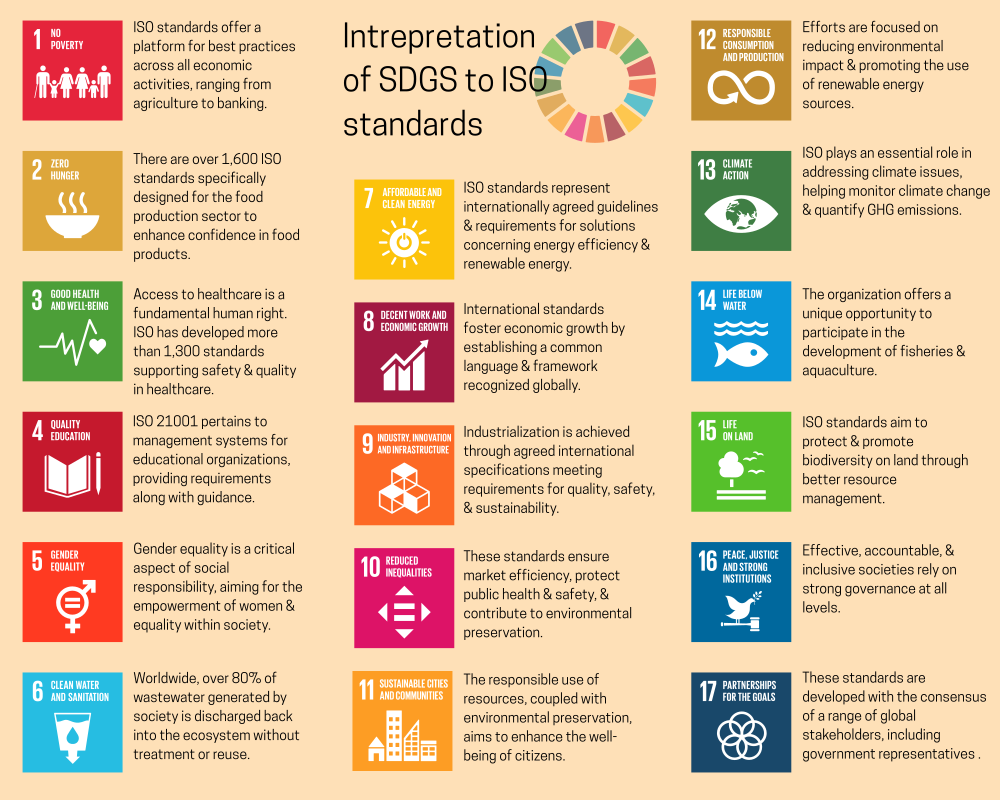
Table 3. Benefits of Sustainability FM (Source: Abigo, et al , 2012 a; Elmualim, et al., 2012 b; Baaki Kurannen, et al., 2016 c; IFMEC, 2018 d and International Organization for Standardization, 2018 e).
Sustainable FM outsourcing relationships: AI applications & case studies
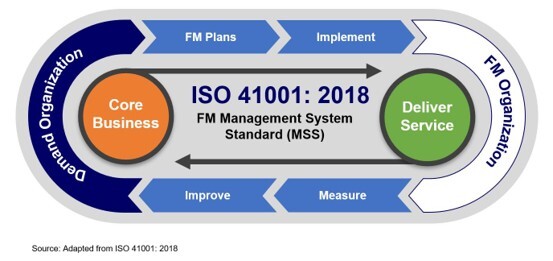
A new model called the CORE is now used in the FM industry. The FORT model was originally created for the information technology sector. The CORE model is based on four types of outsourcing relationships identified in the FORT model. Simulated case studies have been used within the CORE model's four categories: in-house management, technical expertise, commitment and common goals. It primarily focuses on the demand organizations' perspective. It builds on earlier research into the outsourcing relationships between demand organizations and FM organizations. It also investigates using artificial neural networks (ANNs) to support sustainable practices.
The CORE model describes four main outsourcing categories (OC): OC1, OC2, OC3 and OC4. However, in real life, things often do not fit perfectly into these categories. After examining actual case studies, the research introduced three new middle categories: OC1/2, OC2/3 and OC3/4. These new categories help explain how the system works more clearly.
A survey was conducted to examine eight outsourcing strategies across seven different outsourcing relationships. It introduces rules for CORE related to four simulated outsourcing systems. In the effective application of seven outsourcing categories in FM relationships, using scientific AI can be beneficial. The results from the ANN validation offer useful insights into the relationships between stakeholders. By following these rules, demand organizations can better design their FM outsourcing strategies, referring to ISO 41012:2017. This can lead to improved productivity, efficiency and overall service in FM. In summary, categorizing FM outsourcing helps clarify the right relationships within these systems, referring to ISO 41001.
Materials & methods
ANN is used to analyze raw data after collection. This was important for identifying the type of outsourcing relationship in a specific case study. In examining the cases, it was noticed that some outcomes did not fit neatly into the four main outsourcing categories: OC1, OC2, OC3 and OC4. These outcomes often fell near the borders between two categories. To solve this, there are three new hybrid categories: OC1/2, OC2/3 and OC3/4. For example, OC1/2 includes cases that are between OC1 and OC2. Now, there are a total of seven outsourcing categories. The final data about these categories is noted in the analysis section.
Summary
Four kinds of outsourcing relationships can exist between the demand organization and the FM organization:
1. OC1: This type is called Support/In-house. It greatly affects hard FM by tackling challenges related to flexible facility and offering a competitive edge.
2. OC2: This type is known as Alignment/Technical Expertise. It is important for soft FM by helping build flexible relationships in service delivery and improving the value of the FM portfolio and business processes.
3. OC3: This type is called Reliance/Commitment. It has a strong impact on how managers control operations and make decisions about planning and development. It also involves replacing in-house FM staff, which adds to competitive advantage.
4. OC4: This type is known as Alliance/Partner. It significantly boosts long-term competitiveness through strong partnerships and strategic relationships, leading to new revenue opportunities.
Each category highlights different aspects of the service relationship and its effects on FM.
Table 4 – Profile of details of the eight case studies of the seven outsourcing categories during COVID-19 period (Data Collection period: 3.5 months)
| Case Study | Sector/Size/Number of employees/ Number of respondents/Level of respondent/Business nature | FM Outsourcing services | Nature of FM services providers of the case/ Characteristics of Outsourcing Category | Final Raw Output | Confirmed (OC) |
| 1 | Private (Building maintenance)/regional/Below 50/2/ Assistant Manager/ Provision on Maintenance services to residents | Maintenance works; services | Repair and maintenance on building assets The Outsourcing Category 1/2 (OC1/2) is that the relationship between the Client (C) and Service Provider (SP) belongs to a group in-between support/inhouse and SP’s alignment/technical expertise. The SPs can provide in-between medium standards of tailor-made professional knowledge for the building assets and can maintain a general level of customer’s general routine productivity for monthly operations, including security management, waste management, cleanliness of the workplace and indoor environmental quality. |
1.573 1.449 |
1/2 |
| 2 | Private (Property development)/International/500– 1000/2/ Senior officer/Provision on property development and management services | Office Maintenance; IT Hardware; Cleaning and Security | Builder; E&M works; Office Supporting; Hygiene and Security system The Outsourcing Category 3 (OC3) is that the relationship between the C and SP belongs to a group in SP’s re-liance/commitment. SPs can maintain monthly performance and value of customers’ satisfaction concerning health, safety, maintenance and operation management. |
3.261 3.487 |
3 |
| 3 | Public (Leisure and culture of Government)/regional/ Below 50/3/Manager/ Provision on quality cultural services commensurating as a world-class city and events capital | Security; Cleaning and Antimicrobial | **Building Management Responsibilities: Patrol buildings and inspect visitors; Respond to emergencies; Vacuum, sweep, and mop floors; Empty trash cans; Spray antimicrobial coatings** - The Outsourcing Category 4 (OC4) is that the relationship between the C and SP belongs to a group in alli-ance/partner. The SPs can maintain yearly performance and value of customers’ satisfaction on emergency planning, business continuity and sustainability |
3.889 3.875 3.907 |
4 |
| 4 | Public (Construction and Maintenance)/ re-gional/500 – 1000/2/Property Officer/ Provision on construction and maintenance services to districts | Security; Cleaning | **General Property Management Services** The Outsourcing Category 2/3 (OC2/3) is that the relationship between the C and SP belongs to a group in-between SP’s alignment/technical expertise and reliance/commitment. The SPs can also provide at least sufficient or even a higher standard of mutually agreed working timeframe for work orders and progress of concern for confirmation of monthly operations to the Cs’ requirement and can also maintain good relationships with the Cs each day. E.g., diligent work, professional manner, warm hospitality, close co-ordination and understanding the needs of customers. Also as similar as Case Study 2 of Year 2021. |
2.529 2.478 |
2/3 |
| 5 | Public (Education and exhibition)/ regional/ Below 50/2/ Manager/Provision on teaching and learning platform about the sustainable environment to the local community | Cleaning; building maintenance and catering | **Cleaning Service; Maintenance/Building Management** The Outsourcing Category 3/4 (OC3/4) is that the relationship between the C and SP belongs to a group in-between SP’s reliance/commitment and alliance/partner. The SPs have the OC3 characteristic as Case Study 2 of Year 2021. The SPs also have the OC4 characteristic as Case Study 3 of Year 2021. |
1.054 1.147 |
1 |
| 6 | Public (Property management)/ national/500 – 1000/2/ Works supervisors/ Provision of housing supply services | Security, cleaning, customer and maintenance services/ General Building maintenance works | **Cleaning Service; Maintenance/Building Management** The Outsourcing Category 3/4 (OC3/4) is that the relationship between the C and SP belongs to a group in-between SP’s reliance/commitment and alliance/partner. The SPs have the OC3 characteristic as Case Study 2 of Year 2021. The SPs also have the OC4 characteristic as Case Study 3 of Year 2021. |
3.695 3.410 3.370 3.435 |
3/4 |
| 7 | Private (Building surveying consultancy)/ International/50 – 100/2/ Assistant building surveyor/ Building surveying consultancy | ||||
| 8 | Private (Property management)/ regional/100 – 200/2/ Associate Director/ Provision of property management services | Security, cleaning, renovation | Comprehensive hard and soft PFM services - ditto |
1.058 1.107 |
1 |
| X | X | X | The impacts of SO2 concerning Ownership Substitution and CP2 regarding the Strategic Influence of FM (FM) outsourcing strategies are considered quite significant. Service Providers can offer sufficient or even superior levels of customized professional knowledge for man-aging building assets. It is crucial for the Client and Service Provider to mutually agree on the daily operations to ensure they meet the Client's requirements. The Service Provider can maintain a high level of general routine productivity for the Client on a monthly basis. Examples of this include security management, waste management, workplace cleanliness, and maintaining indoor environmental quality. |
X | X |
Remark: Detailed raw data of the eight case studies of the seven outsourcing categories are recorded in the Year 2022’s research paper.
Discussion
This well-trained ANN was applied to eight real-world cases, confirming the effectiveness of the approach. The results matched the outsourcing categories identified by the ANN. FM organizations can improve their outsourcing services continuously based on these categories. The CORE model assists in assessing and managing FM outsourcing relationships with an eye on sustainable performance in environmental, social and economic areas. This model supports both short-term and long-term FM plans, enhancing service delivery results.
Valuable insights have been drawn from the firms tested, allowing facility owners to use the CORE model to measure and evaluate outsourced services systematically. This ensures a substantial database for further analysis and helps increase service productivity while reducing costs linked to FM arrangements.
FM sector incorporation with SDGs
The SDGs can assist in showing the added value of FM to core business operations and the FM industry as a whole. This is especially true regarding ISO standards and the roles of demand organizations, FM organizations and researchers. However, the pace of developing sustainable FM has been still slow. The connection between sustainable FM and the SDGs is still developing. Several FM ISO standards exist, but these pose challenges for international stakeholders. Aligning ISO standards with the SDGs aims to improve FM services. However, how to implement these standards and goals is still unclear. Potential risks exist for stakeholders, making it crucial to understand these issues thoroughly.
Role of demand organizations
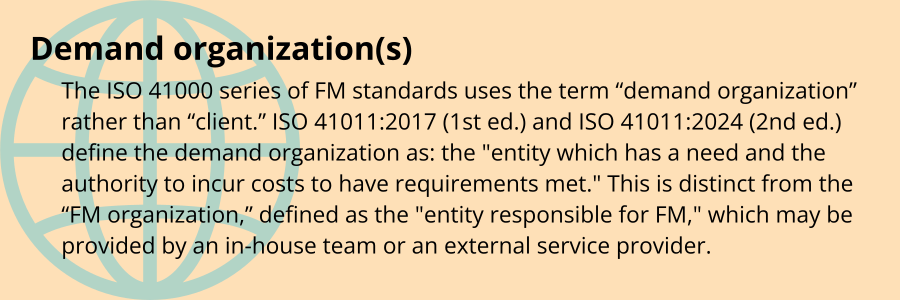 Regardless of whether they are private, public or nongovernmental organizations, it is essential to consider the requirements of their facility. To align with the recently published FM ISO standards, organizations must grasp these standards fully and implement them effectively. However, integrating FM standards into their operations can be challenging. Moreover, the SDGs hold significant value for organizations. The relationship between ISO standards and SDGs can be mutually beneficial, allowing organizations to align their strategies with both sets of criteria. Unfortunately, some demand organizations are hesitant to adopt these standards and goals, as they view them as a potential waste of short-term resources, which can hinder their overall business improvement. Establishing a connection between these standards and goals can be complex.
Role of FM organization
First, organizations must prepare to adopt both internal and external goals and standards that match their demand organization requirements. Second, they need to recognize that different clients may have different concerns related to these goals and standards. Therefore, it is important to create comprehensive plans and strategies to meet clients’ complex requirements sustainably.
Psychological barriers can lead people to overlook development goals. Some individuals may be reluctant to invest time and effort in supporting the SDGs within their businesses. This reluctance can prevent them from understanding what users need and expect from these goals. End users may feel that their experiences are not valued, leading to a lack of trust in the SDGs and their potential to improve business success. They may also worry about changes from new technologies. However, it is essential to establish standardized and strategic support for adopting sustainable FM successfully.
 Recommendations on sustainable FM outsourcing in SDGs
The SDGs are important for the FM community. However, the SDGs have not been implemented as quickly as expected. One reason for this delay is the connection between FM and other sectors like IT and HR, especially when focusing on sustainable FM. Collaboration among all stakeholders is key to successfully implementing the SDGs in this area. The demand organization and the FM organization should integrate the SDGs into their FM policies and strategies. By working together, they can find effective ways to meet these goals, knowing that communication and trust are essential.
Recently, FM has increasingly prioritized sustainability by incorporating the newly recognized UN SDGs into business decisions. The AI-based outsourcing relationship system for FM is validated by examining various real business cases, including building maintenance, property development, leisure and cultural services, construction, education, exhibitions and building survey consultancy, all within the context of sustainability.
Big data is important for improving AI-driven FM outsourcing systems. Analyzing more case studies helps provide better advice to FM service providers. By testing more case studies, this can make the model more accurate. The AI model's results help to analyze the current outsourcing relationships between clients and service providers. Demand organizations with clear and integrated FM outsourcing relationships can expect better services from FM organizations.
Conclusions
 The introduction of the SDGs into the practice of FM is a vital component to achieving sustainable FM; FM professionals need to do more to integrate ESG principles and the SDG targets into FM performance benchmarks and reporting. The use of the SDGs, ISO standards, FM experts and academics can improve SFM practices and enhance facility life cycle performance and costs.
The SDGs can also help connect sustainable practices with FM systems and emphasize the need to reduce waste in a sustainable way. Several important performance indicators related to FM and SFM have been identified through literature reviews. These include aspects like functionality, user experience, physical features and financial factors. Research mainly focuses on efficiency, productivity, resource allocation, customer service, asset management and cost control.
It is essential that SFM utilizes a uniform model that reflects the importance of services for all stakeholders. SFM should not only optimize performance based on functionality; but should also look at how FM services impact routine facility operations and long-term outcomes. Given how crucial FM services are in achieving the SDGs, FM professionals should use established standards and innovative strategies in the practice of SFM worldwide.
In conclusion, understanding SFM and the SDGs can lead to improved resource efficiency and cost effectiveness. It can also improve user satisfaction through optimized quality of life and productivity of the core business outcomes.
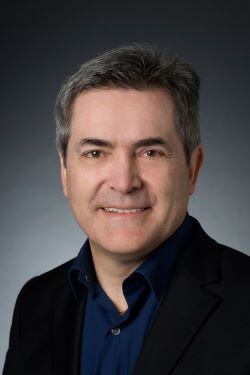
Stephen Ballesty, FRICS, FAIQS, ICECA, CQS, CFM, IFMA Fellow, of In-Touch Advisory is a member of the IFMA Standards Committee. In addition, he is an RICS Governing Council member, Asia Pacific seat, UNSW Casual Academic; IFMA’s FM Consultants Council, Regional Director - Asia Pacific; Standards Australia MB-022 Committee member (AIQS representative) and an Australian delegate to ISO/TC 267 since 2012, most recently in the role of ISO/TR 41019 Project Lead and currently serving as the ISO/TC 267 global liaison to the ISO 53000 (sustainable development goals) and ISO 55000 (asset management) series.

Dr. Ka Leung (Lawrence) Lok, MIET, MHKIPM is a visiting lecturer in Hong Kong. He earned his Ph.D. from the School of Built Environment at the University of Salford and holds a B.Sc. (Honors) degree in building from The City University of Hong Kong, as well as a MBA from the University of Reading and a postgraduate diploma RICS (Project Management). Professionally, he is advancing as a consultant, lecturer, and manager in the construction and real estate sectors. His research interests focus on FM and the relevant ISO standards. He enhances business effectiveness and productivity in sustainability by incorporating the United Nations Sustainable Development Goals into business decisions.
References
Article:
Lok, K.L., Opoku, A., Smith, A.J., van der Pool, I. and Cheung, K.L. 2023 Sustainable FM in UN Development Goals, IOP Conference Series: Earth and Environmental Science, Volume 1176, CIB W070 Conference on FM and Maintenance, 08/05/2023 - 11/05/2023, Trondheim, Norway. DOI 10.1088/1755-1315/1176/1/012022
Collins, D., Haugen, T., Lindkvist, C. and Aamodt, C. 2019 “Bridging the gap between sustainable FM and sustainable buildings—an exploratory study of six public buildings in Norway”, Facility, Vol. 37, pp. 639–652.
RICS (2026) Responsible use of artificial intelligence in surveying practice.
Lok, K. L., So, A., Opoku, A. and Song, H. 2020 “Globalized service providers’ perspective for FM outsourcing relationships: Artificial neural networks”, Management Decision, Vol. 59, No. 1, pp. 134-151, doi.org/10.1108/MD-01-2019-0102
Lok K L, So A, Opoku A and Chen Charles 2021 A Sustainable FM Outsourcing Relationships System: Artificial Neural Networks Sustainability Vol 13 p 4740 https://doi.org/10.3390/su13094740
Lok K L, So A, Opoku A and Chen C 2022 A sustainable artificial intelligence FM outsourcing relationships system: Case studies Frontier Psychology 13:920625 https://doi.org/10.3389/fpsyg.2022.920625
Ballesty, S.P, (2023) Quality of Life: alignment of FM with the SDGs: IOP Conference Series: Earth and Environmental Science, Volume 1176, CIB W070 Conference on FM and Maintenance, 08/05/2023 - 11/05/2023, Trondheim, Norway. DOI 10.1088/1755-1315/1176/1/012044
Ballesty, S.P, (2025) Standards for Sustainable FM: the ISO 41000 series: IFMA Corporate Facilities Council’s FM Professional magazine – The Global ESG Issue
ISO 41001:2018, Facility management – Management systems – Requirements with guidance for use.
ISO 41011:2024, Facility management – Vocabulary (2nd edition).
ISO 41011:2024, Facility management – ISO 41011:2024, Facility management – FM’s role in sustainability, resilience and adaptability.
ISO/UNDP PAS 53002:2024, Guidelines for contributing to the United Nations Sustainable Development Goals (SDGs)
Table 1:
a United Nations (2015), Transforming our world: the 2030 Agenda for Sustainable Development.
b IFMEC (2018) “FM Approach to Realizing the Sustainable Development Goals,” International FM Expert Center (IFMEC), Roden, The Netherlands.
c ISO/TR 41019 determined that the ISO 41000 series of FM standards had direct or indirect impacts on 14 of the 17 SDGs. Refer: ISO/TC 267 - FM
d ISO/TR 41019 determined that the ISO 41000 series of FM standards did not impact on SDG 1.
e ISO/TR 41019 determined that the ISO 41000 series of FM standards did not impact on SDG 2.
f ISO does not consider SDG 17 as this relates to government action and national agendas.
g Ballesty, S. (2025), Standards for Sustainable FM: The ISO 41000 Series, FM Professional, Vol. 2, Issue 3, June, pp. 16-20
Table 2:
a United Nations (2015), Transforming our world: the 2030 Agenda for Sustainable Development.
b International Organization for Standardization (2018), Contributing to the UN Sustainable Development Goals with ISO Standards, Switzerland.
Table 3:
a Abigo, A., Madgwick, D., Gidado, K., & Okonji, S. (2012) “Embedding sustainable FM in the management of public buildings in Nigeria,” In EPPM 2012, pp. 369-380, University of Brighton.
b Elmualim. A. Valle, W. Kwawu, W. (2012) “Discerning policy and drivers for sustainable FM practice,” Journal of Sustainability Built Environment, 1, 16-25.
c Baaki Kurannen, T., Rizal Baharum, M. and Shah Ali, A. (2016) “A review of sustainable FM knowledge and practice,” University of Malaysia, 50603 Kuala Lumpur, Malaysia.
d IFMEC (2018) “FM Approach to Realizing the Sustainable Development Goals,” International FM Expert Center (IFMEC), Roden, The Netherlands.
e International Organization for Standardization (2018), Contributing to the UN Sustainable Development Goals with ISO Standards, Switzerland.
Top image via Getty Images.
Read more on Sustainability and Facility Technology & Data Management or related topics Environmental, Social and Governance (ESG) and Facility Technology
Explore All FMJ TopicsRelated articles
-

Smart Building Control Systems
The foundation for a grid-interactive buildingBy Andre Marino09.25.2024 -

Smart Building Innovation
Cutting costs & carbon footprints without compromiseBy Andrew Butterworth09.12.2024 -

Chart the Path
Building sustainable cities & a sustainable futureBy Izzat Ali Khan & Aykean Forde12.16.2024