
 Membership
 Network
 Regional Sites & Affiliates


 Events
 Participate
 Resources

 Training
 Credentials
 Government


 Content Channels
 Tools
Tools


 Business Overview





Rise to the Occasion
Prepping the FM toolbelt

In the next year, facility management professionals will be asked to build and amplify their skill sets. Those who meet the moment will rise and lift the profession.
While predicting the future is futile, it is beneficial to look at global trends for insight into what the world is likely to expect from the FM profession – and what it does not know to expect but would be delighted to receive.
Trends are like seismic shifts – they open pockets of opportunity that were not there before. FMs do not have to fill the voids; technology and other professions will do so, for life abhors a vacuum. However, if the industry does not act, it cannot complain when 55 percent of today’s FMs retire within 10 years. So, why not step in? By the nature of the work, FMs are resilient, so why not try new things, reaffirm the vital role of the profession and watch young talent be drawn in by the currency and excitement of the challenges they get to solve?
Distributed workplace
During the 2020 pandemic, out of site became largely out of mind. Most FMs did not see their scope of responsibility extend beyond the company asset, occupied or not. This is likely to change: not only does OSHA hold employers accountable for its workplace even if it is across hundreds of homes, but so do sustainability goals. If companies got away with transferring much of their carbon, water and waste footprints to their workers during the pandemic, investors would hold companies to a higher standard going forward. People will rediscover the blessings of a centralized workplace: experts create and maintain them and economies of scale allow savings per person. And FMs will be prime to help corporations account for – and optimize -- their true footprint across a distributed workforce.
Talking money
Through the pandemic, FMs found themselves central to corporate decision-making. They can hold on to this influence by becoming versed in making a business case because money does rule, and it can rule in favor of issues people care about if they master it. For those who think that if good things do not happen it is because they do not make commercial sense, that is plain wrong. There is no shortage of cost-effective ways to improve assets, communities and the jobs associated with them. Most of the time, if they do not happen, it is because those who know have not connected all the dots for those signing the check.
"During the pandemic, reduction in occupancy to 20 percent resulted only in 10-20 percent utility cost savings. More than anybody else, FMs understand why. One of the most important skills we see effective FMs bringing is the ability to talk money: the cost of inaction, opportunity cost, yield on cost, returns, etc." Louis Langlois, vice president at Carbon Lighthouse, USA.
Grid-interactive buildings
The real estate industry has amassed a proportional response to energy efficiency, embodied carbon and net-zero challenges. Still, it has remained a largely passive consumer of energy. This simply will not do for long because the future of energy is interactive: energy has shifted from a perishable commodity to a tradable one. In retail, by not using credit cards to earn rewards, consumers are unable to use those rewards to subsidize their holidays. The same holds here: by not mobilizing real estate assets as a distributed energy resource (DER), FMs are leaving money on the table. As an industry, FMs have another opportunity to step up, transforming the Capital Expense (CapEx) and Operational Expense (OpEx) business cases as a means to slash the cost of "doing the right thing."
"Grid-Interactive buildings represent the next technological challenge for the corporate real estate (CRE) industry. Making a building energy efficient is a key element in addressing the threats posed by climate change, but in itself does not manage the demand/response flow of energy. The need for grid interactivity has risen out of the exponential growth in distributed renewable energy generation, emerging energy storage technologies, peer-to-peer energy trading and vehicle-to-grid energy transfer. This will become a critical knowledge and skillset requirement for the facility manager. It is vital to begin the introductory education and skill development efforts today, so the FM profession is prepared for tomorrow’s opportunities." Dean Stanberry, CFM, second vice-chair – IFMA Global Board of Directors
Supply chain
How people do what they do matters nearly as much as what people do. Many sustainability reporting initiatives demand transparency along the supply chain. So, whether an FM personally cares about these issues or not, they can at any point be asked the percentage of vendors that are local, minority-, indigenous, LGBTQI+- or woman-owned. FMs have an opportunity to make sure that every dollar that is spent advances the vision of their boss or client.
Deconstruction
Rating tools like LEED, Green Star and Living Building Challenge have long rewarded material reuse. Embodied carbon in building materials will account for roughly half of the total carbon emissions that will result from new construction to 2050. Many locations have exchanges that give office furniture another life. Beyond furniture, reuse is about construction that allows for elements to be taken apart and reused: bolted rather than welded, with material properties marked on each element and with a deconstruction guide developed by the design team. While reuse has remained a marginal issue, it will not be for long. A critical mass of companies that have staked their brands on sustainability are now coming up on their assets’ end of useful life. On top of that, some cities have cemented their expectations in deconstruction in policy, with others are planning to follow.
What can FMs do?
Become agile. This is an ask to go against the grain. Humans reduce their range as they "learn" because they are wired to repeat what worked and to avoid what did not. Except, no lessons should be interpreted this rigidly. Circumstances change.
"Being agile and able to adjust quickly to client and employee needs is key." – Jon McCormick, head of IFM and asset services, ANZ at Cushman & Wakefield, Australia.
Learn formally. While researching a specific issue is invaluable, people are guaranteed to miss something important because they did not know to search for it. Formal learning – such as through a course – helps. There are great online courses regarding employment law, real estate finance, change management and more. Many basic courses are free. Some courses lead to a certificate of completion, which will still cost very little compared to a college course.
Ask for new KPIs. On a good day, mankind can move mountains. On a bad day, people can barely manage what is absolutely necessary. That is why aligning KPIs to the evolving role is so important. The workforce must make sure that they are evaluated and rewarded based on what tomorrow expects them to do today.
Always invest in your communication skills. By going through conflict resolution training, the ordinary goes so much smoother by being ready for the worst. Make sure the training actually feels confronting, because if it does not, no one is learning that skill and will likely only further aggravate a combating audience.
"Whether it's expressing yourself or your team's value, communicating with your colleagues, helping others understand the who, what, where, when, why, how of a project - there are limitless applications that wouldn't be effective without communication." Carolyn McGary, FMP, CFM, SFP, USA.
"In today’s environment, there are three keys to FM success: empathy, resilience and flexibility. Demands on leaders and organizations will be changing more and faster. Our flexibility will keep us in the game. Our resilience will make us ready for new challenges. And our empathy will enable us to engage those facing change." Kathryn Lopez, CFM, CRL Facility Management: Strategic Assessment & Client Solutions JLL.
In addition to these new opportunities, those identified last year still hold:
-
Know thy building: FMs should know their buildings the way a family physician knows a patient, spotting abnormality through vitals. Like bodies, all buildings are unique and we will continue to fail in keeping them healthy and optimizing their potential until we know their baseline.
-
IOT-enabled FM: Buildings are now inseparable from technology and FMs need to command data.
-
Change management: In a world changing faster than most can keep up, who is better positioned than the FM to implement the change initiatives required for wellbeing, retention, productivity, Corporate Social Responsibility and more?
-
Leveraging Science: Many FMs function as applied scientists. Embracing this role will supercharge our buildings’ ability to learn in the face of uncertainty.
-
Impact: Become fluent in both risk and impact assessment puts FMs at the decision-making table.
"It is evident that asset life-cycles need to be extended to save on replacement costs. FMs need to hone their space management skills. It is important they have flexibility of space to ensure maintenance costs are kept down when areas are not in use. Furthermore, understanding technology is key to ensuring that efficiencies are introduced through Strategic Asset Management plans." Kristiana Greenwood, immediate past chair, Facilities Management Australia
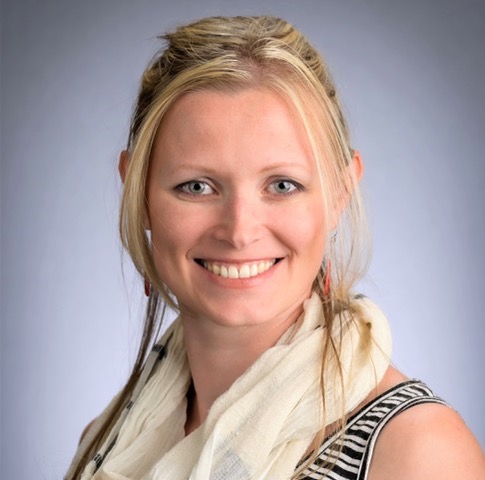
Elena Bondareva WELL AP, WELL PTA has a solid record of transformative innovation around persistent problems, which is the focus of her advisory practice, Vivit Worldwide. Bondareva has held public, private, teaching and board roles in Australia, New Zealand, Russia, South Africa, India and the United States; delivered CPD training to thousands of professionals; participated in globally significant events such as COP17, G20, and the World Green Building Council Congress; published in peer-reviewed and public journals; and presented at countless international conferences. She helped establish four Green Building Councils and the Living Future Institute of Australia, served on the COVID-19 Taskforce of the International WELL Building Institute (IWBI), and serves on the IWBI's Global Health Equity Advisory and (second term) on the advisory board for the Greenbuild's Global Health & Wellness Summit. She also serves on the Board of Pollinate Group, an award-winning social enterprise, and is an advisor to Power Ledger, a ground-breaking software platform that accelerates transition to clean energy future by activating local energy markets.
References
Image via Getty Images.
Read more on Leadership & Strategy and Career Advancement or related topics Career Advancement , Training and Networking
Explore All FMJ TopicsRelated articles
-

Artificial Intelligence in FM
The stakeholder’s perspectiveBy Dr. Jake Smithwick & Dr. Kenneth Sullivan & Nneka Ubi05.01.2024 -

Mastering Change in Hybrid Environments
Insights from global operational leadersBy Meg Swanson09.02.2024 -

Plugged In
Solving the data disconnect in real estate and FMBy Amanda Muzzarelli & James Waddell07.01.2024
