
 Membership
 Network
 Regional Sites & Affiliates


 Events
 Participate
 Resources

 Training
 Credentials
 Government


 Content Channels
 Tools
Tools


 Business Overview





Safe Space
Why the office might a healthier & safer place than home

Facility managers, corporations and property owners are facing a rising existential challenge from remote working enabled by technological advances. This trend is not new but it is accelerating by the sudden work from home (WFH) requirement brought on by the COVID-19 pandemic. This has significantly impacted facility and estate managers, corporate managers, property owners and dependent associated businesses. How has this changed personal and corporate risks profiles?
There have been many thought pieces proclaiming the death of the workplace as it was pre-pandemic. However, similar to Mark Twain, the report of the death of the workplace is "an exaggeration." It is too early to draw that conclusion as greater consideration must be given to second and third order effects and a more robust defense of the workplace, should be put forward based on the health benefits created for its occupants.
A balanced argument must be made of the impact on employees and corporations from this trend. The benefits for staff and corporations seem obvious; less travel, the comforts of home, less formality, improved work-life balance, less office space, lower overheads, fewer FMs. There are many advantages if corporations are designed to be run by a dispersed population working in an unstructured environment (home, café, park, shared workspace) without corporate social interaction.
The key problem for FMs is the perceived lowered need and use for corporate office and workspace. Many corporations are seizing this opportunity to reduce their floor space and buildings without full consideration of the impact on productivity and corporate culture.
However, there are many arguments against this opportunistic reaction. Will the drive to save money on perceived unnecessary office space create secondary issues from an increase of chronic disease though lack of exercise and poorly designed home working spaces and a mental health epidemic caused by isolation and lack of aesthetic stimulus? Will WFH change corporate culture, cohesion and loyalty? Corporate culture has been described as an iceberg, with most elements under the surface. A considerable amount of them is inculcated subconsciously and cannot be learnt/absorbed through a video or teleconference.
 In contrast to offices, most homes do not have a spaces that are professionally designed to carry out the work required by the organizations. Organizations spend 40 to 50 percent of the value of the building on professionally designed interiors with optimized indoor environment quality (IEQ) and wellness (lighting, noise, air quality, comfort, water quality). Town planning has ensured zoning is carried out to create business districts with symbiotic amenities not common in residential areas.
In most countries there are explicit legal obligations placed on landlords, employers and maintainers of non-dwelling buildings to manage the health and safety of employees. Risk assessment and management controls are put in place to manage chronic and infectious disease. Contemporary building standards consider the different modes of disease transmission, including indirect contact with airborne pathogens and contaminated objects, direct person-to-person contact and droplet spread. For example, in the case of airborne viruses, such as influenza or COVID-19, engineering control methods include the careful design of building ventilation systems (both natural and mechanical) to ensure sufficient air changes move pathogens away from the occupants. The same controls are rare in residential properties. One of the key examples of this comes from the first SARS outbreak in 2003, where a high number of cases within the Amoy Gardens residential complex in Hong Kong was traced back to airborne transmission through the soil stacks which connected the residential units. Well maintained commercial properties should not suffer from the same problem.
The Royal Academy of Engineering in the U.K. provided a much-quoted ratio of 1:5:200 in its “Long Term Cost of Owning and Using Buildings” paper. It indicated for every one pound spent on construction cost, five are spent on maintenance and building operating costs and 200 on staffing and business operating costs. In the U.S., 3:30:300 is the often quoted ratio for costs of energy:operations:labor in buildings. While the quantities can be debated, the principle is clear, investment decision around staff will have the greatest effect. Human-centered design is not a new concept. Its adoption can increase the productivity of building occupants and the operational efficiency of organizations, while improving user experience and accessibility, and reducing discomfort, stress and anxiety.
As to the psychological benefits of the workplace on its occupant, these can be linked to motivational theory and the intrinsic and extrinsic motivators. Buildings and the jobs they support provide extrinsic motivators or physical needs such as shelter, security, employment and health as explained in Maslow’s Hierarchy of Needs and the later iterations of this research. The need for space and ventilation are minimal criteria for control of COVID-19. However, these are recognized to have a diminishing return as motivators for people. They are commonly described as deficiency needs; their absence is more keenly felt than a high quantity of their presence. It is the intrinsic motivators or growth needs that have greater impact on people, and they come from within an individual. The use of office buildings can overcome any inequalities present across the workforce. They can provide consistent physiological and psychological needs through verifiable healthy indoor environments, a recognized belonging through a cultural identity and behaviors, the promotion of friendship and connection with friends and colleagues, status, recognition, aesthetic inspiration and self-actualization. This suggests that there may be negative impact of the emerging WFH culture due to the absence of elements of both these intrinsic and extrinsic motivators.
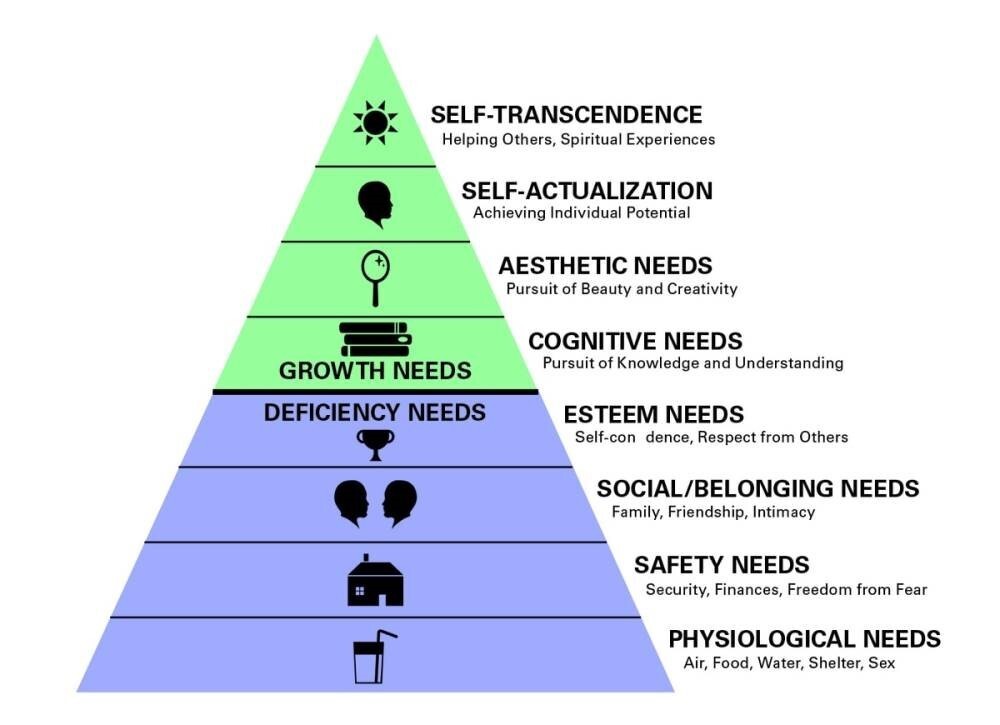
Figure 1. Based upon Human-Centered Design: An Emergent Conceptual Model by Ting Zhang and Hua Dong.

While corporate culture and psychological needs may seem intangible concepts to some, what is very tangible and immediate is the pandemic’s economic worldwide impact. There will be an overwhelming corporate need to recover and improve productivity. In broad terms, productivity describes how well an organizational unit uses its resources to achieve a goal. The Organization for Economic Co-operation and Development’s (OECD) Compendium of Productivity Indicators (OECD, 2015) states:
"productivity is commonly defined as a ratio between the fiscal volume of output and the volume of inputs. In other words, it measures how efficiently production inputs, such as labor and capital, are being used in an economy to produce a given level of output. Productivity is considered a key source of economic growth and competitiveness and, as such, internationally comparable indicators of productivity are central for assessing economic performance.’”
In contrast, efficiency is the ratio of non-fiscal parameters such as task speed, sick leave rate and cognitive ability. The British Council for Offices’ (BCO) report Defining and Measuring Productivity in Offices (2017) concluded that:
"a healthy workplace is not necessarily a productive workplace. However, to be productive office users need to be well. Therefore, a healthy workplace is essential but insufficient for sustained productivity in offices."
The BCO report estimated the potential value of productivity gains to typical occupiers as a percentage of annual office rental costs – ranging between 30 percent in central London to 75 percent outside of the capital. Those productivity gains can only be fully realized by safeguarding the health and promoting the wellbeing of employees.
OECD also provides an international benchmark for Better Life and Wellness, and separately for labor and capital productivity. It makes clear that great consideration must be given to inequalities even in the developed world and a one-size-fits-all approach is not appropriate where wellbeing is concerned. (https://www.oecd.org/statistics/better-life-initiative.htm).

Improved IEQ had a projected net impact on labor productivity of 1 to 5 percent that correlated with better and poorer buildings. The significantly larger gains of $AUD100 to $AUD200 per square meter from labor productivity were compared with the energy gains of $AUD15 to $AUD20 per square meter.
A mid-sized city, such as Melbourne, Australia had a 5 percent increase in labor productivity, equating to an annual benefit of approximately AUD$2.1 billion yearly, to the local economy. Proportional gains apply for portfolios. An improvement of 5 percent in productivity is achievable through targeted and benchmarked retrofits of the indoor environment with rapid ROIs. Targeted improvements to IEQ, be they lighting, acoustics, thermal comfort or contaminants, have significant benefits beyond just productivity, including increasing staff retention, improving occupant satisfaction and even reducing absenteeism. For owners, demonstrable productivity improvements can lead to better building rental yields.
How can landlords and FMs encourage people and organizations to return to the workplace even if it is reimagined with a more hybrid approach to WFH? Fundamentally it requires them to trust that their employers or property owners are going to protect their health at the very least. However, trust in this current era can be a very scarce commodity. What is needed is evidence-based risk assessment and recognizable benchmarking by which this assessment can be judged.
Governments are providing very broad risk guidance rather than benchmark standards for safe reentry of workplaces. There are significant factors concerning infection control that a health and safety generalist will not understand. ISO 31000 – Risk Management states risk assessments needing to be:
-
Customized
-
Inclusive
-
Structured and comprehensive
-
Integrated, and
-
Dynamic
Therefore, it may be beneficial to have risk assessments independently and professionally produced and verified to provide a recognized measurable level of assurance to staff that all risks have been addressed. It is recommended that if employers follow this course of action, they look for a partner with experience in their sector, who has a track record with creating bespoke risk management strategies and action plans that addresses the specific needs of their property portfolios.
A benchmarking approach that acts as a control measure for health and safety, and has been shown to link to productivity, is the adoption of rating schemes such as WELL, Fitwell and NABERS that focus on reducing sickness and promoting health which will help build occupant confidence.
 To succeed in retaining safe building occupancy, the following actions have been found to be important:
-
PLAN
-
Establish the risk appetite of both employer and employee. This may already exist in an organization's risk management framework, but may need to be reviewed considering the external factors impacting on the risk management principles
-
Ensure a risk assessment is conducted by competent individuals
-
Engage with a complete stakeholder team as communication and consultation are key.
-
-
IMPLEMENT
-
Trial model facilities or areas
-
-
MEASURE
-
Measure key indicators before, after, and regularly, including full IEQ and occupant satisfaction
-
Professionally review and audit cleaning materials and protocols
-
-
LEARN
-
Validate that the residual risk is lower and within acceptable risk tolerance.
-
Identify corrective actions to the plan and imbed them in the revised management system
-
-
PLAN
-
Create simple risk indicator communication protocols and performance motivators
-
Develop corporate performance indicators, including health, productivity and satisfaction based on quantitative data.

-

Elena Bondareva WELL AP, WELL PTA has a solid record of transformative innovation around persistent problems, which is the focus of her advisory practice, Vivit Worldwide. Bondareva has held public, private, teaching and board roles in Australia, New Zealand, Russia, South Africa, India and the United States; delivered CPD training to thousands of professionals; participated in globally significant events such as COP17, G20, and the World Green Building Council Congress; published in peer-reviewed and public journals; and presented at countless international conferences. She helped establish four Green Building Councils and the Living Future Institute of Australia, served on the COVID-19 Taskforce of the International WELL Building Institute (IWBI), and serves on the IWBI's Global Health Equity Advisory and (second term) on the advisory board for the Greenbuild's Global Health & Wellness Summit. She also serves on the Board of Pollinate Group, an award-winning social enterprise, and is an advisor to Power Ledger, a ground-breaking software platform that accelerates transition to clean energy future by activating local energy markets.

Dr. Vyt Garnys has more than 40 years of experience in scientific consulting and championed the indoor environment's power over people’s health, well being and productivity since before the term “sick building syndrome” was coined. A founding member of ISIAQ, not only has he developed diagnostic, verification and productivity assessment methodologies and contributed to the global leadership of rating tools, but he has also helped equip two generations of facility owners, designers, managers and users to leverage the indoor environment to its potential. Dr. Garnys is the founder and managing director of CETEC Foray Group.

David Hemming is a chartered civil engineer with more than 30 years of experience managing major campuses, delivering annual budgets in excess of £350M for major universities, the U.K., military and the U.K. government. In his roles, he has been responsible for operations, FM and capital projects in fast-paced, technically complex and operationally demanding environments on time, to cost and to the right quality. Hemming is the CEO: Northern Hemisphere for the CETEC Foray Group, an independent scientific advisory specializing in occupant health, well-being and performance.
Read more on Risk Management and Real Estate or related topics Occupant Health and Data strategy and information management
Explore All FMJ TopicsRelated articles
-

A New Approach
Improving business continuity with alarm managementBy Brad Freeman09.09.2024 -

Beware of Growing Cyberthreats
Why it’s time for stronger facility cybersecurityBy Andrew Harris & Eric Headington10.30.2024 -

Going Up?
Keeping elevators safe & compliantBy Dave Myers & Doug Taylor11.06.2024
