Membership
 Network
 Regional Sites & Affiliates


 Events
 Participate
 Resources

 Training
 Credentials
 Government


 Content Channels
 Tools
Tools


 Business Overview





Seeing the Light
Using data-driven strategies to support people

Employees spend roughly eight hours each day indoors, and for millions of people around the world, those hours are spent inside offices, educational buildings, health care facilities and other spaces. The environmental conditions within these spaces, therefore, play a significant role in shaping human health, productivity and well-being.
Over the past three decades, research from public health and building science disciplines has demonstrated that buildings can either enhance or undermine human performance. Indoor environments influence exposure to pollutants, noise, temperature fluctuations and lighting conditions. Each of these elements contributes to what experts now describe as indoor environmental quality (IEQ), a key determinant of both occupant comfort and workplace performance.
 Among these environmental factors, lighting has emerged as one of the most influential. Studies have found that lighting conditions affect mood, alertness, fatigue and cognitive function. Workers operating in optimized indoor environments that combine better air quality, ventilation and lighting have shown up to 61 percent higher cognitive function scores compared with those in conventional buildings.
These findings are prompting a broader reassessment of how lighting systems function in modern workplaces. Historically treated as a static utility designed primarily for visibility, lighting is increasingly recognized as a strategic component of workplace design and facility management. The emergence of intelligent lighting technologies is accelerating this shift, transforming lighting infrastructure into a dynamic system capable of supporting human well-being while also providing valuable operational insights.
For FMs responsible for maintaining healthy, productive buildings, this evolution presents both a challenge and an opportunity.
The shift from static utility to dynamic well-being
Office lighting systems were designed with relatively simple objectives. Fixtures were installed to meet illumination standards, reduce energy consumption and provide consistent light levels throughout a workspace. While these systems met basic operational requirements, they often overlooked the complex ways in which lighting affects human physiology and behavior.
Poor lighting conditions can contribute to a wide range of workplace issues. Employees working in environments with insufficient or poorly designed lighting frequently report eye strain, headaches, fatigue and difficulty concentrating. Over time, these factors can influence productivity, absenteeism and overall job satisfaction.
Research examining office environments has shown that lighting conditions can influence employee morale and mental well-being. Access to natural daylight and properly designed artificial lighting has been associated with improved alertness, better mood and enhanced overall workplace experience.
IEQ studies have also revealed measurable performance outcomes. In high-performing buildings that prioritize environmental conditions such as lighting and ventilation, occupants have demonstrated higher cognitive test scores, improved sleep quality and significantly fewer health-related symptoms compared with occupants in conventional buildings.
The importance of lighting becomes even more apparent when considered alongside the modern nature of work. Office environments are no longer static spaces where employees occupy the same desks at predictable times. Hybrid work models, flexible schedules and collaborative spaces have introduced variability into workplace occupancy patterns.
Yet many buildings continue to rely on lighting systems designed for fixed schedules and uniform usage. Lights remain fully illuminated even when spaces are empty, while employees working in active areas may experience inadequate lighting conditions that do not support concentration or visual comfort.
This disconnect between building systems and occupant behavior highlights a broader shift taking place in FM. The focus is moving from static infrastructure toward responsive environments capable of adapting to real-time conditions.
The strategic convergence of data, light & health
Advances in digital technologies are enabling lighting systems to play a far more active role in shaping workplace environments. Sensors, networked controls and data analytics are transforming lighting infrastructure into intelligent systems capable of responding dynamically to occupant needs.
 This transition aligns with a broader movement toward human-centric building design, an approach that prioritizes the well-being and performance of occupants alongside operational efficiency.
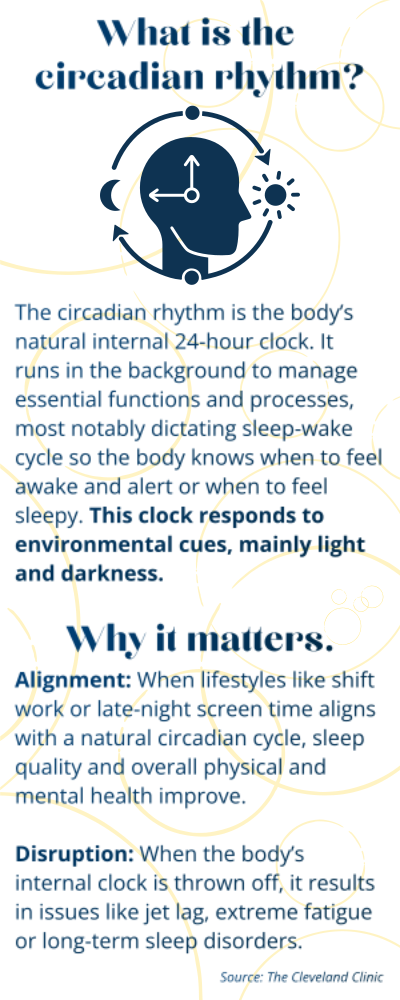
One of the most important developments within this movement is the emergence of lighting systems designed to support human circadian rhythms. Circadian rhythms regulate sleep cycles, alertness levels and many physiological processes within the human body. Natural daylight plays a key role in maintaining these rhythms, but traditional office lighting often fails to replicate the changing patterns of natural light throughout the day.
Circadian-aligned lighting systems attempt to address this challenge by adjusting light intensity and color temperature in response to time of day and environmental conditions. Cooler, brighter lighting in the morning can help promote alertness and focus, while warmer tones later in the day support relaxation and reduce visual fatigue.
Research suggests that environments incorporating circadian-responsive lighting may contribute to improved sleep quality and daytime energy levels among employees. In workplaces where employees spend extended hours indoors, these improvements can translate into greater comfort and sustained cognitive performance.
Beyond physiological benefits, intelligent lighting systems also provide FMs with valuable operational insights. Lighting infrastructure increasingly incorporates occupancy sensors capable of detecting movement and measuring space utilization. These sensors generate data that reveal how different areas of a building are used throughout the day.
In workplaces operating under hybrid schedules, this information can be particularly valuable. FM teams can identify underutilized areas, adjust lighting and environmental conditions accordingly, and make more informed decisions about space allocation and workplace design.
Three strategic practices are emerging as particularly relevant when navigating the transition toward intelligent lighting systems.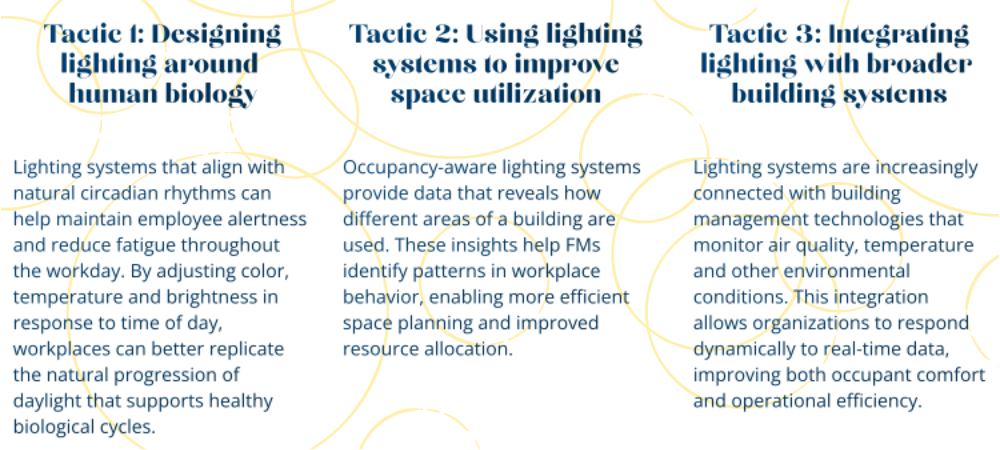
When lighting operates as part of an integrated building ecosystem, it becomes a central component of data-driven FM.
The emerging era of human-centric buildings
The transformation of workplace lighting reflects a broader shift in how buildings are designed, managed and experienced. Rather than functioning as passive infrastructure, modern building systems are evolving into responsive environments that actively support human performance.
As organizations continue to emphasize employee well-being and flexible work environments, FMs are facing increasing expectations to create spaces that support both productivity and health. Lighting systems that adapt dynamically to human needs represent a critical step toward achieving this goal.
At the same time, the integration of lighting systems with sensors and data analytics is expanding FM’s role within organizations. Lighting infrastructure is becoming a source of operational intelligence, providing insights that help teams optimize energy use, understand occupancy patterns and manage space more effectively.
 These capabilities are particularly important in an era when organizations are balancing multiple priorities. Energy efficiency remains a critical concern, but it is increasingly accompanied by expectations around occupant well-being, sustainability and workplace experience.
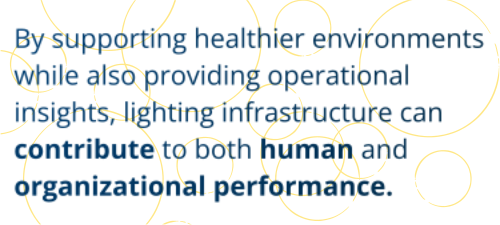
Intelligent lighting systems offer a way to address these priorities simultaneously. By supporting healthier environments while also providing operational insights, lighting infrastructure can contribute to both human and organizational performance.
Looking ahead, workplaces are likely to become increasingly adaptive environments. Sensors, connected systems and automation technologies will continue to reshape how buildings respond to the needs of the people inside them.
In this context, lighting will play a central role. What was once considered a basic building utility is rapidly becoming a strategic asset capable of enhancing employee well-being, supporting productivity and informing better FM decisions.
For FMs responsible for shaping the workplaces of the future, understanding this shift is essential. Intelligent lighting represents not only technological evolution but also a new perspective on how buildings can actively support the people who depend on them every day.

Fabio Zaniboni, the founder and CEO of BubblyNet, is a technology leader with over two decades of experience in the Internet of Things (IoT), digital transformation and sustainable innovation, particularly in the lighting industry. His career, including roles at Emerson Electric and Comau Robotics, has given him a global perspective and market insights. Leading an R&D team, Zaniboni integrates advanced technologies to enhance building efficiency, sustainability and user experience. His research on how factors like light, sound, and air affect well-being is driving smarter, more sustainable building solutions. Known for transforming complex technologies into scalable applications, Zaniboni partners with global organizations to foster digital innovation and sustainability in the built environment.
References
Top image via Getty Images.
Read more on Workplace and Occupancy & Human Factors or related topics Furniture, fixtures and equipment (FF&E) , Space design and planning and Wellness and Well-being
Explore All FMJ Topics