 Membership
 Network
 Regional Sites & Affiliates


 Events
 Participate
 Resources

 Training
 Credentials
 Government


 Content Channels
 Tools
Tools


 Business Overview





Signs of the Times
How digital signage is reinventing facility communication
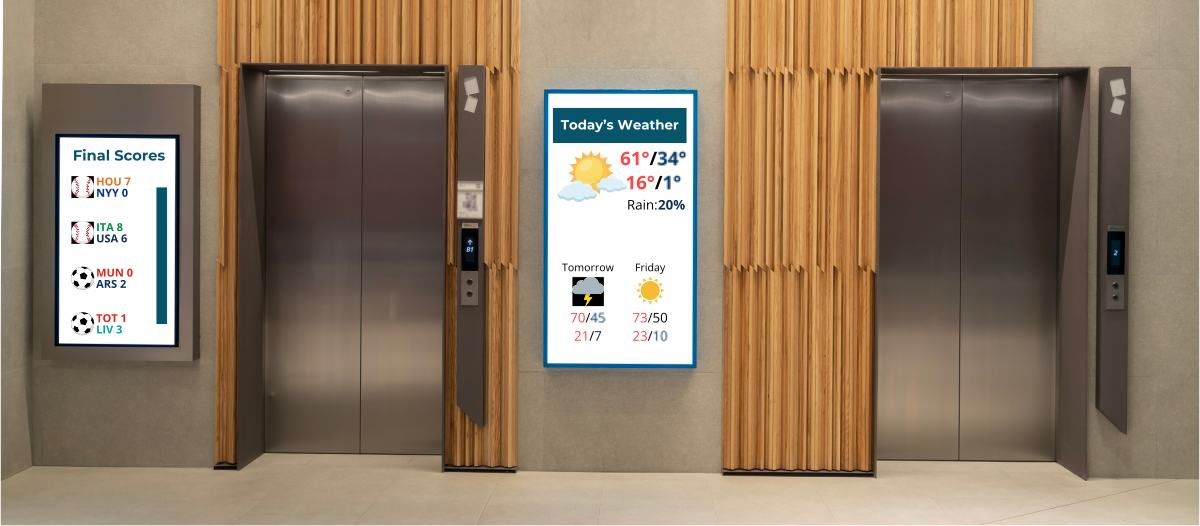
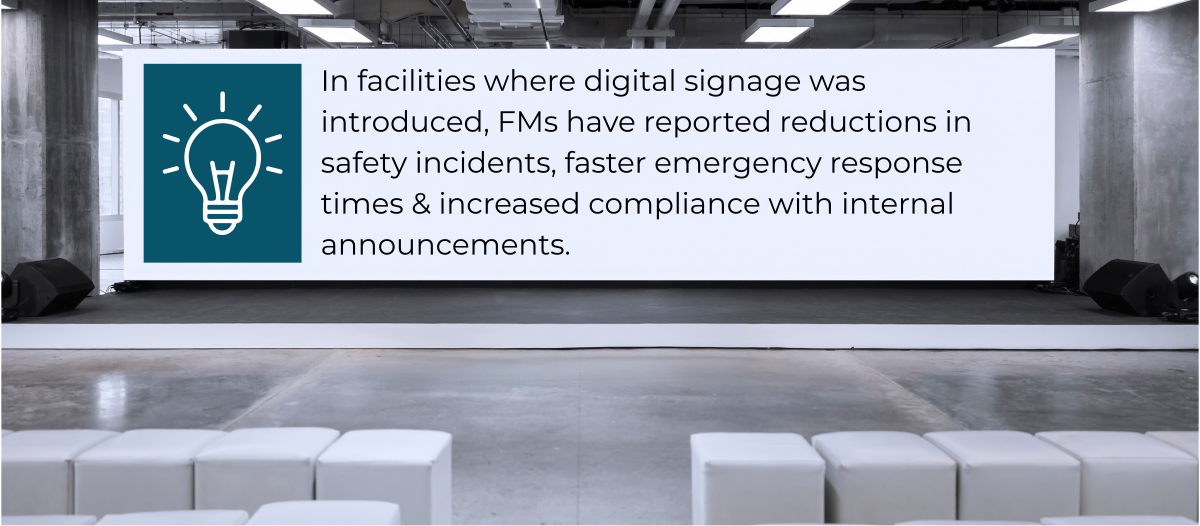
Facility managers are facing a critical challenge: how to communicate effectively across multiple locations, shifts and stakeholder groups in an era of constant change and an inordinate desire for data. Traditional methods like email, printed signs and word-of-mouth fall short in speed, clarity and consistency. Digital signage has emerged as a transformative tool for facility communication, offering real-time, location-based visual messaging that helps reduce confusion, increase safety and improve operational performance.
FM’s new mandate
As hybrid workplaces, compliance requirements and occupant expectations evolve, FMs are under pressure to deliver more dynamic, transparent communication. Buildings have become smarter and more responsive, but communication inside them has not always kept pace. Whether in corporate headquarters, health care environments or manufacturing plants, digital signage is becoming the visual backbone of an agile facility.
There are multiple stakeholders involved in this area: finance wants savings, HR wants compliance, EHS wants a safe workplace, FM wants to reduce labor costs, and everyone wants a clean looking building without taped and tacked signs everywhere that end up unread on the floor. Few want to risk endorsing a news source from cable television. There is a simple economic solution: digital signage.
ROI: Where digital signage delivers value
Why FMs are taking notice
Digital signage is more than a communications tool; it is a management asset. Key benefits include:
-
Fewer communication gaps: Reach everyone, from frontline staff to executives, with targeted messaging.
-
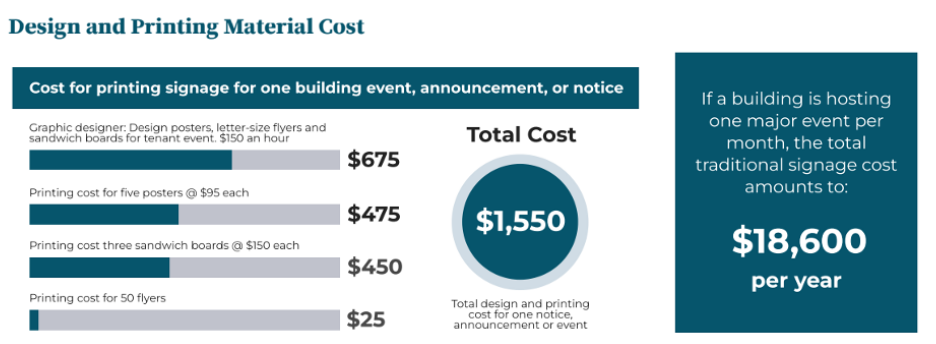
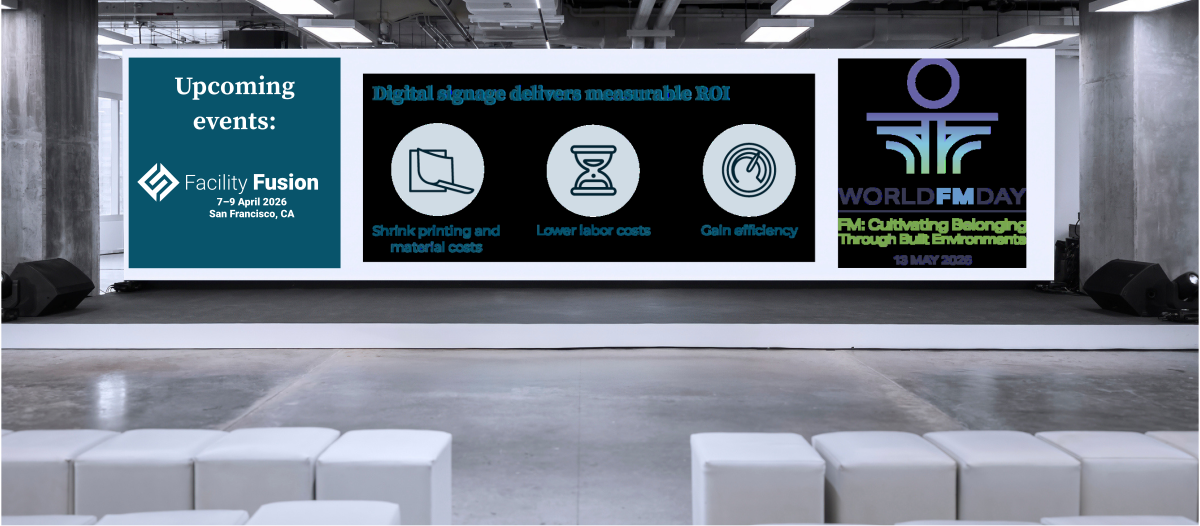
Cost efficiency: Reduce printing costs, eliminate outdated signs and avoid manual updates. For example, one report showed that traditional signage for one monthly building event can cost more than US$18,600 per year, while digital signage eliminates the need for printing altogether. (TouchSource, Building a Business Case for Digital Signage)
-
Time: Eliminate print time and post immediately locally, regionally or internationally. Eliminate the time and labor to manually post signs around the campus.
-
Sustainability: Reduce the amount of paper, ink and tape used to announce, inform and inspire.
-
Scalability: Control multiple locations from a central dashboard.
-
Engagement: A study by Intel found that digital signage can boost corporate engagement by up to 59 percent.
 Overcoming common barriers
Despite its advantages, some managers hesitate due to misconceptions:
-
“It’s just a fancy TV.” It is really a live communication platform integrated with the building’s CMS or data systems.
-
“It’s too expensive.” One comparison found that replacing a tenant name on a traditional slat directory can cost US$750, while the same update with digital signage costs US$0.
-
“Who manages it?” Content automation, templating and third-party support reduce the internal lift. A single person in a single department will be the conduit through which all content is inserted into the display. This person determines how often it changes, which can also be automated. Another option is that each department has control of their screen space.
A pilot project in a single high-traffic area can often prove the value with minimal risk.
Implementing with confidence: A practical approach
-
Start small: Choose one location or use case with clear ROI (e.g., emergency alerts or shift updates).
-
Choose the right platform: Ensure it supports remote updates, scheduling and multiple content formats. Screens do not have to be static; they can rotate through layers of content.
-
Plan content: Use a content calendar to avoid screen fatigue and keep information fresh. Use it to grab attention by displaying birthdays, anniversaries, company events or anything that would have been a flyer attached to the wall.
-
Track KPIs: Measure content views, response rates or compliance improvements to show impact. For example, replacing paper signage with digital displays saved one facility department a total of 114 hours (about 10 days) and US$4,417 annually in labor costs.
FMs who approach signage with the same strategic mindset they apply to HVAC, lighting or access control realize the best outcomes. Digital signage becomes another tool in the FM arsenal to reduce costs, improve efficiency and safety, and get people's attention.
Energy company case study
-
Safety first: Refineries and chemical plants are inherently dangerous work environments, making it easy to see the benefits of preventing just one accident.
-
Emergency alerts: Once the screens were in place with corporate communication messages, it became clear the visual messages could augment the existing audible warnings for severe weather, fire or an active shooter.
-
Ease of use: After identifying an owner for the ability to push out emergency messages 24/7 as needed, Dynacom created an interface to make the process as close to one-click as possible.
-
Enhanced: Beyond initial slides to create awareness of a situation, more detail was provided in the text crawl at the bottom of the screen. With a fire contained in one area, added details could convey the impacted locations.
Working with stakeholders in the business, responsibility can be clearly delegated to appropriate resources to create ownership and ensure reliability. Weekly testing helps create habits and keep processes top of mind when quick and clear thinking is especially important.
 Culture shift
People read screens as they are walking down the corridor; they do not stop and read signs on the wall, even in the breakroom. This leads to informed staff, empowered personnel and actively engaged teams. Knowledge is power, and the knowledge of what is happening in the organization engages people, builds community, fosters thought and ideas that grow a company. These results bring efficiency and focus to all teams and lead to a better organization, culture and retention.
Teamwork makes the dream work
-
Ownership: Identify stakeholders for content. HR, EHS and FM all may have campaigns or other frequent message updates. Identify an individual and a backup to take responsibility for publishing to the screens.
-
Templates: Working from a layout allows even design novices to populate to a format and publish quickly.
-
Art/Fun: Perhaps the most overlooked and important component of effective digital signage is the appeal to human taste. Displaying works of art, famous quotes or trivia questions draws attention so that screens do not just become ignored.
-
Feeds: Independent of the digital signage platform you choose (and sometimes included) are endless content feeds featuring sports scores (even video highlights), weather, traffic, public transportation updates and other information that a commuter or visitor may need.
What is the ROI
ROI scales with the size of an organization. Once deployed, digital signage can eliminate common excuses such as, “I didn’t know.”
From a financial standpoint, the number of screens will also help determine the expense. However, when the reduction in printing and labor costs is accounted for, the savings can stack up quickly. Also, less printing means less waste, which can help meet sustainability goals.
Conclusion
Digital signage is a smart investment in operational clarity, safety and stakeholder engagement. As buildings evolve to become more connected and responsive, so too must the way organizations communicate inside them. For FMs who want to lead rather than follow, digital signage is more than a screen — it is a strategic advantage.

Jerry Sullivan is a technology consultant specializing in digital signage with more thantwo decades of experience in commercial and industrial facilities. He works with facility managers and corporate teams to implement smart communication strategies that reduce confusion, improve compliance and enhance occupant experience.

Brent Ward, CFM, FMP, SFP, IQI, has been in facility management since 2007, serving in the education, banking and medical laboratory sectors. Ward is a board member of IFMA’s Oregon/Southwest Washington Chapter of IFMA where he is the treasurer and chair of the Emerging Professionals and Career Development committees. He was previously vice president of IFMA’s Nonprofit Facilities Council.
References
Top image by Getty Images.
Read more on Communication and Project Management or related topics Communication Management and Project Management
Explore All FMJ Topics