
 Membership
 Network
 Regional Sites & Affiliates


 Events
 Participate
 Resources

 Training
 Credentials
 Government


 Content Channels
 Tools
Tools


 Business Overview





Smart Building Envelope
Delivering savings & improving use comfort

Smart buildings are the results of human and technological evolution. While the first and second industrial revolutions advanced the design and use of machines and enabled mass production, the third was driven by electronics and further advanced automation. Now, the world is in the Fourth Industrial Revolution, the Industry 4.0, driven by connectivity, intelligence, flexibility and efficiency according to Klaus Schwab. The application of new technologies allows the design and construction of efficient buildings that not only reduce energy consumption to be more sustainable, but also improve the comfort of its users.
From intelligence to smartness
The development of construction has been motivated by the need to add value to the building. According to Buckman et al., value can be added to buildings by enhancing durability, sustainability and/or comfort. Although the concept of smart building is relatively new, it has its origin in the concept of the intelligent buildings which emerged in the 1980s to improve comfort through control and automation. One example is the Dayabumi Complex, located in Kuala Lumpur, Malaysia, that has a Building Automation System (BAS), a security automation system and a fire automation system. These systems make the skyscraper an intelligent building, but as these systems operate independently this building is not considered “smart.”
While there is great confusion between the concepts of smart buildings and intelligent buildings there are features that set them apart. While intelligent buildings are reactive, smart buildings are predictive and adaptive. Smart buildings can adapt to different scenarios based on not only occupancy, but also on factors based on users’ perceptions of comfort at different moments of the day and time of year. Further, while intelligent buildings are designed to reduce energy consumption by being programmed to maintain facility temperature and humidity based on day of the week and time of the day, smart buildings go further as their envelope and operations are designed to both maximize user comfort and minimize energy costs.
Smart buildings concept
Smart buildings adapt to the environment by optimizing each of the four main elements of the building: physical structure, systems, service and management. According to Buckman, smart buildings have four pillars: intelligence, enterprise, control and materials and design. Intelligence refers to the ability to control the environment while the enterprise pillar allows smart buildings to consider enterprise data, such as worktime and occupancy, to adapt to the environment. Control means the ability to operationally manage the whole building. Smart buildings not only have systems and services, but are designed with smart materials, which help save energy and increase user comfort.
The integration and interaction of systems are also important features of smart buildings. A smart building uses information to manage the coordinated action of subsystems, hence each of the subsystems composing a smart building needs to be horizontally integrated.
Layers of a smart building
Smart buildings consist of three main layers: the envelope, the connectivity and the software. Each layer has a specific function within the operation of a smart building,
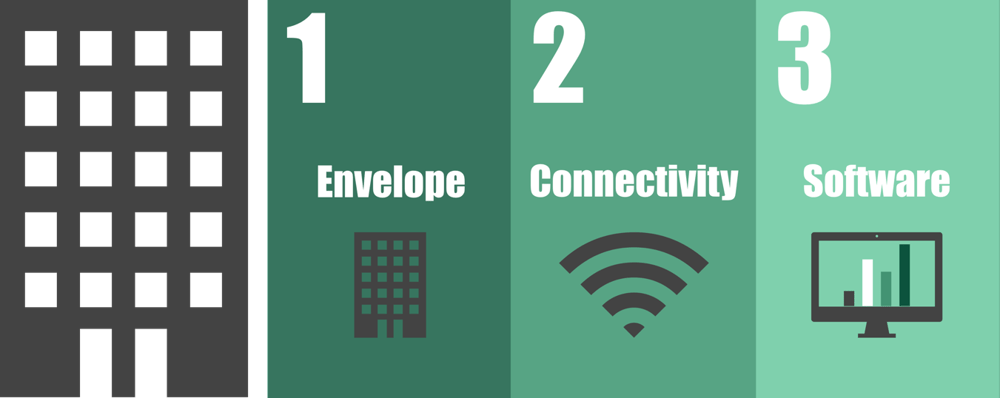 Figure 1: Layers of a Smart Building.
A facility’s envelope is important as it is the physical component that separates the interior and conditioned part from the external part. The main function of the envelope is resistance to and protection from different external agents, such as light, noise and weather. Within the smart building concept, the envelope no longer isolates from external conditions but adapts to them. It fulfils other new functions, such as energy production, responds to external conditions or acts as a passive element against pollution and other external agents.
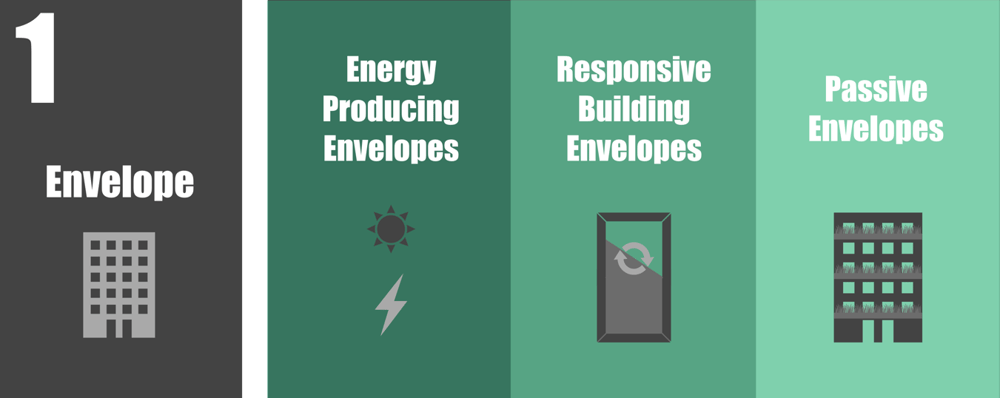 Figure 2: Smart Building Envelopes.
Energy producing envelopes
Energy production is one of the newest functions of a smart building’s envelope. Building-integrated photovoltaic (BIPV) technology integrates photovoltaic materials in modular form into the building envelope. Solar façades, solar roofs and power walls are some of the latest energy-producing envelopes.
Solar façades use vertical photovoltaic panels as part of the building’s façade to produce solar energy. The building that houses the School of Industrial Engineering of the University of Málaga in Spain was one of the pioneering buildings of this type of technological solution with photovoltaic panels integrated into both north and south façades. It obtained the highest score in the European Energy Performance Certificate (EPCs).
Solar roofs made of photovoltaic tiles capture solar energy and produce electricity to supply the building. As solar panels evolve and have greater integration with the envelope, new methods for storing energy have also emerged. These solutions have a payback period of a few years and have become economically viable for most facilities.
Responsive building envelopes
Responsive building envelopes can achieve high-level performance through real-time environmental response based on input parameters such as external and conditions and the number of occupants. These are based on the combination of smart materials and dynamic automation systems. Materials such as smart glass for windows have seen increasingly popularity over the last decades.
According to the National Renewable Energy Laboratory (NREL), almost 30 percent of the electrical load for the heating and cooling is loss through fenestration as windows occupy 15-20 percent of a conventional building envelope. Smart glass involves glazing with light- and heat-sensitive properties, known as photochromic and thermochromic glazing. These types of glazing can alter the transmission of light and heat, either passively or by the external application of a voltage. By controlling its properties, smart glass can reduce building energy consumption by harnessing external energy coming through the windows when there is sunshine and prevent energy loss from the inside to the outside when outdoor conditions are colder.
Three examples of smart glazing are suspended particle devices (SPD), polymeric dispersed liquid crystal (PDLC) and electrochromic glass. Suspended particle devices control the transmission of heat and light by application of voltage. The device consists of two layers of crystals, including two layers of conduit material, millions of suspended particles in between. When an external device actuates a switch, the circuit that will apply a voltage between the layers of conductive material is closed. As a result, an electric field is created in the liquid, which aligns the dissolved particles. When the particles are aligned, light can pass between them, making the window transparent. By the time the voltage is stopped, the magnetic field disappears and the particles become disordered, so the glass becomes opaque again.
Another technology that is very similar to SPD is PDLC. This is a device that works like the SPD but the particles dispersed are liquid crystal and liquid polymer, making the change from opaque to transparent much faster. While the transition in the SPD can take up to 3 seconds, in PDLC it is a matter of milliseconds. For this reason, PDLC is used in interior applications to divide rooms, as it offers more privacy to users.
Electrochromic glass is made of one layer of electrochromic material and another layer of ion conductor between two layers of transparent conductors. Unlike the two previous types, this glass is transparent when not in use. When a current is applied to the transparent conductor, it releases lithium ions that travel through the ion layer to be placed in the electrochromic layer, changing the glass’ color. The glass begins to self-tint, changing its optical properties. Depending on the amount of voltage applied, ions travel, allowing the user to control the tint of the glass. Although the use of electricity could increase electricity consumption, very low voltage is required to operate the device. These devices are almost 10 times more expensive than conventional windows but the extra cost can be recovered in less than five years in most applications.
Passive envelopes
Passive envelopes are made up of elements unable to react to external conditions but contribute to energy saving and improvement of the building's internal conditions. Filter façades and garden walls are the two types of façades included in passive enclosures.
Filter façades are responsible for filtering the air that enters from the outside to the inside of the building. This type of solution is highly effective for large cities where the air is contaminated. An example of this type of façade is the Dr. Manuel Gae Gonzalez Hospital in Mexico City, Mexico, which is ranked among the world’s 30 most polluted cities. The façade is a net of plastic shells covered with a layer of titanium dioxide. When the façade receives sunlight, the titanium dioxide activates and the façade oxidizes organic matter, transforming the polluting particles into carbon dioxide and water vapor, thus improving air quality and the health of patients.
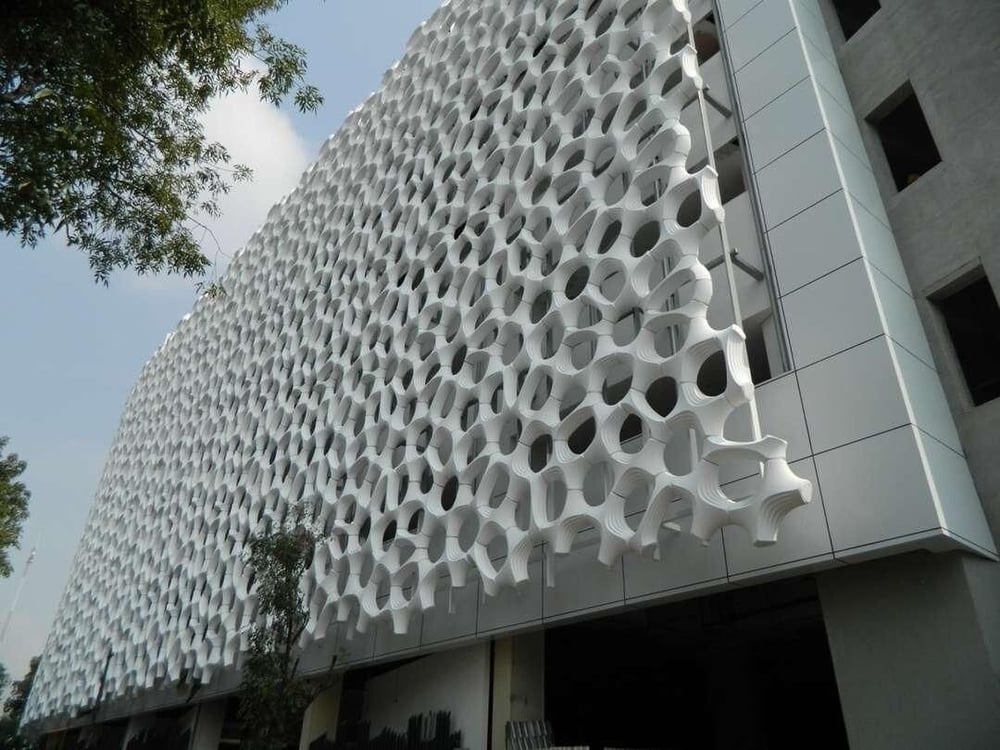 Figure 3. Façade of Dr. Manuel Gae González Hospital in Ciudad de México, México. Retrieved from Gobierno de México, 2020.
Garden walls are external walls are covered by vegetation which can be replaced or substituted by other vegetation at any time. Therefore, the façade of the building is no longer static, as it could change according to the type of vegetation, the season and even the time of day. This feature makes the appearance of the building more dynamic while offering better protection against rain or wind, reducing the amount of UV radiation and trapping airborne particles. In winter months, the vegetation will be less than in the spring or summer months, thus the building can naturally regulate the transfer of heat and light between the outside and the inside. The 17-story Consorcio-Santiago Building in Chile is a good example of how this type of enclosure can contribute to energy savings. The building has a curved façade with three horizontal strips of garden walls.
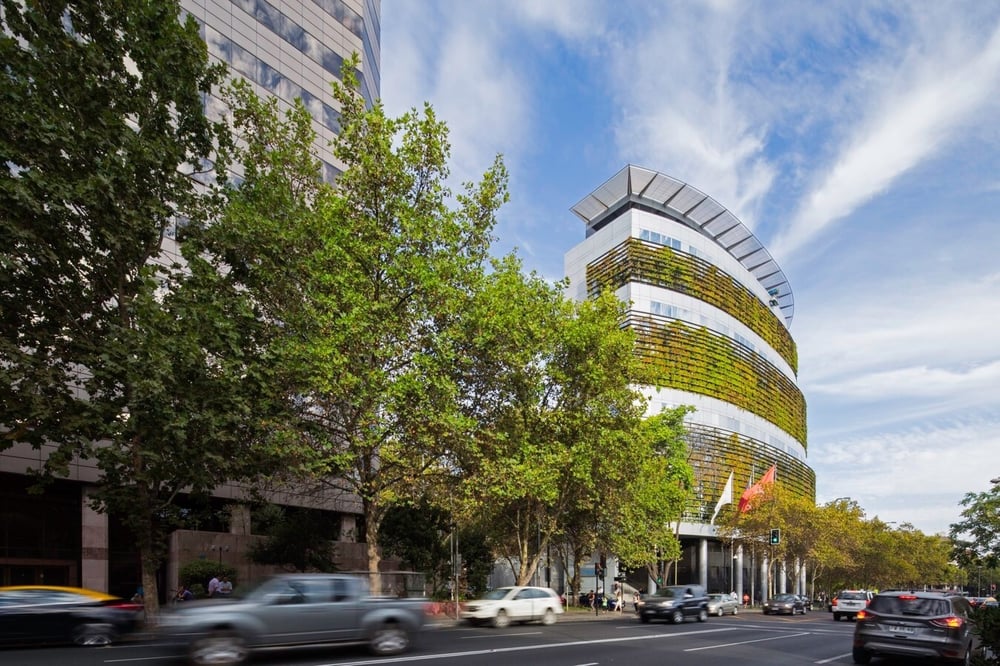 Figure 4: Consorcio-Santiago Building in Santiago, Chile, retrieved from Plataforma Arquitectura
According to Joaquín Reyes, one of the engineers in charge of designing the building, the double garden façade reduces solar radiation by up to 60 percent. Studies showed that 15 years after its construction, the architectural solution not only worked, but it saved almost 40 percent more in energy costs than they had previously estimated and generated up to 48 percent in energy savings compared to other buildings in the same area.
Embrace the envelope
A smart building is an entire system based on adaptability to the environment and interaction of subsystems to maximize user comfort and reduce energy consumption. Smart buildings use three main layers that work together -- the envelope, connectivity and software -- to achieve a high degree of performance. Using the smart envelopes either in new construction or in building retrofits can not only deliver energy savings and improve user comfort but when integrated with connectivity and software, it can produce a facility that truly optimizes dynamic performance.

James Coates is the training director for the International Union of Operating Engineers Local 399 and Adjunct Professor at the Illinois Institute of Technology where he teaches maintenance technology, management and sustainable facilities operations. His quarterly educational news articles are published and distributed to approximately 10,000 members of the IUOE Organization since 2001 centering on facilities engineering. Jim also serves as a governor appointed board member to the Illinois Pressure Vessel Rules Board.

Dr. Gurram Gopal, Ph.D., is the department chair and professor of information technology and management at the Illinois Institute of Technology with a keen interest in technology driven sustainable logistics and facilities management. He has published extensively and has presented at academic and industry conferences. He received a Fulbright Scholar Award to teach and conduct research at Galway Mayo Institute of Technology in Ireland in 2011-2012 and recently completed another Fulbright Scholar Award teaching and conducting research at ISM University, Lithuania. Dr. Gopal developed marketing strategies for some of the world’s largest pharmaceutical companies as a strategy consultant and manager for ZS Associates and worked in strategic marketing, supply chain management and strategic quality at Tellabs Inc. He holds a bachelor’s degree in chemical engineering from the Indian Institute of Technology, Madras and master’s and doctorate degrees in industrial engineering from Northwestern University.

Iván Enríquez Ruiz is a double master's student in industrial technology and management at the Illinois Institute of Technology and in Industrial Engineering at the Universidad Politécnica de Madrid with a strong interest in smart technology and sustainable development. He is keenly interested in the design of facilities, project management and sustainability
References
Images provided by authors.
Böke, J., Knaack, U., & Hemmerling, M. (2019). State-of-the-art of intelligent building envelopes in the context of intelligent technical systems. Intelligent Buildings International.
Buckman, A. H., Mayfield, M., & B.M. Beck, S. (2014). What is a Smart Building? Smart and Sustainable Built Environment.
Jamieson, M., Brajterman, O., Verstraeten, Y., Arbon, J., Lonsdale, J., Allington, M., European Commission, Directorate-General for Energy, & ICF International. (2015). Energy Performance of Buildings Directive (EPBD): Compliance study : final report.
Larios, V. M., Robledo, J. G., Rincon, R., & Gómez, L. (2014). IEEE-GDL CCD Smart Buildings Introduction.
Sinopoli, J. (2016). Advanced Technology for Smart Buildings. Artech House.
Read more on Sustainability or related topics Sustainable Facility
Explore All FMJ TopicsRelated articles
-

Smart Building Control Systems
The foundation for a grid-interactive buildingBy Andre Marino09.25.2024 -

Smart Building Innovation
Cutting costs & carbon footprints without compromiseBy Andrew Butterworth09.12.2024 -

Chart the Path
Building sustainable cities & a sustainable futureBy Izzat Ali Khan & Aykean Forde12.16.2024