
 Membership
 Network
 Regional Sites & Affiliates


 Events
 Participate
 Resources

 Training
 Credentials
 Government


 Content Channels
 Tools
Tools


 Business Overview





Solar & Storage Solutions
Reducing energy costs through strategic partnerships & financing models
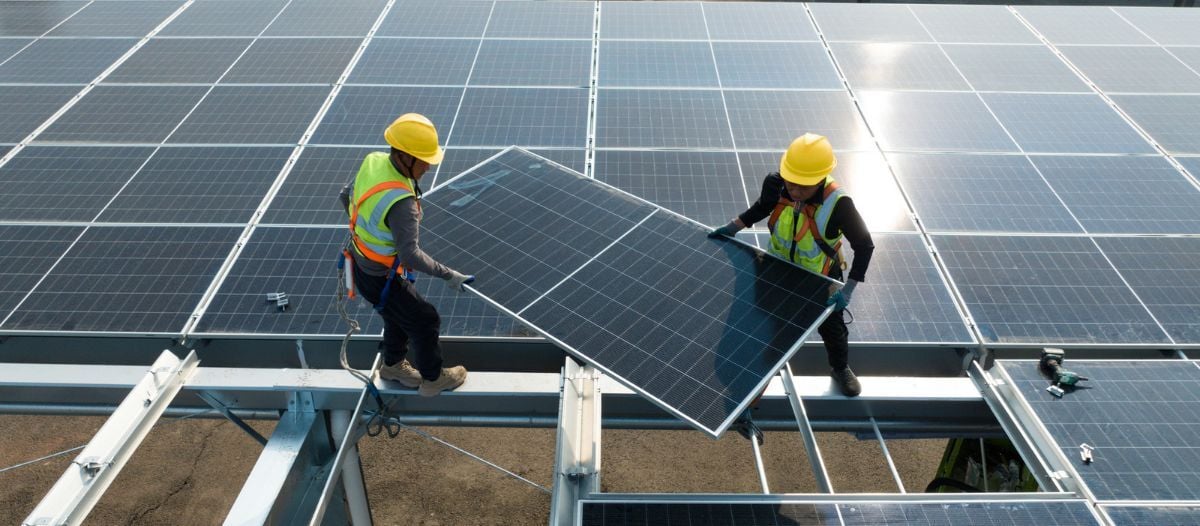
The need for a multi-use solution is felt by manufacturers, universities, warehouses and other organizations, and is a growing concern for facility owners and managers. Solar paired with energy storage or backup power continues to offer increasingly practical solutions and long-term value when strategically planned and implemented. For organizations seeking even greater resiliency and additional benefits, building a fully equipped microgrid further enhances the advantages. However, having the right expertise at the front end of the process is crucial for long-term success.
Understanding the role of solar + storage in facility operations
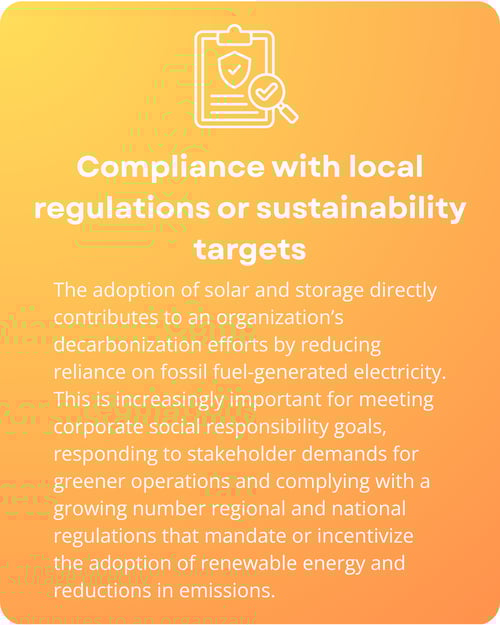
For FMs, implementing solar energy solutions, particularly through a power purchase agreement (PPA), offers a multitude of strategic advantages that extend beyond simple cost savings. These benefits are crucial for maintaining operational efficiency and financial stability in a dynamic energy landscape.
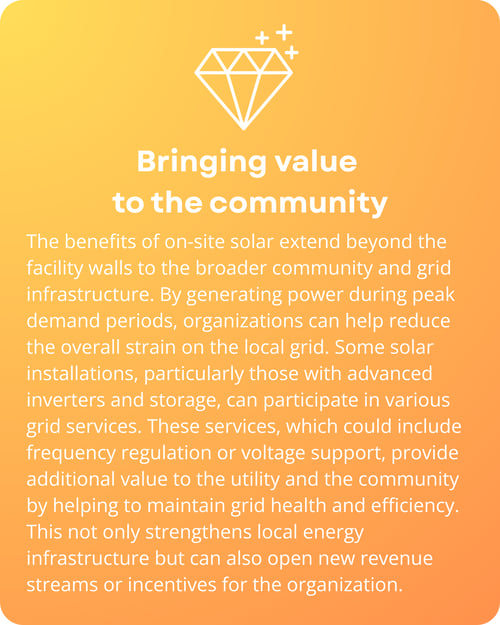
Leveraging PPAs
PPAs are contracts in which a third party owns and operates an energy system on a property, providing stable, fixed-rate energy without upfront costs. This popular choice allows businesses to adopt renewable energy without large initial investments. They are often contracted with an independent power producer (IPP) that handles the day-to-day operations of the system and manages maintenance or upgrades throughout the life cycle of the panels and any distributed energy resources (DER) components.
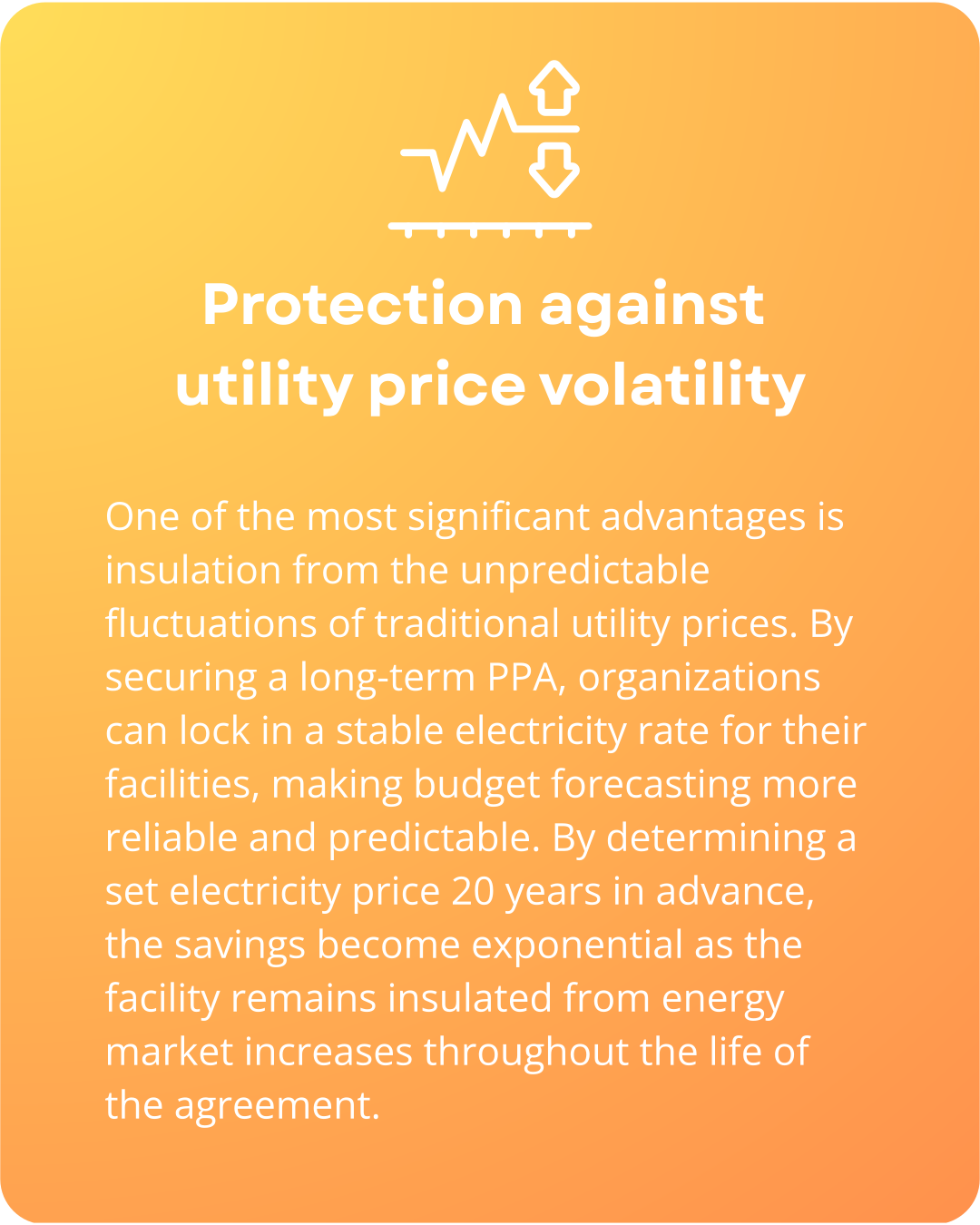
PPAs offer significant benefits, including no upfront capital costs, shifting operational risk to the third party, and predictable operating expenses. Fixed-rate energy pricing for 15-25 years can protect against fluctuations in utility rates. The projects do not even have to supply enough energy to power all operations to be effective.
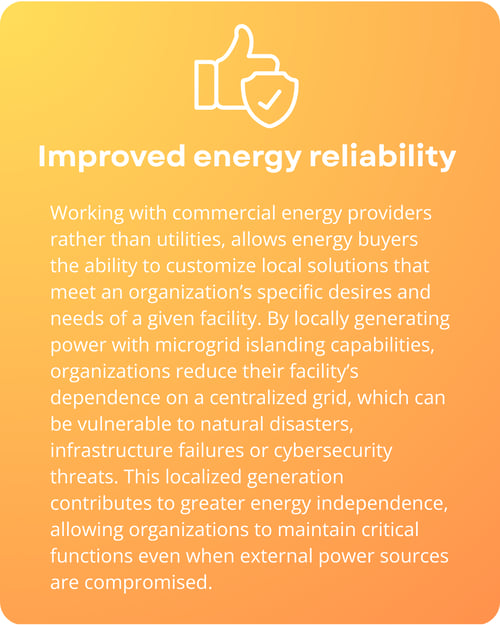
For instance, California Polytechnic University San Luis Obispo commissioned an 18.5-acre solar farm comprising more than 16,000 individual panels, which generates more than 11 million kWh per year. The solar farm, while large in scale, produces enough power to cover about 25 percent of Cal Poly’s total needs. However, the university is still saving more than US$10 million in utility bills over 20 years. For facilities located in areas where weather disruptions or grid interruptions are common, fully built-out microgrids maximize the benefits of solar energy, enabling organizations to take back control of their facility’s energy supply with a more reliable source.
However, carefully consider the long-term nature of the agreement and ensure it aligns with the facility's future energy needs. Be aware of annual escalation rates in energy prices and understand the contract flexibility clauses regarding early termination, upgrades or changes in consumption. Partnering with a reputable IPP is highly valuable for guidance on system design, financial modeling, contract details and long-term support. The right partner can be the difference between a successful strategic investment and just another headache to deal with.
A strategic opportunity
PPAs offer facilities a path toward greater energy autonomy, operational stability and long-term cost control. With rising prices across all sectors, taking control of energy bills by locking in prices through long-term agreements is one way to significantly lower and predict operational costs.
With the right long-term strategic partner, such as an IPP, organizations can offload the responsibility of strategic planning, construction and maintenance of solar and storage systems while enjoying more manageable utility bills.

Read more on Sustainability and Facility Operations or related topics Energy and Operational and Capital Budgeting
Explore All FMJ TopicsRelated articles
-

Smart Building Control Systems
The foundation for a grid-interactive buildingBy Andre Marino09.25.2024 -
Smart Building Innovation
Cutting costs & carbon footprints without compromiseBy Andrew Butterworth09.12.2024 -

Chart the Path
Building sustainable cities & a sustainable futureBy Izzat Ali Khan & Aykean Forde12.16.2024