
 Membership
 Network
 Regional Sites & Affiliates


 Events
 Participate
 Resources

 Training
 Credentials
 Government


 Content Channels
 Tools
Tools


 Business Overview





Something to Chew On
Using real-time insight to influence sustainable kitchen operations
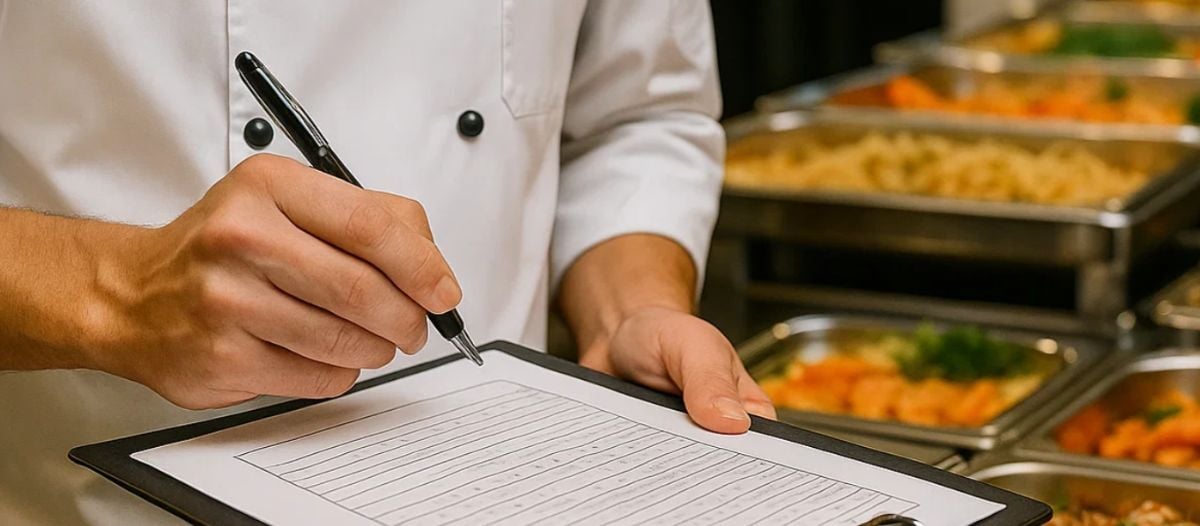
Just before noon, a university dining hall hums with the urgency of feeding thousands of people within a narrow service window. Steam rises from sheet pans, timers chirp at opposite ends of the line and conversations overlap beneath the sound of the hood vents. In the middle of it all is a chef with a clipboard, trying to jot down numbers on a sheet of paper that never stays dry for long.
While the setting varies, from universities and hospitals to corporate campuses and public institutions, the challenge is consistent. Facility management teams are asked to manage food service amid rising costs, tightening regulations and increasing pressure to document sustainability outcomes. What differs is not the problem, but the visibility available to manage it.
For many years, handwritten logs and spreadsheets were the closest organizational leaders came to understanding how much food was produced and how much was actually consumed. FMs responsible for budgets, compliance and sustainability could account for purchasing and waste totals, yet the most critical part of the process remained difficult to see. In that middle space, unserved food quietly accumulated, temperatures were sometimes recorded too late and opportunities to adjust production passed by in real time.
This gap in visibility is more than an operational inconvenience. It limits the ability to control labor and material costs, demonstrate sustainability outcomes and manage food safety risk with confidence.
Food waste itself is not new, nor is its impact on facilities. The United Nations Environment Programme estimates that more than 1 billion metric tons of food are wasted globally each year, much of it originating in environments where meals are served at scale and demand fluctuates from day to day. What has changed in recent years is the emergence of tools that allow kitchens to track production, serving, donation and leftovers in real time, with minimal disruption to service.
 When visibility changes decisions
At one college campus, a small dining hall introduced a real-time process that recorded which pans were placed on the service line and which returned at the end of service. The team expected only incremental adjustments. Instead, they discovered the daily reality of their own patterns.
Dishes long assumed to be consistent favorites showed steep drop-offs midweek. Other items routinely emptied faster than anticipated. When the dining and FM teams reviewed a week’s worth of operational data, they found that overproduction had been significantly higher than manual logs suggested.
Staff made kitchen adjustments using the collected data. Within nine months, overproduction was reduced by 56 percent, and supervisors regained hours each week that had previously been spent decoding handwritten notes. For FMs, it felt as though they were hearing their kitchen clearly for the first time.
For another college, spreadsheets served as the primary tracking tool, but entries varied between staff members and busy days often went undocumented. Once production and consumption data was captured consistently in real time, inefficiencies surfaced almost immediately. Batch sizes were recalibrated to match actual demand, prep lists grew shorter without reducing quality, and by the end of the first term, excess production dropped by 54 percent. Staff members described the shift less as a dramatic overhaul and more as the relief of working with a mirror instead of a guess.
On a large campus serving more than 30,000 students, even small misjudgments produced hundreds of pounds of waste. Small-batch cooking helped, but time-limited manual estimates still left kitchen teams operating with partial information. When live operational visibility was introduced, the pace of work did not change but the clarity did. Managers describe the transition as a period of discovery, as item-level data traced each dish from production through the end of service. In one of their busiest dining halls, overproduction dropped by 51.7 percent in just 12 weeks. Adjustments that once took weeks to implement were made within hours.
For FMs, these examples illustrate what becomes possible when production and consumption can be tracked to the item level, across every service period.
A framework for reviewing food service performance
Improving food service performance does not require reinventing operations. It requires applying the same review discipline used elsewhere in the facility.
A useful starting point is to examine how food decisions are informed. Many operations track what was purchased and what was discarded, but not what was produced and served in between. That gap is where inefficiencies accumulate.
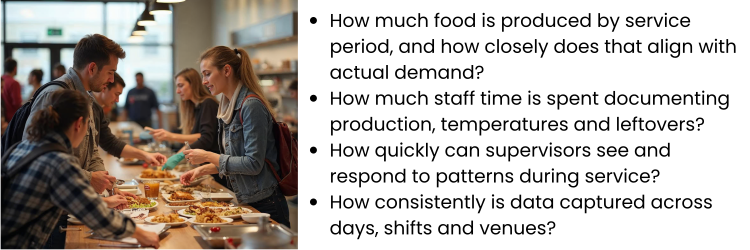
FMs can begin with four practical questions:
 FMs are already accustomed to thinking about data in terms of maturity, not just availability. Food service data follows a similar progression. At a basic level, many operations rely on retrospective data, such as logs, spreadsheets and after-the-fact reports that summarize what happened once service has ended. More mature operations use operational data, capturing production and consumption in real time to support adjustments during service.
For FM leaders overseeing portfolios across cities or countries, food service visibility begins to resemble other mature FM systems — standardized, comparable and actionable rather than anecdotal.
At the highest level, decision-support data reveals patterns over time, flags thresholds and enables comparisons across days, venues or menu items. Understanding where food service data sits along this spectrum helps FMs identify whether they are simply recording outcomes or actively managing performance.
Extending the value of food production data
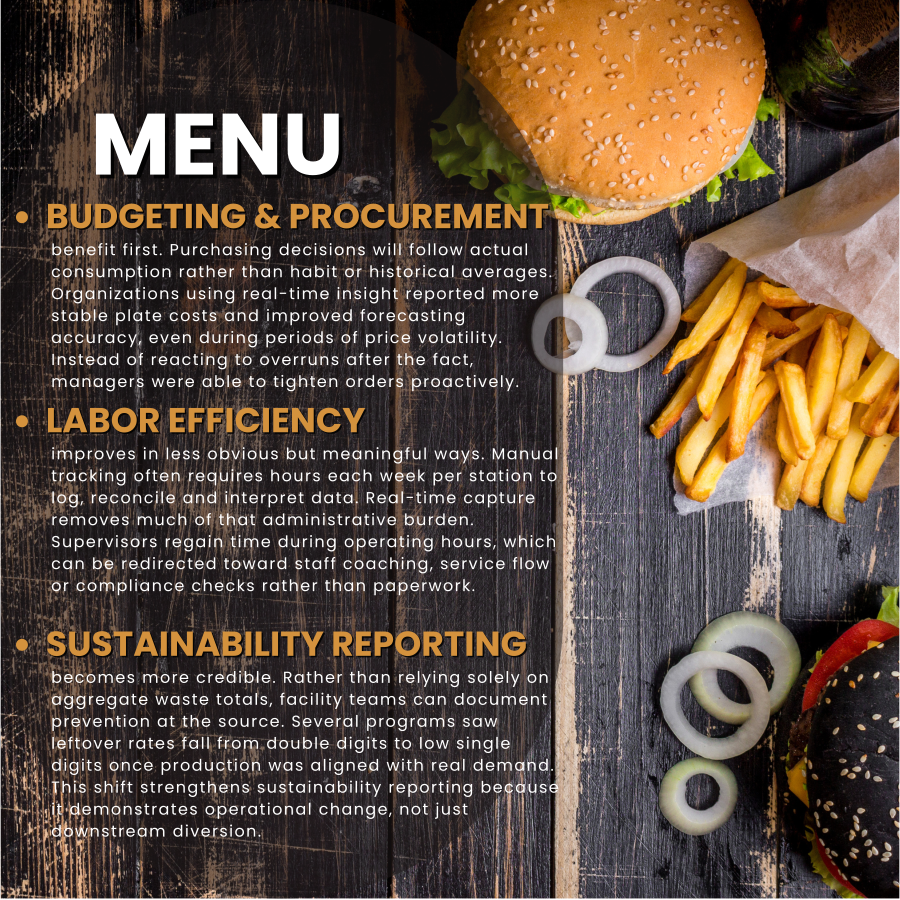
Once reliable, item-level data exists, its value extends well beyond facility and culinary teams. In many facilities, food service data is generated by dining teams, but accountability rests with facilities. Reliable, shared data helps close that gap by giving stakeholders a common operational reference point.
Supporting safety, compliance & risk management
Food service data also supports functions traditionally tied to facilities and risk management. Automated temperature records and time-stamped production logs reduce gaps in documentation and shorten audit preparation cycles. When deviations occur, they are visible during operations rather than being discovered later through periodic review.
For leaders responsible for multisite portfolios, centralized reporting provides a system-level view like other enterprise FM dashboards. Patterns emerge across locations: recurring unserved food at specific stations, temperature challenges during peak times or chronic leftover trends tied to certain menu types. This allows for targeted interventions instead of broad policy changes that may not address root causes.
Some organizations have implemented threshold-based alerts for abnormal production or cost spikes. These are used less as enforcement mechanisms and more as early indicators that allow teams to take corrective actions before inefficiencies become embedded in daily practice. Importantly, many of these improvements have occurred without adding labor or redesigning service flow.
A different way to look at food service
Whether managing a single facility or a global portfolio, facility leaders rely on accurate, timely data to govern performance.
FM relies on data. Budgets, staffing plans, compliance reviews and sustainability reporting all depend on information that is accurate, timely and defensible. Food service should be managed with the same expectation.
Reliable production and consumption data gives FMs clear visibility into kitchen operations. With data, FMs can forecast based on actual demand, adjust production during service and align purchasing with real use. Dining teams can adjust production during service and integrate food safety documentation into daily routines rather than treating it as a separate task.
Recording kitchen data is not about changing how food service works. It is about having the information needed to manage it well. Clear data supports better decisions, consistent operations and credible reporting to leadership and stakeholders. Without it, food service remains one of the few areas of FM still driven by estimates.
Data is not an enhancement. It is the foundation for managing food service with confidence.

Fengmin Gong is the co-founder and CEO of Metafoodx, a Silicon Valley startup delivering AI-Embodied OS Platform for foodservice industry. His passion for food security, food away from home business, and sustainability led his transition from cybersecurity to FoodTech. He earned his D.Sc. and MS degrees in Computer Science from Washington University in St. Louis, Missouri, USA and his M.Eng. and B.Eng. from Xi’an Jiaotong University. He was the corporate vice president of InfoSec Strategy at DiDi Global and the head of DiDi Labs in Mountain View before founding Metafoodx. He has co-founded four startups including Palo Alto Networks (IPO), IntruVert Networks (acquired by McAfee), Cyphort (acquired by Juniper) and AssureSec (acquired by DiDi). He was the chief security content officer at FireEye, playing a critical role with its successful product pivot. His past founding roles include chief scientist, chief strategy officer and CEO. He has 70 awarded US patents and is a value innovator in cybersecurity, AI and FoodTech for humanity.
Read more on Sustainability , Project Management and Facility Technology & Data Management or related topics Sustainable Facility , Supply Chain and Strategic Planning
Explore All FMJ TopicsRelated articles
-

Smart Building Control Systems
The foundation for a grid-interactive buildingBy Andre Marino09.25.2024 -

Smart Building Innovation
Cutting costs & carbon footprints without compromiseBy Andrew Butterworth09.12.2024 -

Chart the Path
Building sustainable cities & a sustainable futureBy Izzat Ali Khan & Aykean Forde12.16.2024