 Membership
 Network
 Regional Sites & Affiliates


 Events
 Participate
 Resources

 Training
 Credentials
 Government


 Content Channels
 Tools
Tools


 Business Overview




Sound Science
What research says about noise & workplace productivity
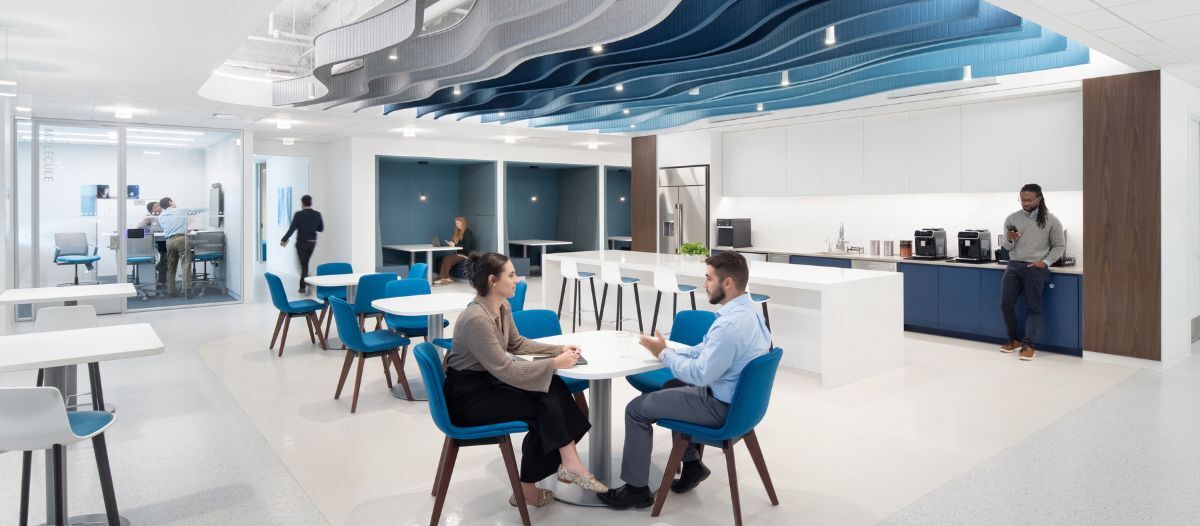
In today’s workplace, experience is everything. Vibrancy, collaboration and a sense of belonging are all things workplaces can provide in abundance that working from home simply cannot. In striving to create this experience, acoustic elements that impact humans are often ignored. Spaces are typically designed to minimize sound under the assumption that quieter workplaces better enable employees’ ability to focus, but new research shows that moderate noise levels can boost productivity while also enhancing overall human well-being.
That may sound counterintuitive, but it all has to do with the type of sounds people are presented with and what they are trying to accomplish.
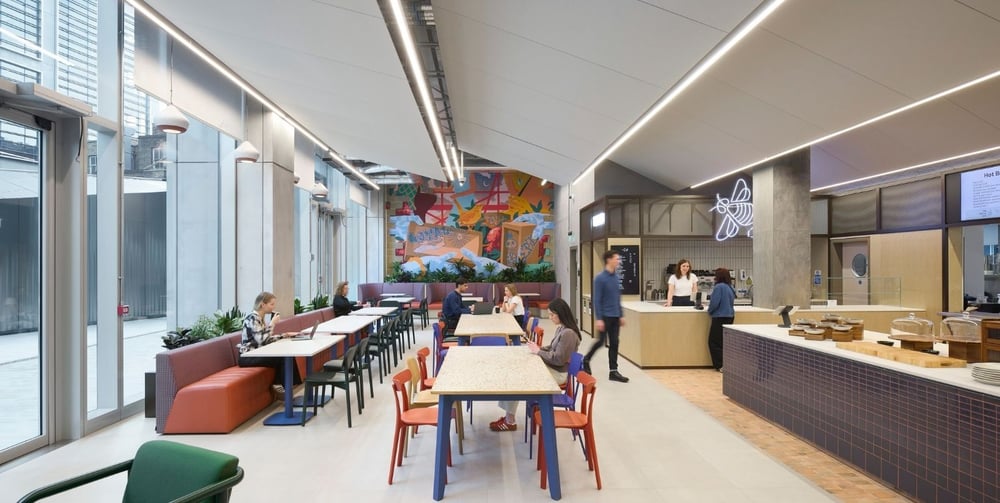
Image provided by HLW.
How do different sounds impact humans?
Humans have been programmed over hundreds of years to react to sounds. Hearing is the primary warning sense, and it affects humans deeply both physiologically and psychologically.
For thousands of years, birdsong has been an indication that people are in a safe environment free from predators, so they naturally feel at ease in its presence. Human speech is one of the most distracting sounds. People are pre-programmed to take an interest in the words being said by their fellow humans and naturally focus their brains’ resources on listening to those sounds.
With that in mind, it is no surprise that the sound of a workplace affects people deeply. After all, there is plenty of human speech. Add keyboards clicking, footsteps on hard surfaces, HVAC systems humming, and there is plenty going on that could disrupt focus.
But does it really?
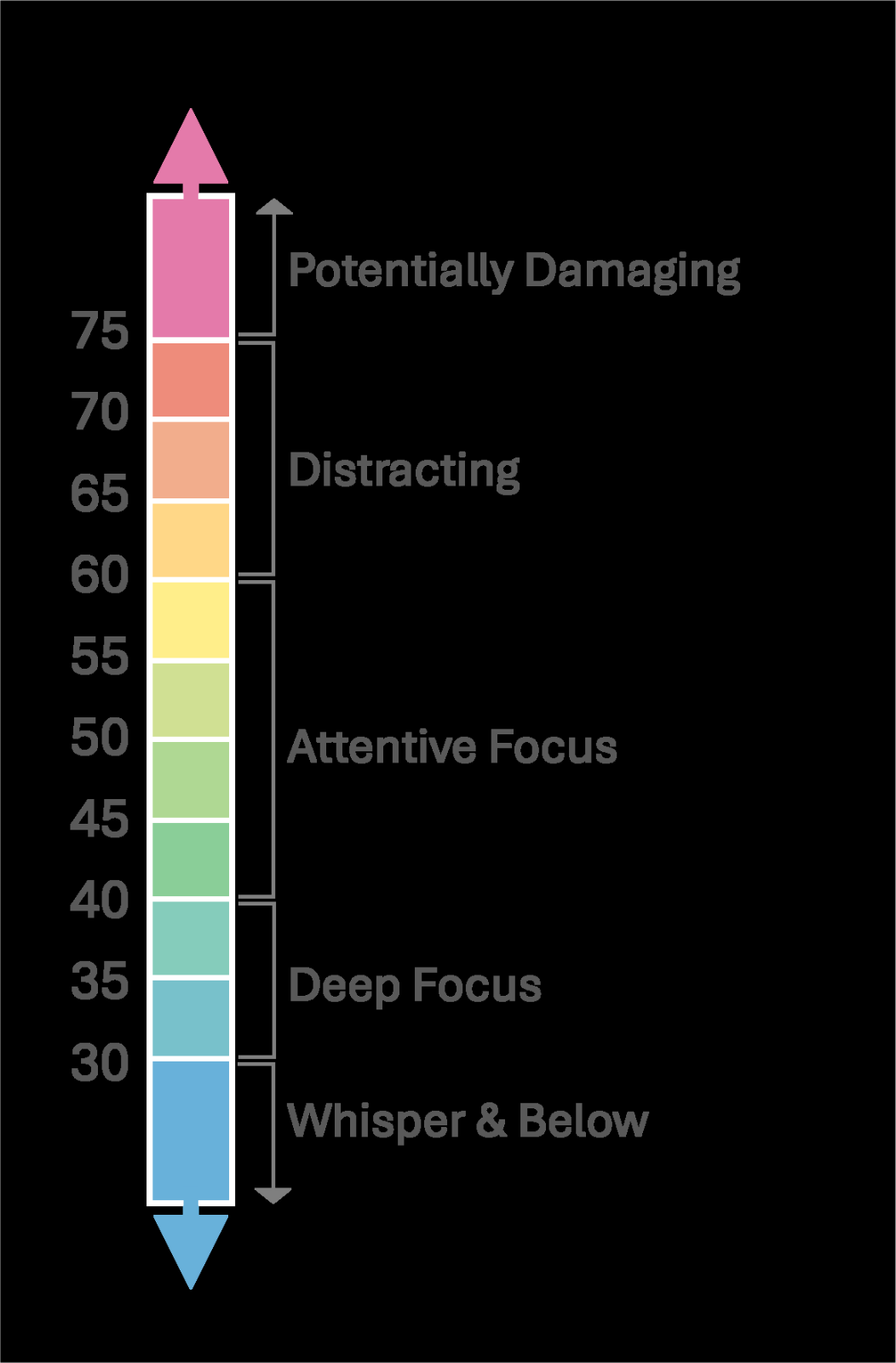
While it may seem that the combination of all these sounds would add up to a high degree of distraction, it is not the overall volume that distracts people, it is particular sounds, specifically, ones that peak higher above the baseline volume that catch their attention.
This is because sudden, loud or high-frequency sounds trigger the sympathetic nervous system (fight or flight) causing a surge in cortisol, increased heart rate and constricted blood vessels. It is easy to see how something incredibly loud would have this effect, but the same holds true for footsteps in a quiet office. If the office is noticeably quiet, those footsteps seem amplified because there is no other sound to drown them out. One person talking draws more focus than the hum of multiple voices. It is not the elimination of sound that is required; it is the modulation of its peaks and valleys that truly reduces distraction.
New studies show that moderate levels of consistent noise increase the ability to focus. Part of that is due to auditory masking, which is when steady, low-frequency sound waves interfere with the sudden percussive ones that might cause distraction. The other factor has more to do with the brain itself.
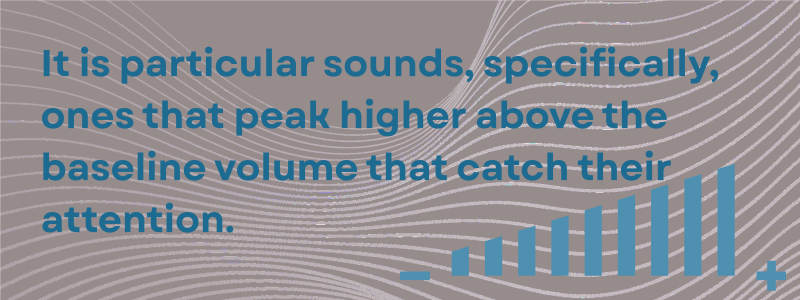 Low to moderate noise levels (~40–60 dB) enhance creative thinking and abstract problem-solving by providing just the right amount of stimulation to shift the brain into associative thinking mode. It is counterintuitive, but gentle noise provides just enough sensory input to nudge the brain into an alert, attentive state.
It is when sound levels rise above a baseline rating of 60 dB that the volume simply becomes more than the brain wants to process.
And while 40–60 dB helps provide the right level of sensory input to nudge the brain into an attentive state, quieter spaces of 20–40 dB are generally considered optimal conditions for deep focus work. The graphic below provides a quick understanding of how dB ratings correspond to optimal work environments.
Align acoustics to tasks
While there is a lot of research on how sound impacts the ability to focus, creating the right acoustic environment in a workplace is as much an art as it is a science. Still, there are some practical steps that can help reduce the amount of trial and error required.
The first step is to understand what kind of workplace facility managers want to create and what their people need. If people are brainstorming, performing simple repetitive tasks or jumping frequently between tasks, a little noise can get the mind going. This is great for most open offices seeking vibrancy and peak productivity.
If employees are primarily trying to solve a tricky problem, read detailed documents or learn something new, a quiet room may be the better option, even if it risks occasional distraction.
In many cases, different employees perform different tasks, and their ideal sound level may not be the same. Finding commonalities between groups or functions and creating different sound zones may be necessary.
Listen to the workplace
Once requirements are understood, the next step is to conduct a sound study of the office. Having an acoustician come in, perform the study and offer recommendations on ways to improve the space is the most comprehensive approach. However, a simple self-assessment is enough in many cases.
With a basic sound meter, office managers can record sound levels across the office. A few times a day, they should walk the floor and record the decibel rating of each room, and in several locations in larger spaces. Consider from where sound may be emanating: large windows along a busy street, HVAC ducts, and proximity to a work café or conference area should receive special attention.
It is important to review the sound meter specifications and recommended processes for recording. Most sound meters allow for recording a snapshot in time, or an average over a specified duration. While the average shows how the space typically sounds, it is the peaks that cause distractions. Therefore, it is recommended to record both the average and the peak, or the highest dB rating above the average.
Be sure to take readings at ear level. This means sitting in the workstation seat to perform the recording rather than standing up. Not only is this where people will be experiencing the sound, but there are many elements at the individual workstations that affect acoustics. The desk itself, monitors, lights overhead and divider panels, felt-covered and otherwise, all affect sound waves at that very critical location.
By recording this information on a floorplan, different acoustic zones develop. These points can also be arranged into a grid below, with the scale determined by the range of the dB ratings.
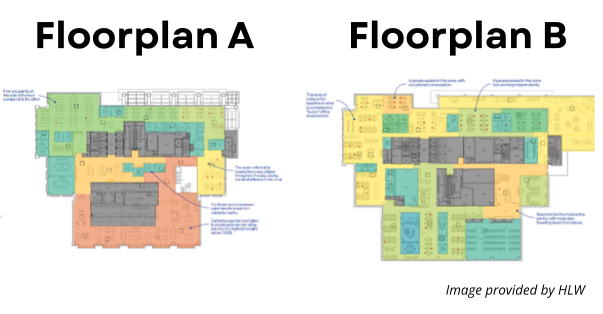
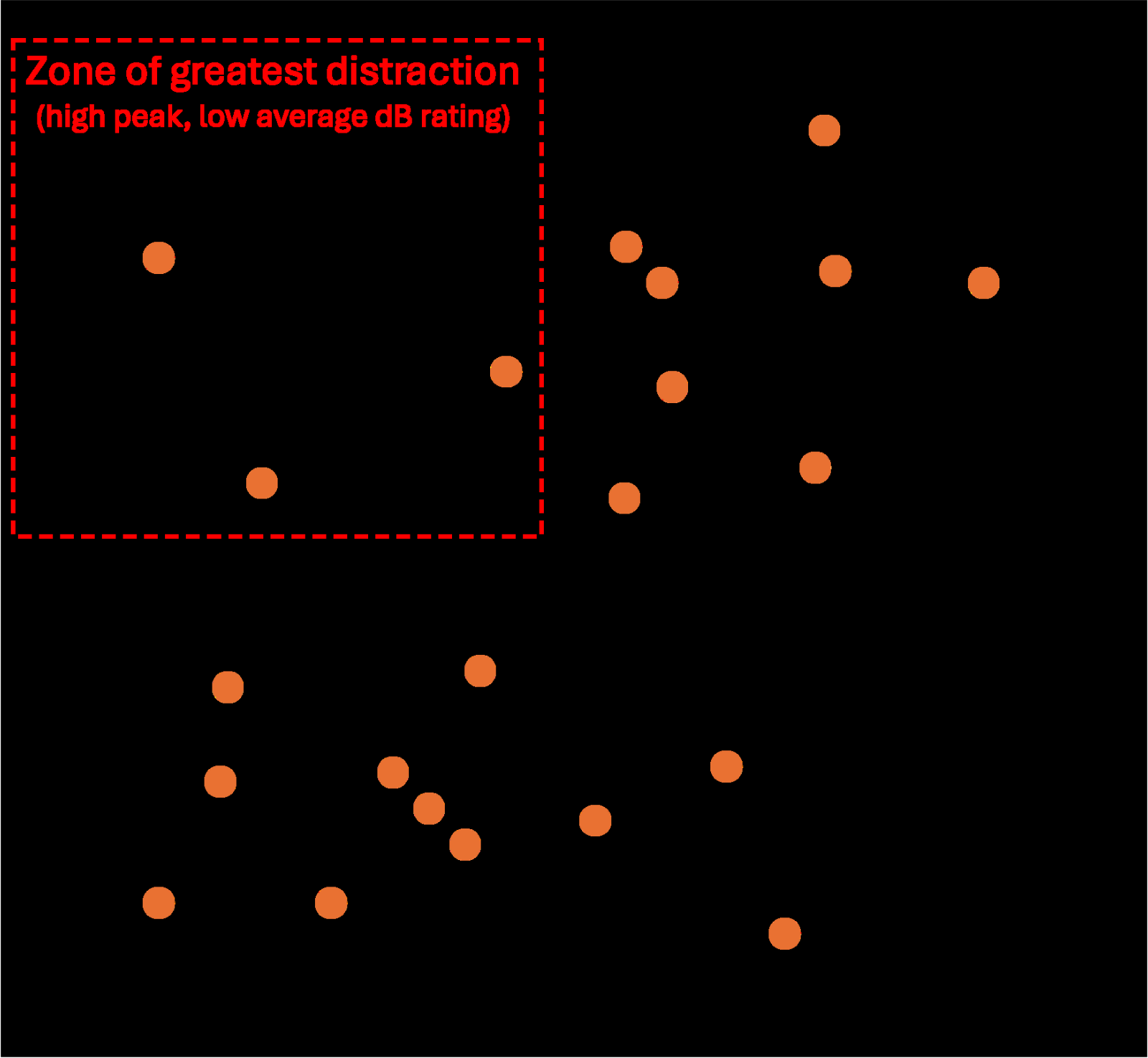
Image provided by HLW.
How can FMs optimize workplaces?
Now it is time to put the data into practice. Look for spaces with the greatest range between the average dB rating and the peak rating. While most workplaces should aim to remain between 40 and 60 dB, the goal is really to modulate the peaks and valleys while maintaining a reasonable volume close to that range. The goal is to filter out harsh or disruptive sounds, while cultivating a lively, engaging atmosphere.
This is best accomplished by capturing existing sound waves and redirecting them, naturally modulating sound levels and creating a more consistent level of background noise. Curved or angled surfaces, moderate density materials like wood, and the use of ceiling baffles, are common strategies employed.
 In these instances, it is best to look to areas where activity might be occurring: a nearby work café, reception area or maybe an IT help desk. Creating an auditory connection that allows the sound to bleed through, in a diffuse and modulated way, helps maximize the energy from those spaces and carry it through the office. This means physically opening these areas while also redirecting sound through angled surfaces, curves, acoustic baffles or moderately acoustic materials.
If these spaces do not exist, it might be worth looking into soundscaping options. There are companies that create custom office soundscapes — soundtracks that add a level of noise to help people focus, feel soothed or feel energized. These can modulate through the day or the week as needed.
While these strategies focus on workplaces that feel quiet and unenergized, with low dB ratings, many of the same strategies should be employed in louder, energetic offices as well. The difference in those cases is that some additional sound dampening needs to be considered.
This may mean adding acoustic ceiling tiles in key areas, like around HVAC ducts or along circulation corridors, replacing hard surfaces with carpet or wood, or even adding soft furnishings.
There are many products on the market that deal with area acoustics, enabling acoustic adjustments directly at the workstation level. These are great because occupants can get all the benefits of sound buzzing above the desk, but with acoustic dividers, thick felt light fixtures or ceiling baffles to keep things modulated at ear level.
Did it work?
Once complete, it is a good idea to perform another sound meter recording to understand the impact. Did the peaks get reduced? Is the workplace within optimal ranges?
Being able to measure the change is important, but the true measure of success is something more intangible. Signs of success include whether people feel like they are part of something larger happening around them when they walk into the office, whether they steadily pace through tasks throughout the day or get stuck when switching from one to the next, and whether they feel confident approaching a coworker with a question.
It is also worth asking if the office acoustics were designed to create this type of energetic, vibrant workspace. If the answer is no, there are likely some changes needed to ensure the acoustic design evolves along with the workplace’s objectives.

Brian Ledder is an experienced designer and planner focused on improving urban spaces while creating dynamic experiences. He has a background in architecture, real estate development and GIS, providing a diversified perspective of the built environment and a strong ability to communicate ideas, lead projects, and develop unique solutions.
References
Images and charts provided by HLW.
Read more on Workplace and Facility Operations or related topics Occupant Health , Workplace Utilization and Space design and planning
Explore All FMJ Topics