
 Membership
 Network
 Regional Sites & Affiliates


 Events
 Participate
 Resources

 Training
 Credentials
 Government


 Content Channels
 Tools
Tools


 Business Overview





Structured Response for Water Intrusion Events
Integrating ICS into building restoration operations
In December 2024, Duke University Hospital (North Carolina, USA) experienced a historic water loss that reportedly costs tens of millions of dollars. While the scale and circumstances contributing to this incident’s costs may be extraordinary, it emphasizes the reality that the water damage restoration services industry was projected to reach US$7.1 billion in 2025 due to the frequency and severity of water loss events within the built environment.
Water leaks happen within buildings. When a significant leak occurs, it is important to safeguard both business operations and people through a coordinated response, especially when it involves multiple parties with different expertise.
Some responsibilities among these parties overlap; others compete for time and money.
Emergency managers are familiar with the Incident Command System (ICS), an all-hazards framework that manages large-scale incidents through a standardized and scalable organizational structure. Water intrusion events that affect building operations are effectively managed using the ICS approach. Such incidents align with the ICS structure allowing the coordination of facility management, safety, restoration contractors and building occupants, under a single, response-oriented command.
Water intrusion events pose significant hazards to building occupants, including slips and falls, electrical shock, structural instability and potential exposure to contaminated water.
 Restoration contractors experienced with responding to these incidents also encounter risks as they enter unfamiliar and specialized environments (e.g., laboratories, pharmaceutical facilities). Building owners and restoration contractors sharing the same worksite should be aware of Occupational Safety and Health Administration’s (OSHA) Multi-Employer Worksite policy. In this setting, the building owner is responsible for ensuring that contractors are aware of known workplace hazards while also maintaining safe working conditions in areas under their control. The restoration contractor is primarily responsible for protecting its workers from the hazards it creates or encounters in the performance of the response activity. A core ICS principle is the use of standardized methods to communicate and manage these hazards across the different employers.
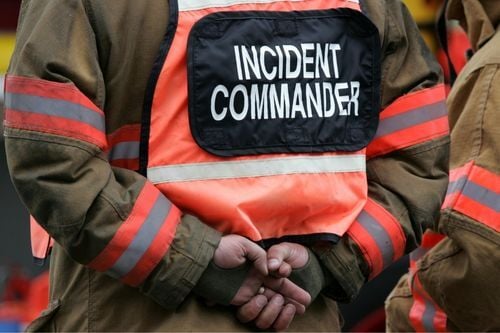
In many organizations, relying on ad-hoc responses to water intrusion events can lead to poorly defined roles, communication failures and unmanaged hazards. Larger property holding organizations frequently use a risk manager or safety officer role to oversee building-wide restoration activities. Yet overseeing water-intrusion response often requires restoration-specific technical expertise (e.g., moisture intrusion, drying standards) that falls outside the typical skillset of traditional safety professionals. This misalignment may delay sound decision-making and lead to sub-optimal outcomes. ICS assigns responsibilities based on subject-matter expertise. To promote operational efficiency and risk management, the response is governed through command and general staff positions: incident commander, safety officer, liaison officer, operations section chief, public information officer, planning section chief, logistics section chief, and finance/administrative section chief.
Contractors and building representatives typically involved in water intrusion response can be assigned to ICS roles to manage life-safety, property protection and business continuity. It is important to note that the ICS framework includes other roles and positions that contribute to a comprehensive incident response.
ICS framework for water damage restoration
The ICS provides a framework for assigning roles based on expertise and authority rather than convenience. The system activates when water damage exceeds routine maintenance capabilities or involves multiple stakeholders, complex hazards or extended restoration timelines. The benefit of this approach is that it establishes clear communication channels among the parties, minimizes duplicated effort and aligns technical decisions with qualified personnel. Each position operates within defined authority yet remains accountable to the overall objectives of life safety, property protection and business continuity.
Incident commander
 The incident commander is the individual with overall authority for managing the response, setting priorities and approving incident objectives. In a water damage restoration scenario, the owner’s representative may serve in this capacity, if they are authorized to commit resources, make decisions about the facility and interface with contractors.
The role operates through the ICS principle of Management by Objectives, which ensures that the team has a clear understanding of what needs to be accomplished. Return-to-operation goals should include measurable criteria for restoring the building to normal functionality, such as project milestones, occupancy readiness standards and communication protocols to guide reopening decisions. Protecting occupants and contractors during restoration activities is inherent to a successful response.
Response decisions involve determining whether water-damaged materials will be restored through drying procedures or require removal, while weighing factors such as water contamination, type of building materials affected, and potential for mold growth.
Safety officer
 The safety officer serves as the incident commander’s principal advisor on hazard identification and risk control throughout the restoration and recovery process. From the perspective of OSHA’s Multi-Employer Worksite policy, the safety officer collaborates closely with the restoration contractor’s safety representative to protect workers navigating unfamiliar environments and to address both pre-existing building hazards and new risks created during the response activities. Hazard communication means providing contractors with known information about chemicals and biological risk, as well as legacy building contaminants (e.g., asbestos, lead-based paint) that they may encounter during the response activities.
Although restoration work often begins immediately following water intrusion, the safety officer should review the contractor’s site-specific safety plan before field activities commence. This approach ensures that PPE, emergency procedures and hazard control measures align with the building’s risk profile. Ideally, the building owner’s contingency planning includes vendor prequalification and advance review of contractor safety documents, as these precautions are valuable for complex building environments.
Operations section chief
 The operations section chief directs tactical operations and oversees incident restoration activities in support of the incident action plan (IAP). In a water damage restoration scenario, this includes daily review of performance metrics (e.g., moisture mapping), execution of the IAP, and real-time allocation of resources. Restoration contractors, meanwhile, are responsible for implementing engineering controls such as air filtration devices and conducting moisture monitoring to determine drying progress.
Key responsibilities of the operations section chief include reviewing and approving contractor work plans to ensure alignment with incident objectives. Because accountability for performance metrics rests with the operations section, tasks such as setting drying goals or approving demolition activities fall under their purview. The safety officer retains authority to stop any unsafe act or condition, including operational decisions. This check-and-balance ensures that all tactical activities prioritize the safety of personnel.
Planning section chief
 The planning section chief serves as the incident’s analytical and documentation hub, overseeing collection and processing of situation and resource information. Their primary responsibility is to develop the IAP for each operational period, aligning objectives and tactics for the incident. The planning section chief collects, analyzes and distributes information, including situation and resource status. This includes moisture maps, drying logs, personnel rosters and equipment lists to support decision making. Accurate accountability of people and resources support both worker safety and cost-effective operations. In a vendor-based restoration scenario, contractor submittals flow through planning, enabling operations to adjust tactics accordingly. Technical specialists (such as industrial hygienists) may be assigned within the planning section to bring knowledge in fields like building science and risk assessment to support the overall planning process.
Logistics section chief
 The logistics section chief is responsible for delivering the facilities, services and material support that keep incident operations running. By coordinating access control, staging areas, loading docks, elevator priorities and site infrastructure, restoration activities can proceed as planned. The logistics section chief also manages parking for equipment trailers, placement and removal of waste containers, and transportation and supply services. Central to the role is proactive problem-solving: anticipating constraints (such as limited access, surge in equipment, or changing restoration phases) before they disrupt work. The logistics section chief also provides input to the IAP, identifies support requirements for each operational period and ensures that the logistical infrastructure aligns with the tactical needs set by the operations section chief.
Public information officer
 The public information officer (PIO) is responsible for coordinating external communication about the incident. In a water intrusion event, which can disrupt building operations, create safety risks and require evacuation, clear and timely communication is important to manage stakeholder expectations and mitigate misinformation. The PIO serves as the central point for information dissemination, using platforms such as email bulletins, town-hall briefings, web posts and media releases. The goal is to ensure all occupants are informed about the response and recovery process. Transparent communication means sharing updates on both successes and challenges, as this builds trust and maintains confidence in the restoration process. The PIO also provides instructions, such as when occupants can retrieve personal items, to reduce uncertainty and support business continuity.
Challenges & benefits
When using ICS to manage a water-intrusion or restoration event, common challenges include resistance to establishing a formal command structure during urgent work, insufficient ICS training among building-management or vendor staff, ambiguity over authority and decision-making lines, and coordination difficulties when external contractors are unfamiliar with ICS principles.
On the other hand, applying a structured ICS framework offers significant advantages: clearer role definitions and communications, improved coordination across work groups, enhanced accountability, more efficient use of resources, potentially faster recovery outcomes, improved cost oversight, and stronger safety management through systematic hazard oversight.
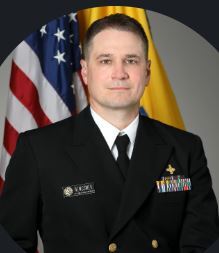
Capt. Derek Newcomer is a commissioned officer in the United States Public Health Service detailed to the National Institutes of Health (NIH), where he serves as Deputy Director of the Division of Safety, Office of Research Services. The Division acts as the agency’s principal advocate and advisor for worker safety, providing technical expertise and guidance across a broad range of occupational safety and health issues, including support for water intrusion and related environmental hazard response projects.
References
Images via Getty Images.
Read more on Risk Management , Occupancy & Human Factors and Facility Operations or related topics Facility Resilience , Business Continuity and Emergency preparedness, response and recovery
Explore All FMJ TopicsRelated articles
-

A New Approach
Improving business continuity with alarm managementBy Brad Freeman09.09.2024 -

Beware of Growing Cyberthreats
Why it’s time for stronger facility cybersecurityBy Andrew Harris & Eric Headington10.30.2024 -

Going Up?
Keeping elevators safe & compliantBy Dave Myers & Doug Taylor11.06.2024