
 Membership
 Network
 Regional Sites & Affiliates


 Events
 Participate
 Resources

 Training
 Credentials
 Government


 Content Channels
 Tools
Tools


 Business Overview





The Big Chill
Antifreeze code compliance for fire sprinkler systems
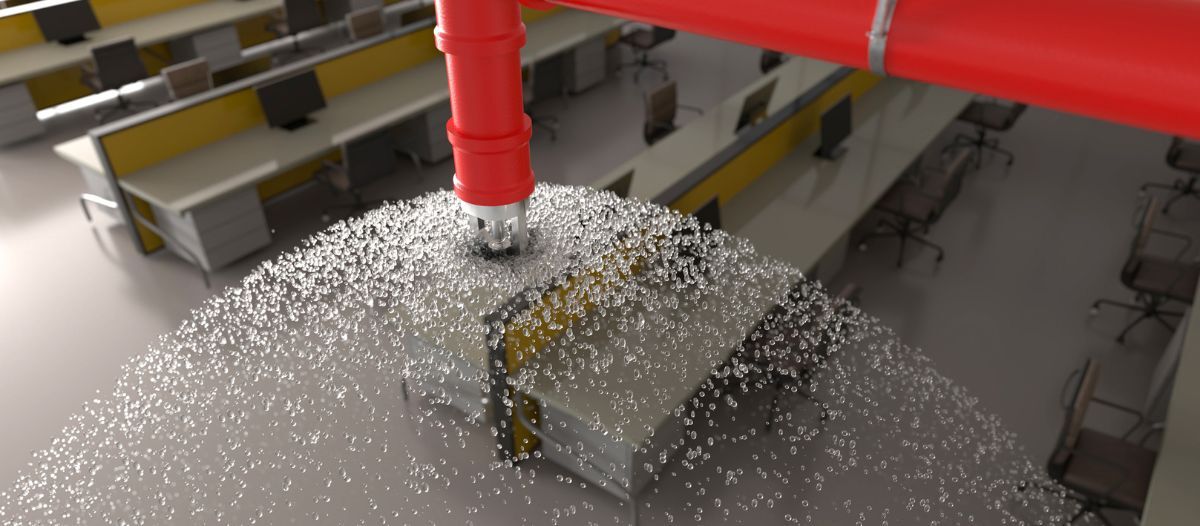
Over the next year, facility managers whose properties have fire sprinkler systems that use antifreeze can expect to have a different conversation than usual with their sprinkler system inspector. This is because of the September 2022 deadline for compliance with National Fire Protection Association (NFPA) fire sprinkler standards. The standards require agency-listed antifreeze in new and existing antifreeze systems to ensure every system is designed and installed using the safest and most reliable practices in the industry.
In cold weather, water-filled pipes for fire sprinkler systems must remain above 40 F (4.44 C) to prevent severe damage, leaks and pressure drops caused by severe freezing. Traditionally, glycerin and propylene glycol-based antifreeze solutions have been used in sprinkler systems in residential, light hazard, ordinary hazard and storage applications. That changed after several well-publicized tragedies where incorrect concentrations of flammable ingredients in these types of antifreezes ignited and led to injuries and fatalities.
New antifreeze solution requirements
In response, NFPA and UL conducted extensive research that showed certain concentrations of antifreeze would actually intensify a fire. Based on the research, UL established requirements for the performance of antifreeze solutions for wet fire sprinkler systems. Now, for an antifreeze solution to obtain an agency listing, the solution, which must be factory premixed, must pass rigorous tests to prove that it will not only protect the fire sprinkler system from freezing, but also enable it to operate properly and effectively suppress any fire. A listed antifreeze solution should:
-
Have a freeze point that remains consistent over time.
-
Flow free through the sprinkler pipes.
-
Never freeze when the temperature is at, or warmer than, its minimum use temperature.
Additionally, listed antifreeze must incorporate corrosion resistance properties to protect sprinkler pipes against premature degradation, costly repairs and possible system failure.
While new systems have had to use listed antifreeze since 2012, NFPA 25, the Standard for Inspection, Testing, and Maintenance (ITM) of Water-Based Fire Protection Systems, gave existing systems until Sept. 30, 2022 to be drained and replaced with a listed antifreeze solution. For FMs responsible for antifreeze systems, this means planning in 2021 for the next annual ITM visit. Older glycerin and propylene glycol antifreeze cannot demonstrate that they can deliver fire protection safely and effectively.
Defending against costly corrosion
A significant aspect to achieving a UL listing is developing and validating the formulation’s corrosion resistance. The constant presence of water and oxygen in contact with metal pipes and fittings makes wet sprinkler systems vulnerable to high levels of corrosion. Galvanic corrosion can also be a problem when the system is comprised of more than one metal. Corrosion can not only render a sprinkler system unable to hold water, but can also compromise the system’s designed flow and pressure values. Debris from corrosion builds up, pinhole leaks form, and friction from surface roughness obstructs flow in sprinkler drops and feed mains, all of which can lead to the system not operating effectively in the event of a fire.
A separate form of piping corrosion, microbiologically influenced corrosion (MIC), was not specifically addressed by UL, but is a significant challenge that plagues both wet and dry fire sprinkler systems. According to FM Global, MIC is responsible for 10-30 percent of corrosion in U.S. piping systems. In addition to steel piping, other areas susceptible to MIC include caps, valves, fittings and supply tanks. MIC is the localized and rapid development of metallic corrosion, manifested in the form of pitting, crevices and craters. This degradation is caused by the growth of certain aerobic and anaerobic bacteria, or hybrids of the two, which tend to form biofilms. In turn, this creates a sub-environment with different flow characteristics, pH levels and chemical concentrations. Together these conditions can spur MIC and can combine with the more well-known nonbiological corrosion caused by oxygen and acidic exposures.
In areas subject to freezing conditions, a key factor that can worsen the growth of MIC in sprinkler systems is the use of antifreeze that lacks high-quality corrosion protection. Antifreeze solutions can add to the acidity of sprinkler system water, leading to biofouling from bacterial growth and setting up the conditions for a persistent MIC problem that will compromise the reliability of the system piping. Therefore, using a product that has built-in safeguards is worth considering.
Maintenance of wet versus dry systems
During the years before listed antifreezes arrived on the market, dry pipe systems were often chosen to fill the void and protect fire sprinklers from freezing. To this day, dry systems are commonly used across many applications including attics, unheated warehouses, commercial freezers, overhead canopies, loading docks and parking garages. However, to avoid corrosion in dry systems, the sprinkler system piping must be pitched to promote drainage of condensation at its lowest points. The arrangement requires piping to be pitched a half inch per 10 feet (4 mm/m) for all branch lines, and one-fourth inch per 10 feet (2 mm/m) for all other sprinkler piping. This adds to the installed costs of such a system, which also requires auxiliary drains for each pipe section to collect condensates from the pressurized air while minimizing loss of air pressure during maintenance. These systems are also often equipped with heat tracing to provide freeze protection, the cost of which ranges widely. Furthermore, the need for pitched piping presents installation and inspection challenges in smaller facilities or those with complex roof systems.
Beat the deadline
FMs should be proactive on compliance to enhance their life safety practices. A listed product provides peace of mind that the antifreeze meets or exceeds the most rigorous standards. Once implemented, the system needs only be tested annually by a qualified inspector to ensure the freeze point is being maintained.
FMs should ask the following questions before selecting an antifreeze for a fire sprinkler system:
-
Does it meet the rigorous technical challenges of becoming listed as required by NFPA?
-
Is it listed and approved for use with the application and the size of the system?
-
Will it protect the system against damage from exposure to the severe cold?
-
How does it contribute to the prevention of corrosion and MIC?
Why annual antifreeze testing is critical
Finally, with new safeguards for life safety in place, closing the loop with annual testing by a qualifi ed inspector, as required by NFPA 25, ensures that the antifreeze maintains its proper concentration and freeze point. Either of these can be disrupted by leaks, pressure surges or temperature changes, which may lead to antifreeze fl owing out of, or water fl owing into, the system. The concentration of an antifreeze solution should always be no more than the least amount necessary for the anticipated minimum temperature. If concentration conditions deviate from allowable tolerances, the fl uid must be drained and replaced. With a little due diligence today, FMs can have peace of mind that they have taken the most advanced steps to protect building occupants and assets from devastation by fi re.

Mark Knurek, North American sales and marketing manager, Lubrizol Advanced Materials has more than 20 years of experience in strategy, marketing, sales, product development, engineering and brand management. He is an executive governing board member of the International Fire Sprinkler Association (IFSA), a member of the Suppliers and Manufacturers Council, Quality Assurance Committee and Residential Committee for the National Fire Sprinkler Association, and strong supporter of the American Fire Sprinkler Association. He holds a degree in mechanical engineering and an MBA.
Read more on Risk Management and Facility Operations or related topics Standards , Risk Management and Regulations
Explore All FMJ TopicsRelated articles
-
A New Approach
Improving business continuity with alarm managementBy Brad Freeman09.09.2024 -

Beware of Growing Cyberthreats
Why it’s time for stronger facility cybersecurityBy Andrew Harris & Eric Headington10.30.2024 -

Going Up?
Keeping elevators safe & compliantBy Dave Myers & Doug Taylor11.06.2024
