
 Membership
 Network
 Regional Sites & Affiliates


 Events
 Participate
 Resources

 Training
 Credentials
 Government


 Content Channels
 Tools
Tools


 Business Overview



The Competency Dividend
How skilled teams drive operational excellence

Workplace efficiency is essential to strengthening operational performance and enhancing organizational reputation. Whether operations encompass commercial buildings and residential communities or large-scale developments and industrial sites, efficiency is not just about speed, but consistency, reliability, safety, sustainability and quality.
Facility management teams are the mainstay of daily built environment functionality. Ensuring complex systems and critical services operate seamlessly, dependably and concordantly, FMs play a vital role in achieving workplace efficiency. Their responsibilities extend across a wide range of integrated services, each requiring a high level of coordination, technical expertise and well-defined processes. And as industry standards evolve, advanced technologies emerge, occupant expectations heighten and sustainable practices are updated to reflect regulatory compliances, the need for ongoing training is essential.
Operational efficiency depends on FM’s commitment to service excellence, continuous improvement and professional competence, which makes training a fundamental pillar of success in the industry. Prioritizing well-structured FM training programs helps reduce safety risk, improve response times and enhance service quality. Training equips staff with the knowledge, technical skills and operational readiness required to perform their duties effectively, consistently and confidently. Employees gain a deeper understanding of their roles, the tools they use and the processes that support daily operations — when employees clearly understand operational procedures and equipment handling techniques, the probability of errors, service delays and operational disruptions is significantly reduced. And when employees feel their professional and personal growth are supported by the organization, they are more likely to become key contributors to operational improvement and innovation.
From reskilling to upskilling, training provides strategic benefits for organizations seeking efficiency, adaptability, engagement and new opportunities. Organizations that enable their FM workforce to grow and adapt sharpen their competitive edge and establish a foundation for resilience. Investing in employee training is not only a means of improving individual performance but also a strategic approach to reinforcing overall operational capability.
Accountability
Supporting on-the-job, classroom and online training fosters an initiative-driven mindset and a culture of accountability. When individuals clearly understand their roles, responsibilities and the impact of their work on overall operations, they become more attentive to detail, more committed to maintaining quality standards and more proactive in addressing issues. They actively participate in inspections, audits and performance evaluations, report discrepancies and ensure work is completed in accordance with contractual deliverables, which contributes to improvement strategies across the organization.
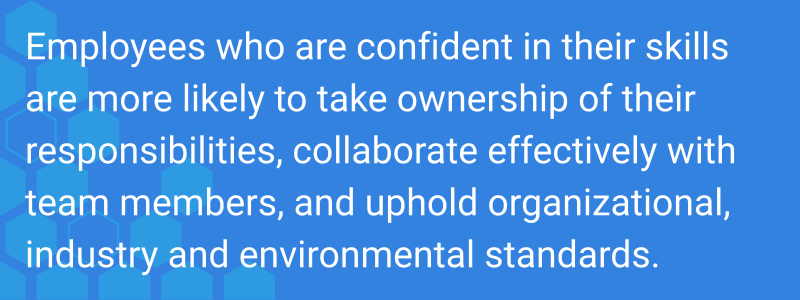
Investing in employee training strengthens workforce capability and enhances operational resilience.
Innovation
A strong training culture encourages personal growth, fosters a sense of purpose, provides motivation, enhances emotional intelligence and balance amid change. Training can transform task-oriented employees into skilled professionals who add value through critical thinking, problem-solving and innovation. When employees are continually exposed to new knowledge, diverse ideas, industry best practices and modern technologies, and they are more likely to identify opportunities for improvement in day-to-day operations. Instead of simply following established routines, employees engaged in the ongoing pursuit of knowledge and skills development actively contribute ideas and strategies that enhance efficiency, reduce waste, optimize resource utilization and improve overall service delivery.
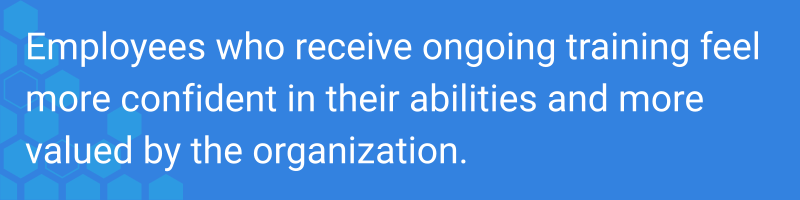
This increased confidence not only enhances individual performance but also boosts motivation and job satisfaction. As a result, employees are more engaged, more committed to organizational goals and more willing to go beyond their basic responsibilities to support operational improvements and overall success.
Risk management
FM teams frequently deal with equipment-, chemical- and operational-related risks. Through proper safety training, employees become aware of risk identification, hazard control measures, preventive maintenance strategies, emergency response procedures and environmental protection practices. This helps reduce workplace accidents and ensure compliance with environmental and safety regulations.
This helps them detect early warning signs of equipment failure, system inefficiencies or safety risks, and take timely corrective actions. For example, if not identified early, a minor fault in an HVAC system can lead to energy inefficiencies, occupant discomfort and increased operational costs (e.g., replacement parts, specialized repair). Instead of reacting to breakdowns or incidents, trained personnel adopt a proactive approach ensuring that potential issues are addressed before they escalate into costly disruptions or service failures.
Continuous training fosters a culture of vigilance, responsibility and continuous improvement. Employees become more engaged in monitoring performance, reporting anomalies and suggesting process improvements. This not only strengthens operational resilience but also contributes to improved asset lifespan, reduced maintenance costs and enhanced service reliability. A proactive approach significantly improves the reliability and continuity of FM services. When employees can anticipate potential failures, managing unexpected situations and applying standardized procedures, organizations experience fewer operational delays, reduced maintenance costs and improved overall service performance.
Collaboration
Effective coordination between different teams is critical, as a failure in one service area can directly impact others or the entire organization. For instance, poor maintenance can affect energy efficiency; improper waste handling can lead to hygiene and compliance issues; lapses in water treatment processes can result in environmental noncompliance and reputational risks. Trained personnel are equipped to detect such risks early, take preventive measures and ensure that systems operate within defined parameters.
Through training sessions, workshops and cross-functional learning, employees develop better communication skills, understand workflows and service expectations, and gain a clearer understanding of how their roles connect with others. Ensuring that every role contributes effectively to overall workplace performance results in a more cohesive, more efficient working environment.
Business continuity
Training improves employees’ response capabilities during emergencies and high-pressure situations. Whether dealing with equipment failures, safety incidents or environmental hazards, trained staff can act swiftly and correctly, minimizing damage and ensuring business continuity. They are more confident in coordinating with teams and implementing preventive, corrective actions.
Training enhances employees’ ability to follow standardized operating procedures and comply with organizational and regulatory requirements. It improves their emergency-response decision-making skills. Employees become more confident in handling unexpected challenges, coordinating with teams and maintaining operational continuity amid system failure, extreme weather or other business disruptions.
Bottom line
Complex built environments require competence across a range of skills and collaboration across multiple departments. Facility management forms the backbone of any successful workplace — it is the connector and core to workplace efficiency. Keeping that essential foundation at top form through ongoing training will make the difference between organizational inertia and operational excellence.

Aykean Forde CFM SFP, FMP, MBA, MA, is the facilities director of The International School Port of Spain in Trinidad & Tobago (grades Pre-K-12). Forde serves as a trustee of the IFMA Foundation, is an IFMA Qualified Instructor and a past member of the IFMA Global Board of Directors. An ambassador of FM, she passionately serves and collaborates with others to positively impact workplace experience while leading organizations towards making their vision a reality. She has also spoken at conferences in Trinidad and Tobago, the Bahamas and the U.S.

Izzat Ali Khan, SFP, FMP, is the general manager at EFSiM Facilities Services. A seasoned FM professional, he is passionate about creating a positive impact in business through sustainability. He focuses on integrating sustainability and innovation in businesses to build the FM industry and make the world a better place to live.
References
Top image via Getty Images.
Read more on Leadership & Strategy , Facility Operations and Sustainability or related topics Training , Team Management , Operations , Sustainable Facility and Facility Resilience
Explore All FMJ TopicsRelated articles
-

Artificial Intelligence in FM
The stakeholder’s perspectiveBy Dr. Jake Smithwick & Dr. Kenneth Sullivan & Nneka Ubi05.01.2024 -

Mastering Change in Hybrid Environments
Insights from global operational leadersBy Meg Swanson09.02.2024 -

Plugged In
Solving the data disconnect in real estate and FMBy Amanda Muzzarelli & James Waddell07.01.2024