
 Membership
 Network
 Regional Sites & Affiliates


 Events
 Participate
 Resources
 Training
 Credentials
 Government


 Content Channels
 Tools
Tools


 Business Overview




The Great Reset
The new culture of work & work enablement

COVID-19 caused virtually all businesses to implement their FM and workplace business continuity plans. Most organizations realized that regardless of whether they had a specific planned response to a global pandemic, market supply and demand was impacted. The extent of the impact challenged the fundamental assumptions of access to infrastructure, logistics, telecommunications and broadband networks, mass transport, support staff, medical facilities and much more. A global shutdown ensued.
Remote work became an overnight mandate. Employers realized how adaptive their teams could be when their circumstances were a shared experience helping each other through the pandemic. Remote work has become the global norm over the ensuing months. During the pandemic and ensuing return to the office, there have been benefits realized by companies, employees, and other stakeholders that companies are working to understand. CRE professionals are working closely with business leadership, human resources and their IT departments to discuss and analyze the changes and the potential implications for their organizations.
As companies return to the office, they are taking note of the important shifts that have broadly and almost universally occurred. There is a great reset underway. Though workplace changes such as work from home, hoteling, flexible and shared space, co-working, and other approaches to workplace occupancy strategy gained traction during the 10 years following the global financial crisis (GFC), the broad implementation of workplace change by corporations and institutions was slow.
The GFC launched a decade of change and business transformation that resulted in more focus on an organization’s purpose, environmental, social and governance (ESG) impact, compliance and reporting, the sustainable development goals (SDG) established by the United Nations, brand, stakeholder experience, business resiliency, digitization initiatives and transparency. As real estate, facility and workplace leaders launched new response strategies, they viewed workspaces and the built environment as an ideal area to align corporate values and reflect them through the way it consumed and curated office spaces. There is a better understanding of the potential provided for new ways of working to accelerate business transformation objectives.
The C-Suite and business leaders have become aware of the challenges and advantages that the extended large-scale shutdown forced on their people and respective businesses. However, the positive overall impact experienced from work from home resulted in a desire to establish a new way of operating and a rethinking of the culture of work. Working from the office was the dominant workplace model before COVID-19. Part of the reason for this is that major workplace change can be difficult to effectively implement without buy-in.
Various stakeholders struggled with embracing new workplace plans. Managers were concerned they could not effectively manage their teams and outcomes without working together in the office. Employees feared they would miss out on interactions, promotions, team events, professional growth, networking and their daily routines. Business leaders were concerned that workplace change without buy-in could disrupt the business or result in a loss of talent, or productivity or management pushback, and therefore remained with the dominant model. It was more predictable and seen as the safer path.
C-Suite leadership has received feedback from employees that overall, they have a desire for more flexibility. This desire is shared with business leadership, management and shareholders. Employees have enjoyed the savings from reduced commuting, meals and clothing expenses. They have also enjoyed more time at home with family, less time commuting (hence better productivity), more time to relax and workout and potentially, a healthier lifestyle and reduced stress. Workers with young families have endured unique challenges that some employers are helping address by providing childcare subsidies, flexible working hours, extended work deliverables deadlines and other types of assistance.
Events over the past year have driven CEOs to scrutinize their company’s purpose, resiliency, brand, impact on the environment, society and community, corporate governance, compliance and transparency. Working from home and remote work has demonstrated that real estate costs, service support and travel costs can be reduced, environmental impact significantly improved, talent retention strengthened, SDG and ESG goal attainment improved and brand and reputation enhanced. Company leadership realizes that in addition to improved employee experience, there is a directly related reduction in CO2 emissions, waste and energy consumption. A newly imagined workplace and work-from-anywhere approach can result in an improved impact on the Triple Bottom Line of people, planet and profit.
This alignment of shared goals and outcomes resulted in a desire for more permanent space, place and work solutions when companies return to the office. Improved organizational resiliency is key to this workplace transformation. This will entail digitization and an improved experience for the effectiveness, uptime, functionality and cost of on-line work and meetings, choice of where to do the most productive work for different activities and functions. Additionally, a renewed commitment to the environment and reducing carbon footprints creates opportunities for small and diverse suppliers and new employees who previously did not have access to certain jobs/locations and could not relocate or commute.
Companies have made digital transformation and enablement a priority for remote work. This is an important fundamental requirement now and for the future culture of work. In the recently published The Experts’ Assessment: The Workplace Post-COVID-19, supported by all six IFMA Communities of Practice, the workspace sea-change is supported by results and feedback. Feedback from the survey indicates there are five underlying values and cultural requirements to successfully deliver upon the promise of productive, new models for space-as-a service and work from anywhere solutions for employees. Findings were that trust, talent, teams, technology and transformation are required to implement a new, effective and acceptable solution for those returning to the office.
The office for many organizations will be a place that is a destination for meetings, training, events or team activities that cannot be done effectively online or from remote locations. It will be intended to be accessible or reserved for a specific activity by a team or individual which cannot be done at home or remotely. The office will be a very different accommodation than it was before the pandemic.
FM leaders are conceptualizing remote co-working or flex work options, alternative meeting spaces, and other approaches to support work that cannot be executed effectively from home or headquarters. Hub-and-spoke models are developing which provide office space in a central business district and then other suburban office locations near where employees live. This model reduces the costs of occupancy, parking, meals and travel while improving the experience of the space for the employee.
The findings concluded that to return to the office, trust is imperative. Employees need to believe that measures are taken to access, clean and sanitize the building and space, provide clean, filtered air, and workspaces are safe, resilient and productive. Health, safety and wellbeing must be at the forefront and part of a sustained managed process visible to employees, suppliers and customers. This need for trust extends to third-party managers if the office is in a third-party managed property.
Talent is returning to offices focused on accommodating that talent for their work. Whether in-office or remote work, some extent of agility and flexibility is required. Talent attraction and retention remains integral to the sustainability of the organization and directly relates to the commitments of its SDGs and ESG goals. Also, collaborative space will be a top priority within new office environments as a destination for team members to meet up for face-to-face work and meetings. New spaces will be planned, serviced and provisioned for providing different types of collaboration space as many new offices will be consumed by talent as “space-as-a-service” in a work-from-anywhere environment.
Effective collaboration in the new culture of work will provide spaces and work solutions for talent to team. This will only be possible and effective if technology at the office and remote locations are reliable, safe, secure and compliant. This provides an organization with important flexibility and resiliency as it has become an area of focus for company investors, shareholders, leadership and talent.
Experience and enablement are all relative. Business transformation is as unique as the companies that are changing for their customers, employees, investors and communities where they operate. Occupancy strategy has been redefined, regardless if companies had adequately prepared for the unprecedented circumstances that have arisen amidst the pandemic. The great reset is underway. It is time for FMs to rethink and leverage this point in time and create the path for their transformed workplace to enable their organization’s new culture of work.

Maureen Ehrenberg, FRICS, CRE, LAI is CEO of Blue Skyre IBE (BSI). An internationally recognized expert on real estate business transformation, strategic redesign for the future of work and digital facility management, Ehrenberg serves as an adviser and board member to global organizations, investors and real estate technology providers. Before co-founding BSI, she was global head of real estate operations and strategic services for WeWork and has held global executive roles with JLL, CBRE and Grubb Ellis Company. She serves on several industry boards. She is a management trustee for the International Union of Operating Engineers, a trustee of Roosevelt University and a member of the Real Estate Advisory Board for the New York State Teachers Retirement System (NYSTRS).
References
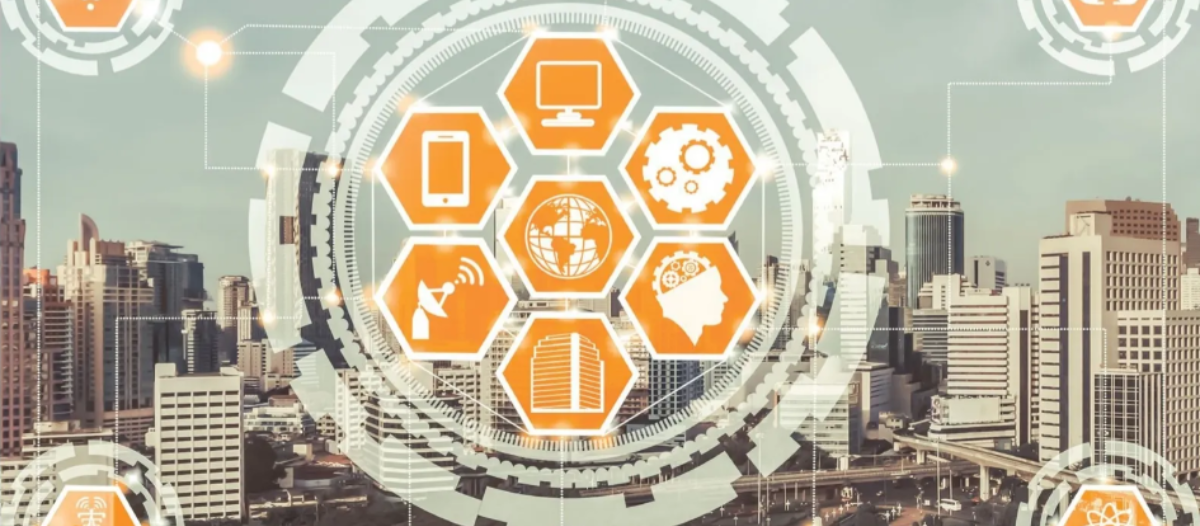
Top image via Getty Images.
Read more on Leadership & Strategy and Real Estate or related topics Workplace Utilization and Change Management
Explore All FMJ TopicsRelated articles
-

Artificial Intelligence in FM
The stakeholder’s perspectiveBy Dr. Jake Smithwick & Dr. Kenneth Sullivan & Nneka Ubi05.01.2024 -
Mastering Change in Hybrid Environments
Insights from global operational leadersBy Meg Swanson09.02.2024 -

Plugged In
Solving the data disconnect in real estate and FMBy Amanda Muzzarelli & James Waddell07.01.2024