 Membership
 Network
 Regional Sites & Affiliates


 Events
 Participate
 Resources

 Training
 Credentials
 Government


 Content Channels
 Tools
Tools


 Business Overview




The Hidden Infrastructure Behind Respiratory Protection
Why it matters
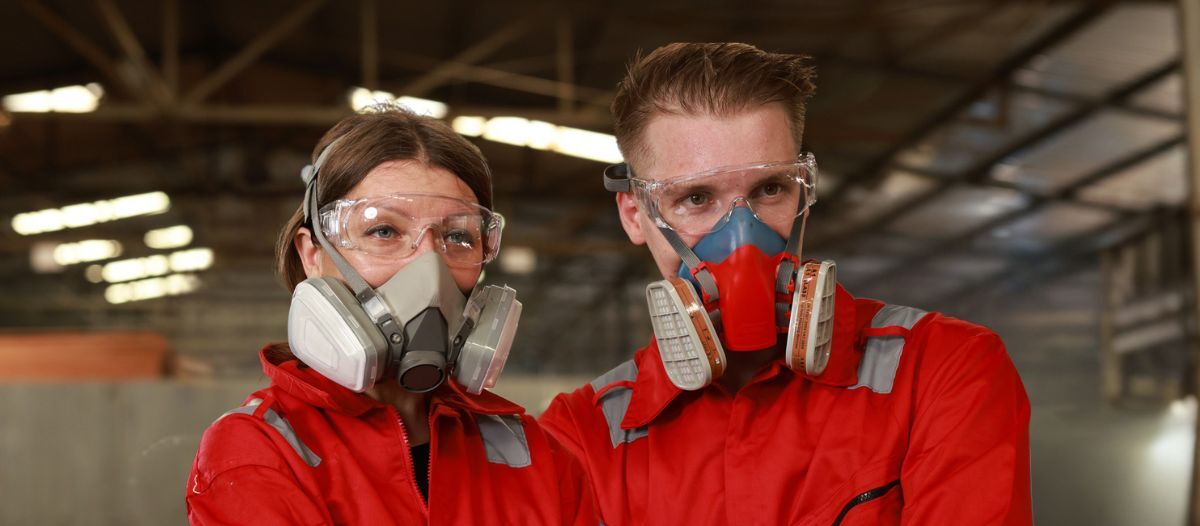
Respiratory protection is a critical safeguard across health care, manufacturing, energy and emergency response environments. Whether protecting a nurse from airborne pathogens, a technician from chemical exposure, or a first responder entering a hazardous scene, respirators serve as a frontline defense against invisible threats.
What is far less visible, however, is the infrastructure that makes those protections possible.
 Behind every certified respirator is a highly specialized system of testing, approval and oversight designed to ensure that equipment performs reliably under hazardous conditions. This system — largely operating in the background — functions as a cornerstone of occupational safety. When it works well, it is rarely noticed. When it falters, the consequences can ripple quickly across industries.
Recent developments have brought renewed attention to the fragility of this invisible infrastructure. A proposed Fiscal Year 2027 U.S. federal budget includes significant reductions in funding for the National Institute for Occupational Safety and Health (NIOSH), the agency responsible for respirator approval. The proposal also includes the elimination or restructuring of several core programs and reduced resources for the Personal Protective Technology program, which supports certification activities.
These proposals come on the heels of a period of operational disruption. While temporary, these disruptions highlighted a fundamental vulnerability: certification capacity is not easily scaled, and even modest constraints can create downstream impacts.
Why certification systems matter to facility operations
For facility managers, respirator certification is not an abstract regulatory function — it plays a direct role in operational continuity.
Every certified respirator on the market has undergone rigorous evaluation to ensure it meets performance standards for filtration efficiency.
When certification systems slow down or become unstable, several risks emerge:
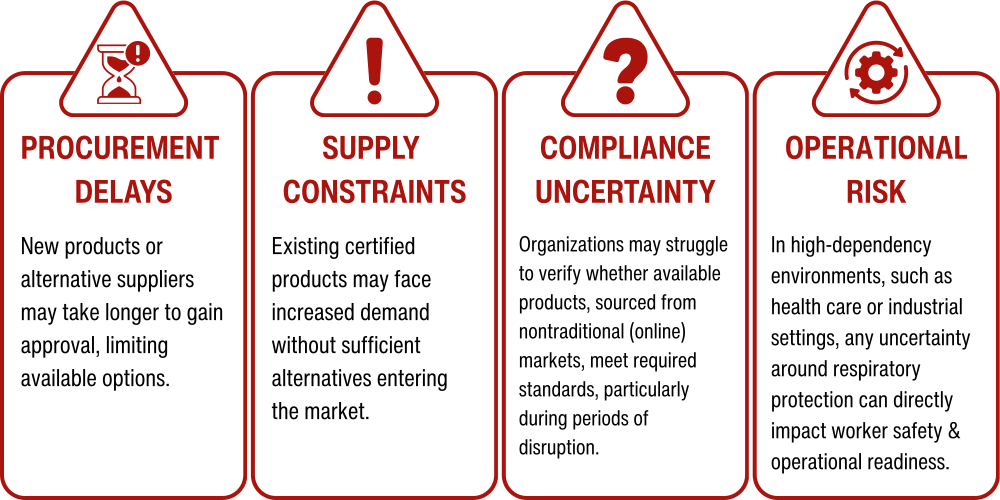
In short, certification systems are deeply embedded in the reliability of facility operations, even if they are rarely acknowledged as such.
 A system under strain
The challenges facing respirator certification are not isolated. They reflect broader pressures affecting safety-critical systems across industries.
There is the issue of financial constraint. As public funding becomes more limited, agencies responsible for oversight must do more with fewer resources. This can lead to longer processing times, reduced program capacity and difficulty maintaining specialized expertise.
Second, evolving risk environments are increasing demand for protective equipment. From emerging infectious diseases to changing industrial processes, the need for reliable respiratory protection continues to grow. Certification systems must adapt to new technologies and hazards, often without corresponding increases in capacity.
Third, global supply chain complexity has made it more difficult to ensure product integrity. The influx of new manufacturers — particularly during periods of crisis — can strain certification pipelines and increase the risk of counterfeit or substandard products entering the market.
Taken together, these pressures create a challenging environment in which certification systems must balance speed, rigor and scalability.
Respirator certification as infrastructure
One of the key insights emerging from recent disruptions is the need to rethink how certification systems are viewed.
Too often, they are treated as a background compliance function: necessary, but secondary to day-to-day operations. In reality, they function more like infrastructure: a foundational system that supports everything built on top of it.
Just as organizations depend on reliable utilities, transportation networks and digital systems for their facilities, they also depend on the integrity of certification frameworks that ensure equipment safety and performance.
When viewed through this lens, the implications become clearer. Infrastructure requires investment, maintenance and contingency planning. It cannot be taken for granted.
What FMs can do
While FMs may not control federal funding decisions or regulatory structures, they are not without influence. There are practical steps that can be taken to strengthen resilience at the organizational level.
✅Align procurement strategies with certification timelines.
Understanding how long it takes for new products to be certified can help facilities plan more effectively. This includes anticipating delays and avoiding overreliance on last-minute sourcing.
✅Verify product authenticity & certification status.
In periods of disruption, the risk of counterfeit or noncompliant products increases. Establishing clear verification processes — such as cross-checking approval numbers and working with trusted providers — can mitigate this risk.
✅Diversify sourcing approaches.
Relying on a single supplier or product line can create vulnerability. Expanding the pool of approved vendors and maintaining flexibility in product selection can help ensure continuity.
✅Engage with manufacturers & distributors.
Open lines of communication can provide early insight into potential shortages, certification delays or product discontinuations. This information is critical for proactive planning.
✅Incorporate regulatory capacity risks into continuity planning.
Business continuity plans often focus on physical disruptions, such as natural disasters or supply chain interruptions. Including certification system constraints as a potential risk factor can provide a more comprehensive approach to preparedness.
These strategies are not about eliminating risk entirely — that is rarely possible. Instead, they are about increasing visibility and building flexibility into systems that depend on external infrastructure.
Looking ahead
The current moment offers an opportunity to reassess how safety systems are supported and sustained.
Respirator certification may seem like a narrow technical issue, but it sits at the intersection of public health, industrial safety and supply chain resilience. Its reliability affects not only individual workers but also the broader systems in which they operate.
For FMs, the lesson is clear: the systems that operate behind the scenes are often the ones that matter most when conditions become uncertain.
By recognizing certification frameworks as a critical component of operational infrastructure, organizations can better anticipate disruption, adapt to changing conditions and ensure that protective equipment remains both available and reliable when it is needed most.
The invisible infrastructure may not always command attention — but its impact is anything but invisible.

Dan Glucksman works as a Senior Director, Policy at International Safety Equipment Association, a membership organizations company founded in 1933. Glucksman graduated from Clark University.
References
Top image via Getty Images.
Read more on Risk Management or related topics Occupant Safety and Occupant Health
Explore All FMJ TopicsRelated articles
-
A New Approach
Improving business continuity with alarm managementBy Brad Freeman09.09.2024 -

Beware of Growing Cyberthreats
Why it’s time for stronger facility cybersecurityBy Andrew Harris & Eric Headington10.30.2024 -

Going Up?
Keeping elevators safe & compliantBy Dave Myers & Doug Taylor11.06.2024