 Membership
 Network
 Regional Sites & Affiliates


 Events
 Participate
 Resources
 Training
 Credentials
 Government


 Content Channels
 Tools
Tools


 Business Overview



The New State of Cleanliness
Demand could bring change to janitorial service contracts
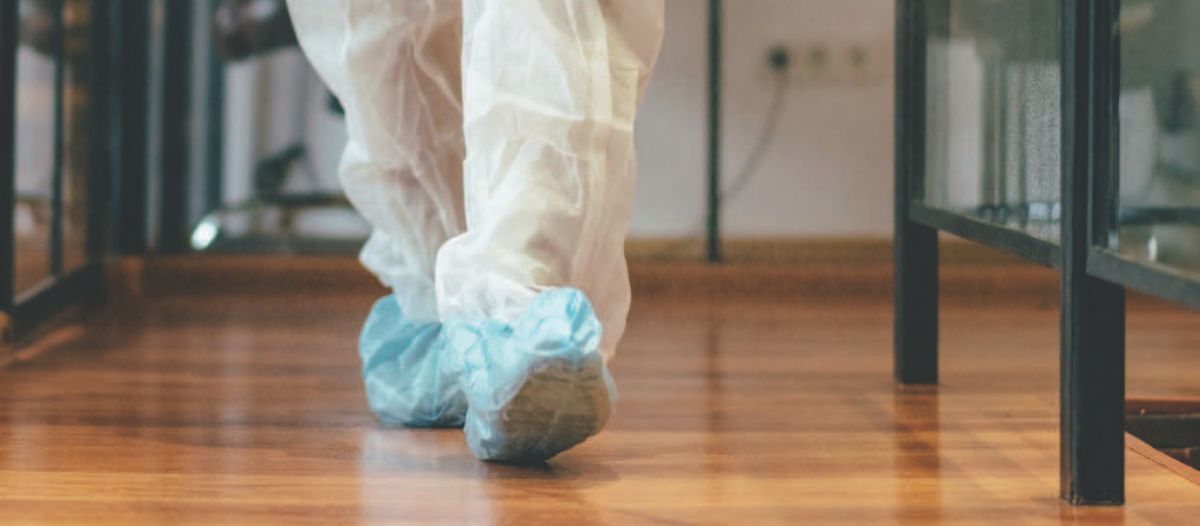
Remember air travel in the United States before Sept. 11, 2001? Security screening at airports was somewhat lax. Travelers could bring friends to the departure gate and pack a baseball bat or up to a gallon of water.
The terrorist attacks on 9/11 changed all that. The Transportation Security Administration was created just weeks after. Screening of airline passengers was greatly intensified, as was the presence of Federal Air Marshals and explosive-detection dogs. Air travel has never been the same, and other areas of society were similarly affected.
The COVID-19 coronavirus pandemic raises the question, will there be permanent changes in the economy and society as a result of this crisis?
For most companies and organizations, janitorial services have occupied a secondary level of importance in budgeting and planning. Was cleaning always considered important? Of course. Was it considered essential? Maybe, depending on your business. Health care facility managers have always considered cleanliness extremely important; their mission and liability are at stake. Office building managers, however, were less concerned. As long as the floor and bathrooms were clean and the trash collected, most facility managers were pleased.
The stakes for facility managers and business owners are far greater now. The appearance of clean is important, but infection prevention is imperative. At least one state, Pennsylvania, has already mandated regular cleaning and disinfecting of buildings that are 50,000 square feet or more. More states may follow their lead. Representatives for some professional cleaning companies have noted that CEOs are now getting involved in janitorial decisions for their companies. They are asking tough questions and carefully reviewing the resumes of vendors.
Interest in professional cleaning companies has never been higher. Infection prevention has created new opportunities for janitorial service providers, and service contracts will likely look different going forward.
Expertise
Supply and demand are the driving forces in free market economies. As North America reopens and businesses come back online, the demand for cleaning services will likely increase. Companies that previously did not outsource cleaning may now want professional cleaning, and those that already outsourced cleaning may want more frequent cleaning or additional services such as disinfection.
“In the days before the coronavirus pandemic, few commercial property managers concerned themselves with whether an infectious pathogen was lurking on frequently touched surfaces or anywhere else at their offices,” explained Mark Warner of ISSA, the worldwide association for the cleaning industry. “Cleaning common areas used to be routine, and mostly for appearance. The outbreak of the coronavirus is now forcing fundamental changes in the way people think about common public interactions.”
Increasing attention to cleaning may lead some entrepreneurs to see the pandemic as a business opportunity. The industry is already crowded, with more than 800,000 professional cleaning services in the U.S. But new companies jumping into the industry should be aware that today’s customer wants more than a bucket and mop.
“There may be a lot of new people entering the janitorial space, trying to make money,” said Jean-Pierre Dumas, business development consultant for ServiceMaster Clean. “What most don’t understand is that you cannot disinfect if you don’t properly clean first, and cleaning is a science. There is a lot of misinformation out there.”
“Untrained amateurs can inadvertently spread disease while they think they are cleaning and disinfecting,” added Warner.
Professional cleaning services with years of proven success are in demand these days. Companies simply aren’t willing to risk their business with amateurs. Clients want assurance that their vendors know the science of disinfection. The assurance of a clean, safe and healthy environment for both employees and customers is driving the market now.
Frequency
New janitorial contracts, and discussions about those contracts, may be different in the months and years to come. Process, quality control and subject matter expertise will likely be front and center in negotiations.
“I expect to see a welcomed movement into highly defined scope-of-work documents,” said ISSA’s Warner. “For many companies, this will level the playing field, preventing low bidders from taking contracts based on performing at reduced levels of staffing and performance.”
Why the need for expertise & process quality?
According to the World Health Organization, the COVID-19 virus can survive on surfaces for a few hours up to several days, depending on conditions. Once disinfected, the surface can potentially be re-infected as soon as someone with the virus walks in. Creating an office or retail environment that is considered “safe” requires frequent cleaning and cleaning know-how.
“Customers are looking for solutions and they need expertise, especially around disinfecting,” said Matt Peppin, a strategic account executive for ServiceMaster Clean. “I’ve had conversations with a lot of higher-level executives. They are looking for information and asking intelligent questions.”
Peppin noted that many conversations now begin with questions about Centers for Disease Control and Prevention (CDC) regulations and infection remediation protocols. Building managers, vice presidents and CEOs want more emphasis on preventing pathogens from contaminating the workplace.
A typical scope of work in the past would include a detailed list of daily and weekly basic services, with emphasis on cleaning restrooms and floors. New agreements will likely have a long list of specific items to disinfect, including high-touch surfaces such as doorknobs, coffee makers, handrails and countertops. “Daily cleaning” may now mean multiple cleanings per day. More clients may want day porters for frequent disinfecting, and some may even prefer to have cleaning technicians work during business hours so customers can see the cleaning take place.
Cleaning is now a priority topic, which raises the level of importance of everyone in the janitorial profession.
Process
Disinfection and infection prevention are now top of mind with everyone who manages a building. Clients have always wanted cleanliness, now they also want some level of protection.
Disinfection begins with thorough cleaning. Pathogens such as viruses and bacteria thrive in dirty environments, so effective disinfection can’t occur unless surfaces are free of dust, dirt and grime. Regular cleaning, therefore, should be an important part of any janitorial contract that has a goal of disinfection.
“Clients want to feel safe, but we have to remind them that we minimize risk, but we can’t eliminate it,” said Peppin. “An environment can be re-infected at any time.”
Any cleaning company that has worked in a health care environment knows the proper procedures for cleaning and disinfecting a clinical space: work from high places first, then low; clean the cleanest areas and work toward the dirtiest areas; pay close attention to high-touch areas; and use disposable cloths and mop heads. Cleaning that leads to disinfecting should follow a similar pattern while using EPA-approved cleaning and disinfecting products under strict label directions. Scope of work agreements created with the intent to achieve some level of disinfection should include these steps.
“I hope more clients take an environmental services [health care] approach to cleaning,” said Dumas. “For many clients, it makes economic sense in the long term. What is the impact of people coming to work sick and infecting others? There is reduced productivity, even danger to employees and visitors. While we can’t guarantee complete elimination of all pathogens, we can help to drastically reduce the threat of an infection spreading.”
Preparedness
It’s safe to say that most companies and organizations were caught off guard by COVID-19. While most people realized a pandemic was a possibility in theory, very few were prepared to deal with it in reality.
“I believe the impact of the 2020 coronavirus outbreak will be that disinfection becomes more of a core service for clients,” said Peppin. “I think some cleaning service providers will be viewed as consultants on infection prevention, providing advice to facility managers. I also think you may see a pandemic response plan as a part of new service contracts.”
If that is the case, facility managers will likely be much more interested in working with established, experienced cleaning companies - those with research and development capabilities, a large network of providers, ongoing training, and adherence to best products and practices.
Confidence in the provider may be a requirement for future janitorial service contracts, and it’s up to the vendor to prove their capabilities. Clients may want to personally witness and evaluate the provider’s training program. They may quiz applicants on their knowledge of CDC, OSHA and EPA regulations. They will almost certainly seek references. New contracts will likely be more detailed and require a higher level of service by providers with proven track records.
Perception
Industry surveys have reported that cleaning companies lose up to 55 percent of their customers each year. In the past, janitorial service providers were often seen as disposable, subject to losing a client over a single mistake or to a new low bidder. Will that perception change?
“I believe cleaning in general has become one of the most important things on people’s minds,” said Warner, whose organization represents cleaning companies around the world. “People are grasping that ‘professional’ cleaning people, certified custodial technicians, are worth their weight in gold right now.”
Health and safety are now tied directly to cleanliness. They always were linked; the difference is now we have seen the effect of what a virus can do. The objective is to reduce exposure risk with proper personal hygiene, cleaning and disinfection.
The bar is higher for cleaning companies these days and that will likely be the case for years to come. It’s a good and healthy change for the janitorial industry and everyone else, too.

Daniel Gravatt is business operations manager for ServiceMaster Clean, which has more than 900 franchised and licensed locations around the world. He is a Licensed Nursing Home Administrator and a Trainer of the Certified Surgical Cleaning Technician program.
Read more on Risk Management and Facility Operations or related topics Occupant Health , Occupant Safety , Operations and Maintenance Planning and Supplier or Vendor Management
Explore All FMJ TopicsRelated articles
-
A New Approach
Improving business continuity with alarm managementBy Brad Freeman09.09.2024 -

Beware of Growing Cyberthreats
Why it’s time for stronger facility cybersecurityBy Andrew Harris & Eric Headington10.30.2024 -
Going Up?
Keeping elevators safe & compliantBy Dave Myers & Doug Taylor11.06.2024