 Membership
 Network
 Regional Sites & Affiliates


 Events
 Participate
 Resources
 Training
 Credentials
 Government


 Content Channels
 Tools
Tools


 Business Overview





The Next Shift in FM Technology
Human comfort & compliance
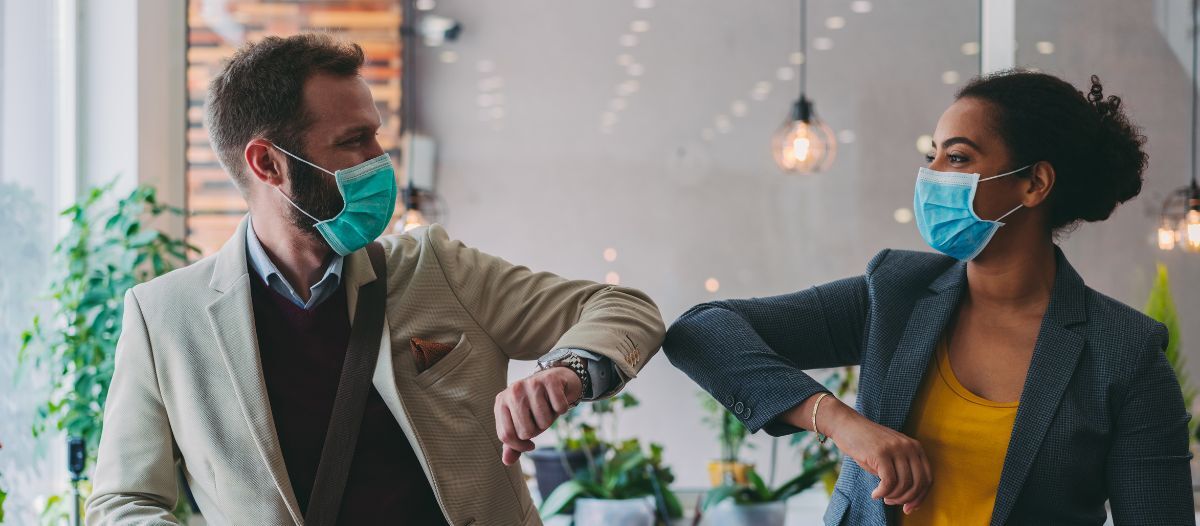
This pandemic of 2020 saw a shift in facility management. While the industry has centered on delivering safe, clean and efficiently run facilities, the pandemic required FMs to laser focus on mitigating risk by implementing stringent disinfecting of high-touch surfaces, enhancing air quality and working while socially distanced.
With COVID-19 vaccinations underway and people returning to buildings, there is another, equally critical shift underway: the need to instill trust and confidence among occupants and guests that the facility they are in is a safe zone. Underlying this is proving the facility is adhering to all required compliance regulations. Technologies from sensors and robotics to visual maps are being adopted to help FMs meet the need for comfort and compliance.
Comfort is king
The pandemic has put people around the world on edge, more aware and knowledgeable than they ever imagined they would be about the novel coronavirus.
Inordinate amounts of time have been spent isolating from others, figuring out ways to minimize in-person interactions, wearing masks and physically distancing when in public. A feeling of hope and excitement about returning to workspaces, schools, entertainment venues and other gathering places is mixed with concern and anxiety about uncontrollable variables.
“How safe is this building really?” “Has anyone coughed on this surface?” “Is it okay to touch this elevator button?” “This sink looks dirty. What if the bathroom isn’t disinfected?”
The reality is, no one knows when or if COVID-19 will be eradicated, and what impact variants will have on the effectiveness of vaccines and future outbreaks. Therefore, questions like these will be running through peoples’ minds for quite a while. If they do not feel comfortable with the answers, chances are they will want to continue working, learning and shopping remotely.
That is why FMs must focus on making people feel comfortable in their facilities by doing their best not just to ensure the facility is safe but also to influence peoples’ perceptions. FMs must do everything possible to show in a visible way that every risk mitigation measure is being taken.
Compliance is critical
Many areas have set mandates around COVID-19 disinfection practices. They want to ensure there are standards to which all facilities are adhering, including how often and where disinfection takes place.
Some industries also have their own guidelines. For instance, the cleaning industry’s extensive GBAC STAR™ accreditation for outbreak prevention, response and recovery is recommended for sports and entertainment venues and even required in some cases before these venues can increase attendance at events.
Many FMs have also adopted their own criteria, based on recommended best practices, on everything from FM team wellness checks to air quality controls and disinfection reporting.
The level of scrutiny around compliance and practices like these is unprecedented. It is not only FM executives who are paying the utmost attention to these concerns. It is also every building visitor, employee and tenant. Not only are these people hyperaware of how clean everything is or isn’t, many also want proof that the facility is making good on their disinfection and compliance promises. They want to see hard evidence.
Technologies & best practices
In the past year, several innovations, as well as new applications of existing technologies, have arisen to facilitate compliance and comfort. The following should be on every FM’s list of considerations:
Compliance
Wellness checks: Many companies require FM employees to complete paperwork at the start of every shift to determine whether they are experiencing COVID-19-like symptoms or may have been exposed to the virus – and, therefore, whether they can work that day. This is a cumbersome, time-consuming process and results in piles of paperwork that cannot be easily searched.
However, there are apps now that make monitoring and managing employee wellness much easier. For example, site managers can use a smartphone-based survey that poses questions about symptoms and potential exposure. Employee information is accessed via quick response (QR) codes scanned with a smartphone or a near field communication (NFC) chip embedded within a plastic badge, which the supervisor simply taps with the smartphone. Another strategy is the use of self-check questions on facial recognition clocks. These process improvements are much faster than filling out paperwork and enable data to be captured in electronic reports. Supervisors can access their site report from anywhere with a network or Wi-Fi connection to assist with alert notifications, contact tracing or analyzing safety trends.
Disinfection tracking: If a tenant, employee or visitor tests positive for COVID-19, the building personnel must trace where the person was and when the spaces they occupied were last disinfected. Instead of filling out paper-based logs to track activity, cleaners can use their smartphone to scan a QR code or tap an NFC chip embedded in their ID badge to verify disinfected areas, like high-touch surfaces, and answer required questions in a dropdown menu, such as where and when work was performed.
Work function, location and employee information are automatically recorded in an electronic database that meets state requirements for disinfection reporting. These digital logs can be securely stored, searched and sorted.
In addition to tracking disinfection, FMs should stay current on the latest protection solutions. Some new products have been proven to protect surfaces for up to 90 days. Others enable staff to swab a surface and check immediately whether it falls into an acceptable germ-free range.
Indoor air quality: COVID-19 is an airborne virus, which is why air quality testing, monitoring and control are key to mitigating its spread. Sensors attached to walls can play a role by measuring air quality. If required metrics such as CO2 levels, VOCs, airborne pathogen levels and particulate matters of all kinds are not met, the sensor sends a signal to the building automation system to open fresh air dampers and increase fresh air intake.
Occupancy & foot traffic: Real-time building occupancy and foot traffic data collected by sensors can help determine how many people are in an area and where they tend to congregate. This informs where, when and how often to clean and disinfect surfaces, refill hand sanitizers, remove trash and enables FMs to ensure occupancy levels do not exceed mandates.
Training: With new technologies and processes being adopted it is critical that FM organizations put a renewed focus on staff training and, where needed, certifications. Everyone needs to be current on best practices, on when and where products can and cannot be employed, on how to use new mobile apps and more.
Comfort
Quality management inspections: FMs are adapting their inspection criteria for the post-isolation era. To ensure that every aspect is covered, that cleaning is done on a timely basis and that real-time reporting is available for internal stakeholders, many are relying on FM inspection tools. In addition to keeping up with room turnover cleaning and disinfecting, these apps let staff easily identify and profile deficiencies like dirty toilets, garbage spilling out of trash cans and carpet spills – anything not up to the new, more stringent standards. FMs simply scan QR codes or NFC tags via their smartphones. These readings are automatically fed into the appropriate system, where they are processed, addressed and retained for future analysis, if needed.
Self-service ticketing: Building occupants need to feel empowered that they have some control over their environment. They also want to know that any concerns they have around cleanliness are taken seriously and readily addressed.
QR code-based applications can enable tenants to capture codes on their smartphones that initiate location-specific work order requests – for instance, that a disinfection station or a bathroom soap dispenser is running low or a lobby has a spill. The app instantly creates a work order, sends verification and notifies the sender when the work order is complete.
Automation & robotics: To help instill confidence in their COVID-19-related safety measures, organizations are adopting technologies, such as robotic vacuums, scrubbers and sweepers, that enable a more touchless environment. These mechanisms are visible reminders to building occupants that the property management team is continually working to keep spaces clean and people safe. Using these products also enables FMs to reallocate staff to other pressing tasks.
Supply chain management is another area in which touchless, automation technology can be employed. In this case, it may be an automatic paper towel or soap dispenser that notifies the facility supervisor when product needs to be refilled. This way, no one will have to open containers to check levels, decreasing touch points and potential virus spread.
Cleaning visualization maps: Cleaning staff can use QR code apps on their smartphones to scan each location and time stamp. This information is instantly fed into a visualization tool, which maps the cleaning status of a particular area using color codes (red, yellow, green) for at-a-glance checks. Displaying this map on monitors throughout the facility helps provide peace of mind to building occupants that the spaces they are in are safe.
Signage: Not everything that offers comfort is high tech. FMs should use signage wherever possible to make occupants aware of safety practices and compliance. This could include a sign outside an elevator noting it is disinfected regularly and has been fitted with a new air filtration system, a door hanger outside a conference room letting occupants know the room has been disinfected, and table signage in break rooms and kitchens reminding employees to practice social distancing. It could also include a pin or tag worn by custodial staff that says they have been certified in proper sanitizing and disinfecting procedures.
All the above technologies should be considered by FM executives, as should any technology used to make environments safer for tenants, such as enhanced filtration, bipolar ionization, ultra-violet filtration and particulate sensors. However, whether and how they are applied will differ based on organization, stakeholder and occupant dynamics. Building owners need to provide tenants with guidance about the practices being implemented. Companies that work with government agencies will have dramatically different compliance requirements than those in entertainment, for instance. Universities will need to over-communicate safety measures to students – and their parents. Public venues must adhere to state guidelines regarding capacity limits.
Consistency: The key to success
With so much still unknown about the life cycle and impact of COVID-19, one thing is certain. FMs can only succeed in keeping people safe and earning their trust if they consistently use appropriate technologies, demonstrate compliance and follow best practices.
Perhaps the best advice is not to get complacent and relax risk mitigation and communication tactics. Just when the pandemic seems like it is getting under control, it can spur new challenges. It takes time to re-earn trust. Consistency can help keep safety and trust intact.

Jeff Peterson is senior vice president of strategy and innovation at UG2 and has more than 30 years of management experience. Peterson began his career at Arthur Andersen & Co. in 1981 and held several managerial positions during his 17-year tenure. He later joined UNICCO Service Company in 1998 and advanced in his career to become chief information officer of DTZ. He managed global technology infrastructure and support services as well as the client-facing solutions team.
References
Top image by Getty Images.
Read more on Workplace and Occupancy & Human Factors or related topics Workplace Utilization
Explore All FMJ Topics