
 Membership
 Network
 Regional Sites & Affiliates


 Events
 Participate
 Resources

 Training
 Credentials
 Government


 Content Channels
 Tools
Tools


 Business Overview




The (Not So) New Normal
How FM is poised to handle today's situations

As businesses resume operations with staff in office, as the COVID-19 ebbs and flows, the term “new normal” is used to describe the new ways people live, work and play. A new normal is a state to which an economy, business, society, or the like, settles following a crisis, when this differs from the situation that prevailed prior to the start of the event. Such proclamations are fraught with trepidation and fright, an alarmist mentality concerned that life as it is known is over.
For FMs, it is just another day in the life. While it is true there will be changes in the way work is performed, what it means to the general public and how it will affect the FM profession may differ in the overall acceptance of change.
If the new normal is no longer classified as normal, that may make it abnormal. If the projected state of the workplace is out of the ordinary or no longer typical, it might fit that definition. However, most FMs have probably encountered work requests that were certainly not based in reality. Requests to stop clouds from passing over skylights because lighting sensors kept turning off and on during a major meeting, or keeping landscaping healthy without paying for water, or gauging the half-life of a budget while being asked to do more with less, year after year are customary. Yet they have coped. Nothing is abnormal in an FM’s life.
For FMs, the new normal is always just around the corner. They have dealt with catastrophes, real or projected, all their professional lives and through them, they have realized consistent changes for the better. Whether temporary or long term, it will be just another adjustment to how FMs manage the workplace. Normal is the usual, average, or typical state or condition: conforming to a standard; usual, typical, or expected. FMs have the ability to take any situation and relegate it back to normal, different as it may be. To FMs, normal is the state of things at any given time. The notion of the “good old days” changes with time as well. Someday, an FM will look back at their current facility operations and reminisce as what they are experiencing now as the "good old days.”
Understanding what can be controlled and what is left to circumstance is a valuable lesson that FMs learn, sometimes through trial and error. Once that realization is integrated into day-to-day practice, it has been found that if an FM takes care of their business, they can help the rest of the business take care of itself.
FMs are known for many things, especially their resiliency and flexibility. These are virtues cultivated over time. FMs must have the capacity to recover from setbacks and difficulties and take things in stride. They must be responsive to change and be willing and able to adapt quickly. Part of their roles deal with reorganization and integrating new, necessary functions within the existing workplace activities. FMs should bend easily without breaking, accommodating needs as they arise and adjust practices to comply with demand. Most FMs are generalists who know a little about a lot of things. This versatility serves them well as the workplace evolves.
Just yesterday
FMs endured change after change during their storied history as a profession, adjustments that always seemed to come with silver linings. One major shift in the workplace came with the advent of the introduction of personal computers on desktops. The Information Age began in the mid-20th century, characterized by the significant shift from work done with pen and paper in the office to the need for new equipment, running data lines and adding more power to the workstations. Desk configurations changed, as did the need for lighting and a fully functional data center. It not only helped to reconfigure the office areas in the local businesses, it led to globalization, which altered an FMs roles and responsibilities from local practices to worldwide ones. The Information Age was formed by increasingly advanced technological discoveries leading to streamlined data capture and availability. Modernized information and communication processes became the driving force of workplace and social evolution. Technology is an invaluable asset to FMs.
The COVID-19 pandemic is not the first time FMs have had to respond to a new normal. The turn of the century was a major cause for consternation. The Y2K scare was a phenomenon where computer users and programmers feared computers would stop working when the calendar changed from 1999 to 2000. It was a problem in the coding of computerized systems that was projected to create havoc in computers and computer networks around the world. After more than a year of international alarm, feverish preparations, and programming corrections, few major failures occurred in the transition from December 31, 1999, to January 1, 2000. It ended up being much ado about little, but it did cause FMs to develop emergency preparedness and business continuity plans.
The open office experiment caused a bit of a kerfuffle in the world of FM. This workplace configuration consisted of situating staff and equipment of all the departments in a single room. Different departments were allotted a specific space under the same roof. Cubicles were opened up, office walls came down, areas were redesigned, refurbished, and refurnished. Separate spaces were delineated by counter high filing cabinets or shelves. The intent was to create more visibility, inter-employee creativity and eliminate departmental silos. It was supposed to level hierarchies and encourage the sort of barrier-less collaboration and communication required by the 21st-century economy. This solution wasn’t for everyone. Privacy issues, confidentiality and proprietary meetings were compromised and the concept was not widely embraced for long. Silos and walls are integral components of corporate culture. The adaptation to desktop computers seemed to introduce a pronounced increase in musculoskeletal disorders in the workforce. Repeated occurrences of hand and arm problems like carpal tunnel syndrome and tendonitis due to constant work at a keyboard were reported. This, turned attention toward ergonomics and applied science concerned with designing and arranging tools employees use so tools and equipment interact most efficiently and safely. Ergonomics uses anthropometric data to determine the optimum seating, spacing and comfort of the office worker. In many cases the FM was tasked with workspace assessments, instructing users on posture and seating and performing any desk or cubicle alterations that were needed to ensure health and safety.
Telecommuting has been around since the 1970s to assist in work-related telecommunications and connections for travelers. It refers to a solution for working off-site. Because of the pandemic, it has become prominent again. For seasoned FMs, this is nothing new. Remote offices, hoteling and other alternate workspaces has been part of FM responsibilities for decades. FMs have always worked on the premise that if personnel cannot relocate for work, work will relocate for them. As businesses wrestle with keeping their companies productive with employees away from the office, this is a way of fulfilling their goals. The scope of remote work may have broadened during this time, but facility processes and procedures for telecommuting have been in place for a long time.
One of the major departures from business as usual – normal — in the FM world was the introduction of sustainability into the profession. Aimed at resource conservation, environmental protection and improved quality of life, sustainable operations also led to significant cost savings.
Guided by programs such as BREEAM (Building Research Establishment Environmental Assessment Method), LEED (Leadership in Energy & Environmental Design) and Green Globes and aided by developments in technological tools, FMs implemented activities that supported the Triple Bottom Line (People, Planet & Profits). FM teams learned to save energy usage and costs, conserve water, minimize trash going to landfill through recycling efforts and provide healthy workplaces through green cleaning efforts and concentration on indoor environmental quality. They understood the value of life cycle assessment in tracking products from cradle to grave. What was dismissed early on as a passing fancy, sustainability has now become standard operating procedure.
Tomorrow
Having been out of the workplace for almost a year has altered employees’ perspectives toward work and the workplace. Many have changed as individuals. Their habits, priorities and needs may have shifted and the things that mattered six months ago can seem very different to what is important today. For FMs, the mission of keeping employees safe, comfortable, healthy and productive stays the same.
In the short-term, this recent pandemic has created an urgent need for more efficient workplaces, more remote working and contactless, digital solutions. FMs have helped their clients to achieve these changes for years. The reality is that the pandemic has not shifted the entire direction of the workplace. It has simply accelerated the path along the trend lines that were already in place.
Given the challenges of attempting to predict future changes, FMs must always focus their energy on anticipating directions. Everything that FMs have experienced and the resultant continuous improvements would suggest that the changes ahead are the ones they have all been preparing for this whole time. As facility leaders plan to reopen for work, adaptations on how employees work to meet the new and different demands of office work. FMs should not be satisfied with hurried adjustments for the short-term, but with an eye toward what tomorrow may hold. They can affect far-reaching changes as every crisis provides an opportunity to enable a better working world, encompassing five critical dimensions: better health, connectivity, relationships, ingenuity and accountability. Those are all achievable as FMs ply their trade in coping with adversity and planning for the future.
To FMs, ”new” normal is just normal. One of the constants in FM is change. They could be large changes brought about by external influences or internal changes in corporate culture and practices, but they do occur.
Organizations have always been transformed by crisis-induced shifts. It may not seem a crisis to FMs, but the demand organization can be … well … demanding. All an FM can do is go with the flow and do their job.
The learning curve in the previously uncharted territory brought on by the pandemic has businesses and professionals interested in the future of the workplace. One of the biggest challenges is understanding whether the "new” normal is a temporary change or a permanent revamping of what life and work looks like. This is the type of insight that makes informed, impactful decisions possible, and FM are well-suited to fulfill this role. For them, it's just another normal day in the office.
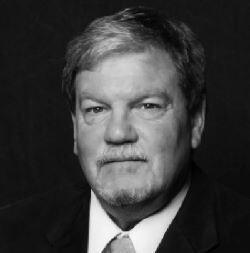
Bill Conley, CFM, SFP, FMP, LEED AP, IFMA Fellow, is a facility manager at Yamaha Motor Corp. in Cypress, California, USA. He previously served as owner and chief sustainability officer of CFM2, a facility management company. Conley has more than 40 years of experience in the facility management profession and has been a proponent of sustainable operations for more than 20 years. Conley has served on the IFMA board of directors, is a recipient of IFMA’s Distinguished Member of the Year award and has received the association’s Distinguished Author award three times. He has been a regular contributor to FMJ for almost 30 years and has authored more than 100 FMJ articles.
Read more on Leadership & Strategy and Facility Operations or related topics Problem Solving
Explore All FMJ TopicsRelated articles
-
Artificial Intelligence in FM
The stakeholder’s perspectiveBy Dr. Jake Smithwick & Dr. Kenneth Sullivan & Nneka Ubi05.01.2024 -
Mastering Change in Hybrid Environments
Insights from global operational leadersBy Meg Swanson09.02.2024 -

Plugged In
Solving the data disconnect in real estate and FMBy Amanda Muzzarelli & James Waddell07.01.2024