
 Membership
 Network
 Regional Sites & Affiliates


 Events
 Participate
 Resources

 Training
 Credentials
 Government


 Content Channels
 Tools
Tools


 Business Overview





The Pulse of Sustainability
An ESG health check of India

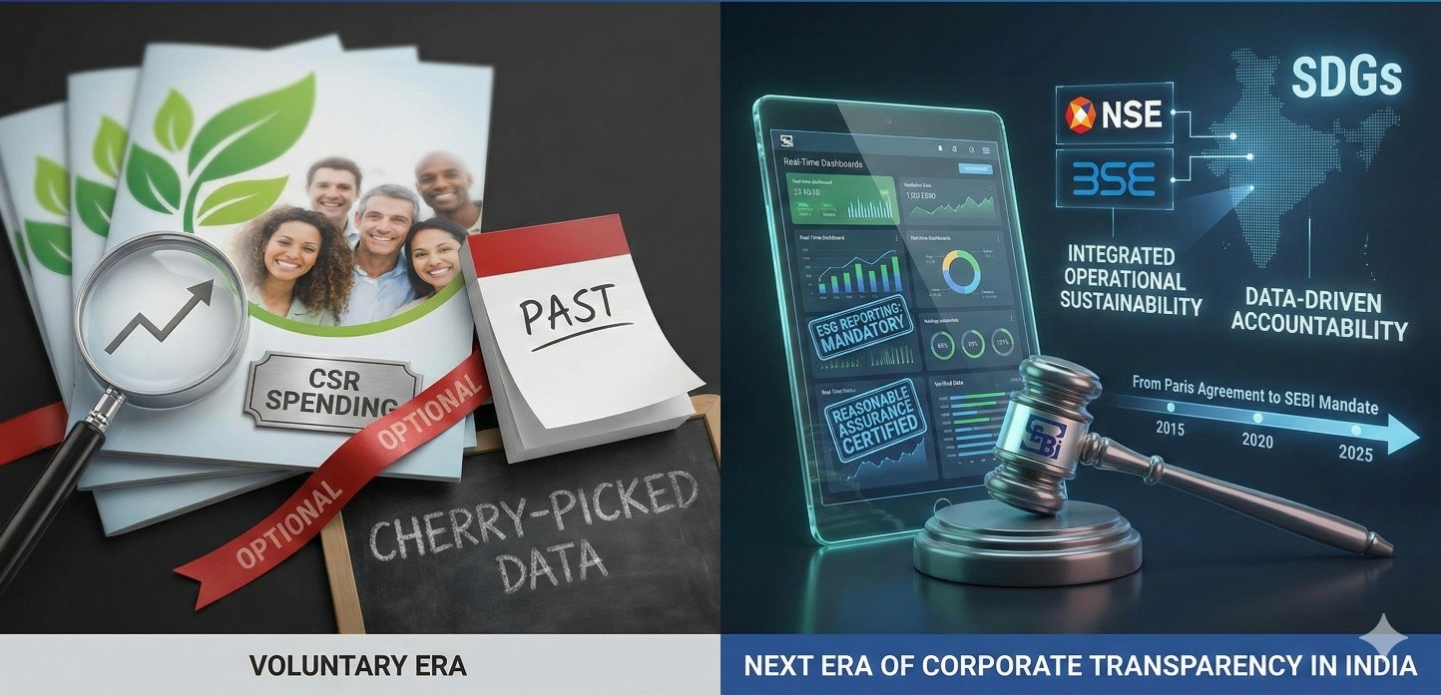
Corporate India stands at a definitive inflection point. For decades, environmental, social and governance (ESG) reporting in the country was largely a voluntary exercise — often characterized by glossy brochures, cherry-picked data and a focus on corporate social responsibility (CSR) spending rather than integrated operational sustainability. That era is ending. The next era of corporate transparency in India is driven by a decisive regulatory push from the Securities and Exchange Board of India (SEBI).
The ESG health check (2015-25)
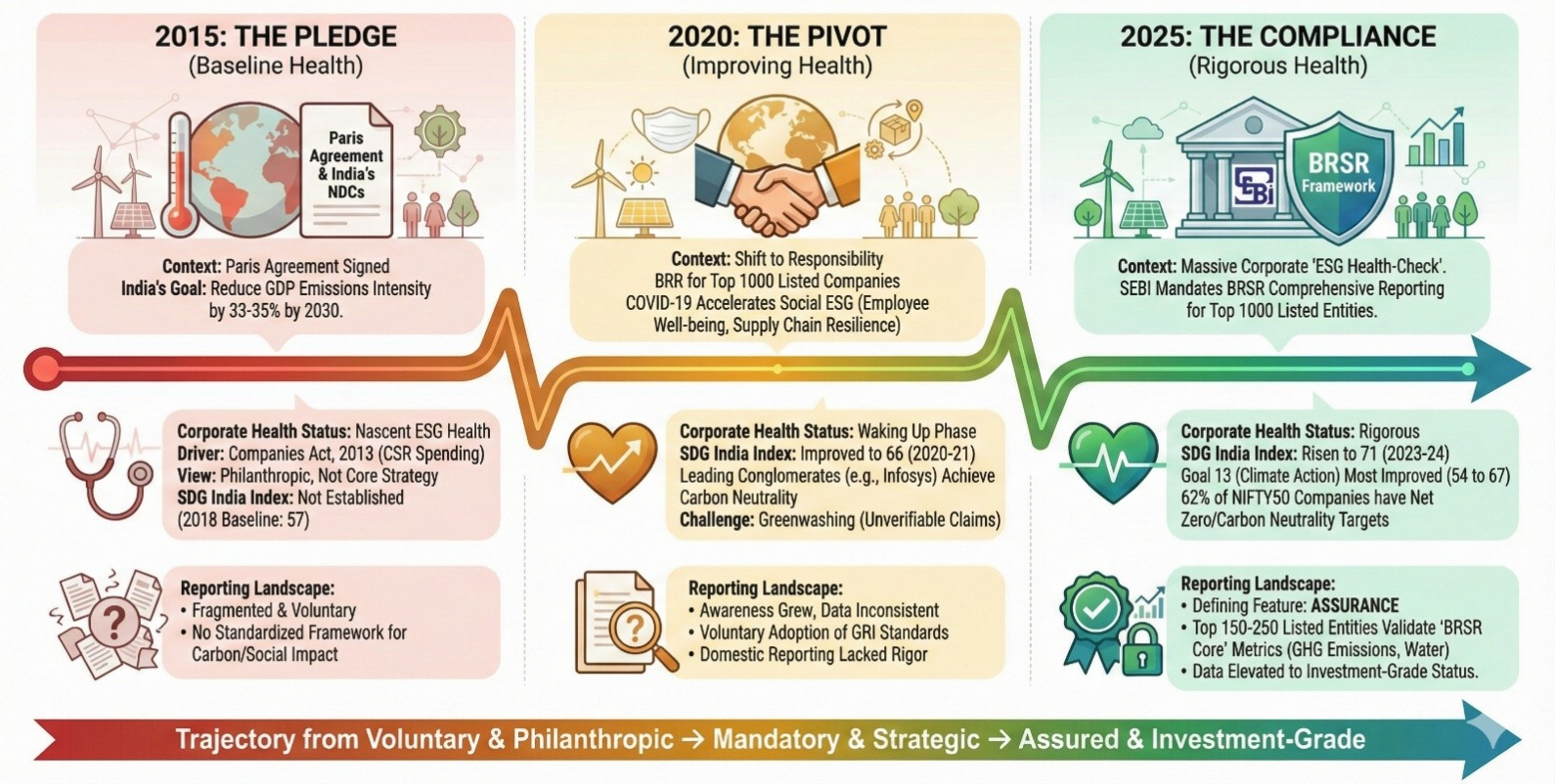
The trajectory of India Inc.’s sustainability journey can be mapped across three distinct checkpoints, aligning with India's commitments under the Paris Climate Agreement and the U.N. Sustainable Development Goals (SDGs).
2015: The pledge (baseline health)
-
Context: In 2015, the global community signed the Paris Agreement, and India committed to its nationally determined contributions (NDCs), including reducing the emissions intensity of its GDP by 33-35 percent by 2030 from 2005 levels.
-
Corporate health status: At this stage, the ESG health of listed entities was nascent. The primary driver was the Companies Act 2013, which mandated CSR spending. However, sustainability was viewed through a philanthropic lens rather than a core business strategy. The SDG India Index score was not yet established (the baseline in 2018 was 57), indicating significant room for improvement in aligning corporate outputs with national development goals.
-
Reporting landscape: Reporting was fragmented and largely voluntary, with no standardized framework to measure carbon footprints or social impact accurately.
2020: The pivot (improving health)
-
Context: By 2020, the conversation shifted from philanthropy to responsibility. The introduction of the Business Responsibility Report (BRR) for the top 1,000 listed companies forced a degree of disclosure. The COVID-19 pandemic further accelerated the social aspect of ESG, highlighting employee well-being and supply chain resilience.
-
Corporate health status: The SDG India Index score improved to 66 in 2020-21. This period marked a waking-up phase, during which leading conglomerates like Infosys achieved carbon neutrality. However, greenwashing remained a critical challenge, as claims were largely unverifiable.
-
Reporting landscape: While awareness grew, data remained inconsistent. Companies began voluntarily adopting GRI standards to attract foreign capital, but domestic reporting lacked rigor.
2025: The compliance (rigorous health)
-
Context: Now in the midst of a massive corporate ESG health-check, as SEBI’s introduction of the Business Responsibility and Sustainability Reporting (BRSR) framework has mandated comprehensive reporting for the top 1,000 listed entities.
-
Corporate health status: The SDG India Index score has risen to 71 (2023-24), with Goal 13 (Climate Action) showing the most substantial improvement, jumping from 54 to 67. 62 percent of NIFTY50 companies now have net zero or carbon neutrality targets.
-
Reporting landscape: The defining feature of 2025 is assurance. The top 150-250 listed entities are now required to strictly validate their BRSR Core metrics — a subset of critical KPIs including GHG emissions and water consumption — elevating this data to investment-grade status.
The way ahead: BRSR vs. Global frameworks
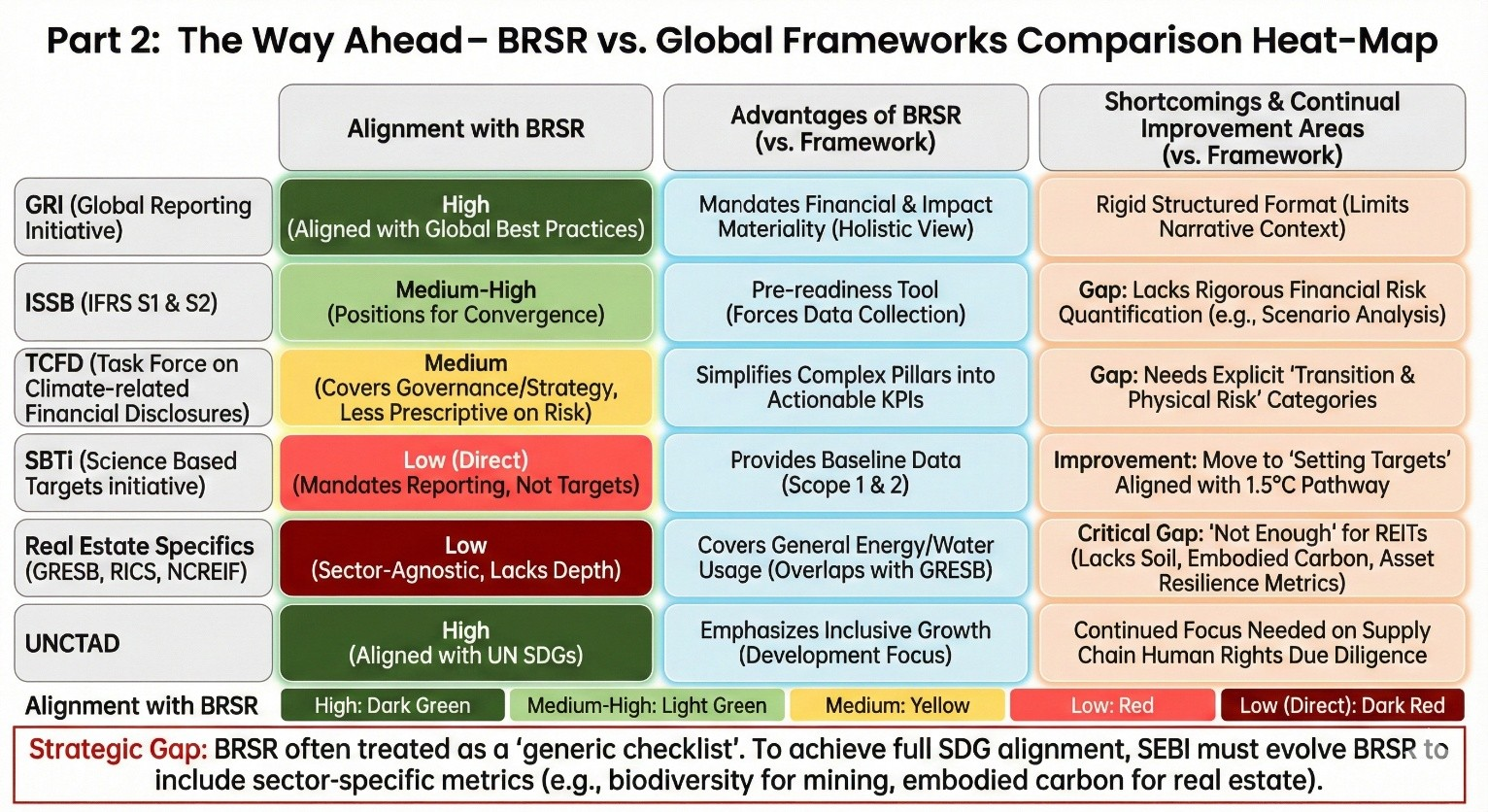
As India Inc. integrates into the global economy, the interoperability of BRSR with international standards is critical. While BRSR is a glocal (combination of global and local considerations) framework — tailored to India's developing economy while borrowing from global best practices — gaps remain.
Framework comparative analysis
 Strategic imperative: The assurance conundrum
The most significant aspect of SEBI’s directive is the move from "limited" to "reasonable" assurance for BRSR Core metrics. This is not merely a compliance tick-box; it is a strategic decision with profound financial implications.
Cost-benefit analysis (CBA): Limited vs. reasonable assurance
1. Limited assurance (the "negative" form)
-
Definition: The auditor states, "Nothing has come to our attention that causes us to believe this data is wrong." It relies on management inquiries and surface-level checks.
-
Short-term benefit: Lower cost, faster execution and less disruption to operations. Ideal for companies just starting their data journey.
-
Downside/risks:
-
The trust deficit: It provides a lower level of confidence. In an era of rampant greenwashing, negative assurance may not satisfy discerning global investors.
-
Capital risk: Global pension funds and sovereign wealth funds increasingly demand investment-grade data. Limited assurance may restrict access to this premium capital pool.
-
2. Reasonable assurance (the "positive" form – strategic imperative)
-
Definition: The auditor states, "In our opinion, the ESG data is fairly stated in all material respects." This requires site visits, process walkthroughs and independent recalculations.
-
Cost analysis: Significantly higher. It requires investments in robust data systems (ERP integration), specialized internal control talent and higher audit fees.
-
Strategic benefits (middle to long term):
-
The trust dividend: It elevates ESG data to the same level as audited financial statements.
-
Cost of capital: Companies with reasonable assurance are viewed as lower risk by lenders and insurers. As climate risk becomes a core component of credit ratings, this rigor will likely translate into a lower cost of debt.
-
Competitive moat: By FY 2027, the top 1,000 listed entities must have this. Early adopters (subscribing now) will build institutional muscle and data resilience before the regulatory hammer falls, avoiding the compliance panic of FY26-27.
-
Recommendation: While limited assurance is a permissible starting point, the strategic imperative for India Inc. is to treat reasonable assurance not as a cost, but as an investment in capital access. The downside risk of staying on limited assurance is the eventual exclusion from high-quality, long-term global portfolios that view unverified ESG data as a liability.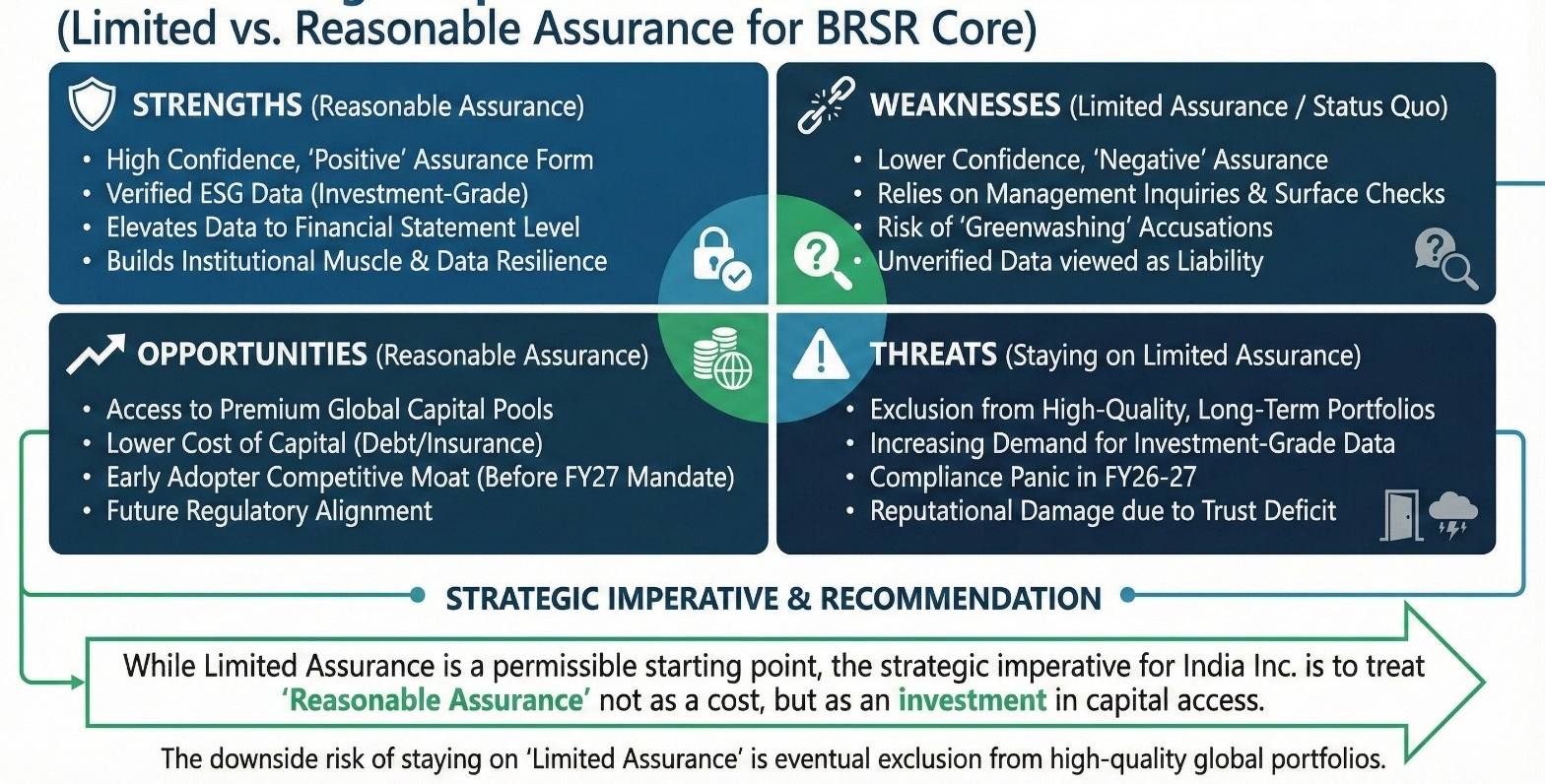
 Evaluating India Inc.
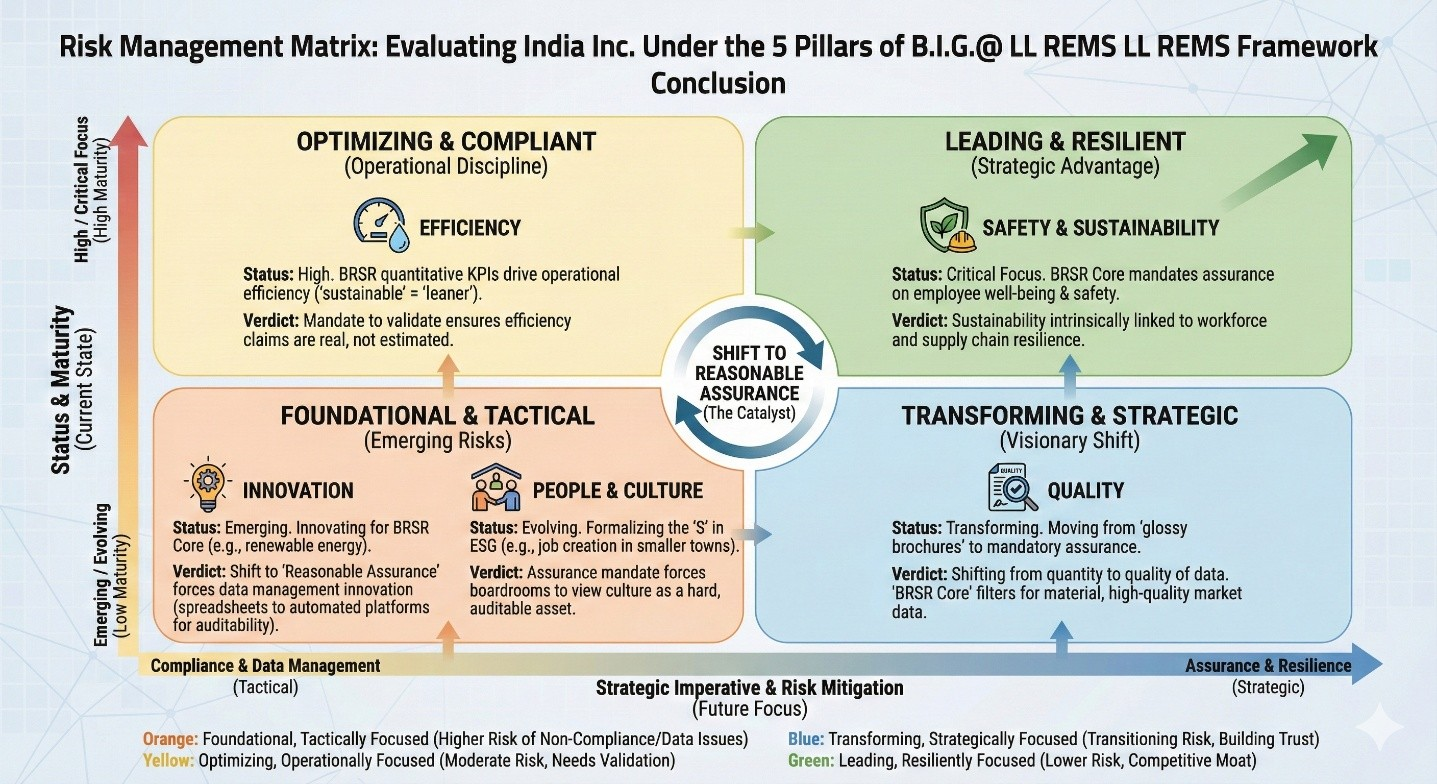
Assessing the standing of the NSE and BSE listed entities, the health check reveals a mixed but promising picture across five critical pillars:
-
Innovation:
-
Status: Emerging. Companies are innovating to meet BRSR Core requirements, particularly in renewable energy adoption.
-
Verdict: The shift to reasonable assurance is forcing innovation in data management — moving from spreadsheets to automated ESG platforms to ensure auditability.
-
-
Efficiency:
-
Status: High. The BRSR framework’s emphasis on quantitative KPIs (energy/water intensity) has driven operational efficiency. Companies are realizing that "sustainable" often means "leaner."
-
Verdict: The mandate to validate these metrics ensures that efficiency claims are real, not estimated.
-
-
Quality:
-
Status: Transforming. The move from voluntary glossy brochures to mandatory assurance has fundamentally changed the quality of ESG disclosures.
-
Verdict: India is moving from a quantity of disclosures to the quality of data. The BRSR Core is the filter ensuring that only material, high-quality data reaches the market.
-
-
Safety & sustainability:
-
Status: Critical Focus. BRSR Core explicitly mandates assurance on employee well-being and safety metrics.
-
Verdict: Sustainability is no longer just about the environment; it is intrinsically linked to the safety and resilience of the workforce and the supply chain.
-
-
People & culture:
-
Status: Evolving. The "S" in ESG — often the hardest to measure — is being formalized. The inclusion of job creation in smaller towns as a metric reflects a distinct Indian cultural priority.
-
Verdict: The assurance mandate on employee well-being KPIs forces boardrooms to look at culture not as soft HR sentiment, but as a hard, auditable asset.
-
Final assessment
India Inc. has successfully moved from "good intentions" to "rigorous compliance." The journey from 2015 to 2025 has been one of awakening and standardization. The next phase — driven by reasonable assurance — will be one of differentiation. Companies that embrace this rigor will not only meet SEBI’s mandate but will align fully with the Paris Agreement, securing their place as resilient, trustworthy leaders in the global sustainable economy. The health of India Inc. is robust, but the regimen has just become stricter.
Way ahead: 15-year roadmap
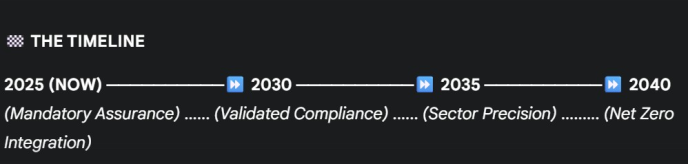
While the immediate regulatory focus is on the mandatory phased timeline for the top 1,000 listed entities by FY 2026-27, the trajectory suggests a deeper evolution toward 2040. The following roadmap enumerates the steps that have been planned, as well as those that must be taken to address current strategic gaps and align with global frameworks.
Milestone 2030: The era of validated compliance & NDC achievement
-
Achievement of national targets: This milestone marks the deadline for India’s NDCs under the Paris Agreement, specifically the target to reduce the emissions intensity of GDP by 33-35 percent from 2005 levels.
-
Maturity of reasonable assurance: By 2030, the reasonable assurance mandate, currently phased for the top 150-250, will have fully permeated the top 1,000 listed entities. This will transition the market from compliance panic to established institutional muscle.
-
Global convergence (ISSB & GRI): The "medium-high" alignment gaps currently identified with frameworks like ISSB (IFRS S1 & S2) should be closed. BRSR is expected to evolve from a glocal framework to one that is fully interoperable with global standards to facilitate foreign capital access.
-
Actionable KPIs: The market should move fully from glossy brochures to simplifying complex pillars into actionable, verified KPIs, a strength identified in the current BRSR framework.
Milestone 2035: The era of sector-specific precision & supply chain depth
-
Addressing the generic checklist gap: To address the current strategic gap where BRSR is treated as a generic checklist, this phase must implement distinct sector-specific metrics.
-
Real estate: Integration of metrics for embodied carbon and asset resilience, currently missing in general frameworks.
-
Mining/industry: Specific biodiversity and soil impact metrics that are lacking.
-
-
Supply chain human rights: Building on the UNCTAD alignment, the focus must shift to rigorous human rights due diligence across the entire supply chain, an area identified as requiring continued focus.
-
Risk quantification: Moving beyond the current governance disclosures to rigorous financial risk quantification (e.g., scenario analysis), addressing the gap currently seen in comparison to ISSB standards.
Milestone 2040: The era of integrated value & net zero realization
-
Realization of net zero targets: With 62 percent of NIFTY50 companies already holding net zero or carbon neutrality targets in the 2020s, 2040 will serve as the critical validation point for these long-term commitments, moving from "targets" to "actuals."
-
Total integration: By this stage, the distinction between "financial audit" and "ESG assurance" should dissolve. The "trust dividend" will be fully realized, where verified ESG data is treated with the same reverence as audited financial statements.
-
Capital access: Indian entities that have sustained reasonable assurance regimes will secure their place in high-quality, long-term global portfolios, having successfully avoided the exclusion risks associated with unverified data.

Siddhant Aggarwal is senior manager at LL REMS. Across the real estate life cycle, Aggarwal has carried out the roles of an aggregator, integrator, administrator and coordinator, spanning from design, leasing, fit-outs and operating spaces, whether viewed from the purview of a developer, occupier or tenant. His body of knowledge and exposure that has been earned through PMP, USGBC LEED and engineering in a gamut of varying business environments have catalysed the process of continual improvement, enhancing his overall pedigree.

Parvez Kazi serves as the Chief Executive Officer of LL R.E.M.S (Real Estate Management Services), the Integrated Facilities Management and Real Estate Services arm of the LL Group. With more than 26 years of leadership experience in facilities management, business operations, and service transformation, he is responsible for steering the company’s strategic vision, growth agenda, and operational excellence across India. With a leadership philosophy rooted in agility, collaboration, and accountability, Kazi is committed to redefining real estate and facility management as strategic enablers of business productivity, workplace experience and sustainable infrastructure.

Dr. Amit Raual is the Group Chief People & Culture Officer at LL Group, where he leads people & culture, workplace, safety, sustainability, strategy and transformation across the organization’s diverse business verticals. In his role, he integrates human capital strategy with sustainable business practices, ensuring that growth, governance, and environmental responsibility move forward in alignment. Raual brings a unique blend of human-centric leadership and operational acumen, driving workplace transformation and cultural excellence across the organization. He is a Certified Chartered Surveyor (MRICS) and holds a Ph.D. in Workplace Strategy, complemented by advanced executive credentials from premier institutions including IIM Rohtak and Corenet Global. Beyond his professional achievements, he is deeply passionate about innovation, learning and cultivating environments where people and businesses thrive together.
References
Top image by Getty Images.
Infograpghics courtesy of LL REMS.
Read more on Leadership & Strategy and Quality or related topics Analysis , Best Practices and Environmental, Social and Governance (ESG)
Explore All FMJ TopicsRelated articles
-

Artificial Intelligence in FM
The stakeholder’s perspectiveBy Dr. Jake Smithwick & Dr. Kenneth Sullivan & Nneka Ubi05.01.2024 -

Mastering Change in Hybrid Environments
Insights from global operational leadersBy Meg Swanson09.02.2024 -

Plugged In
Solving the data disconnect in real estate and FMBy Amanda Muzzarelli & James Waddell07.01.2024