
 Membership
 Network
 Regional Sites & Affiliates


 Events
 Participate
 Resources

 Training
 Credentials
 Government


 Content Channels
 Tools
Tools


 Business Overview





The Shift Away From PFAS
What FMs should know
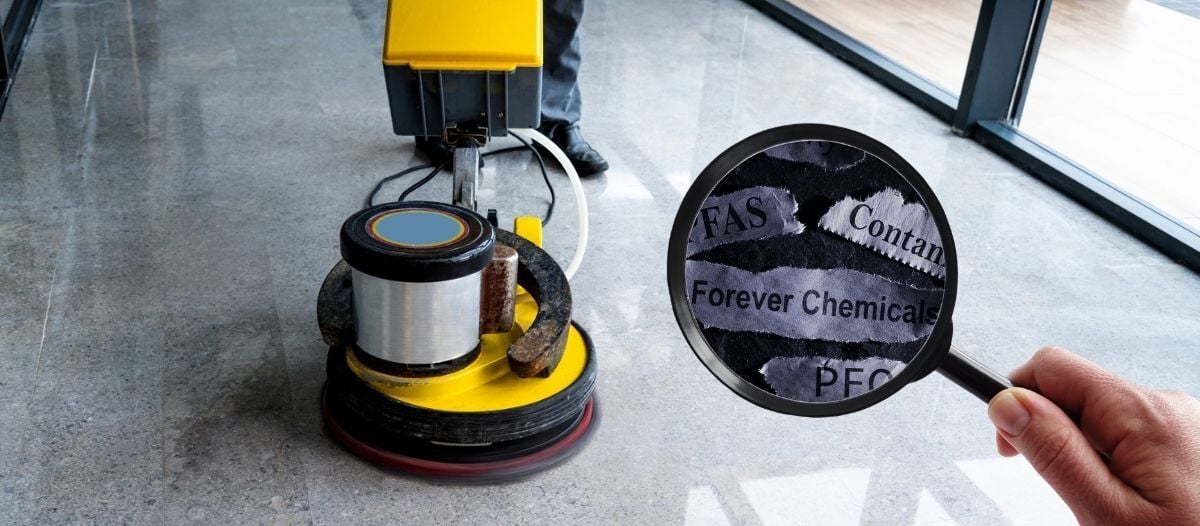
Global sustainability expectations placed on facility managers are evolving rapidly. What once centered on energy efficiency and waste reduction now includes closer scrutiny of the chemicals used throughout buildings every day.
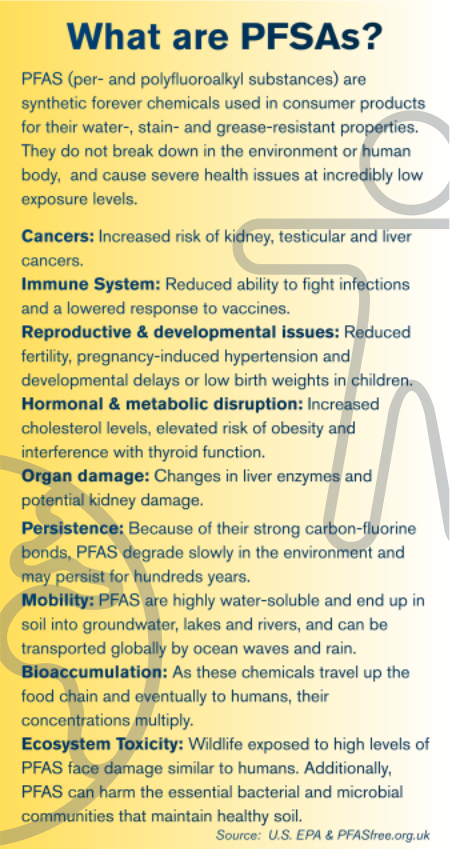
Among the most significant emerging concerns are per- and polyfluoroalkyl substances (PFAS), often referred to as “forever chemicals” because of their persistence in the environment and the human body. As regulations expand and public awareness grows, organizations are examining where PFAS may exist within their operations, including cleaning products, floor care solutions, coatings, adhesives and maintenance materials.
The shift away from PFAS is not simply a compliance issue. It is a part of broader risk management, occupant wellness, procurement transparency and sustainability strategy.
 Why PFAS are an issue
PFAS have been used in a wide range of products because of their resistance to water, grease, stains and wear. In facilities, these chemicals may appear in floor finishes, cleaners, coatings, textiles and other maintenance-related materials.
At the same time, governments are increasing restrictions on PFAS use, while institutional purchasers, investors and building occupants are demanding greater transparency around chemical ingredients and environmental impacts.
Regulatory activity is accelerating across multiple regions and product categories. The European Union is considering a broad restriction on PFAS under the REACH framework, while several U.S. states have adopted or proposed limits on intentionally added PFAS in products including cleaning supplies, floor care materials, textiles and food packaging. Canada, Australia and other jurisdictions are also expanding reporting requirements and evaluating broader PFAS management approaches.
Meanwhile, public agencies, school systems, health care organizations and large private-sector purchasers are strengthening sustainable procurement requirements that address chemical ingredients and product transparency. For FMs operating across multiple jurisdictions or managing complex supply chains, these evolving expectations create new operational and procurement challenges, particularly when product requirements differ by region or client.
In some floor care product categories, PFAS were viewed as difficult to replace because they contributed properties such as stain resistance, gloss, leveling and durability. This helped create the perception that eliminating PFAS might require sacrificing product performance, resulting in more frequent product application and higher costs.
However, recent innovations in floor care and maintenance products are beginning to challenge that assumption. Manufacturers are introducing products formulated without intentionally added PFAS that still are designed to meet institutional performance expectations. These developments suggest the market is moving more quickly than many procurement and purchase teams may realize.
Moving from reactive to proactive procurement
One of the biggest lessons emerging from the transition away from PFAS is that organizations benefit from addressing safer chemistry before regulations force sudden operational changes.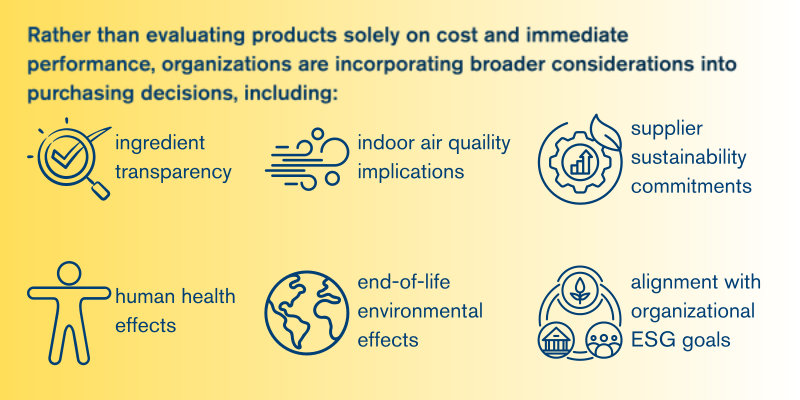
This approach allows FMs to build more resilient procurement systems while reducing the likelihood of future product substitutions caused by changing regulations.
Importantly, organizations are now evaluating PFAS as an entire class of chemicals rather than focusing only on specific compounds. This reflects growing concern that replacing one PFAS with an alternative PFAS may not fully address long-term environmental and health concerns.
This broader perspective can help avoid repeated procurement disruptions and support longer-term purchasing consistency.
Collaboration across the supply chain
One important lesson from the transition away from PFAS is that progress often depends on collaboration between FMs, procurement teams, suppliers and standards organizations.
Manufacturers are investing in reformulation efforts in response to both customer demand and evolving sustainability criteria. At the same time, institutional purchasers are asking more detailed questions about chemical ingredients, disclosure practices and long-term product strategies.
Standards organizations are accelerating this shift by establishing clearer criteria regarding safer chemistry. In recent years, Green Seal prohibited intentionally added PFAS across multiple product categories relevant to facility operations, including floor care products, paints and coatings, adhesives and degreasers. Manufacturers are responding to these expectations, with products formulated without intentionally added PFAS entering the institutional market across several facility care categories. These developments suggest that safer chemistry considerations are part of mainstream product innovation rather than a niche sustainability initiative.
Engaging suppliers early can help identify alternatives, understand performance considerations and avoid future disruptions as regulations and purchasing requirements continue to evolve.
Questions FMs should ask suppliers include:
-
Are PFAS intentionally added to this product?
-
Has the product been independently certified or evaluated?
-
What reformulation efforts are underway?
-
How does the product perform compared with legacy formulations?
-
What ingredient disclosure information is available?
These conversations can help organizations make more informed purchasing decisions while encouraging greater transparency across the supply chain.
The importance of clear standards
A persistent challenge for FMs is navigating competing environmental claims in the marketplace. Sustainability language can vary significantly across suppliers and regions, making product comparisons difficult.
Third-party standards and certifications can help simplify this process by establishing consistent criteria for product performance, chemical safety and environmental responsibility.
For FMs managing large portfolios or geographically diverse operations, standardized evaluation frameworks may help:
-
streamline purchasing decisions
-
improve consistency across facilities
-
support reporting requirements
-
reduce time spent evaluating supplier claims
-
increase confidence in product selection
Importantly, standards can also help bridge the gap between sustainability objectives and operational realities by ensuring products continue to meet performance expectations.
Practical steps
Organizations do not need to overhaul procurement systems overnight. Many successful transitions begin with incremental improvements and cross-functional collaboration.
FMs can start by:

Identify the products most frequently used across facilities, such as floor finishes, cleaners, degreasers, coatings and disinfectants. High-volume products often represent the greatest opportunity to reduce potential chemical exposure and simplify future compliance efforts.

Engage suppliers in conversations about whether products are formulated with intentionally added PFAS and what ingredient transparency information is available. Early supplier engagement can also help FMs understand reformulation timelines and evaluate alternative options before procurement requirements change.

Independent certifications can help navigate complex sustainability claims by providing consistent criteria for product performance, chemical safety and environmental responsibility. This can reduce the burden of evaluating supplier claims individually across large product portfolios.

Cross-functional collaboration helps ensure purchasing decisions align with broader organizational priorities, including occupant wellness, ESG reporting, risk management and regulatory preparedness. Coordination across departments can also improve consistency in product selection and policy implementation.
 Procurement policies may need to evolve to address ingredient disclosure, safer chemistry preferences and supplier transparency expectations. Establishing clearer purchasing criteria now can help organizations create more resilient and future-ready procurement systems.

Testing alternative products in selected facilities or maintenance programs can help teams evaluate performance, durability, maintenance requirements and user acceptance before broader rollout. Pilot programs also allow FMs to gather operational feedback and build internal confidence in product transitions.
Education also plays an important role. FM staff, vendors and procurement teams may all require a clearer understanding of emerging chemical concerns and the rationale behind product changes.
Organizations that begin these conversations now may find themselves better prepared as regulations, customer expectations and procurement standards continue to evolve globally.
A broader shift in FM
The growing focus on PFAS reflects a larger transformation occurring across FM. Organizations recognize that operational decisions can influence not only building performance, but also occupant health, environmental impact and organizational reputation.
FMs are uniquely positioned at the center of this transition.
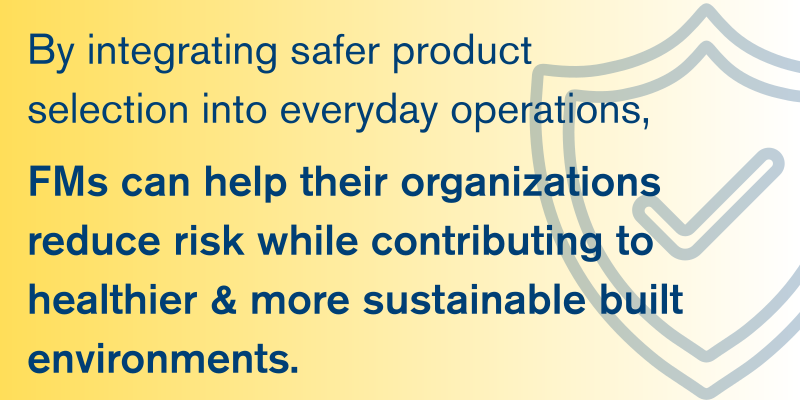 The shift toward safer chemistry is also part of a broader move toward greater transparency and accountability across the facility supply chain. As stakeholders expect measurable sustainability performance, FMs may play an even larger role in helping organizations translate environmental goals into day-to-day operational decisions.
The question is no longer whether safer chemistry will influence procurement decisions, but how quickly FMs can adapt their organization’s purchasing strategies to meet changing expectations.

Brittany Maule is senior director of products and standards at Green Seal, where she leads the organization’s standards strategy and product portfolio, guiding the development of science-based certification criteria that support market transformation and advance product sustainability. With deep expertise in technical research, stakeholder engagement, and science communication, Maule bridges complex scientific insights and real-world application, supporting cross-sector collaboration to deliver solutions that are both ambitious and practical. Prior to Green Seal, Maule worked in the Drinking Water Branch at the Indiana Department of Environmental Management, where she led outreach initiatives and reviewed technical plans to support the protection and improvement of drinking water systems across the state.
References
Top image via Getty Images.
Read more on Risk Management , Occupancy & Human Factors and Sustainability or related topics Procurement , Maintenance Processes , Supplier or Vendor Management , Sustainable Facility and Occupant Health
Explore All FMJ TopicsRelated articles
-

A New Approach
Improving business continuity with alarm managementBy Brad Freeman09.09.2024 -

Beware of Growing Cyberthreats
Why it’s time for stronger facility cybersecurityBy Andrew Harris & Eric Headington10.30.2024 -

Going Up?
Keeping elevators safe & compliantBy Dave Myers & Doug Taylor11.06.2024
