
 Membership
 Network
 Regional Sites & Affiliates


 Events
 Participate
 Resources

 Training
 Credentials
 Government


 Content Channels
 Tools
Tools


 Business Overview





The Silent Language of Facilities
How the built environment shapes trust, culture & organizational performance

Walk into any successful organization and ask a simple question:
What do I know about this company before anyone has spoken to me?
The answer is almost always more than people realize.
Long before a receptionist offers a greeting or a meeting begins, a visitor has already started gathering information. They notice whether the parking lot is well maintained or neglected. They observe whether landscaping reflects care and attention or years of deferred maintenance. They recognize whether the entrance feels welcoming, whether the lighting creates comfort or uncertainty, and whether finding a destination is intuitive or frustrating. Without consciously intending to, people also observe how employees interact with one another, whether visitors appear confident or confused, and whether the environment feels calm, safe, organized and purposeful.
None of these observations require deliberate thought. They occur almost instinctively because people are remarkably adept at interpreting physical environments. Long before a conversation begins, they are asking questions. Is this organization well managed? Do they pay attention to details? Do they value their employees? Can they be trusted?
The answers may not always be accurate, but they are undeniably influential.
Environmental psychologists have long understood that physical surroundings shape human perception and behavior. The spaces people occupy influence how they think, feel and behave. Well-designed environments reduce stress, encourage collaboration and create confidence. Disorganized or neglected spaces create subtle friction that can undermine productivity, increase anxiety and influence how people perceive the organizations responsible for them.
For facility managers, this reality presents both a challenge and an extraordinary opportunity.
Every building communicates. Every workspace tells a story.
Every hallway, reception area, manufacturing floor, conference room and loading dock quietly reflects the priorities of the people responsible for it.
This is the silent language of facilities.
Unlike spoken language, this one cannot be rehearsed. Organizations can carefully craft mission statements, publish strategic plans and invest in branding initiatives, yet the built environment often reveals something far more authentic.
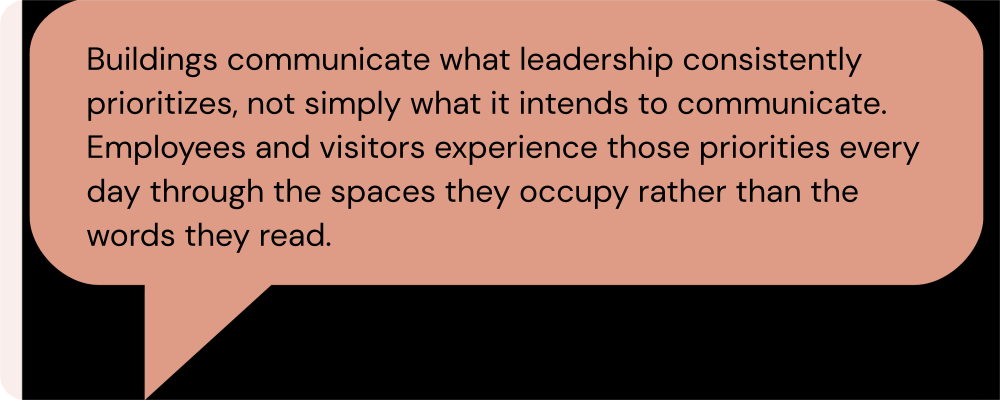
That distinction matters.
Most organizations devote considerable energy to defining who they want to be. Yet the physical environment remains one of the few places where organizational values become tangible. People do not simply hear about a company's culture — they experience it through the workplace.
A clean, thoughtfully maintained facility rarely earns compliments because of polished floors or attractive landscaping. Instead, people remember something less tangible. They remember whether they felt welcomed. They remember whether navigating the building was easy or confusing. They remember whether interactions with employees felt professional, whether the environment inspired confidence, and whether the organization appeared to care about the people inside it.
Those experiences accumulate long before anyone discusses products, services or business capabilities.
Trust begins quietly.
It develops through dozens of seemingly insignificant moments that, taken together, shape lasting impressions.
This perspective requires people to think differently about FM.
For much of its history, the profession was primarily viewed as an operational function. The mission was clear: maintain the building, repair equipment, oversee contractors, manage capital improvements and ensure that critical building systems remain reliable. Success was often measured by what did not happen. If the heating system never failed during winter, if elevators remained operational, if maintenance requests were completed on time, and if occupants experienced few disruptions, then the FM did their job well.
Those responsibilities remain fundamental. Reliable infrastructure will always be essential to organizational success.
But today's workplace demands much more.
Organizations have become increasingly dynamic. Hybrid work has reshaped expectations about office environments. Advances in technology have transformed buildings into intelligent ecosystems capable of generating real-time operational data. Sustainability initiatives influence everything from energy management to capital planning. Business continuity and resilience are executive priorities rather than afterthoughts, while employee safety and well-being are measurable contributors to organizational performance.
Every one of these initiatives intersects with the built environment.
FMs find themselves working alongside executive leadership, finance, information technology, human resources, operations and security to solve problems that extend far beyond building maintenance. Decisions about workspace design influence employee collaboration. Investments in smart building technologies improve operational efficiency. Preventive maintenance strategies reduce business interruptions. Emergency preparedness planning strengthens organizational resilience. Visitor management processes influence customer experience. Building performance has become inseparable from business performance.
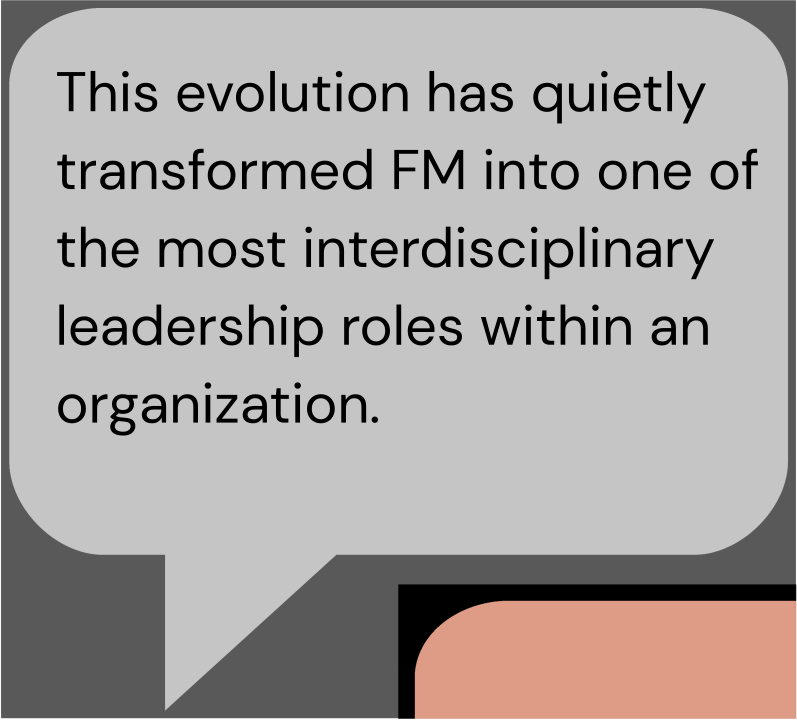
Few professionals possess such a broad understanding of how every department depends on the physical environment to accomplish its objectives. FM leaders routinely balance operational efficiency with employee experience, financial stewardship with long-term planning, and technological innovation with practical implementation. They understand that a building is never simply a collection of walls, mechanical systems and equipment. It is a living environment where people work, collaborate, innovate, recover from setbacks and pursue organizational goals.
When viewed through that lens, FM’s purpose expands considerably.
The profession is no longer defined solely by its ability to maintain buildings. It is increasingly measured by its ability to create environments where people can perform at their best.
That shift changes the conversation entirely.
Instead of asking whether a building is operating efficiently, people now ask whether it is helping the organization succeed.
-
Do employees feel safe and supported?
-
Does the workplace encourage collaboration?
-
Does it reinforce the organization's culture?
-
Does it make employees feel valued?
-
Does it inspire confidence among visitors and customers?
-
Can it adapt to changing business needs?
-
Can it withstand disruption and recover quickly when challenges arise?
These are no longer questions reserved for executive strategy sessions. They are central to FM’s daily work because the answers influence every aspect of organizational performance.
Perhaps that is why FM has become one of the most strategically important disciplines in modern organizations. The profession sits at the intersection of people, place, technology, operations and leadership. It influences how organizations function on ordinary days and how they respond when extraordinary circumstances arise.
The buildings themselves have not changed nearly as much as the understanding of what they represent.
They are no longer simply places where business happens. They have become one of the most authentic expressions of the business itself.
Where experience becomes performance
If the built environment shapes perception, it also shapes performance.
Most people think about facilities in terms of physical assets: buildings, mechanical systems, utilities, maintenance schedules and capital projects. Those elements are undeniably important, but they are only part of the story. The true value of a facility lies not in the infrastructure itself, but in what that infrastructure enables people to accomplish.
Consider the workplace from the perspective of an employee. Few people arrive each morning thinking about the air-handling system, security post orders, electrical distribution, access control network or preventive maintenance program. Yet each of those systems quietly contributes to their ability to work effectively. Comfortable temperatures improve concentration. Reliable technology reduces frustration. Well-designed workspaces encourage collaboration. A thoughtfully integrated security program creates confidence by protecting people while preserving a welcoming, productive environment. Clean, organized environments minimize distractions and create a sense of professionalism. Even something as simple as intuitive wayfinding can eliminate unnecessary stress for visitors and new employees.
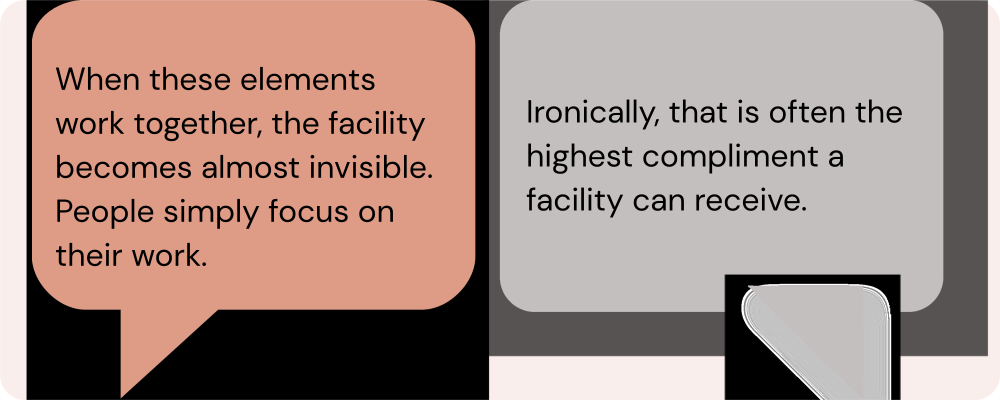
The opposite experience is equally familiar. A malfunctioning elevator delays meetings. Poor lighting contributes to fatigue. Confusing building layouts frustrate visitors. Inconsistent security practices or a visible lack of preparedness can leave employees and visitors questioning whether their safety is truly a priority. Deferred maintenance creates distractions that slowly erode confidence in leadership's attention to detail. None of these issues alone define an organization, but together they shape how people experience it every day.
FM has always been about solving problems before they become disruptions. However, it is also about creating environments where people can perform their best work. That subtle distinction represents one of the profession's greatest transformations. FMs are no longer measured solely by what they maintain; they are valued for the experiences they create.
This broader perspective also changes the role of security.
Security has traditionally been viewed as a protective function, focused on preventing unauthorized access, responding to emergencies or reducing loss. Those responsibilities remain essential, but within today's workplace, security contributes to something much larger. When thoughtfully integrated into the built environment, it becomes part of the overall experience of the facility.
Employees feel comfortable arriving before sunrise because security is present, and parking areas are well lit and thoughtfully designed. Visitors move confidently through reception because access procedures are clear without being cumbersome. Deliveries occur efficiently because loading areas have been planned with both operations and safety in mind. Security officers become ambassadors for the organization, representing professionalism as much as protection.
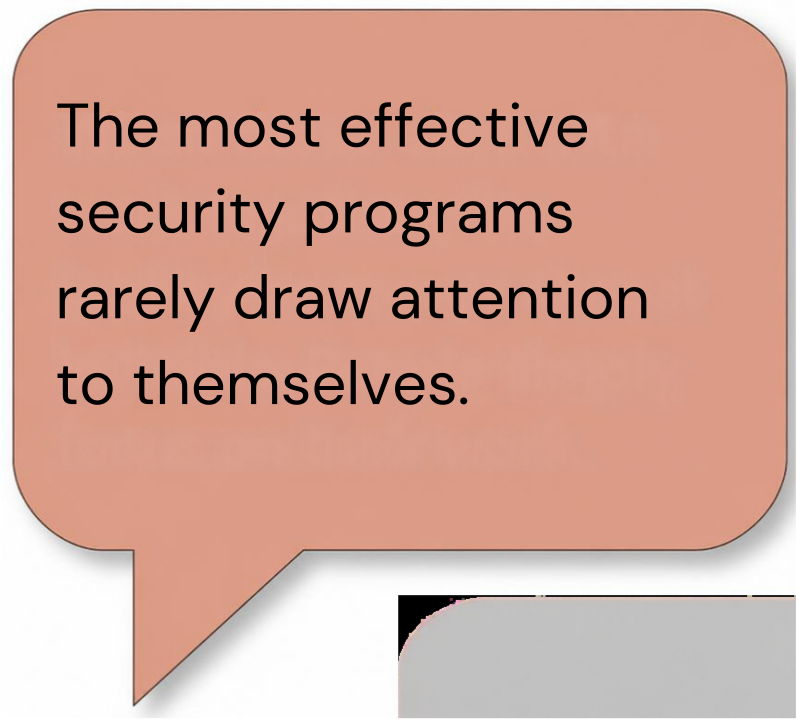 Instead, they quietly reinforce confidence by creating environments where people feel safe without constantly being reminded of why.
This principle extends well beyond physical security. It reflects a broader philosophy of risk management that FMs understand well. The objective is not simply to respond effectively when something goes wrong. It is to create conditions that reduce uncertainty long before problems emerge.
That same philosophy shapes the technologies transforming the profession.
For many years, building systems operated independently. HVAC, lighting, access control, surveillance, maintenance records and energy management often existed in separate silos, each producing valuable information but rarely communicating with one another. Today's intelligent buildings are changing that relationship.
Modern facilities continuously generate information about how they are functioning. Sensors monitor occupancy, temperature, air quality, equipment performance, energy consumption and environmental conditions. Building automation systems coordinate mechanical operations in real time, while integrated platforms allow FMs to view the health of an entire property from a single dashboard.
The value of these technologies lies not in the volume of information they produce, but in the quality of decisions they enable.
Instead of reacting after equipment fails, FMs can identify performance trends that suggest maintenance should occur before disruptions happen. Instead of relying solely on historical reports, organizations can use operational data to improve energy efficiency, optimize space utilization and better understand how people interact with their workplaces. Technologies such as digital twins now allow organizations to evaluate renovations, operational changes and infrastructure improvements within virtual models before committing significant financial resources.
AI promises to accelerate this evolution even further.
While much of the public conversation surrounding AI focuses on automation, its greatest contribution to FM may be its ability to recognize patterns that would otherwise remain invisible. By analyzing maintenance histories, environmental conditions, occupancy patterns, security concerns, work orders and operational performance, AI can help identify subtle indicators that equipment requires attention, resources should be reallocated or emerging risks deserve closer evaluation.
Rather than replacing FMs, these technologies strengthen their ability to make informed decisions.
Experience, judgment and leadership remain essential.
Technology simply provides better information upon which those decisions can be made.
Perhaps nowhere has this become more important than organizational resilience.
The past several years have demonstrated that disruption is no longer an occasional event. Organizations navigated global pandemics, severe weather, cyberattacks, supply chain interruptions, security incidents, infrastructure failures and rapidly changing workplace expectations. Each event has reinforced the same lesson: resilience is not defined by avoiding disruption, but by responding to it effectively.
FMs occupy a unique position within that conversation because nearly every continuity strategy depends upon the built environment. Emergency operations, alternate work arrangements, utility redundancy, life safety systems, communications infrastructure and recovery planning all converge within the facility. When organizations recover quickly from unexpected events, it is often because years of thoughtful planning, disciplined maintenance and strategic investment quietly prepared them for circumstances no one hoped to encounter.
 That preparation is rarely visible during ordinary days. Its value becomes unmistakable during extraordinary ones.
This may be the profession's greatest contribution to organizational success. FMs create environments where people can thrive when conditions are ideal and continue operating when conditions are not. They balance efficiency with resilience, innovation with reliability, and long-term planning with the realities of day-to-day operations.
These responsibilities rarely attract headlines or are recognized in quarterly earnings reports.
Yet they influence nearly every outcome organizations hope to achieve.
Perhaps that is why the silent language of facilities deserves greater attention from executive leadership. Buildings are often discussed as costs to be managed or assets to be maintained. In reality, they are environments where organizational culture becomes tangible, where employees determine whether they can do their best work, customers decide whether an organization inspires confidence, and resilience is tested long before it is ever measured.
Every investment in the built environment communicates something about what leadership values. Every decision regarding maintenance, technology, security, accessibility, sustainability and workplace experience contributes to the story an organization tells about itself.
The question has never been whether facilities communicate. They always have.
The question is whether that message reflects the organization leadership intends to build.
The built environment is far more than the space where business takes place. It is where organizational values become visible, culture becomes tangible, and trust quietly begins.
Long before a conversation starts, a meeting is called to order or a visitor hears the first welcome, the facility has already spoken.
Its message is waiting to be heard.

Eric Zurlo is a business development manager with Allied Universal specializing in integrated security, risk management and operational resilience. With more than three decades of experience in security leadership, emergency preparedness and organizational risk, he works with facilities and executive leaders to create environments that enhance safety, strengthen culture and support business performance.
References
Top image via Getty Images.
Read more on Leadership & Strategy and Facility Technology & Data Management or related topics Strategic Planning , Strategy and Facility Technology
Explore All FMJ TopicsRelated articles
-

Artificial Intelligence in FM
The stakeholder’s perspectiveBy Dr. Jake Smithwick & Dr. Kenneth Sullivan & Nneka Ubi05.01.2024 -
Mastering Change in Hybrid Environments
Insights from global operational leadersBy Meg Swanson09.02.2024 -

Plugged In
Solving the data disconnect in real estate and FMBy Amanda Muzzarelli & James Waddell07.01.2024
