Membership
 Network
 Regional Sites & Affiliates


 Events
 Participate
 Resources

 Training
 Credentials
 Government


 Content Channels
 Tools
Tools


 Business Overview





Tomorrow’s Office
Recognizing the workspace evolution
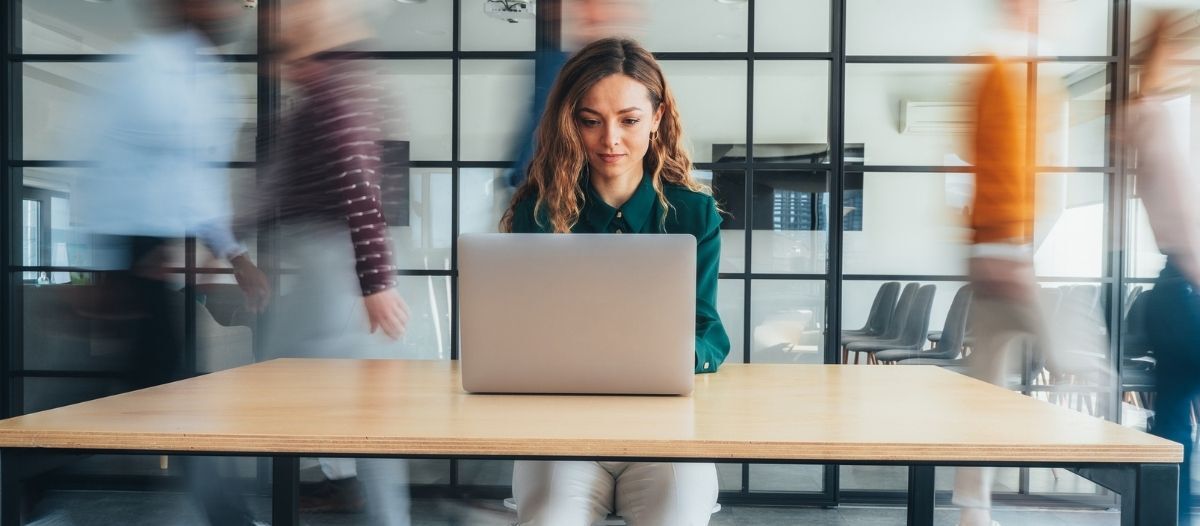
An office is a room or set of rooms where business is conducted and to differentiate between types of workplaces, qualifiers are used: home office, office building, third-place office, virtual office and the future office. The COVID-19 pandemic has made workers ask where they would work in the future. Management wondered if employees would be efficient and productive when not in a contained environment and not managed or supervised.
Telecommuting and remote work have been around a long time, but in some businesses, it was never fully embraced. The preponderance of remote work implemented during the pandemic has proven it works.
How people work
When looking at the shape of the office as employees are expected to return to the office building, give thought to the validity of the workplace as it was, even a year ago. Analyze what people are doing, how long they spend doing it and where they like to do it, and determine what would be the best type of space to use for that work.
It is no longer about having people in a standard office. It is now about effectiveness, expectations, needs and employee satisfaction. It is about having people interacting in different ways, depending on the type of work that they are doing and enjoying.
The future office will include a much more diversified portfolio of flexible and on-demand workspaces. Both the nature of corporate portfolios and their own personal workspaces will become a series of locations to work, based on convenience, function and comfort. This will mean they are much simpler and used intermittently but much more intensively.
Employees liberated from long commutes and travel have found more productive ways to spend that time, enjoyed greater flexibility in balancing their personal and professional lives, and decided they prefer to work from home rather than the office. Through telecommuting or remote work, organizations have access to new pools of talent with fewer locational constraints, adopt innovative processes to boost productivity, create an even more influential culture and significantly reduce real estate costs.
Remote work options
If employees are not coming back to the workplace, then the work must be brought to them. Employees interact through video conference from their PCs, laptops, tablets and even smartphones.
A hybrid model will balance the efficiency gained by remote work with the benefits of social interactions and creativity and innovation generated by working in-person with others. Employees may be given more choices on where to work based on necessity and preference: either fully remote, in a hybrid remote or on-site and the workplace will be distributed across home, office and satellite offices. During a recent webinar concerning the future of the office sponsored by IFMA’s WE Community, attendees were polled about their preferred working conditions post-COVID. Some respondents opted to continue working from home, but the majority liked a hybrid approach — and not one opted to work solely in the office.
For these plans to succeed, technology must enable multiple modes of working. Data can be saved in the cloud — with access and security tailored for different working modes — and applications that allow seamless virtual collaborations. Another challenge is that leaders must learn how to manage, coach, collaborate, evaluate performance and motivate their team remotely. The culture must prioritize trust and belonging. This will present a major learning curve and attitude adjustment.
Return to work
When employees return to the office, there are changes that can be implemented that could improve the work experience. The decades-long push toward fitting as many people into the office as possible may finally reverse. More flexible seating should be planned, as well as larger, more robust and numerous group spaces. Offices will have more common space than personal space. Traditional workplaces are approximately 80 percent cubicles and offices and 20 percent common space; that ratio could flip.
In a well-planned return to offices, management can use this moment to reinvent their role and create a better experience for talent, improve collaboration and productivity and reduce costs. A transformational approach to reinventing offices will be necessary. Instead of incrementally adjusting the existing footprint, companies should take a fresh look at how much and where space is required and how it fosters desired outcomes for collaboration, productivity, culture and the work experience. Companies must move past decades of orthodoxy about 9-to-5, office-centric work. Recent events created an opportunity to retain the best parts of office culture while freeing employees from bad habits and inefficient processes, from ineffective meetings to unnecessary bureaucracy. This coming transformation could entail a variety of space solutions such as owned space, green leases, open space configurations, coworking options and remote work.
In the office itself, open seating is the new trend. Most open-plan scenarios allow a flexible design offering a variety of work environments, including quiet spaces, and grants them the ability to move around. When working from home, employees had the choice of where to work, anywhere in the home with freedom of movement not experienced in a typical office setup. The whole adaptation of the office to what people do during the day is a difference maker. It provides employees that type of freedom. If they are no longer tethered to a desk, they can find suitable spots within an open plan office that allows them to choose where to work and when. They can select spaces more consistent with their needs, undisturbed or with a team.
Feels like home
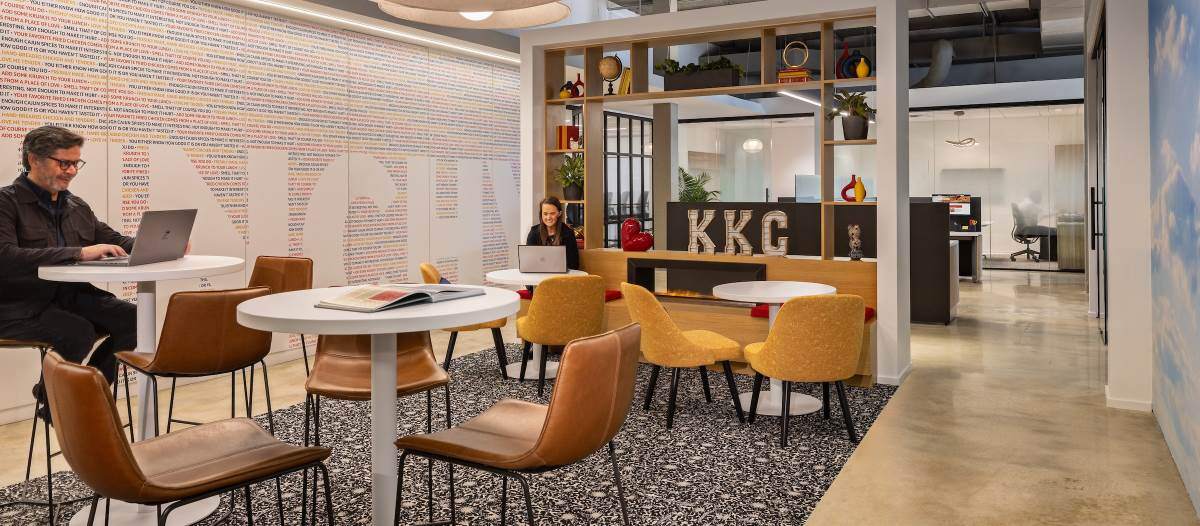
As the history of office design evolves, it has reached a point where the modern workplace should take inspiration from the home. Using warm colors, intimate lighting and soft seating, the work atmosphere can become more appealing. Employees working at home may miss the social interaction of the workplace, so the comfort, flexibility and freedom they experience at home will need to be replicated to retain and attract personnel. The shared spaces supporting this purpose also bring a welcomed warmth and energy to the workplace. Employees will continue to be drawn to those collaborative spaces in more residentially inspired, comfortable settings which also support their performance. This approach focuses on the comfort and well-being as companies have become aware that the office is a valuable tool that can be used to attract and retain the very best talent in a competitive marketplace.
Some trends come and go, but there has been a significant rise in biophilic office design and companies bringing a little of the outdoors to inside the work environment. The need for emphasis on sustainable design has become more prevalent. Ambient factors like access to daylight, access to an outdoor environment and integration with nature is more in demand. This could be achieved through the addition of fresh shrubbery, increased access to natural light and air, and installing living walls as a feature. Such environmentally friendly design will have a positive impact on people’s perception of their space, and it is here to stay.
Design considerations
Challenges regarding design and creation of safer work environments have come to the forefront. Physical distancing, spatial context and circulation patterns have become paramount. Understanding distancing and density and their relationship to wayfinding and interoffice travel is key to solving challenges for safety guidelines in shared spaces. The workplace must be designed to reduce the number of people accommodated within a space to satisfy a minimum six feet (two meter) physical distancing requirement. Elbow-to-elbow meetings will be outdated as social distancing is now so ingrained. Furniture arrangement must be changed to maximize distance and minimize close face-to-face orientation. Install screens or panels to create barriers between people, spaces and pathways. Shared spaces must pivot towards supporting required physical distancing and cleaning protocols. Spaces that employees enjoy must be adapted or created to not only enhance productivity but to ensure that the people using them can be safe and feel safe.
These strategies should be combined with established performance principles to address the design challenges for creating shared spaces. The goal is creating a place where workers can safely come together. As FMs adapt and design workplaces to these predominant aspects of employee expectations, shared spaces offer the greatest ability to flex as needs toggle between creating greater distance and coming closer together.
Collaboration
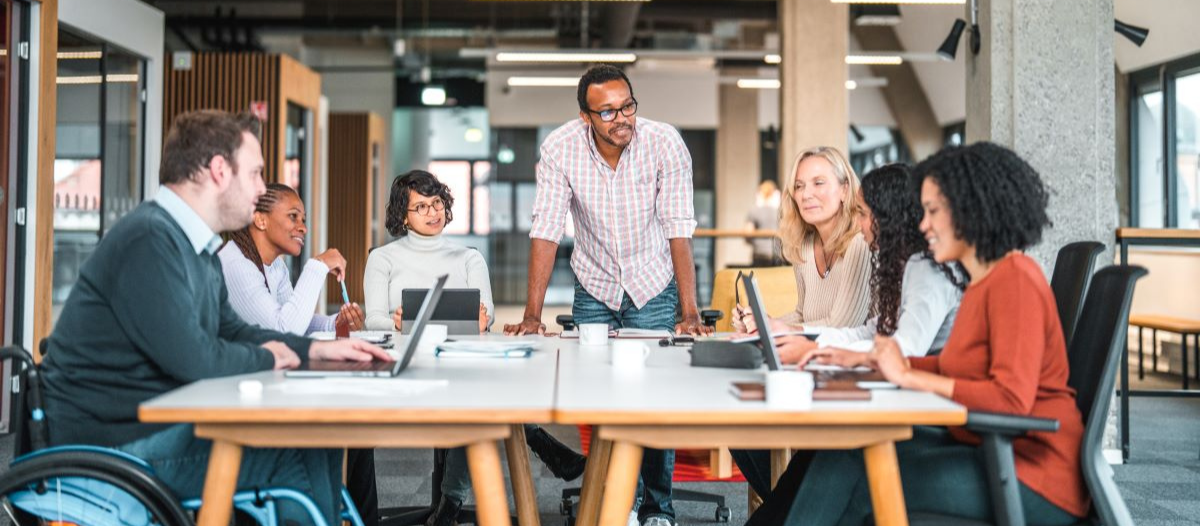
The office will be a place where people come in to work together and to maintain an office culture. It is possible fewer people go into the office all the time, while the vast majority still want office space, they can go to some of the time. When they do, they want to be able to work with others. The coronavirus made working from home more widely acceptable, but it also made being together more important than ever.
To enhance these efforts, FMs must provide and leverage space. Shared social and collaborative spaces should be in the open, rather than in enclosed spaces with fixed walls. This design can more easily respond to challenges by providing greater flexibility for physical distancing and circulation patterns. Shared spaces must be equipped with essential tools for generative collaboration while transforming existing shared spaces to facilitate enhanced performance and safety. The spaces must have flexibility to expand and contract by integrating more individual seating, modularity and flexible pieces. FMs must also rethink traffic directions and situate furniture, boundary elements and accessories to cue behaviors. Additional wayfinding signage and directional arrows may be necessary to assist safe passage through the office.
Looking forward
The office is a continual work in progress, influenced by the needs, values, technology and culture of each organization. Today’s office has evolved to solve a particular problem. Its function was/is to host a large number of people, enable communication, and ensure the proximity and easy access to important documentation. Through the pandemic, virtual solutions such as cloud-based hosting and video-conference calls have altered this perception. The focus has shifted from having the workplace dictate performance to creating a space where people feel inspired, motivated and happy. The goal is to have employees produce the best work possible.
Office design does not happen by chance. Work psychology, developments in technology and other cultural factors have shaped the office employees use today and will continue to do so. Senior managers would be well served by taking this opportunity to learn how to apply the innovations and advances implemented in recent months. They should develop an approach for ongoing workplace reinvention that is more resilient to all types of accommodation needs.
FMs understand these concepts and see the ways that remote work and the need for social interaction mesh. Looking at their facilities from a holistic perspective provides them with insights that individual department managers may not understand. They are also cognizant of the need for enhanced health and safety measures. The scenario of a different, improved workplace can be invigorating and exciting. Once the dust settles (and is vacuumed up), it will in their best interest to step up the evolution.
Bill Conley, CFM, SFP, FMP, LEED AP, IFMA Fellow, is a facility manager at Yamaha Motor Corp. in Cypress, California, USA. He previously served as owner and chief sustainability officer of CFM2, a facility management company. Conley has more than 40 years of experience in the facility management profession and has been a proponent of sustainable operations for more than 20 years. Conley has served on the IFMA board of directors, is a recipient of IFMA’s Distinguished Member of the Year award and has received the association’s Distinguished Author award three times. He has been a regular contributor to FMJ for almost 30 years and has authored more than 100 FMJ articles.
Read more on Workplace , Real Estate and Occupancy & Human Factors or related topics Space design and planning , Collaboration and Occupant Health
Explore All FMJ Topics