
 Membership
 Network
 Regional Sites & Affiliates


 Events
 Participate
 Resources

 Training
 Credentials
 Government


 Content Channels
 Tools
Tools


 Business Overview





Turning Waste Into a Resource
Compostable bags & the circular economy

The accelerating growth of plastic waste has emerged as one of today’s most critical environmental challenges, reflecting the unintended consequences of decades of material convenience and mass consumption. Lightweight, durable and inexpensive plastic bags were once widely embraced as symbols of efficiency and progress, seamlessly integrated into daily life across retail, logistics and food services.
However, the very properties that made these bags have transformed them into persistent pollutants that accumulate across landfills, urban drainage systems, waterways and natural ecosystems. Their widespread dispersion and long lifespan results in severe ecological impacts, including soil contamination, marine pollution and the formation of microplastics that threaten biodiversity and human health.
As urban populations grows, consumption patterns intensify and global waste generation reaches unprecedented levels, the structural weaknesses of the traditional linear “take-–make-–dispose” economic model are becoming increasingly apparent. This model prioritizes short-term convenience and low production costs while externalizing long-term environmental and social impacts. In rapidly expanding cities and high-consumption economies, reliance on single-use plastic bags contributes to overloaded landfills, inefficient waste management systems and escalating environmental remediation costs. These pressures have forced policymakers, businesses and communities to reconsider how materials are designed, used and managed at the end of their life cycle.
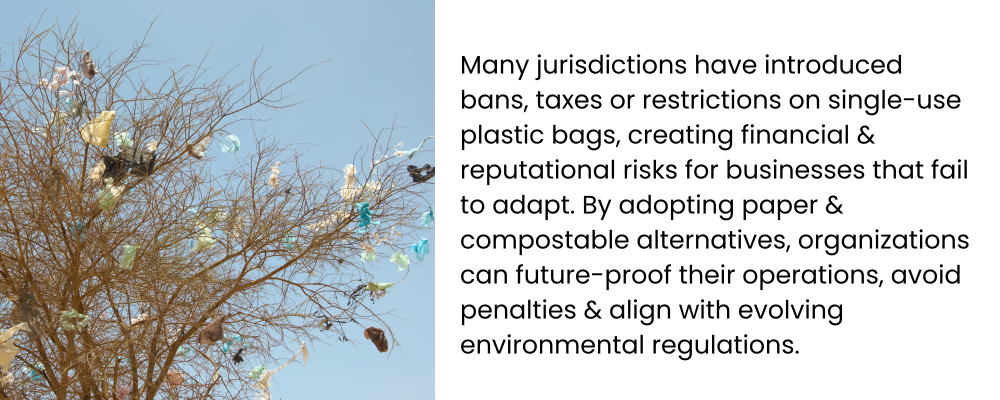
In response, a growing shift is underway toward solutions that reduce dependence on fossil-based plastics while promoting regenerative and circular material flows. Governments are introducing bans, levies and extended producer responsibility regulations, while businesses are reevaluating packaging choices to align with sustainability targets and ESG commitments. Within this evolving landscape, the transition from conventional plastic bags to paper and compostable alternatives is gaining momentum as a practical and scalable intervention.
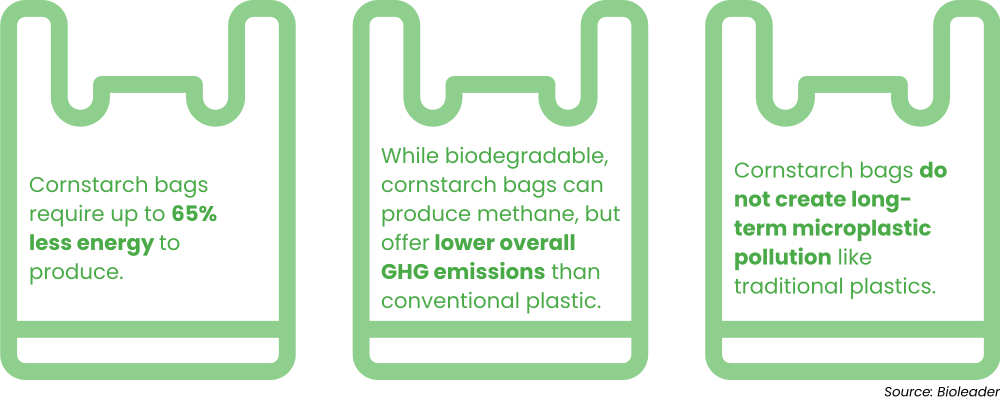 Compostable bags made from renewable resources such as cornstarch, sugarcane and other plant-based materials offer a pathway to replace persistent plastics with materials designed to safely return to natural systems. When supported by appropriate waste segregation, composting infrastructure and public awareness, these alternatives help transform waste from an environmental burden into a recoverable resource, reinforcing the principles of the circular economy and redefining how society values materials in everyday use.
Plastic bags are typically derived from fossil fuels and can persist in the environment for hundreds of years. Their lightweight nature makes them particularly prone to dispersal by wind and water, leading to widespread litter and marine pollution. Once fragmented, plastic bags break down into microplastics that enter food chains, contaminate soil and water, and pose risks to both wildlife and human health. Recycling rates for plastic bags remain extremely low due to contamination, economic constraints and limited collection infrastructure. As a result, most plastic bags are either landfilled, incinerated or leaked into the environment, creating long-term environmental liabilities rather than recoverable value.
Reducing plastic waste requires more than incremental improvements in recycling — it demands a fundamental shift in material choices and waste management practices. Paper and compostable bags offer an opportunity to replace problematic single-use plastics with materials that are either recyclable through established systems or capable of returning safely to natural cycles. Paper bags, when sourced from responsibly managed forests or recycled fibers, provide a renewable alternative that aligns with circular economy principles. Compostable bags made from cornstarch and similar biopolymers go a step further by enabling organic waste to be collected and processed without introducing persistent synthetic materials into the composting stream.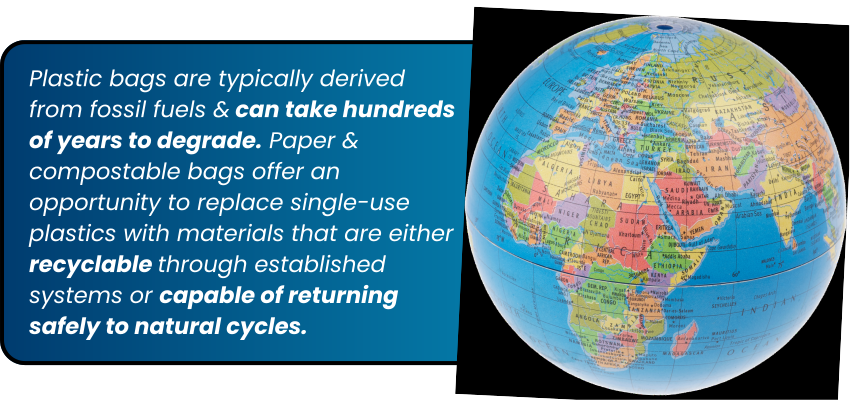
Cornstarch-based compostable bags are produced from plant starches that are converted into biopolymers such as polylactic acid. Unlike conventional plastics, these materials are designed to decompose under composting conditions into water, carbon dioxide and organic matter, leaving no toxic residues or microplastics behind. This characteristic makes them particularly valuable for facility managers who focus on food waste and green waste collection, for which contamination from plastic liners has long undermined compost quality and increased processing costs. By using compostable bags, organic waste can be diverted from landfills and transformed into nutrient-rich compost that supports soil health, agriculture and urban landscaping.
The environmental benefits of paper and compostable bag alternatives extend across the entire life cycle of materials. At the production stage, bio-based materials reduce reliance on fossil fuels and lower associated greenhouse gas (GHG) emissions. While paper production does require energy and water, advancements in manufacturing efficiency, recycled content and sustainable forestry practices have significantly reduced its environmental footprint. Compostable bags made from cornstarch utilize renewable feedstocks that can be replenished annually, supporting a shift toward bioeconomies that value agricultural by-products and renewable resources over finite petrochemicals.
During the use phase, paper and compostable bags perform effectively for many retail, commercial and waste collection applications, particularly where using single-use bags is unavoidable. In the waste management phase, their advantages become even more apparent. Paper bags can be recycled multiple times, extending the useful life of fibers and reducing the need for virgin materials. Compostable bags, when correctly managed, enable the biological recycling of organic waste, closing the loop between consumption and regeneration. This dual pathway — technical recycling for paper and biological recycling for compostables — supports a more resilient and diversified waste management system.
The transition away from plastic bags also delivers significant benefits for landfill reduction. Organic waste wrapped in plastic bags often ends up in landfills, where it decomposes anaerobically and generates methane, a potent GHG. Compostable bags, by contrast, facilitate the diversion of organic waste to composting or anaerobic digestion facilities, where emissions can be managed and energy or soil amendments can be recovered. Reduced landfill volumes translate into lower long-term environmental risks, reduced leachate generation and decreased pressure on already limited landfill capacity, especially in rapidly urbanizing regions.
From an ecological perspective, replacing plastic bags with paper and compostable alternatives reduces the risk of harm to wildlife and marine ecosystems. Plastic bags are frequently mistaken for food by animals, often leading to ingestion, suffocation and entanglement. Even when paper bags enter the environment, they degrade far more rapidly and pose significantly lower risks. Compostable bags, when certified and properly processed, are designed to break down completely, minimizing the likelihood of persistent pollution. This shift contributes to healthier ecosystems, cleaner urban environments and improved public perception of waste management practices.
The economic benefits of reducing plastic waste through alternative bags are equally compelling. Although paper and compostable bags may have a higher upfront cost than conventional plastic bags, their long-term value becomes evident when considering waste management efficiencies, regulatory compliance and environmental cost avoidance.
 In addition, the use of compostable bags supports the growth of local composting and biowaste treatment infrastructure. This creates opportunities for green jobs in waste collection, processing, agriculture and landscaping. Compost produced from organic waste can be used to improve soil fertility, enhance water retention and reduce dependence on chemical fertilizers. These benefits extend beyond waste management, supporting food security, urban greening and climate resilience. In contrast, plastic waste represents a cost burden with little or no regenerative value.
Social and behavioral impacts also play a crucial role in the transition away from plastic bags. Visible alternatives such as paper and compostable bags function as daily reminders of sustainability commitments and encourage more responsible consumption habits. When consumers and employees are provided with clear, practical alternatives, resistance to change is often reduced. Compostable bags used for food waste separation can improve participation rates in recycling programs, as they simplify sorting and reduce concerns about cleanliness and odors. This improved engagement strengthens the overall effectiveness of waste reduction initiatives.
Despite these advantages, the transition to paper and compostable bags must be managed carefully to avoid unintended consequences. Not all compostable bags are equal, and improper labeling or misuse can lead to contamination of recycling or composting streams. Certification standards, clear communication and proper infrastructure can ensure that compostable materials are processed as intended. Similarly, increased demand for paper bags must be balanced with responsible sourcing and high recycled content to prevent negative impacts on forests and biodiversity. These considerations highlight the importance of viewing alternative bags not as a standalone solution, but as part of an integrated waste management and circular economy strategy.
Education and policy support are critical enablers of this transition. Public awareness campaigns, staff training in commercial facilities and clear waste segregation guidelines help ensure that paper and compostable bags deliver their intended environmental benefits. Municipalities can accelerate adoption through procurement policies, incentives and support for composting infrastructure.
Businesses, particularly in retail, hospitality and large facilities, have a key role to play by choosing certified products, engaging suppliers and monitoring performance outcomes.
Ultimately, reducing plastic waste by increasing the use of paper and compostable bags made from cornstarch and other renewable materials represents a practical and scalable step toward a more sustainable future. This transition addresses the root causes of plastic pollution while supporting circular material flows that prioritize reuse, recycling and regeneration. By shifting from fossil-based, persistent plastics to renewable, recyclable and compostable alternatives, societies can reduce environmental harm, unlock economic value from waste and move closer to a system wherein materials are designed to benefit both people and the planet. The success of this shift will depend not only on material innovation, but also on collective commitment, informed decision-making and the recognition that waste is not an inevitable by-product of progress, but a design challenge that can and must be solved.


Izzat Ali Khan, SFP, FMP, is the general manager at EFSiM Facilities Services. A seasoned FM professional, he is passionate about creating a positive impact in business through sustainability. He focuses on integrating sustainability and innovation in businesses to build the FM industry and make the world a better place to live.

Dr. Shahrukh Nawaz Khan is an environmentalist with specialized expertise in water pollution control and circular economy practices. He holds a Ph.D. in environmental sciences, with a strong focus on sustainable resource management. His work centers on reducing environmental impacts through efficient waste and water management solutions, signalling his commitment to promoting environmentally responsible practices that support long-term sustainability.
References
Top image by Getty Images.
Read more on Sustainability or related topics Carbon Footprint and Environmental, Social and Governance (ESG)
Explore All FMJ TopicsRelated articles
-

Smart Building Control Systems
The foundation for a grid-interactive buildingBy Andre Marino09.25.2024 -
Smart Building Innovation
Cutting costs & carbon footprints without compromiseBy Andrew Butterworth09.12.2024 -

Chart the Path
Building sustainable cities & a sustainable futureBy Izzat Ali Khan & Aykean Forde12.16.2024