 Membership
 Network
 Regional Sites & Affiliates


 Events
 Participate
 Resources
 Training
 Credentials
 Government


 Content Channels
 Tools
Tools


 Business Overview




What's in a Name?
The acronymic world of FM

What’s in a name? That which we call “facility management” by any other name would function the same. However, an operational definition is helpful when defining a concept. For instance, the word “plane” has a different meaning to someone in aeronautics versus a carpenter or a mathematician. The context in which a name is used is important in defining the terminology, and facility managers must have familiarity with the profession’s frequently used terms in their proper context.
Facility management (FM) contains a world of acronyms, and when one enters this world, understanding connotation is imperative. In a sense, names don’t really matter when all that is needed is to know what something is. A case can be made then, that acronyms are names.
There are good reasons for compressing phrases into initials. It’s done in texting (LOL) and Tweets (OMG) all the time. Whenever a title or term is used multiple times, there is a tendency to abbreviate. Whether out of laziness or for the sake of expediency, it’s common in any industry.
There are a myriad of acronyms relating to facility management, from organization names like IFMA (International Facility Management Association), to publications like the FMJ (a case in which an acronym became a formal name when the magazine’s title was shortened from Facility Management Journal). Acronyms are also used to reference construction, design, workspace, industry standards and compliance issues…too many to discuss at one time.
One area that has come to the forefront in FM deals with sustainable operations, with a slew of acronyms devoted just to these efforts. Some are new to the profession, and some are time-tested and can be reapplied in a different context. As a start, there are five areas to consider.
Process improvement/standards
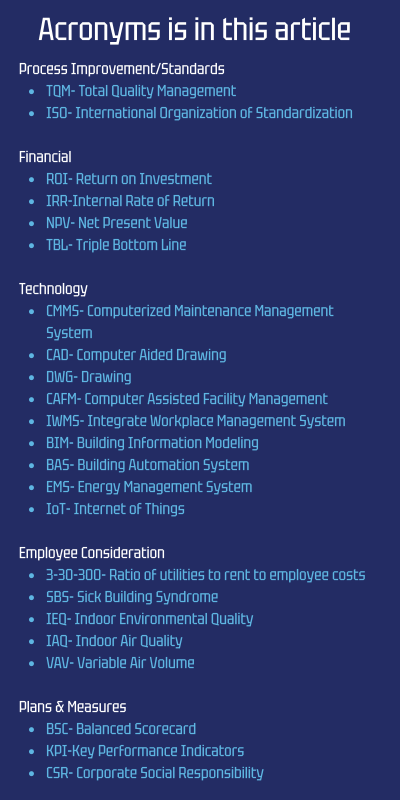 Every FM focuses on efficiency and continual improvement. Concentrating on sustainability works to that end, but there are ancillary tools that can be used to set the framework for an overall approach. A good place to start is TQM – total quality management. TQM is a set of management principles aimed at improving performance throughout an organization, and its tenets can be applied to any program that revolves around sustainable actions. It consists of facility-wide efforts to install and make permanent a culture in which the ability to deliver high-quality service is continually improved. Transferring the precepts of TQM to sustainability makes sense in facility management, where consistency is paramount.
Another tool for improving performance is provided by the International Organization of Standardization, or ISO. ISO is an independent, non-governmental, international organization with a membership of 162 national standards bodies. Through its members, it brings together experts to share knowledge and develop voluntary, consensus-based, market-relevant international standards that support innovation and provide solutions to global challenges. There are several ISO Standards related to FM. In fact, there are three devoted especially to the industry: ISO 41011, devoted to Facility Management Vocabulary; ISO 41012, which provides guidance on strategic sourcing and the development of agreements; and ISO 41001, which takes it to the next level and provides a standard against which a facility management organization can be assessed and measured. ISO 14001 is another standard that helps organizations identify, manage, monitor and control their environmental issues in a holistic manner.
Financial
When a project is proposed, and funds are requested, the accounting department may have questions about the plan’s viability. They probably want to know the return on investment, or ROI, of the work being done. They may ask what the internal rate of return, or IRR, will be. This is a metric used in capital budgeting to estimate the profitability of potential investments. The IRR is a discount rate that makes the net present value – NPV – of all cash flows from a particular project equal to zero. NPV is calculated to find today’s value of a future stream of payments. It accounts for the time value of money and can be used to compare investment alternatives. ROI is a more immediate determination. NPV can outline savings that will be realized after the initial project is balanced out.
And, of course, as the discussion tends toward sustainability, there is the triple bottom line, or TBL. This is an accounting framework with three parts: social, environmental and financial. Many organizations have adopted the TBL framework to evaluate their performance in a broader perspective to create greater business value. It is also referred to as people, planet and profits.
Technology
Tech is replete with acronyms! The world has gone digital, and pen-and-paper documentation has mostly been relegated to the past. To start with, there’s computerized maintenance management systems, or CMMS, which allows users to manage and accomplish maintenance practices in an effective manner. The use of CMMS can lead to a more efficient workforce along with major cost reductions.
Computer aided design, CAD, is a program that delivers drawing, or “dwg,” files in 2D electronic format. When FMs or architects mention “as-builts,” they’re usually referring to CAD drawings. CAD can be used in other ways, as well. When combined with a database, a computer assisted facility management (CAFM) program can be created. This is an interrelational program with CAD drawings that delivers specific FM capabilities. Changes in one file are reflected in another, so adds, moves and changes in a workspace can be entered into one spreadsheet or drawing and it will show up in both files. Asset management, maintenance programs and other modules make CAFM a robust tool for FMs.
An integrated workplace management system (IWMS) is CAFM on a larger scale. The fundamental difference between CAFM and IWMS is that CAFM centralizes information about one facility, while IWMS centralizes information about the entire real estate portfolio.
BIM - Building information modeling could be defined as CAD on steroids. Traditional building design is reliant upon two-dimensional technical drawings (plans, elevations, sections, etc.). Building information modeling extends this into 3D, augmenting the primary spatial dimensions of width, height and depth.
BAS - Building automation system is an example of distributed control of equipment in a facility. It is a network of electronic devices designed to monitor and control certain systems in a building, such as mechanical, security, fire and flood safety, lighting (especially emergency lighting), humidity control and ventilation.
EMS - Energy management system can be a part of a BAS or it can be a standalone system. It automates controls related to elevators, fire and safety, and metering. An EMS can also track and control energy expenditures and identify energy savings opportunities.
Tying everything together is the Internet of Things, or IoT. A dynamic, smart workplace is interactive and responsive to the needs of the employees working there. IoT refers to the devices connected to the internet through sensors or Wi-Fi. Each device collects and exchanges data, enabling systems to work together to maintain a safe, comfortable and efficient facility.
Employee consideration
Changes that affect human capital have a greater impact than those that improve only physical capital. Employee costs are, by far, the highest expense a company incurs. Any increase in productivity has a direct impact on the bottom line.
The 3-30-300 Ratio may not formally belong in a discussion of acronyms, but it falls into the “good-to-know” category. Coined by Jones-Lang-LaSalle (JLL), the ratio of utilities to rent to employee costs is one that can be used in evaluating successful building operations. It provides a basic breakdown of what a company pays per square foot of a building: US$3 for utilities, US$30 for rent and US$300 for employee costs. This ratio reinforces the notion that saving money on energy or negotiating better lease rates are valuable but paying attention to personnel and increasing their ability to be more productive provides more benefit to corporate success.
Thus, it is important to provide safe, healthy, comfortable working environments. Indoor air quality (IAQ) refers to the air quality within and around buildings and structures, especially as it relates to the health and comfort of occupants. One way to ensure comfort is via a variable air volume, or VAV, HVAC system. Unlike constant air volume systems that supply a constant airflow at a variable temperature, VAV systems vary the airflow at a constant temperature.
Indoor environmental quality, or IEQ, includes air quality, IAQ, access to daylight and views, pleasant acoustic conditions and occupant control over lighting and thermal comfort.
When IEQ and IAQ are ignored, get ready for sick building syndrome, or SBS. This is when facility occupants experience acute health- or comfort-related effects, and the common denominator is time spent in the building. Avoiding SBS is one of the primary reasons IAQ and IEQ are so important. It is interesting to note that one area not covered by insurance is liability caused by SBS.
Plans & measures
As FMs decide to implement systems or upgrade their services, there are a few tools that help define and guide the process.
KPI - Key performance indicator. This is a measurable value that demonstrates how effectively a facility department is achieving key operational objectives. Organizations use KPIs at multiple levels to evaluate their success at reaching targets. In FM, these can be indicators of water or energy conservation efforts, service levels, customer satisfaction, time to task, the ratio of reactive actions to proactive measures, or preventive maintenance (PM) program compliance.
BSC - The balanced scorecard is based on the premise that more than one factor needs to be satisfied in any facility undertaking. The BSC looks at strategic measures in addition to traditional financial measures to get a more “balanced” view of performance. This focus on high-level strategy and low-level measures sets the balanced scorecard apart from other performance management methodologies. The TBL (remember what that stands for?) can be viewed as a type of balanced scorecard. All three legs of the triple bottom line must be addressed in order for endeavors to be deemed successful.
The overarching goal of progressive organizations in the international business world is to be able to report on their corporate social responsibility, or CSR, efforts. Also called corporate conscience, corporate citizenship or responsible business, this is a form of corporate self-regulation integrated into a business model. A business monitors and ensures its compliance with the spirit of the law, ethical standards, and national or international norms. Sustainability practices and their positive effects are reported here and play a major role in these efforts.
For a new FM, learning acronyms is like picking up a new vocabulary…extending the knowledge of language needed to identify and implement continuous improvement. Understanding the concepts behind the abbreviations can lead to streamlined operations, increased customer satisfaction and stakeholder appreciation. As more acronyms arise in the workplace – and they will – it’s wise for FMs to stay aware of new terminology and decide what fits their needs. It’s the SMART thing to do (specific, measurable, attainable, realistic and timely).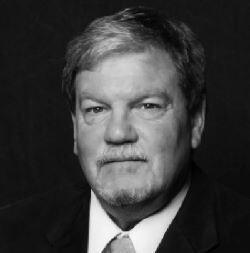
Bill Conley, CFM, SFP, FMP, LEED AP, IFMA Fellow, is a facility manager at Yamaha Motor Corp. in Cypress, California, USA. He previously served as owner and chief sustainability officer of CFM2, a facility management company. Conley has more than 40 years of experience in the facility management profession and has been a proponent of sustainable operations for more than 20 years. Conley has served on the IFMA board of directors, is a recipient of IFMA’s Distinguished Member of the Year award and has received the association’s Distinguished Author award three times. He has been a regular contributor to FMJ for almost 30 years and has authored more than 100 FMJ articles.
Read more on Communication and FM Solutions or related topics Communication Skills
Explore All FMJ Topics