
 Membership
 Network
 Regional Sites & Affiliates


 Events
 Participate
 Resources

 Training
 Credentials
 Government


 Content Channels
 Tools
Tools


 Business Overview





5 Reasons Data Centers Fail at Environmental Monitoring
… and how to fix them
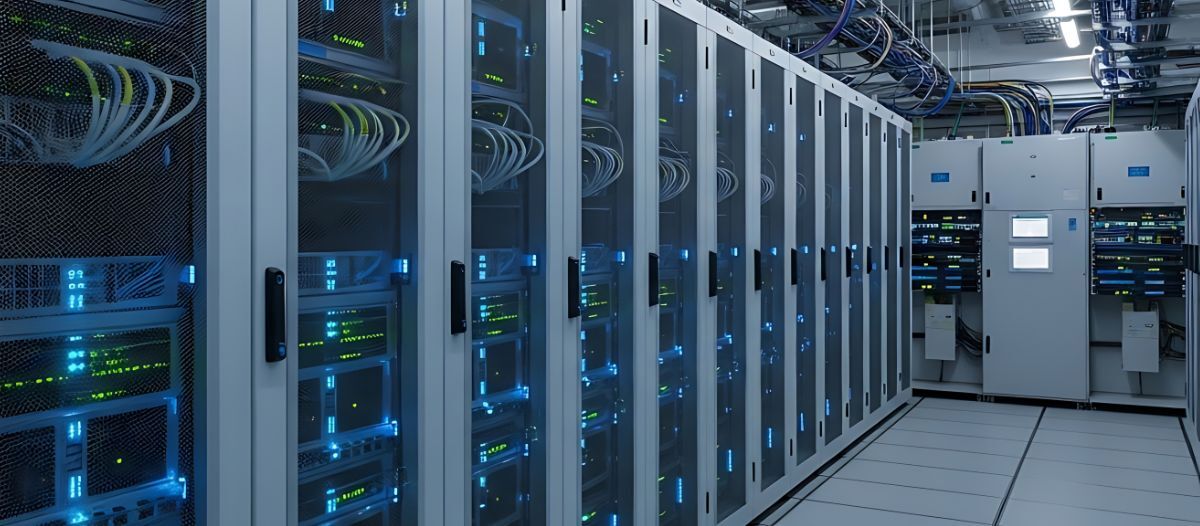
A single degree can make the difference between efficient operations and unnecessary energy costs in a data center.
Thousands of facilities worldwide support cloud services, financial transactions and AI workloads. All of that computing power generates heat that must be continuously removed to maintain safe operating conditions and avoid costly downtime. Cooling systems are therefore central to data center operations, often accounting for roughly a quarter of a facility’s total energy use.
Even small measurement errors can have significant consequences.
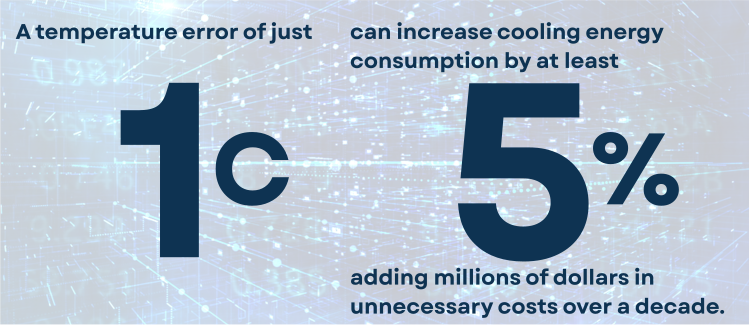 These errors can originate inside the white space or at the facility boundary when outdoor measurements are inaccurate.
For facility managers responsible for reliability, energy efficiency and operating costs, accurate environmental monitoring is essential. Sensors must deliver sufficient accuracy and long-term stability to prevent overcooling, avoid thermal risk and ensure power usage effectiveness (PUE) targets are achieved.
Why monitoring matters more than ever
Data center growth shows no signs of slowing. Hyperscale operators now account for nearly 60 percent of global capacity, while thousands of colocation facilities are expanding to meet enterprise demand for managed IT infrastructure. With compound annual growth rates projected to exceed 10 percent through 2030, data centers are expected to consume 3 percent or more of global electricity. This trajectory makes continued efficiency improvements both economically valuable and increasingly important for reducing environmental impact.
Power usage effectiveness, measuring total facility energy consumption against IT equipment energy alone, remains the industry’s primary efficiency metric, complemented in recent years by water usage effectiveness (WUE), measuring the efficiency of water used in data centers. Both metrics can be influenced by environmental conditions, particularly temperature and humidity measurements that inform cooling system operation and economization strategies.
 Perfect efficiency would yield a PUE of 1.0, meaning zero waste on supporting infrastructure. Unfortunately, reality falls short.
Modern hyperscale facilities can achieve PUE values below 1.2, while many traditional data centers still operate closer to 2.0. The global average remains near 1.5 to 1.6, indicating that roughly one-third of total energy consumption still supports infrastructure rather than computing itself. Cooling dominates that non-IT consumption and increasingly determines overall efficiency outcomes.
As operators pursue tighter efficiency targets, cooling performance depends less on design intent and more on the quality of real-time environmental measurements. Overcooling increases energy consumption and erodes potential efficiency gains. Undercooling raises the risk of thermal excursions, performance throttling and unplanned shutdowns. Uneven temperature distribution can create persistent hot spots that accelerate component wear and shorten equipment life.
Environmental measurements also play a critical role in economization strategies. Organizations that rely on outdoor air cooling must accurately measure external temperature and humidity to determine the optimal balance between fresh outdoor air and recirculated indoor air. Even the most advanced building management systems cannot optimize performance if the data guiding them is incomplete or unreliable.
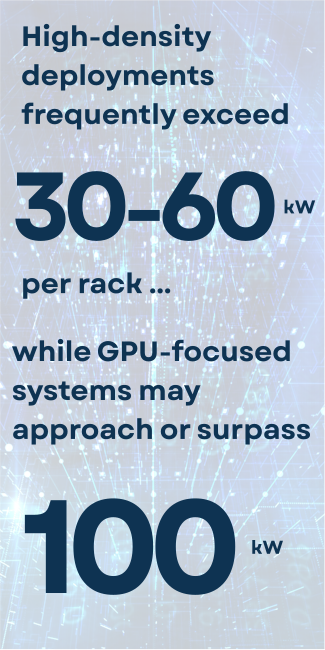
Rising rack densities further intensify these challenges. Historically, average rack power remained below 10 kilowatts, with many enterprise environments still operating in the 5 to 9 kW range. However, AI and accelerated computing clusters are rapidly redefining these norms. High-density deployments now frequently exceed 30 to 60 kW per rack, while GPU-focused systems may approach or surpass 100 kW. Next-generation AI infrastructure is expected to push densities even higher in the coming years.
As power densities rise, the margin for thermal error narrows and precise environmental control becomes increasingly critical.
Liquid cooling technologies, increasingly deployed to support extreme densities, introduce additional monitoring requirements such as liquid temperature, flow rates and heat rejection performance. In this environment, accurate environmental measurement becomes foundational to reliable and efficient operation.
For FMs, however, the issue is rarely the availability of monitoring technology. The challenge is how it is implemented. Across the industry, five recurring failures continue to undermine environmental monitoring and limit cooling performance.
Challenge 1: Compromised sensor quality
Not all environmental sensors deliver the same long-term performance. Procurement decisions sometimes focus heavily on initial purchase cost, overlooking differences in measurement technology, calibration practices and component quality that influence long-term reliability.
Lower-grade sensors may appear accurate in specifications but struggle to maintain that performance under real-world operating conditions. Measurement drift is a common challenge. Over time, sensors can gradually lose calibration, shifting their baseline so reported readings no longer reflect actual conditions. Humidity sensors may provide different readings at the same actual humidity depending on environmental conditions.
A temperature sensor reading 24 degrees Celsius when the actual temperature is 25 degrees may appear insignificant at first. Across cooling systems operating continuously, however, even a one-degree discrepancy can have measurable consequences. Modeling conducted by major cooling equipment manufacturers shows that a one-degree temperature difference can increase cooling energy consumption by 8 to 9 percent.
These impacts accumulate relentlessly. A facility operating with inaccurate or drifted sensors for five years can potentially add millions to operating costs while facility systems continue reporting conditions that appear within specification.
The fixEstablish a proactive calibration program aligned with the facility maintenance schedules. Sensors with exchangeable measurement modules or field-swappable probes allow recalibration without interrupting operation. A traceable calibration certificate ensures consistent performance across the network. Some organizations are employing portable validation tools, giving operators real-time insight into sensor health. |
Challenge 2: Inadequate maintenance
Environmental sensors may appear trivial compared to multimillion-dollar IT equipment, such as servers, networking gear and storage systems, but their impact on facility operations is disproportionate. Sensors that cause unreliable input to controlled systems can waste enormous energy or create thermal conditions that damage expensive IT equipment.
Even premium sensors require life cycle oversight. Maintenance plans established during commissioning can gradually weaken as facilities focus on other operational priorities. Calibration intervals may be extended, service windows postponed or verification checks skipped. Within a few years, sensors installed with proper care but operating without oversight may gradually drift out of specification.
The fixEstablish a proactive calibration program aligned with the facility maintenance schedules. Sensors with exchangeable measurement modules or field-swappable probes allow recalibration without interrupting operation. A traceable calibration certificate ensures consistent performance across the network. Some organizations are employing portable validation tools, giving operators real-time insight into sensor health. |
Challenge 3: Improper sensor placement & installation
Even the most accurate sensor provides limited value if installation optimization is overlooked.
Data center thermal dynamics complicate monitoring more than typical building spaces. Hot aisle and cold aisle containment create distinct thermal zones, while airflow patterns produce three-dimensional variations in temperature and humidity. Conditions at a sensor location may appear stable while localized hot spots develop elsewhere.
Vertical temperature stratification adds another dimension of complexity. Heat rises, creating temperature gradients from floor to ceiling. Sensors mounted at convenient heights might miss conditions at rack tops where temperatures peak. Capturing these variations requires sufficient sensor density. A 10,000 square foot data hall might require dozens of monitoring points to capture thermal variations across the space.
The fixThe more known about a space, the more accurate control can be. A zoned measurement strategy helps capture both vertical and horizontal gradients. In a perfect world, sensors should be distributed at different rack levels and along airflow paths, particularly at inlets and outlets, to detect stratification and airflow anomalies. However, what is most important is having enough sensors to form a comprehensive view of the indoor space. Modular monitoring architecture, which allow multiple probes to daisy-chain along a rack or duct, offer flexibility and scalability as layouts evolve. Proper commissioning, including airflow visualization or thermal mapping, helps validate that every measurement represents the real environment. |
Challenge 4: Limited long-term instrumentation support
Environmental monitoring systems often remain in service for many years, sometimes longer than the original automation platforms they connect to. Over that time, maintaining consistent support can become an important consideration.
Product lines may evolve, components may be discontinued and calibration services may change as vendors adjust their portfolios. When replacement parts, calibration resources or technical support become difficult to obtain, maintaining consistent measurement accuracy across a facility can become more complicated.
Geographic factors may also influence response times. Facilities located outside major service areas may experience longer delays when sensors require verification, replacement or recalibration. In environments where stable thermal conditions are essential, extended response times can introduce operational risk.
Organizations operating multiple facilities may also encounter differences in calibration practices or service availability across regions, which can lead to variations in monitoring performance between sites.
The fixPartner with established instrumentation providers with established service networks and long-term product support can help maintain consistent monitoring performance. Traceable calibration services, documented reliability metrics and clearly defined service agreements support long-term stability. For global operators, harmonized calibration protocols ensure comparability across sites, an increasingly important factor for environmental, social and governance (ESG) reporting and carbon accounting. |
Challenge 5: Not fully utilizing monitoring data
Environmental monitoring often generates large volumes of operational data. However, in some organizations, this information is used primarily for alarms or threshold alerts rather than as part of ongoing performance analysis.
Without periodic validation and analysis, operators may have limited visibility into how environmental conditions evolve over time. Changes in equipment density, airflow patterns or cooling strategies can gradually alter thermal behavior inside the facility.
Monitoring systems may also operate independently from other operational platforms. When environmental inputs are not properly integrated with building automation systems, energy management platforms or data center infrastructure management (DCIM) tools, opportunities for deeper optimization can be missed.
The fixTreat environmental monitoring as an active part of FM rather than a passive alarm system. Periodic validation checks help confirm measurement accuracy, while integration with DCIM or energy management platforms allows operators to correlate environmental conditions with cooling performance, power consumption and long-term efficiency trends. |
From diagnosis to action
Environmental monitoring shapes data center economics and reliability more than its modest hardware costs suggest. Accurate environmental measurement enables more efficient cooling, helps prevent unexpected downtime and supports better capacity planning. Yet, too many facilities underinvest in monitoring infrastructure or neglect ongoing maintenance.
The stakes are high as demand for digital infrastructure continues to grow. Data centers account for roughly 1.5 percent of global electricity consumption, a number that is rising rapidly as AI, cloud computing and digital services expand. Without intervention, the environmental impact will continue to grow. Improving operational efficiency will therefore remain a priority for both economic and environmental reasons.
Reliable monitoring plays an important role in achieving those gains. Accurate measurements allow cooling systems to operate closer to their intended design conditions, reducing unnecessary energy use while maintaining stable thermal environments for critical equipment.
Treating environmental monitoring as core infrastructure rather than a peripheral system can deliver measurable benefits. Stable, drift-resistant sensors, well-planned calibration programs, thoughtful sensor placement and dependable service support help ensure that every measurement contributes to efficiency, resilience and risk reduction.
In an industry where a single degree can influence millions of dollars in operating costs, precision measurement has become an essential foundation for reliable and efficient data center operations.

Kelly King is a business development leader at Vaisala with more than 10 years of experience in data center infrastructure, where she has helped embed AI solutions into early cloud deployments and built strategic relationships with customers navigating complex technology environments. Her background in physical security and data center protection gives her deep technical understanding of uptime, sustainability, and scalability challenges. King takes a consultative approach to translating evolving data center needs into practical solutions that support business growth and operational performance.
References
Top image provided by Vaisala.
Read more on Facility Operations and Sustainability or related topics Energy and Data strategy and information management
Explore All FMJ Topics