 Membership
 Network
 Regional Sites & Affiliates


 Events
 Participate
 Resources

 Training
 Credentials
 Government


 Content Channels
 Tools
Tools


 Business Overview





Accentuate the Positive
Controlling mold growth in exterior walls
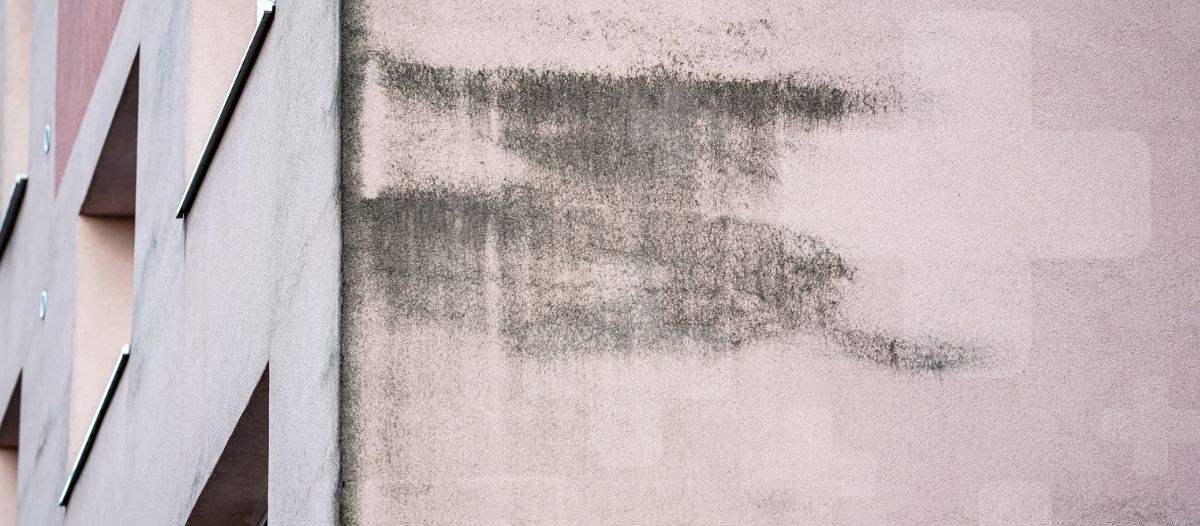
Mold growth inside exterior wall assemblies remains one of the most costly and difficult indoor environmental challenges for facility managers. Often hidden from view, moisture accumulation within wall cavities can persist for months before visible damage or occupant complaints appear. By the time staining, odors or health concerns emerge, remediation costs and liability risks are already rising.
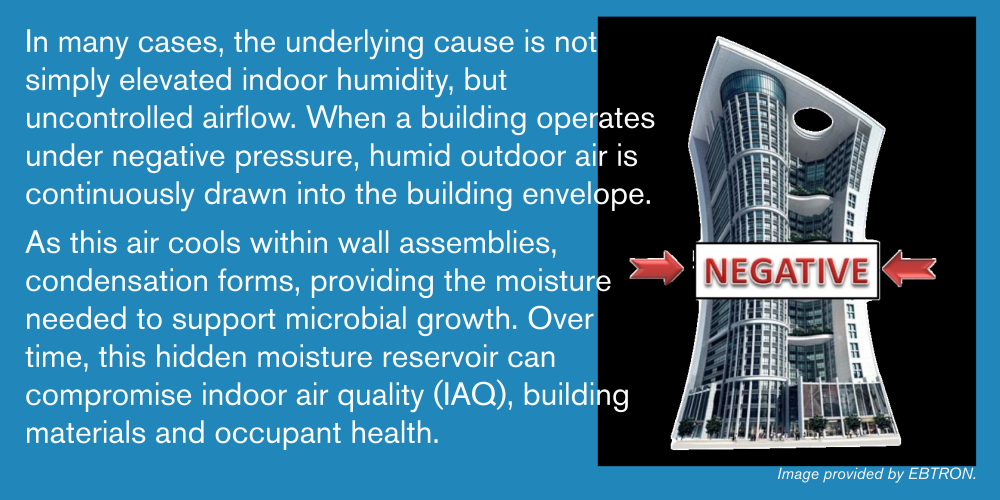
Why mold develops inside walls
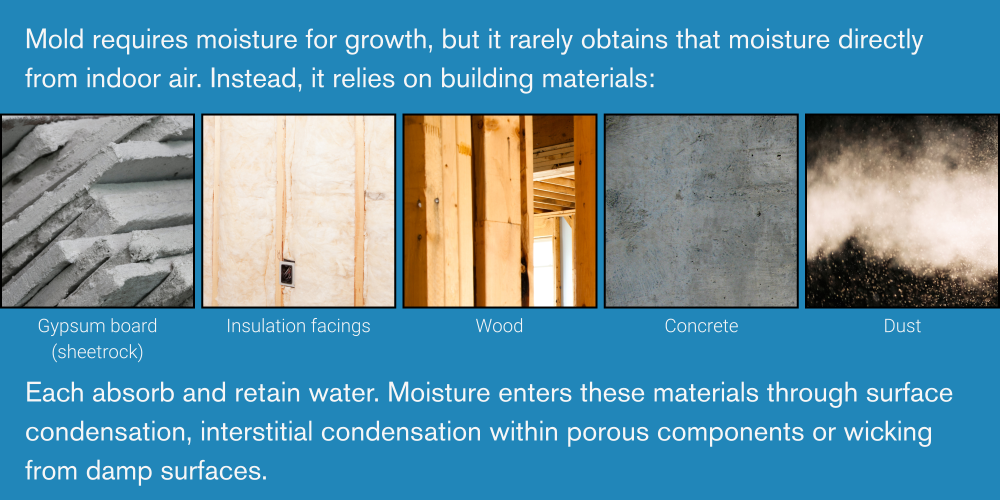 A common misconception is that maintaining indoor relative humidity below 60 percent is sufficient to prevent mold. Surface temperatures vary throughout a building. Exterior walls, thermal bridges and poorly insulated areas are often cooler than the surrounding air. As a result, the relative humidity at these surfaces can be significantly higher than measured room values. If humid air reaches these cooler areas and falls below its dew point, condensation will occur even when space humidity appears acceptable.
ASHRAE Standard 62.1 recognized the potential for mold growth within the building and has incorporated a dew point limit of 60 F during both occupied and unoccupied hours with requirements for controls. There is also a requirement for building exfiltration, by maintaining intake airflow rates higher than exhaust rates under all dynamic conditions. The standard recognizes that managing moisture is not solely about space relative humidity but also prevents conditions where condensation can occur within building assemblies or on surfaces.
Once moisture is trapped inside a wall cavity, it can sustain mold growth long after ambient conditions have changed.
The role of building pressure
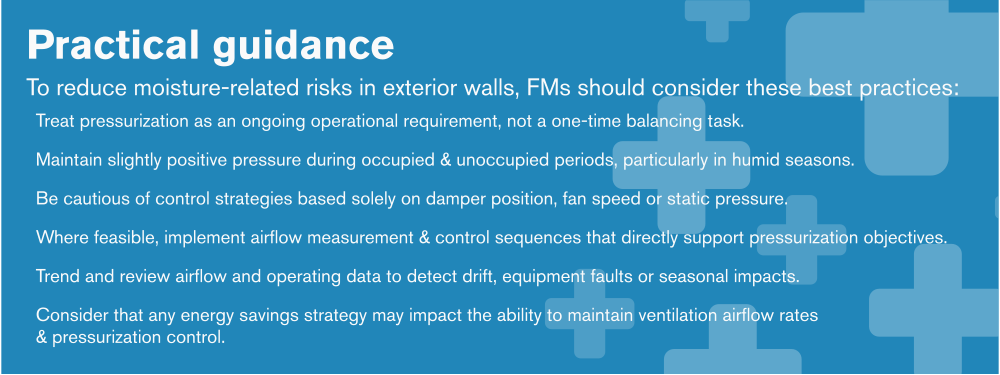
One of the most effective ways to limit moisture intrusion is to maintain continuous, slight positive pressure relative to outdoors. When more air is supplied to a building than is exhausted, a positive pressurization flow is created. This outward airflow reduces infiltration through cracks and openings in the building envelope.
Positive pressurization is especially critical in humid climates and during shoulder seasons, when outdoor moisture levels remain high.
Unfortunately, many buildings operate negatively during unoccupied hours when ventilation systems are shut down or reduced. These off-hours periods often coincide with cooling surfaces and high humidity — ideal conditions for condensation inside walls.
Maintaining positive pressure should therefore be viewed as a continuous operational strategy, not merely a commissioning target.
Energy saving choices & requirements
Whether the building is newly designed or decades old, there are energy saving control strategies implemented. These may be retrofitted by the facility to save operational energy, required by energy codes, or mandated by governmental appliance and equipment standards. These strategies include economizing, demand control ventilation, varying supply fan speed with cooling load, unoccupied shutdown and more.
Implementing these energy saving controls results in constant dynamic changes within the HVAC system, making maintaining zone and building pressurization a challenging affair. They are often referred to as dynamic reset conditions. These constantly changing conditions require building intake airflow rates and exhaust rates to be dynamically modulated to maintain proper pressurization.
Even when the energy saving choice is not related to HVAC, it may still affect the HVAC operation and building pressurization. A new roof, replacement windows and sealing of the building enclosure can all impact the infiltration and exfiltration dynamic. This will affect how the HVAC system works and may require a rebalance of the systems and changes in control operation.
Limitations of conventional control strategies

Many HVAC control sequences were developed primarily to minimize first cost and energy use. While well-intentioned, these approaches often fail to maintain stable pressurization in real-world conditions.
-
Fixed outdoor air dampers are common in supply-fan-only systems. However, wind, stack effect, variable air volume (VAV) operation and other dynamic reset conditions cause actual outdoor airflow to fluctuate widely, leading to unpredictable pressure relationships.
-
Proportional fan tracking using variable frequency drives assumes that supply and return fans will maintain airflow balance by running at similar speeds. In practice, changing system resistance and economizer operation make this approach unreliable.
-
Static pressure control of return fans attempts to maintain building pressure directly. However, very low differential pressure setpoints are difficult to measure accurately and are highly sensitive to wind effects and sensor placement.
All of these methods rely on indirect indicators of airflow. As a result, buildings may drift negatively even when control systems appear to be functioning properly.
A more reliable approach: Control the flow differential
A more robust strategy focuses on directly measuring and controlling the airflow rates that determine pressurization. Pressurization flow is simply the difference between air entering and leaving the building. If that differential remains positive, the building tends to remain positively pressurized.
For supply-fan-only systems, this requires accurate measurement and control of outdoor air intake, often coordinated with return air damper modulation.
For systems with return or relief fans, maintaining a controlled volumetric difference between intake and exhaust airflows provides stable pressure control. In some configurations, maintaining a small continuous bleed through relief dampers improves stability across operating modes.
Direct airflow measurement allows facility teams to verify performance, identify deviations and correlate pressure problems with weather conditions, schedules or equipment modes.
The key takeaway
Preventing mold inside exterior walls starts with controlling airflow direction. When buildings operate under negative pressure, humid air is drawn into the envelope and condenses on cool surfaces. By maintaining continuous positive pressurization through measured, dynamic ventilation control, FMs can significantly reduce hidden moisture accumulation, improve IAQ, and limit long-term operational and liability risks.
Effective pressurization control supports healthier buildings, protects building assets and provides a measurable foundation for sustainable facility management.

Darryl DeAngelis has served as director of business development for EBTRON since 2018. He holds a B.S. in Marine Engineering from the Massachusetts Maritime Academy. He has more than 40 years of experience in the HVAC industry, along with four related patents and LEED AP accreditation. A longtime ASHRAE member, DeAngelis has served on numerous technical and standards committees. Currently, he serves as chair of the 62.1 Ventilation Subcommittee and as past chair of TC 7.7 Testing and Balancing. He is a voting member of ASTM and participates in several professional organizations supporting indoor air quality, building performance and facility management.
References
Read more on Facility Operations , Occupancy & Human Factors and Facility Technology & Data Management or related topics Occupant Health , Measure and Monitor , Operations and Maintenance Planning and Operational Technology
Explore All FMJ Topics