
 Membership
 Network
 Regional Sites & Affiliates


 Events
 Participate
 Resources

 Training
 Credentials
 Government


 Content Channels
 Tools
Tools


 Business Overview





AI-powered HVAC
The scalable blueprint for future-ready, resilient buildings
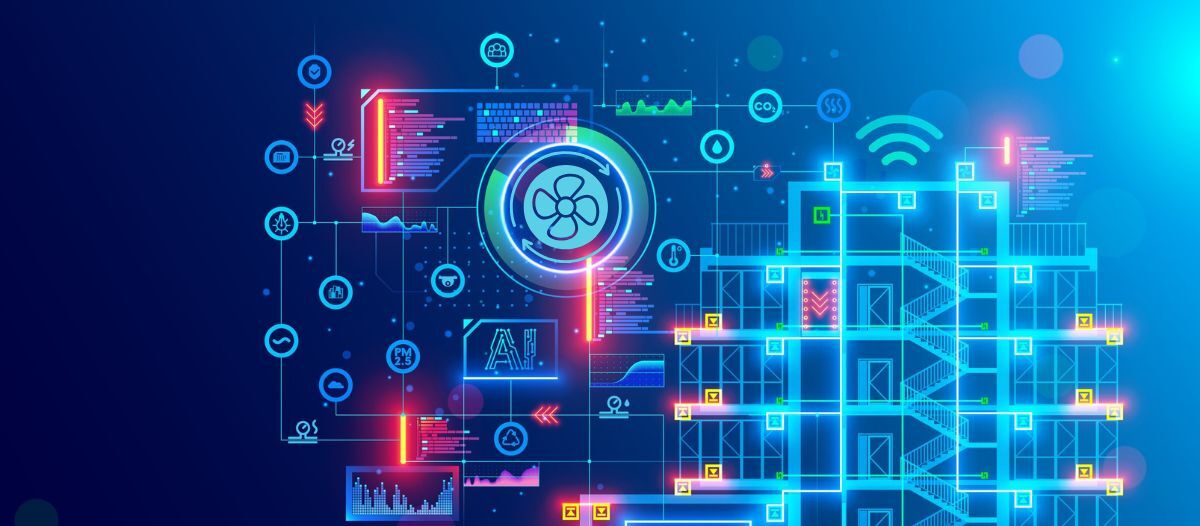
The rise of AI in buildings is reshaping how organizations operate their facilities. Among all the places where AI can drive meaningful impact, HVAC stands out. These systems quietly underpin comfort, indoor air quality and energy performance, but they routinely waste up to 30 percent of energy consumed. With global HVAC demand set to climb another 45 percent by 2050, the pressure is on building owners to optimize their facilities.
This challenge is shared by large campuses with complex HVAC systems as well as small and midsize facilities, which often lack building automation and operate with lean teams.
The solution lies in a new generation of AI-powered HVAC optimization. By harnessing artificial intelligence, building management systems (BMS), digital twins and real-time data, HVAC solutions are evolving from static, reactive infrastructure into intelligent, adaptive engines for building performance. The result can lead to a more responsive, resilient built environment, as well as lower energy bills and reduced carbon footprints, all without sacrificing occupant comfort.
The challenges with legacy systems
Traditional approaches to HVAC management are no longer enough. Most commercial buildings still operate on fixed schedules and static setpoints — systems that run the same way on a mild Monday morning in the fall as they do on a sweltering Friday in summer. They rarely respond to real-time occupancy and struggle to anticipate environmental changes. This reactive approach causes many existing systems to lag behind actual building needs, leading to comfort issues, wasted energy and higher operational costs.
Meanwhile, facility teams are asked to do more with less while facing a growing technology skills gap, coupled with fewer new workers entering the industry than the number of experienced tradespeople retiring, which further exacerbates the issue. The skills required to maintain buildings are also changing, as the technology in modern buildings requires deeper technical knowledge, making the demand for skilled workers even more prominent.
This reality is especially true for small and midsize buildings, which often lack full-time facility staff. However, even large, highly automated buildings feel the strain as systems become more complex and operational expectations increase.
Every month unoptimized HVAC systems operate without AI, organizations are poised to overspend on energy, accelerate equipment wear and miss opportunities to stabilize comfort.
 Additionally, regulations are tightening, and the need for flexible, hygienic spaces has only grown since the COVID-19 pandemic. AI-powered HVAC optimization is not just a technological upgrade; it is non-negotiable to maintain the new standard for maintaining building health and efficiency.
Transforming from reactive to adaptive
AI fundamentally changes what HVAC systems can do. Instead of relying on human-set schedules, AI continuously analyzes data from sensors, weather feeds, occupancy patterns and asset health. The AI algorithms can predict and adjust system behavior in real time. These platforms learn the unique rhythms of each building, whether a high-rise office tower or a small retail store, predicting demand and proactively adjusting facility operations to deliver comfort and saving energy.
For example, when a conference room is scheduled for a large meeting, AI can pre-condition the space, ensuring comfort as soon as occupants arrive. If sensors detect a drop in occupancy, the system automatically reduces airflow and temperature control, which helps conserve energy. Over time, the AI engine refines its models, learning from every data point to optimize performance.
This shift from reactive to adaptive is transformative. AI HVAC systems become an active part of the building’s decision-making team, freeing up human brains for creative thinking, while the buildings themselves become living systems, continuously tuning for efficiency, comfort and resilience. This transformation is particularly impactful for buildings without dedicated facility teams. In smaller sites, AI becomes the always-on operator, automating decisions that were previously manual or simply never performed. In larger, complex facilities, AI augments skilled teams by managing complexity and removing routine tasks.
Proving real-world impact
The promise of AI-powered HVAC optimization is not theoretical. It is already delivering results in diverse real estate environments. In one example, SISAB, a major owner and operator of schools in Stockholm, Sweden, faced the challenge of reducing energy costs across 624 buildings without replacing existing equipment.
An AI-driven solution was deployed portfolio wide. Within five months, the results were striking. Heating energy was reduced by 4 percent, electricity usage dropped by 15 percent, CO2 emissions were cut by 205 tonnes, and occupant comfort complaints decreased by 23 percent. The investment paid for itself in just two years. Most buildings experience measurable energy and comfort improvements within weeks, not years, because AI works with existing HVAC infrastructure rather than requiring major upgrades.
AI models anticipated temperature patterns, proactively adjusting setpoints before natural heat spikes and occupancy surges. Ventilation optimization reduced fan motor energy, and overall system intelligence led to significant operational improvements.
These outcomes are not limited to educational facilities, however. There are countless examples across hotels, office buildings, health care facilities and retail environments where AI-powered HVAC systems are providing measurable gains in efficiency, sustainability and occupant satisfaction.
The technology stack behind smarter HVAC systems
AI-powered HVAC optimization is built on a comprehensive technology stack. At the core are BMS, which serve as the nerve center, aggregating data from HVAC equipment, sensors, smart meters and other building systems. This foundation is essential for AI integration, enabling centralized control and monitoring.
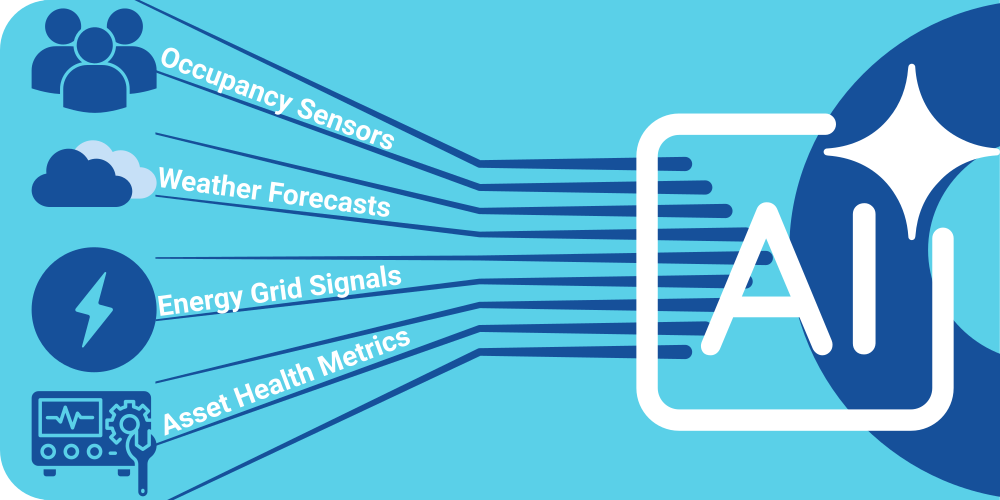 Real-time data integration is another critical component. AI engines ingest data from a wide range of sources, such as occupancy sensors, weather forecasts, energy grid signals and asset health metrics. This continuous data flow enables real-time decision-making and helps detect possible faults and maintenance issues.
Digital twins, or virtual building models, are continuously updated with this real-world data and allow for risk-free experimentation and long-term planning. AI models simulate HVAC operations within the digital twin, allowing facility managers to test scenarios without impacting actual operations.
These systems are increasingly sitting within hybrid architectures that combine the strengths of cloud and edge computing. Cloud AI handles large-scale data aggregation and complex analytics, while edge AI delivers real-time responsiveness at the device level. This balance ensures both portfolio-wide optimization and immediate, local control.
Additionally, AI can be deployed in any building type or size regardless of architecture type, and can be integrated with nearly any existing equipment, systems, specific governance or data privacy needs.
Finally, intuitive dashboards and mobile apps empower facility teams with actionable insights. When implemented, solutions can streamline operations and simplify maintenance, making advanced HVAC management accessible to teams of all sizes.
Resilience amid climate challenges
.svg) As climate volatility increases, buildings must be prepared to withstand extreme events, heatwaves, ice storms, grid disruptions and more. AI-powered HVAC systems are uniquely equipped to deliver resilience.
As climate volatility increases, buildings must be prepared to withstand extreme events, heatwaves, ice storms, grid disruptions and more. AI-powered HVAC systems are uniquely equipped to deliver resilience.
With grid-interactive capabilities, AI enables buildings to respond dynamically to grid signals, adjusting HVAC loads to support grid stability during peak demand or emergencies. This capability is essential as more renewable energy sources come online, and grid management becomes more complex.
Autonomous optimization ensures 24/7 environmental control, maintaining air quality and temperature, even during system failures or external disruptions. This protects occupant health and reduces downtime, overall supporting business continuity.
The path to AI-driven HVAC optimization
For building owners and managers, the first step toward AI-powered HVAC optimization is understanding the unique needs and challenges of their portfolio. A thorough assessment of current systems and their performance is essential to identify opportunities for optimization and integration. Determining goals around increased efficiency and cost savings can help guide decision-making on system modernization and improvements.
Establishing robust data collection across building systems and related equipment, such as sensors and meters, is critical for effective AI modeling. The quality and breadth of data directly impact the success of any AI initiative.
Selecting the right platform is another key consideration. The chosen solution should align with the building’s specific needs — which can vary by location, size and occupancy type — and offer open protocols and hybrid cloud and edge capabilities.
Deployment and training are crucial to success. Owners or facility teams must be equipped to integrate the solution with existing systems and adapt to new workflows and dashboards. Continuous improvement is also a must. By monitoring performance, reviewing analytics and refining system parameters, teams can ensure that AI optimization delivers ongoing value.
Even buildings without advanced automation can start their AI journey through HVAC optimization, which remains the most accessible and highest-ROI use case for small and mid-size buildings.
The new blueprint for future-ready buildings
Energy costs, occupant expectations and climate realities are reshaping the buildings landscape. AI‑powered HVAC optimization gives owners a scalable, low‑complexity way to improve performance today while preparing for tomorrow.
Purpose‑built AI does not add complexity. It absorbs it and elevates resilience while building value from the first month of operation.
For owners and facility managers, the path is clear: HVAC is no longer just an operational system. It is a strategic lever, and AI is the key to unlocking its full potential.

Sadiq Syed is the senior vice president of digital buildings business at Schneider Electric and at the forefront of pioneering transformation within the building automation sector. His role focuses on delivering solutions that drive sustainability and operational efficiency, for large enterprises and SMB segment across industry segments. He has strategic business unit P&L ownership, including strategic planning and worldwide growth accountability. He has more than 23 years of demonstrated success driving innovation and growth across verticals - healthcare, industrial and building automation. He has strong business management experience across product management, R&D, marketing, sales, supply chain, service operations and inorganic growth plays.
References
Top image via Getty Images.
Read more on Facility Operations and Facility Technology & Data Management or related topics Operational Technology and Data strategy and information management
Explore All FMJ Topics