
 Membership
 Network
 Regional Sites & Affiliates


 Events
 Participate
 Resources

 Training
 Credentials
 Government


 Content Channels
 Tools
Tools


 Business Overview




All the Right Reasons
Physical security teams need digital transformation
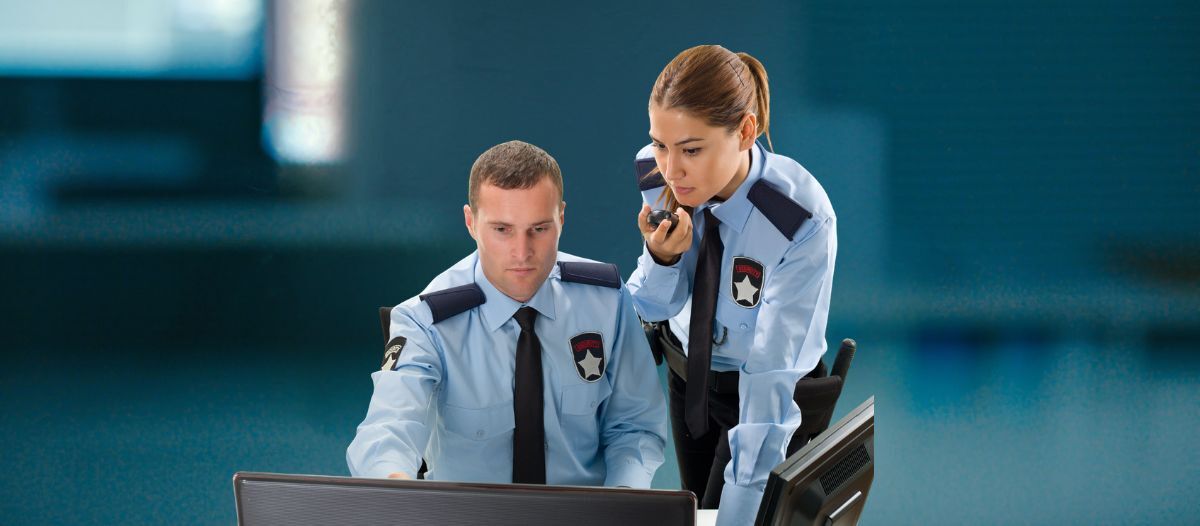
Planning, protocols, infrastructure and personnel are critical to facility and security management for commercial and institutional buildings, facilities and campuses. FM organizations, whether they oversee one building or an entire campus, must be well prepared to maintain safety in their everyday routines and in the face of unexpected scenarios.
Team communication and collaboration is a core component of having prepared physical security teams ready to address unexpected challenges. Traditionally, security teams relied on legacy technology like radios. However, leading security teams must augment their communications strategies with digital transformation.
Many FMs have experienced the low-quality audio and limited capabilities that radios offer compared to modern, digital solutions. After facing these challenges with radios, frustrated teams often migrate toward multidevice strategies mixing radios, smartphones, desktops and mobile applications to meet their full multimodal needs of voice, text and visual media. This often unsanctioned or unplanned mismatch requires security guards to switch back and forth between devices to communicate by voice or share video or photos, creating a communications method that is overburdensome, creates risk and stalls productivity.
Further, the hybrid mix of technology like radios and mobile phones does not offer the full breadth of intelligence security officers and professionals need to do their jobs. Leading security teams must move away from disorganized multidevice communications strategies that lack security and compliance with today’s IT requirements and protocols.
So what is the alternative? Intelligent collaboration solutions unlock the full benefits of digital transformation, ultimately recasting how FM and security teams communicate and operate. By eliminating multiple device usage for people in the field, security teams open the door to a holistic approach to operations and a real-time security operations system of record.
Here are six ways physical security teams benefit from modern and intelligent collaboration technology:
No. 1: Operational control:
FM and security leaders need centralized visibility and intelligence to improve management and decision making that enhances productivity and safety. Collaboration technology does this by providing security guard mapping and locations in real time, increasing visibility across operations. Team leads or dispatchers gain insights to improve decision making and accountability during routine operations and safety during emergencies or changing situations.
Managers communicate and coordinate 1:1 or with specific teams or groups, targeting conversations to only relevant personnel. Teams distributed across a campus or a network of campuses coordinate in real time with their security operations center (SOC) and dispatch, as well as local, regional or global teams. Physical security team leaders also communicate cross-departmentally during urgent or dynamic situations, directly updating distributed janitorial, utility, fleet, mechanical, and electrical teams with relevant and timely information in an emergency.
Operational control dramatically improves response to dynamic events organization wide and productivity during routine activities.
No. 2: Improved situational intelligence with location-driven insights & analytics:
Security leaders must know where their security guards are at any given time, where they have been, and if they have completed the tasks or routes assigned to them. Intelligent collaboration tools with geolocation and heat mapping enable managers to track guard locations, analyze low coverage zones and ensure that all teams perform at maximum efficiency.
Even in GPS-denied environments like indoors and subterranean areas, advanced collaboration software can maintain situational awareness and actionable mapping and location data. Managers optimize and gain insights into the day-to-day operations across security teams to maximize overall performance. In urgent or dynamic events, managers and team members are situationally aware of their teammates.
Collaboration platforms also capture 100 percent of the metadata for a message stream providing a complete picture of what happened, what is happening and potentially what will happen. This metadata creates the opportunity for unique analytics that increase situational intelligence for operations, compliance and safety. Recorded and archived information also supports incident reporting needs for compliance. In the event of an incident, teams know they have captured the information needed to complete reporting and assist with any investigations or evaluations. The actual content of messages is only available to users of the collaboration software and cannot be heard or retrieved by the platform provider.
Turning voice into data with collaboration technology creates rich analytics that measure and optimize security operations for continuous improvement. From the start of an urgent or emergency situation, collaboration technology records and archives all relevant information including locations, messages sent and response times. This intelligence informs decision making with pattern analysis and anomaly detection, enabling teams to continually evaluate performance for improvement and effectiveness.
No. 3: Increased productivity with process automation:
Voice-automated processes optimize operations and help organizations reduce costs by promoting protocol compliance, documenting and archiving processes, and simplifying routine tasks. Process automation ensures security teams complete everyday tasks like safety checklists, assigned guard routes, and timely check-ins efficiently and effectively. Voice automating these processes promotes heads-up work and frees security personnel to focus on higher-value tasks.
Take, for example, a routine, daily checklist confirming doors and windows are secure at the close of business hours. Instead of documenting task completion on a paper clipboard, voice-activated workflows require verbal verification of each checkpoint while enabling guards to stay heads-up. Location data and voice answers are logged and recorded so no checkpoint is missed and a digital record is stored for future reference.
In another example, a security guard needs to create an incident report for an irregularity like property damage. Instead of taking time to manually enter information about the incident onto a paper form, the guard can take a picture, load it to the collaboration platform and record relevant information. The collaboration platform logs and documents that incident for retrieval or kicks off an automated workflow of next steps when needed.
Intelligent, voice collaboration solutions also manage tasks like building or campus patrol. Process automation tracks guard inactivity or lingering too long in one place. Workflows prompt the worker to respond and remind them to resume their activities without requiring managerial interaction or continuous monitoring.
No. 4: Emergency preparedness:
Security teams must be prepared to handle unexpected threats. Intelligent collaboration tools provide the always-on ability to respond to emergencies and threats immediately, and security teams leverage process automation and intelligent collaboration to respond to incidents.
In emergencies, guards have the added support and safety of multifunction workflows like automated safety check-ins, lone-worker protocols, incapacitation monitoring and location breach alerts. Words like “fire,” “man-down” or “help-help” trigger workflows that deploy back-up, alert managers or even escalate serious events to the police or fire departments.
For example, a building occupant is injured in an active shooter scenario. Security guards immediately trigger workflows and protocols by speaking designated words like “active shooter.” Bots without human intervention redirect guards in proximity to provide assistance to the event and emergency alerts deploy remaining resources according to building or campus protocols. Additional workflows inform managers and alert police faster and more efficiently.
In another example, a lone worker lingers too long in one area without responding to bot-driven voice prompts. Workflows redeploy the next nearest guard to investigate and notify management of a possible emergency.
No. 5: Reduced training time for new or contract workers:
The physical security industry often undergoes high employee turnover. Every facility has its own unique and specific protocols that each new security personnel must learn. Intelligent collaboration tools immediately connect employees and contractors to the information, SMEs and systems that instantly amplify their ability to perform at maximum efficiency on day one.
Process automation ensures that the new security personnel never miss a protocol step or assigned task. Ultimately, this increases each employee’s effectiveness and reduces training costs for organizations.
No. 6: Data security & encryption:
Radio systems and messaging apps do not offer message security or integrity by default, allowing bad actors to listen or even impersonate staff. When bad actors obtain access to a radio frequency, they can track all chatter to learn sensitive information to target people, property or assets. Messaging apps with weak encryption lack the strict IT security standards today’s enterprises require.
Intelligent collaboration software with end-to-end encryption (E2EE) offers unmatched privacy and security. E2EE eliminates security gaps and keeps an organizations’ information secure — even from the platform provider.
A physical security operations system of record
Intelligent collaboration platforms create a security operations system of record that integrates operations and provides all the information workers need to perform their duties at their point of work. Security teams that modernize and embrace the benefits of collaboration can truly achieve innovation and have confidence in providing best-in-class security operations.
Constant innovation is necessary to improve productivity and increase the safety of people and assets. With digital transformation, FMs create effective, productive and safer physical security teams.

Desmond Thorsson, a technologist at Orion, is an active U.S. Coast Guard auxiliarist with more than 15 years of training and operational experience in incident command, emergency management, homeland security and search-and-rescue roles. Prior to Orion, Thorsson served on the faculty of the School of Communications and Media Technologies at Academy of Art University. He spent over a decade in mass-market broadcasting and was one of the earliest employees at CNET (Now CBS Interactive). Hosting the shows, “Cool Tech,” “The New Edge” and “CNet Central," he brought the latest exciting developments in technology and the internet to audiences over Sci-Fi and USA Networks.
References
Read more on Facility Technology & Data Management and Risk Management or related topics Physical Security , Occupant Security , Facility Technology and Data strategy and information management
Explore All FMJ TopicsRelated articles
-

Artificial Intelligence in FM
The stakeholder’s perspectiveBy Dr. Jake Smithwick & Dr. Kenneth Sullivan & Nneka Ubi05.01.2024 -

Don’t Drop the Ball
How a CMMS can make or break an FM organization’s successBy Michael Carmean09.17.2024 -
Beware of Growing Cyberthreats
Why it’s time for stronger facility cybersecurityBy Andrew Harris & Eric Headington10.30.2024