Membership
 Network
 Regional Sites & Affiliates


 Events
 Participate
 Resources

 Training
 Credentials
 Government


 Content Channels
 Tools
Tools


 Business Overview





August Adjustments
Cooling considerations to beat the heat

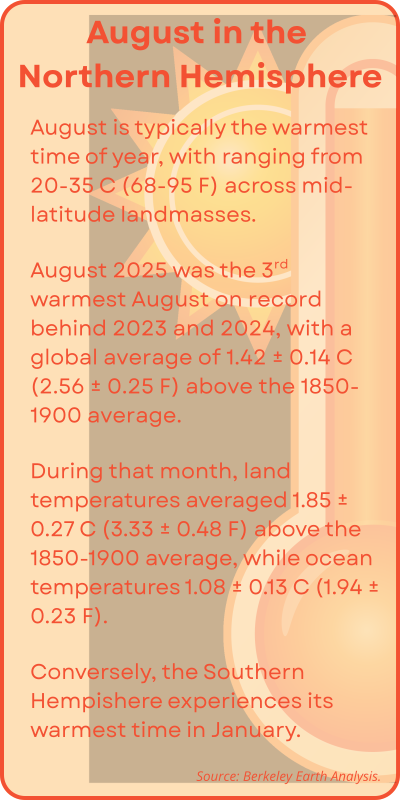
For facility managers in the Northern Hemisphere, August tends not to rank among their favorite months. After all, many expect demand for cooling to reach an annual peak, pushing HVAC systems to their limits.
This scenario is hardly a given, however. Many tenants and employees go on vacation in August, which lowers the occupancy levels and counterbalances the demand for higher cooling.
On the other hand, many businesses are now requiring employees to work on site or on a hybrid schedule, which means that tenants expect their office temperature to be reasonably comfortable. As a result, unpredictable occupancy levels create challenges for FMs who are trying to manage cooling systems. But with a bit of research, analysis and planning, FMs can not only optimize HVAC operations during the month; they may even achieve substantial energy and cost savings.
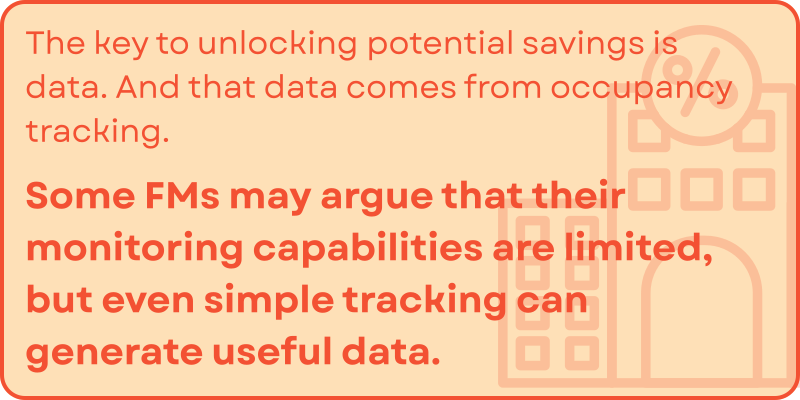 Low-tech options might include lobby sign-in sheets, security desk counts, badge-swipe reports, tenant check-ins, cleaning team feedback and personal walk-throughs at different hours.
Mid-range options include access-control data from visitor management systems, Wi-Fi connection counts, room-booking data, automated monitoring of elevator traffic, parking lot tracking and electronic work-order records.
At the higher end of the spectrum are occupancy sensors, people-counting cameras configured for privacy, integrated building management systems, and analytics that combine occupancy, temperature, humidity and energy use.
 In short: Anyone can track occupancy, regardless of what systems they use.
Real-time decisions
Analysis of real-time data can, and should, drive cooling decisions. This does not mean that FMs should institute broad changes throughout a building when occupancy is lower than usual. It is better to make focused zone adjustments where necessary. For example, FMs can prioritize signals of problems in areas of high occupancy, addressing the problems before they turn into complaints, and give lower priority to similar signals in areas of unoccupied suites. The best approach is to assess real-time occupancy levels (e.g., occupied, unoccupied or lightly occupied) to proactively manage the space and the comfort of those within it.
Amenity spaces, like gyms or conference rooms, should be a particular focus, because usage tends to be less predictable during the summer months. Cooling should align with usage; so, these spaces may provide additional opportunities for efficiency and cost savings. But FMs should keep in mind that cooling requires ramp-up time; so, for example, if a conference room has been empty for the morning but there is a reservation in the afternoon, the cooling should start long before the reservation starts.
 Past patterns
Data from past Augusts is also valuable. The best analyses uncover patterns, identifying which floors were lightly occupied, when peak demand occurred, where comfort complaints came from, which zones overcooled and whether equipment ran at times when the building was empty. For further insights, factor in prevailing weather conditions, utility use, work orders, after-hours HVAC requests and tenant events.
Again, not everyone has access to comprehensive data from high-tech sensors and systems. But the data does not have to be all-encompassing to be informative. Maintenance requests can reveal past hot and cold spots. Utility bills can reveal demand spikes. Badge data can show attendance trends. Parking counts can indicate building population. Cleaning schedules can show which areas were actually used. Not one of these stats is perfect on its own, but combining several can provide a useful operating picture.
Potential savings
Potential savings vary by building type, climate, equipment, utility rates and lease structure, but cooling adjustments can be meaningful because HVAC is one of the largest controllable loads in many commercial buildings. The U.S. Department of Energy suggests that for homes, thermostat setbacks of 7-10 degrees Fahrenheit for eight hours a day can save up to 10 percent annually on heating and cooling. And commercial buildings are much larger than most homes, so dialing back the in-office temperature during off-peak hours can lead to significant financial returns.
But FMs should focus their attention less on guaranteed percentages and more on practical savings. In addition to occupancy data, energy management software is one of the most popular tools for cost control and efficiency, according to survey respondents in MRI Software’s 2025 Voice of the Facility Manager report. With organizations’ budgets under constant pressure, these tools can identify unnecessary spend, improve asset longevity and help FM teams work smarter while reducing financial risk.
Proactive optimization of August cooling can reduce downtime, peak demand charges, after-hours cooling, and wear and tear on equipment. Even modest changes across multiple zones can add up.
Maintaining a positive tenant experience
Amid the opportunities for savings, FMs should not lose sight of tenant experience, which remains paramount. Many tenants understand the importance of environmental conservation and efficiency and support associated initiatives, but they do not want to feel that savings are happening at their expense. To make sure that programs do not interfere with comfort levels, FMs should establish clear, two-way communication channels with tenants to discuss what steps they are taking, how and why. Tenants should have an opportunity to voice concerns about the proposed plans, while also understanding that the adjustments made by building management are targeted, modest and reversible. To minimize risks, FMs should test small changes and monitor the responses. Providing a clear path for reporting and escalating issues will also go a long way when making adjustments.
The usual preparations that responsible FMs undertake ahead of August are also essential. FMs should confirm sensor calibration, review cooling schedules, test overrides, check humidity control, clean coils and filters, and validate economizer and damper operation. Furthermore, they should check in with tenants on expected occupancy changes, which can aid in planning. These check-ins also offer an opportunity for FMs to explain the reasoning behind their cooling strategies.
Real-life examplesFMs at two commercial buildings achieved a strong return on investment by analyzing data and making associated adjustments. In one large multitenant office environment, the facilities team used access-control trends and historical August occupancy to reduce cooling in underused floors during Fridays and late afternoons. They did not shut systems down completely; they widened temperature bands and shortened operating schedules. The result was a noticeable reduction in cooling runtime and fewer unnecessary after-hours HVAC calls. In another case, an operator reviewed amenity-space usage and found that several conference and collaboration areas were being cooled to full occupancy levels despite very light August demand. By aligning cooling schedules with bookings and actual use, they reduced avoidable runtime while maintaining comfort during scheduled events. |
A guide for the future
FMs who are missing quality data from past years should use August of 2026 as a launchpad for future planning. During the month, they should compile records of occupancy by zone and note temperature and humidity trends, energy use, peak demand, complaints, after-hours requests, amenity bookings and equipment runtime. That data becomes the playbook for next summer. Proactive outreach to long-term tenants regarding temperature challenges for their office space can provide additional historical data, helping FM and property management teams understand past concerns and address them accordingly.
The best cooling approach for August is to link building operation to actual demand, which can result in significant energy savings and efficiency. But this approach also enables FMs to demonstrate the strategic value of their work by reducing waste, protecting comfort, extending equipment life and using data to make better decisions.
In MRI’s 2026 report on the state of facilities management, survey respondents mentioned challenges such as rising operational expectations and tightening budgets, and they pointed to data visibility, energy management software and predictive planning as critical factors to ensure efficient operations.


References
Top image via Getty Images.
Read more on Facility Operations and Sustainability or related topics Energy and Operations and Maintenance Planning
Explore All FMJ Topics