
 Membership
 Network
 Regional Sites & Affiliates


 Events
 Participate
 Resources

 Training
 Credentials
 Government


 Content Channels
 Tools
Tools


 Business Overview





Behind the Counter, Ahead of the Curve
The rise of AI-driven restaurant FM operations

In a world where razor-thin margins meet sky-high customer expectations, restaurants are under constant pressure to deliver more: more consistency, more speed, more sustainability with less — less waste, less downtime and less manual errors. In this world, traditional operating models fall short and need re-inventing.
Welcome to the era of intelligent restaurants, in which the use of artificial intelligence (AI) and the Internet of Things (IoT), or AIoT, is quietly transforming operations from being reactive to proactive. Sensors monitor equipment activity, algorithms predict failures and dashboards offer real-time insights, not just data. It is not about automation alone; it is about operational transformation.
Forward-thinking operators are already reaping the benefits: lower utility bills, extended equipment lifespans, reduced food waste, better occupant comfort and kitchens that practically operate autonomously. Beyond these advantages, technologies are also helping restaurants meet rising expectations for good customer service, regulatory compliance and corporate sustainability goals.
Foodservice FMs are applying smart technologies across four critical areas of restaurant operations: energy management, equipment maintenance, production management and food safety.
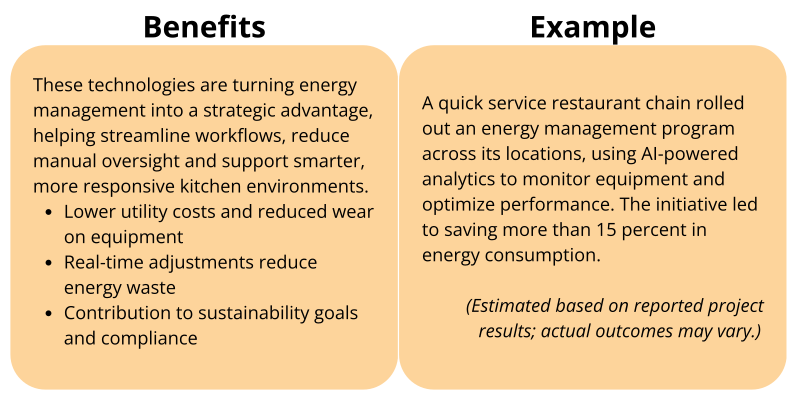
1. Energy management: Precision for every kilowatt
Restaurants are among the most energy-intensive commercial spaces. According to the EPA’s Energy Star data, restaurants, especially quick service restaurants, use 10 times the energy of regular commercial buildings. Inefficient HVAC, lighting and kitchen appliances can quietly drain profit margins. With real-time monitoring and AIoT-driven automation, energy management is becoming smarter, more granular and proactive.
Enhancements:
-
Multitiered dashboards deliver both enterprise-wide visibility and localized, role-specific insights.
-
Asset performance dashboards track how efficiently each piece of equipment runs, flagging underperformers early.
-
Energy use intensity (EUI) analysis compares performances across stores and highlights hidden savings opportunities.
-
AI-driven demand control automates load shedding during peak hours to avoid spikes and penalties.
-
Daylight harvesting & ventilation tuning fine-tune environmental settings to match natural light and kitchen activity, reducing waste without compromising comfort.
-
Occupancy-based controls & remote equipment scheduling automate HVAC and food preparation equipment settings based on foot traffic and store hours.
 2. Equipment maintenance: From break-fix to predictive
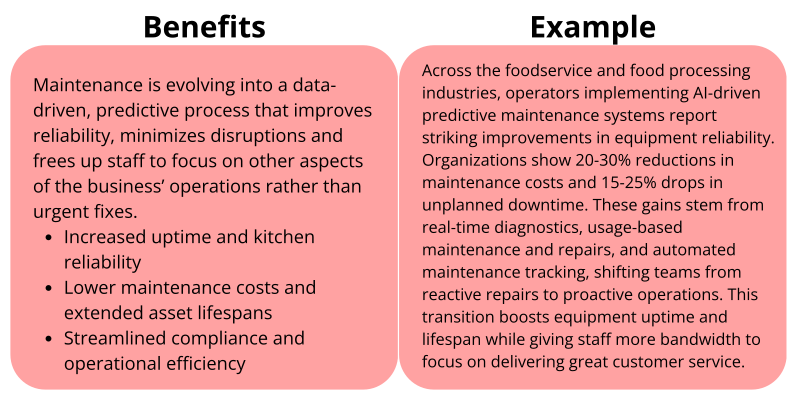
Downtime in a kitchen is costly, not just in repairs, but in lost revenue and service disruption. AI-enabled diagnostics are shifting maintenance from reactive to predictive, increasing uptime and cutting service costs.
Enhancements:
-
Predictive-based maintenance eliminates guesswork, triggering service only when needed.
-
Oil life monitoring maintains food quality while minimizing fryer oil waste.
-
Digital PM logs automate preventive maintenance tracking, ensuring compliance and eliminating manual errors.
-
Remote malfunction resolution reduces downtime with faster diagnostics and fewer technician visits.
-
Smart scheduling aligns maintenance with off-peak hours to reduce disruption.
3. Production management: Consistency at scale
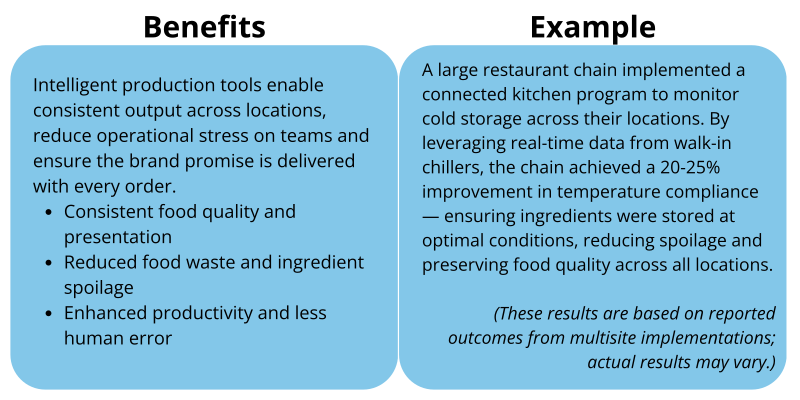
Maintaining consistency across multiple locations is one of the toughest challenges in the foodservice industry. Smart production systems help maintain quality and predict demand, without increasing manual effort.
Enhancements:
-
Remote menu pushes allow centralized updates across all stores, ideal for promotions, policy changes or nutritional compliance.
-
Cook cycle monitoring ensures optimal cooking times, quantities and conditions.
-
IoT-controlled appliances standardize cooking across locations by enabling remote settings that can be uniformly applied for temperature and timing.
-
AI demand forecasting predicts footfall, enabling stores to preheat and prep just the right amount of food.
4. Food safety management: Automated compliance, assured trust
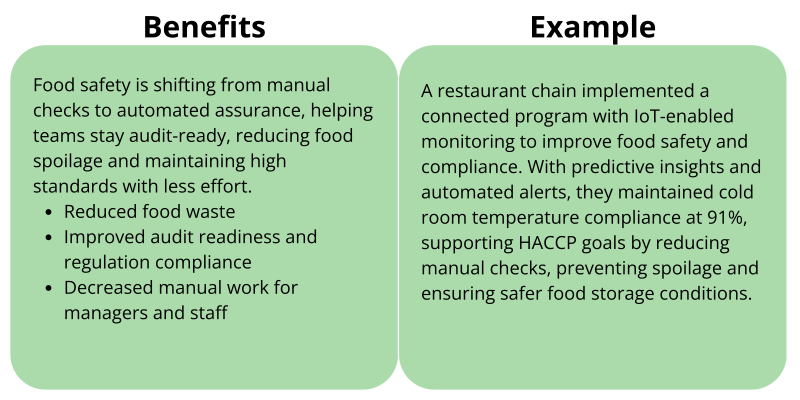
Food safety is most important, but manual tracking of temperature logs, foodborne illness incidents and cleaning/sanitation practices is time-intensive and error-prone. Smart sensors and alerts provide 24/7 monitoring and peace of mind.
Enhancements:
- Hazard analysis & critical control point alerts notify staff of any deviations from food safety protocols in real time.
- Refrigeration & door monitoring ensure stable temperatures and flags fluctuations.
- Defrost cycle automation improves energy efficiency without compromising food safety.
A unified vision for the smart restaurant
What do all these systems have in common? They speak to a larger truth: the future of restaurant operations is data-driven, automated and intelligent. By investing in IoT and AI technologies, operators are not just cutting costs, they are building smarter, safer and more sustainable restaurants. These investments will soon be table stakes when operating such businesses.
The payoff is not just in numbers. It is in better customer experience, happier staff and a resilient operation that is ready for whatever comes next.

Parminder Singh leads Presales & Offering Management for Americas at Carrier Abound in North America and is primarily focused on crafting innovative and award-winning energy management and IoT enabled solutions for multi-site operators. He has more than 20 years of experience working in product management, solution design, client engagement, operations management, business consulting, new product development, launch and global delivery. He holds a graduate degree in Mechanical Engineering and is a post-graduate in Business Administration
Read more on Facility Technology & Data Management and Facility Operations or related topics Asset Management and Operations and Maintenance Planning
Explore All FMJ TopicsRelated articles
-

Artificial Intelligence in FM
The stakeholder’s perspectiveBy Dr. Jake Smithwick & Dr. Kenneth Sullivan & Nneka Ubi05.01.2024 -

Don’t Drop the Ball
How a CMMS can make or break an FM organization’s successBy Michael Carmean09.17.2024 -

Beware of Growing Cyberthreats
Why it’s time for stronger facility cybersecurityBy Andrew Harris & Eric Headington10.30.2024
