
 Membership
 Network
 Regional Sites & Affiliates


 Events
 Participate
 Resources

 Training
 Credentials
 Government


 Content Channels
 Tools
Tools


 Business Overview





Beyond Fire Watch
Operational fire risk management in construction & refurbishment projects
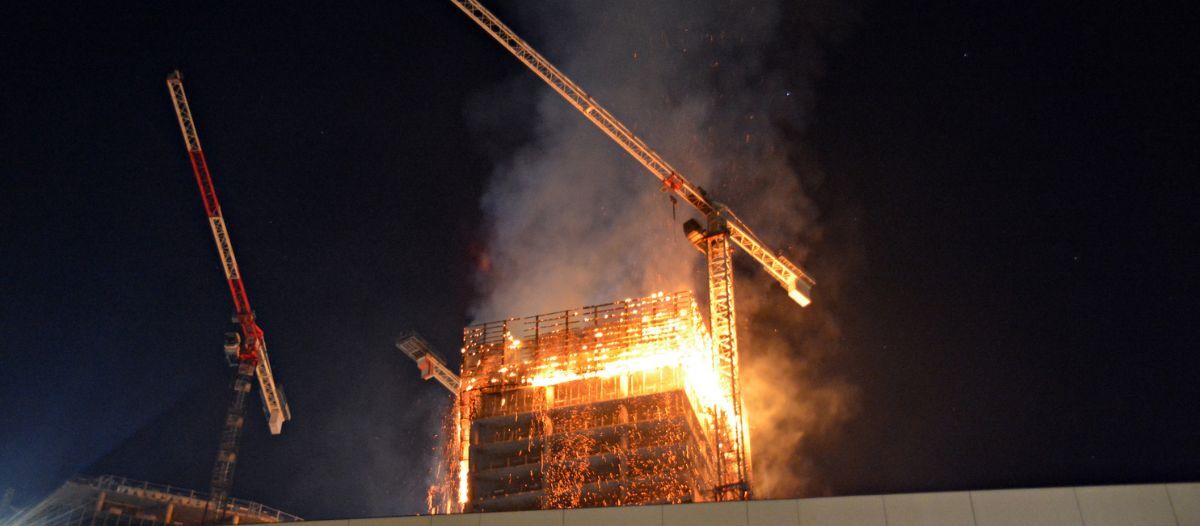
Construction and major refurbishment projects represent high-risk phases in the life cycle of any built asset. While facility managers maintain rigorous operational fire safety protocols for occupied space, the boundary between active operations and ongoing temporary works often remains vulnerable. Temporary building sites frequently rely on outdated safety measures, creating dangerous gaps in early warning capabilities, emergency communication and site-wide evacuation.
As architectural projects grow larger and more technically complex, managing temporary fire safety can no longer be treated as a secondary operational task.
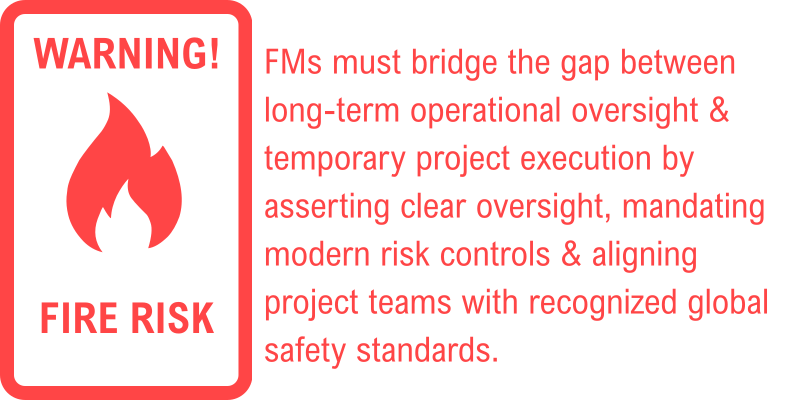
The risk landscape
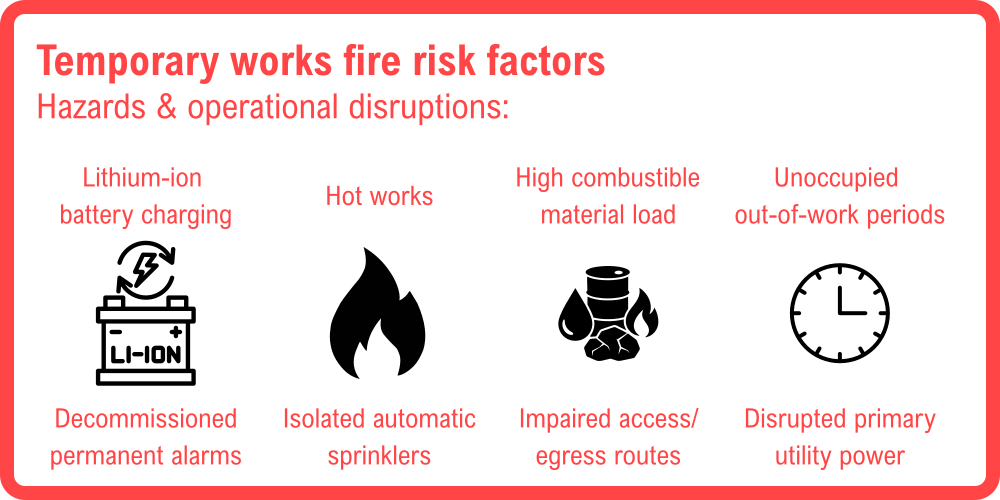
During construction, renovation or structural alteration works, built environments undergo continuous change. These shifting environments introduce specific operational hazards that do not exist during normal building occupancy:
-
Utility & system disconnections: Main power is frequently disconnected or unstable during major works. Additionally, standard fire protection measures — such as permanent smoke detection or automated sprinkler systems — are routinely isolated or decommissioned to prevent accidental discharge or water damage during demolition and structural fitting.
-
Emerging technological hazards: The widespread transition to battery-powered machinery introduces high-density lithium-ion charging stations onto sites. Damaged, unmonitored or improperly stored lithium-ion batteries present severe thermal runaway and fire risks.
-
Combustible material loading & hot works: Temporary works concentrate high volumes of combustible materials such as mass timber, temporary protective coverings and packaging. When combined with routine hot works (welding, cutting and grinding), the potential for rapid flame spread increases substantially.
-
Out-of-hours vulnerability: During nights and weekends, unoccupied sites face severe risks from undetected fires or unauthorized entry. Fires starting during non-working hours often cause catastrophic asset loss before emergency responders are notified.
Moving past legacy safety protocols
A primary structural issue in temporary site safety is the continued reliance on manual, low-technology warning devices. On many sites, emergency protocols still rely on manual fire watch patrols equipped with handheld air horns.
While air horns offer low initial costs, they introduce systemic vulnerabilities:
1. Environmental failure: Compressed air horns are prone to mechanical failure or loss of pressure in extreme freezing temperatures.
2. Audibility issues: High ambient noise levels from heavy machinery, concrete pouring and power tools frequently drown out localized air horn signals.
3. Desensitization & alarm fatigue: Handheld horns are often inappropriately used for nonemergency site signaling, such as crane movement alerts, leading workers to ignore the sound during an actual fire event.
4. Delayed notification: A fire watch patrol can take significant time to complete a single circuit. A fire ignited shortly after a guard passes a location can grow unchecked for extended periods before manual detection occurs.
To maintain building resilience, FMs must mandate automated, self-monitoring early-warning networks that remove single points of human failure.
Evolving regulations & best practice
Facility managers operating internationally must navigate evolving building codes and temporary safety regulations. Across global jurisdictions, a unified movement is shifting site fire management from minimum base compliance toward proactive, upfront planning.
International fire safety mandates
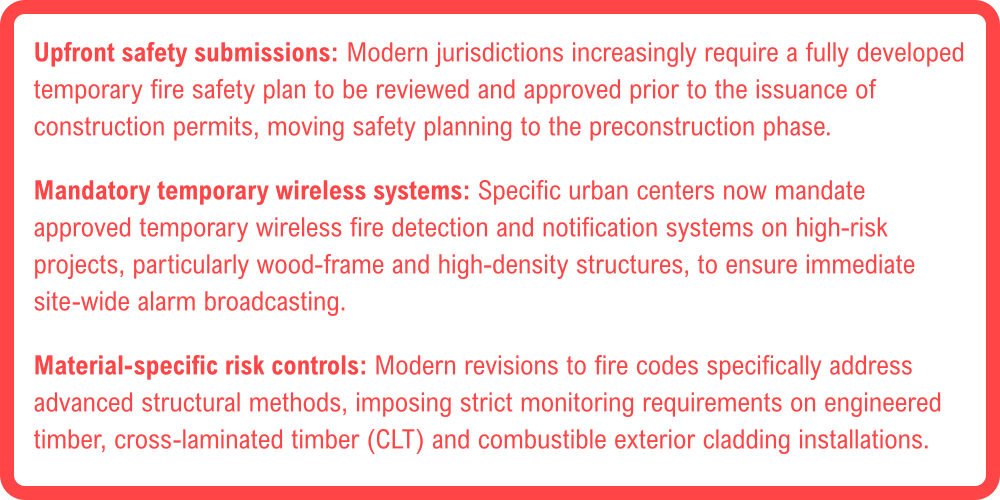
Standards such as the National Fire Protection Association (NFPA) 241 (Standard for Safeguarding Construction, Alteration and Demolition Operations) outline the required structural controls for temporary works. Major municipal jurisdictions are progressively embedding these requirements directly into early building permit approvals:
Key components of a comprehensive safety plan
-
Designated fire prevention program manager (FPPM) and alternate
-
Site-wide emergency evacuation and communication protocols
-
Off-site emergency response access and turning provisions
-
Hot work permitting and fire watch management procedures
-
Out-of-hours security, access control and monitoring
-
Storage and charging controls for lithium-ion equipment
FMs must avoid the trap of treating local fire codes as the maximum target. Adhering only to mandatory minimums leaves assets exposed to severe operational delays, costly structural damage and increased insurance liabilities.
Defining governance & structural accountability
Clear assignment of responsibility is crucial for effective site safety. Ultimate legal responsibility for an asset rests with the building owner, but day-to-day operational execution requires dedicated on-site oversight.
The role of the FPPM
To maintain compliance with international safety benchmarks, every project must designate a qualified FPPM alongside a trained alternate. The FPPM must possess explicit authority to enforce fire safety standards, pause hazardous operations and mandate corrective actions across all contractors and subcontractors.
Key responsibilities of the FPPM include:
-
Formulating the site safety plan: Developing a comprehensive fire prevention strategy covering all phases of construction, alteration or demolition.
-
Maintaining access & egress: Ensuring emergency-vehicle access roads, fire hydrants and temporary standpipes remain clear, unobstructed and fully functional at all times.
-
Managing high-risk activities: Implementing formal permit systems for hot works, temporary heating equipment and electrical installations.
-
Executing evacuation protocols: Conducting routine site-wide fire drills and maintaining clear, illuminated evacuation routes across changing site geometry.
-
Primary liaison: Acting as the dedicated point of contact for local emergency response agencies and authority inspectors.
Comparative analysis of temporary safety measures
When evaluating fire safety options during refurbishment or construction, facility managers must balance system reliability, installation speed, operational flexibility and life-safety effectiveness.
|
Safety approach |
Detection method |
System reliability |
Installation & adaptability |
Life safety & asset protection |
|
Manual fire watch & air horns |
Human visual observation |
Low: Dependent on human presence; prone to cold-weather failure and ambient noise interference. |
High: Requires no fixed hardware, but labor costs scale rapidly on large sites. |
Poor: High risk of delayed detection; localized alarm range. |
|
Active permanent building systems |
Fixed ceiling smoke/heat sensors |
Moderate: High risk of false alarms or physical damage from construction dust and works. |
Low: Rigid infrastructure; cannot easily adapt to changing temporary site layouts. |
Moderate: Effective if operational, but vulnerable to dust contamination and accidental triggers. |
|
Temporary wireless safety networks |
Interconnected automatic optical sensors & manual call points |
High: Battery-powered, self-monitoring mesh networks independent of site utility power. |
High: Rapid deployment; units can be easily relocated as construction progresses. |
Excellent: Immediate site-wide notification, precise location logging and direct monitoring links. |
Case study 1A major US$1.3 billion hospitality resort project in North America involving 1,600 guest rooms and expansive convention space required robust temporary fire safety during its fit-out phase. The project faced a substantial increase in combustible fire loading as furniture, textiles and finishing materials were moved on site months before the permanent building fire alarm system was scheduled for final commissioning. Compounding the risk, staff training programs brought hundreds of personnel into the uncommissioned facility. To mitigate the risk, project leaders deployed a fully integrated temporary wireless fire detection system. More than 350 wireless units — including automated smoke detectors, manual call points and central monitoring interfaces — were installed across 18 floors.
Case study 2A US$1 billion multi-use urban project comprising a 1.5 million-square-foot footprint and a 48-story vertical tower presented complex emergency evacuation challenges. More than 350 trade professionals worked on site simultaneously in conditions characterized by heavy ambient machinery noise, changing stairwell access and limited vertical visibility. Air horns were rejected due to limited range and ambient noise levels. The contractor installed a dynamic temporary wireless evacuation and notification network tied to cloud-based management software.
|
Actionable strategy
FMs overseeing building alterations, major repairs or tenant fit-outs should execute the following step-by-step control strategy to protect asset value and occupant safety:
 Step 1: Embed requirements in procurement specifications
Insert strict temporary fire safety clauses into request for proposals (RFPs) and contractor agreements. Mandate that main contractors submit a site-specific safety plan adhering to current standards prior to contract award.
Step 2: Establish direct oversight of the FPPM
Verify that the contractor has appointed a qualified FPPM with documented training. Establish weekly compliance reviews between the FM team and the FPPM to inspect access routes, temporary utility connections and hot work permits.
Step 3: Upgrade to self-monitoring detection technologies
Phase out reliance on manual air horns. Require contractors to deploy temporary wireless detection systems with centralized signal reporting. Ensure systems feature battery backup and automatic fault detection to maintain operability through site power outages.
Step 4: Control specific process hazards
Designate dedicated, well-ventilated charging stations equipped with thermal monitoring and fire-rated storage cabinets for all lithium-ion battery equipment. Enforce a strict 60-minute post-work fire watch following any hot work activities.
Step 5: Facilitate joint site audits
Coordinate regular site walkthroughs with local fire department officials and the project safety team. Engaging first responders early ensures they are familiar with temporary site access roads, staging areas and water connection points long before an emergency occurs.

James Pecz is vice president of North America at Ramtech. He has extensive hands-on experience as a fire detection specialist, collaborating with leading North American contractors on high-profile megaprojects to safeguard complex structural assets and trade professionals. Pecz actively contributes to advancing regional and national safety frameworks as an appointed member of the National Fire Protection Association (NFPA) 72/241 Temporary Fire Alarm Task Group. His work focuses on building operational bridges between temporary and permanent fire standards, expanding industry education and promoting proactive, data-driven life safety infrastructure across the construction sector.
References
For facility professionals seeking further guidance on temporary works fire management, the following ungated standards and educational resources provide foundational insights:
-
National Fire Protection Association (NFPA) Standard 241: Official standard outlining requirements for safeguarding construction, alteration and demolition operations for North America. Access via NFPA Free Access Program
-
International Fire Code (IFC) - Chapter 33: Regulations governing fire safety during construction and demolition. Access via ICC Digital Codes
-
Occupational Safety and Health Administration (OSHA) Construction Fire Protection Guidance: Federal safety and health standards for temporary site fire protection and prevention. Access via OSHA Regulations Portal
-
Fire Protection Research Foundation Reports: Independent technical research on construction site hazard identification and risk mitigation strategies. Access via NFPA Research Portal
Top image via Getty Images.
Read more on Facility Operations and Risk Management or related topics Operations and Maintenance Planning , Risk Management and Project Management
Explore All FMJ Topics