Membership
 Network
 Regional Sites & Affiliates


 Events
 Participate
 Resources

 Training
 Credentials
 Government


 Content Channels
 Tools
Tools


 Business Overview





Beyond Traditional
What data center commissioning really entails — Levels 0–6 with technical commissioning built in
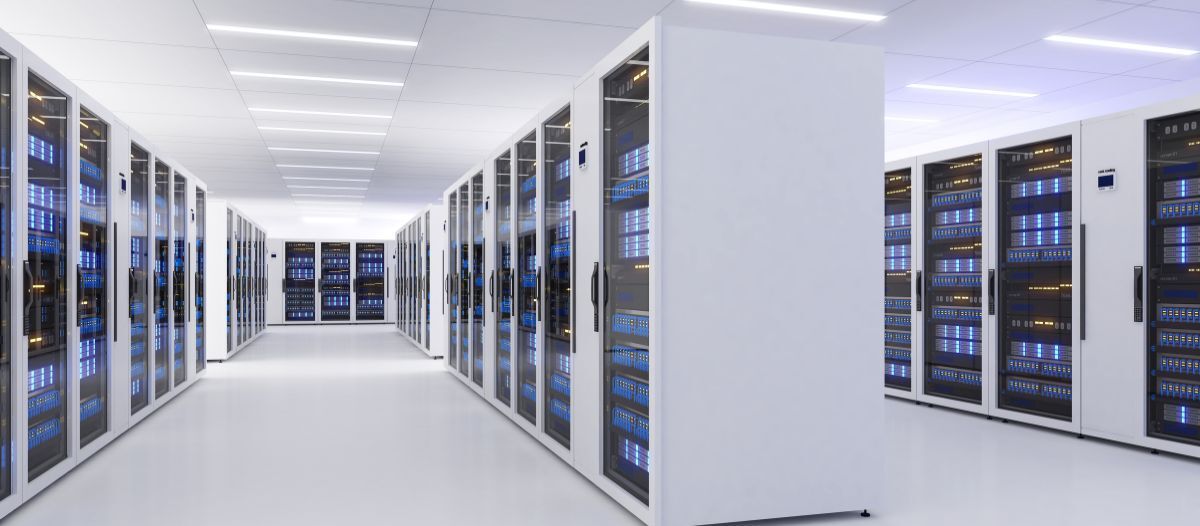
 Data center commissioning (Cx) is a rigorously phased, performance-validated process that ensures critical mechanical, electrical, controls and life-safety systems are designed, installed, integrated and operated to meet the owner’s project requirements (OPR) under both normal and failure conditions. Unlike "traditional" building commissioning — which is often organized around design, construction, acceptance, and warranty phases — data center Cx is structured into seven progressive Levels (0 through 6) that ladder from early design review to turnover and occupancy, with explicit checkpoints, documentation gates, and readiness criteria at each step.
In practice, the Level 0–6 framework does more than rename project milestones: it operationalizes a quality-assurance and risk-reduction program built for high-availability facilities. Comprehensive commissioning guidelines should formalize this approach and assign roles and responsibilities to the Owner, Commissioning Authority (CxA), General Contractor (GC), trades and vendors, while also specifying documentation control, issues management and witness/notice requirements that keep the effort auditable and schedule driven.
Where data center Cx most clearly departs from traditional Cx is in its emphasis on technical commissioning — enhanced activities that focus on validating measured performance, optimizing control behavior (e.g., tuning PID loops) and verifying reliability/fault tolerance, not just proving that equipment “runs.” Technical commissioning permeates all Levels and becomes especially intensive in Level 4 Functional Performance Testing (FPT) and Level 5 Integrated System Testing (IST).
 By contrast, a traditional four-phase Cx model group’s work into: (1) Design Phase reviews and planning; (2) Construction Phase checklists and start-ups; (3) Acceptance Phase functional testing; and (4) Warranty/Occupancy Phase training, seasonal tests and closeout. The Level 0–6 data center model retains those intents but adds granularity (e.g., discrete Level 2A/2B inspections, exhaustive Level 3 startup verification, and system-level vs. facility-level testing in Levels 4 and 5 to reduce single points of failure and to document performance at defined load conditions.
What is technical commissioning & why it matters in data centers
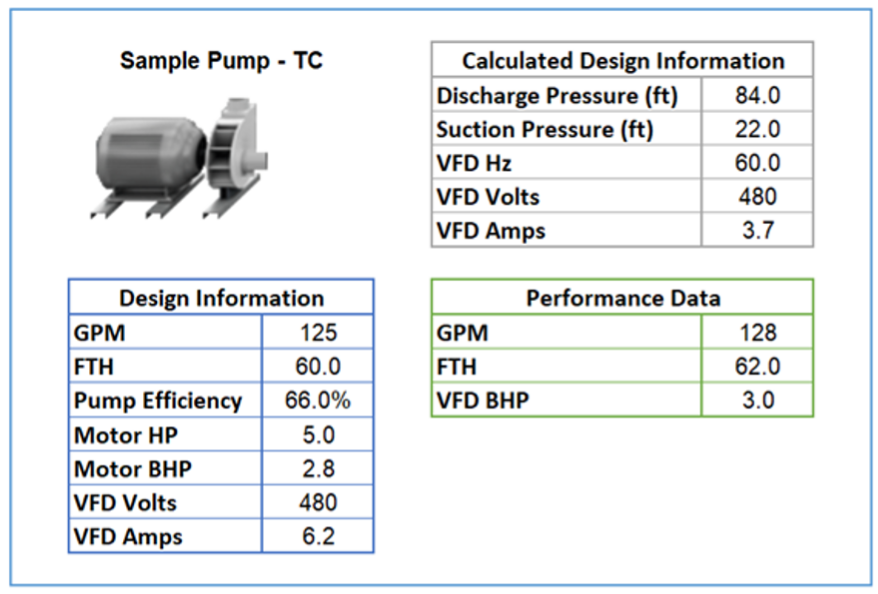
Technical commissioning augments the standard Cx process with instrumented measurements, engineering calculations and optimization tasks that validate actual performance against design intent. A simple illustration: while process Cx confirms a pump starts and follows its sequence of operations (SOO), Technical Cx captures pressures, flows and power to calculate head, efficiency and controllability, then uses those results to confirm capacity, alarms and setpoints — or to retune control loops for stability.
Because data centers must sustain IT load through utility disturbances, component failures and maintenance activities, Technical Cx target’s reliability attributes (selective coordination, automatic transfer behavior, cooling plant step-response, setpoint management, alarming) in addition to energy performance (e.g., kW/ton, UPS efficiency, site PUE trending). The result is fewer “surprises” at IST, faster issue closure and a clearer pathway to optimization in operations.
Traditional commissioning vs. Data center commissioning
Traditional Model (Design → Construction → Acceptance → Warranty): Focuses on document reviews, pre-functional checklists, functional tests, training and seasonal verification. It is often adequate for commercial buildings but may not prescribe the depth of failure-mode testing or the instrumentation rigor demanded by mission-critical facilities.
Data Center Model (Levels 0–6): Adds explicit readiness gates, QA/QC artifacts, and multi-party witnessing, with a progression from factory to site, from components to systems and finally to fully integrated facility testing under scripted normal and failure scenarios — supported by meter plans, load banks, trend requirements and issues log closure criteria.
Levels of commissioning (0–6) with technical commissioning activities
 Level 0 — Design, planning & construction review & development
Scope & objectives: Commissioning engagement begins with design-phase reviews of drawings/specifications, sequences, and maintainability; formulation of the commissioning plan; definition of roles, reporting, software and the issues log workflow. This level establishes the roadmap and integrates commissioning into the master schedule.
Technical commissioning emphasis: None unique to this level; however, the Technical Cx mindset is embedded by setting performance metrics (e.g., kW/ton, UPS efficiency) and defining trending/measurement plans that will substantiate validation at later levels.
Level 1 — Procurement & factory witness testing (FWT)
Scope & objectives: Conduct factory testing on major equipment (e.g., engine-generators, UPS, switchgear, chillers) against specified performance and protective functions; confirm nameplate ratings, curves, sequences, interfaces and safety features before shipment; document deficiencies and corrections.
Technical commissioning activities: Although there are no unique Technical Cx requirements, FWT is inherently technical: teams review procedures, acceptance criteria, meter setups/time-sync and require timely raw waveform data submittals to support acceptance and troubleshooting.
Level 2 — Site acceptance & installation (Levels 2A & 2B)
Scope & objectives: 2A focuses on site acceptance inspections — verifying delivered equipment condition, completeness, documentation, and attribute capture. 2B covers installation quality and pre‑energization inspections, including 100 percent torque checks, megger/continuity, pressure testing, flush/fill and manufacturer pre‑energization verification; all documentation is uploaded and reviewed progressively by GC and CxA.
Technical commissioning activities: The CxA actively monitors checklist execution and documentation quality; metering and load bank plans begin coordination to support later performance validation; readiness gates prevent energization without completed 2A/2B artifacts.
Level 3 — Startup (Pre‑functional commissioning)
Scope & objectives: Energization and manufacturer/site start-ups proceed under an approved energization and startup plan (including LOTO, staffing, instrumentation, stepwise criteria). Networked systems (BMS, EPMS, SCADA, Fire) are brought online with point‑to‑point, graphics, alarms, calibration and trending; TAB is executed 100 percent water- and air‑side.
Technical commissioning activities: CxA witnesses FOK start-ups and post‑startup testing, enforces load bank use to validate metering and mechanical performance and verifies that “as‑left” settings and IPs match approved configurations — laying the foundation for later performance tests.
Level 4 — Functional performance testing (FPT)
Scope & objectives: Component- and system-level tests validate functionality, operability, setpoints, alarms and measured performance at defined load conditions. Scripts are authored by the CxA against OPR, submittals, SOO, and points lists; schedules and witness notices are issued; BMS/EPMS/SCADA baselines and KPIs (e.g., PUE, kW/ton, UPS efficiency) are trended.
Technical commissioning activities: This is the heart of Technical Cx — instrumented measurements, calculations and analysis to confirm capacities/efficiencies (e.g., chiller plant kW/ton), control stability and protection/coordination; load banks are commonly applied to individual electrical and mechanical equipment. Issues are categorized and must be closed prior to IST unless owner approves deferral.
 Level 5 — Integrated system testing (IST)
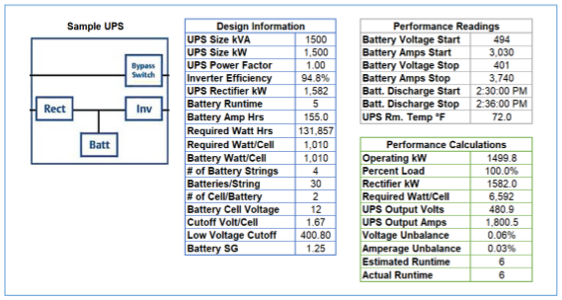
Scope & objectives: Orchestrated, scripted tests drive the fully integrated facility through normal and failure scenarios (e.g., utility loss, equipment failure, single‑point challenges) at multiple load levels, with no active human intervention, to verify automatic response and overall performance/reliability. Prerequisite: all Level 4 testing passed with issues closed.
Technical commissioning activities: Facility‑scale performance validation — coincident power/cooling response, transient behavior and reliability objectives — supported by synchronized metering, long‑duration trending and rapid defect triage/retest cycles as directed by the CxA.
Level 6 — Turnover & occupancy
Scope & objectives: Compile Level 1–5 closeout artifacts, finalize issues log, deliver training, O&M manuals, systems manuals, and the final commissioning report; complete lessons‑learned and readiness walks; plan any seasonal/deferred tests; and establish definition of “commissioning complete.”
Technical commissioning activities: Validate KPI trends (e.g., energy and reliability metrics) and embed optimization findings into SOPs/EOPs/MOPs and operator training so that performance gains persist into operations.
Practical benefits of the Level 0–6 + Technical Cx approach
-
Risk reduction: Early documentation gates (2A/2B) and FOK dry‑runs prevent late surprises; IST is executed on systems already proven at component and system levels.
-
Measurable performance: Meter plans, load banks, and trending convert “it runs” into verified capacity, efficiency, and stability numbers that inform acceptance and warranty baselines.
-
Faster issue closure: Centralized issues logs, priority criteria, and retest protocols keep the program auditable and decisive.
-
Operational readiness: Training and systems manuals are tied to tested sequences and “as‑left” settings, improving turnover quality.
Case study: Technical commissioning improves efficiency & stabilityProject context: A new 12 MW data center with a water-cooled chilled-water plant (N+1 chillers, variable-primary pumping, cooling towers, plate-and-frame heat exchangers) and CRAH-based white space adopted a Level 0–6 commissioning program with technical commissioning embedded. Level 3 readiness: TAB completed 100 percent of air- and water-side systems, controls graphics and alarms were verified and a meter and load-bank plan was implemented to support performance validation. Level 4 technical commissioning: During chiller plant FPT, kW, tons, ΔT and pump head were measured across 30–100 percent load. Calculations showed excessive condenser-water oscillation driven by aggressive PID tuning on tower VFDs, causing approach instability and degraded plant efficiency. After PID retuning, deadband optimization and coordinated resets for CHWS/CWS, repeat tests demonstrated stable control with plant kW/ton improving from 0.82 to 0.75 at 70 percent load. CRAH valve control and fan-speed response were validated during step-load changes to ensure space stability. Level 5 IST: Integrated tests simulated peak-ambient conditions and a cooling-tower cell failure. Trends confirmed automatic capacity redistribution without exceeding white-space temperature limits. All critical and high issues were resolved prior to IST completion. Results: Verified thermal stability during failures, with approximately 9 percent improvement in steady-state plant efficiency, and fully documented “as-left” sequences and setpoints transitioned into operations. |
Data center commissioning cannot be a generic checklist exercise. Mission‑critical facilities demand a Level 0–6 framework that scales from factory floors to integrated, failure‑mode testing and that treats metering, trending and performance calculation as first‑class deliverables. That is the core distinction from traditional commissioning organized by broad project phases.
Technical commissioning is the multiplier in this model. By validating measured performance, enforcing configuration discipline and tuning control behavior, Technical Cx closes the loop between design intent and real‑world operation and readies the facility for continuous optimization in service of availability and efficiency.
When executed properly the result is a commissioning program that is transparent, verifiable and repeatable, with clear acceptance criteria and enduring value for operations.

Travis Short is vice president of commissioning for Fleet Data Centers with extensive experience delivering Level 0–6 commissioning programs for mission-critical facilities. He specializes in technical commissioning, integrated systems testing and operational readiness for large-scale data centers, with particular focus on cooling optimization, controls stability and reliability-driven design. He has led commissioning efforts for greenfield and retrofit projects across North America, working closely with owners, designers, contractors and operations teams to deliver repeatable, verifiable outcomes.
References
Top image via Getty Images.
Read more on Facility Operations and Standards or related topics Operations and Maintenance Planning and Standards
Explore All FMJ Topics