 Membership
 Network
 Regional Sites & Affiliates


 Events
 Participate
 Resources

 Training
 Credentials
 Government


 Content Channels
 Tools
Tools


 Business Overview




Blurred Lines
Adapting experiences for employees & visitors
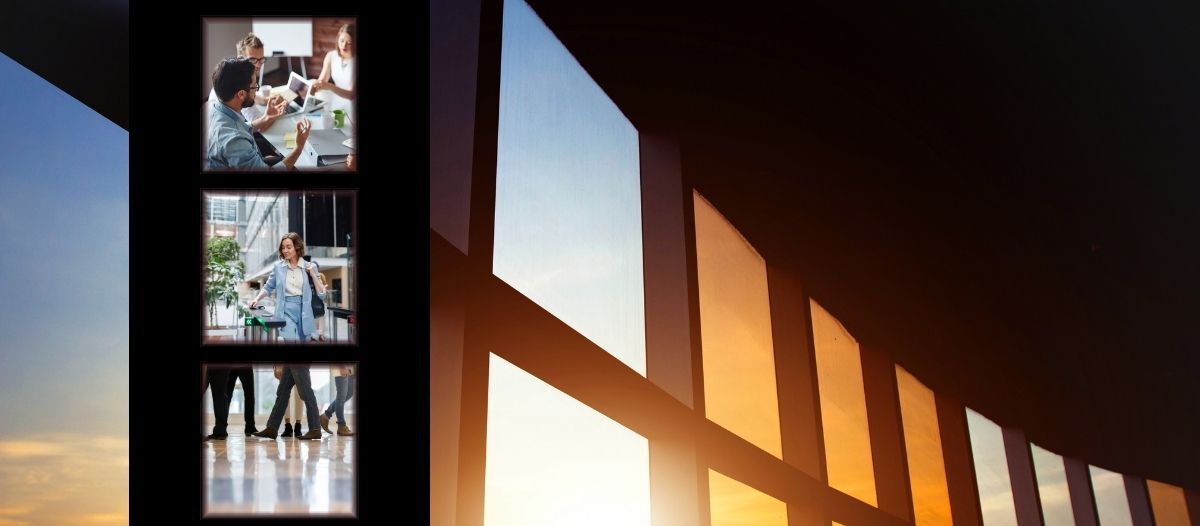
Converging trends in technology and culture are blending the boundary between employee and visitor and significantly changing how the workplace looks, feels and is experienced. The workplace of the future can already be found today at forward-thinking companies that provide workers and visitors with seamless, secure, self-service access to the spaces and facilities they need to do their best work. This access will become increasingly flexible and on-demand – a shift that has been accelerated by the COVID-19 pandemic, as organizations strive to control who uses what and when, in order to protect their people.
The shift toward this agile working was well underway before the pandemic struck. However, this year, a vast portion of the global workforce is required to participate in an experiment in remote working on an unprecedented scale. Regardless of how many organizations maintain their work-from-home policies beyond COVID-19, agile working will continue to rise as workers demand new levels of autonomy.
Creating a brand experience
Today, many skilled workers expect their employer to grant them the freedom to choose when and where they work; whether from home, a café, a coworking space, the office or a combination. The workplace, in that sense, is competing with alternative spaces. Just as brands like Nike and Apple open flagship brand-experience stores that immerse shoppers in their values and culture, the workplace is fast becoming a symbol and propagator of culture, delivering competitive advantage by helping organizations attract and retain talent.
It’s important to visitors as well. According to a survey by Proxyclick, 2 out of 5 people say their perception of a company has been negatively impacted by their experience in the lobby or reception. To avoid damaging brand reputation, organizations must create a visitor experience for customers, suppliers, partners and other members of the ecosystem, that creates the right impression.
As the war for talent rages, an employee experience that rivals that of a consumer retail experience will become the norm, not only in terms of the physical space, but the seamless use of technology, including mobile.
Many employees no longer expect assigned seating, while they do expect to easily locate their colleagues, check in and book facilities like conference rooms, AV equipment and parking spaces; and book services like lunch, a new room layout or a yoga class. The pandemic is pushing the digitization of these bookings, because walking up to a receptionist to make a booking, or using a touchscreen, are not as safe than people booking what they need via their own mobile phone.
This “book everything, from anywhere” trend raises new challenges for FM professionals who are trying to reduce – or at least optimize – real estate costs, while providing an excellent employee experience that will serve as a competitive advantage, enabling them to attract and retain talent.
A 2015 report by CBREfound 40 percent of office space is typically unused, equating to US$150 billion in empty space. Therefore, it comes as no surprise that 83 percent of corporate real estate executives rank space utilization as the key metric for making workplace decisions, according to Gensler. As for meeting rooms, space utilization is as low as 30 percent; and when a room is in use, only 40 percent of seats are occupied.
Given that each workstation costs US$15,000-$20,000, combined with the need to improve sustainability, the pressure is on to adopt a data-driven, flexible approach to ensuring people can access what they need, when they need it.
Cost and sustainability are only part of the story, however. According to a 2019 CBRE survey, talent attraction and development was the top driver of corporate real estate strategy in 2019, ahead of cost reduction.
To succeed in today’s fast-changing, competitive landscape, organizations are increasingly relying on geographically distributed workspaces. “Work anywhere” tools and processes widen the net in terms of recruiting top talent from anywhere in the world.
Yet the importance of blending virtual work with face-to-face contact cannot be underestimated. A field study7 on a multinational organization with 43 teams, showed that visiting one another’s workplace to work side-by-side on day-to-day tasks is more effective at improving collaboration and productivity than off-site meetings.
Meanwhile there are mixed feelings about returning to work post COVID-19, as some remote working employees are anxious about safety in the workplace, while others are keen to escape the loneliness and isolation of being separated from their peers.
Accommodating the gig economy
Another factor blurring the boundary between employee and visitor is the rise of the gig economy. An increasing percentage of the workforce is made up of independent workers, such as freelancers and consultants. In an autonomous culture of flexible, non-traditional workers, those on payroll are often indistinguishable from those who are self-employed or contracted from another organization. Research by Gallup showed that over a third of U.S. workers participate in the gig economy already, and a report by Manpower Group revealed that 87 percent of workers globally would consider freelancing or non-traditional work.
Optimizing the workplace for all
Sharing the workspace with potentially dozens or more visitors raises various challenges for facility professionals, from security and data privacy, to automation and space optimization.
To address these challenges, forward-thinking FMs are adopting best practices such as:
-
Create a consumer-level, flagship workplace experience that embodies the organization’s values.
-
Make people feel at home right away: Provide wayfinding services with maps and directions to meeting rooms, restrooms, kitchens and other facilities; and enable them to quickly locate the right person or team. With resource scheduling software and mobile apps, companies can let visitors set up the right office environment in advance, which will be ready for them when they arrive – e.g., desk or room selection, resources and the people they need to collaborate with. Likewise, there is no need for paper logbooks that compromise privacy and security, nor for a receptionist to check visitors in, when they can self-serve.
-
Organizations can also limit the capacity of meeting rooms, ensure social distancing between desks and gather data that enables contact tracing with scheduling tools if someone falls ill . At the point of booking, health and safety measures can be further enforced by having people provide a reason why they need to be in the office and introducing a layer of approval before they can go ahead with the booking. Likewise, to aid compliance and protect colleagues, people can be asked to confirm that they have not had any symptoms of COVID-19, such as fever, and have not been in contact with anyone who is ill.
-
Use data to make workplace decisions that optimize space, well-being, health and safety, productivity and collaboration. Data analysis is particularly critical to enable facility managers to prepare for and address the high degree of fluctuation in space utilization in workplaces today. With employees traveling between offices, freelancers visiting workplaces and a flexible workforce that chooses when to work from the office, the need to predict usage and adapt accordingly is becoming more important than ever. Data-driven insights will help facility managers reduce real estate and other costs and create an outstanding experience, while being able to respond quickly to changing business needs, e.g., the need to suddenly accommodate 100 new hires for a fast-expanding team or the need to plan a phased, safe return to work that prioritizes who is given access to the workplace and when.
An on-demand workplace, in which employees and contractors can easily connect with coworkers, spaces and other resources, inevitably requires an element of activity-based working. Activity-based working allows people to select a particular workspace that suits the type of work at hand, e.g., focus booths for private calls or work that requires deep concentration, a café for informal meetings, breakout rooms for an impromptu brainstorming sessions and whiteboard spaces for collaboration.
A report by Kinnarps found that nearly 70 percent of employees say working in an activity-based work environment – where people can choose from various types of space, depending on their needs – gives them more energy, helps them achieve better results and is more stimulating.
British utilities company National Grid found this to be the case when they achieved an 8 percent increase in overall productivity and a reduction in operating costs of £8-10 million per year as a result of implementing activity-based working.
Given that staff costs typically account for 90 percent of business operating costs, while energy costs equate to just 1 percent and rental costs 9 percent, according to the World Green Building Council, a seemingly small gain in productivity can vastly outweigh potential real estate savings.
A study by Atlassian estimates less than 60 percent of the average workday is spent productively, with the remainder of time devoted to distractions, socializing and aimless office tasks; so, improving the way people, spaces and things interact in the workplace can have a substantial impact.
Architect David Dewane, for example, designed a workspace layout called the Eudaimonia Machine, based on Aristotle’s concept of eudaimonia, meaning ”the epitome of human capability.” It consists of five rooms in a linear layout, forcing the visitor to walk through each one. The first space, The Gallery, inspires visitors with impressive examples of work that has been achieved by people in the organization. Secondly, The Salon provides a collaborative hub where people can debate ideas over coffee. Thirdly, The Library is a resource for research and information-gathering for new projects. Fourthly, The Office Space is a place for doing shallow work that does not require deep focus, such as low intensity administrative tasks. Finally, The Chamber is designed to enable intense, uninterrupted focus when tackling cognitively demanding work.
Such thoughtful design is likely to gain traction as organizations prepare their workplaces for dozens of visitors or more, who require not only flexible, on-demand access to resources, but also the ability to leverage those resources to help them achieve new levels of productivity and innovation.

John T. Anderson is CEO of Smartway2 and is a seasoned technology executive with almost four decades of experience building and growing profitable teams in small to large companies, and extensive experience in the resource scheduling industry. Anderson has significant M&A experience, helping acquire six companies and drive four successful exits for shareholders over the past 17 years. He has presented at conferences worldwide and his articles have appeared in leading industry publications. Anderson earned a bachelor’s of science degree in administrative management from Clemson University in South Carolina, USA.
References
Top images via Getty Images.
The Integrated Visitor Experience, Proxyclick
Space Utilisation: The Next Frontier, CBRE, 2015
Gensler Corporate Real Estate Challenges 2013 Survey Summary
https://www.density.io/blog/space-utilization-benchmarks-150-billion-office-waste/
Optimising Human Capital: Evolving Strategies for Skills, Space and Service, CBRE, 2019
The Gig Economy & Alternative Work Arrangements, Gallup, 2018
Gig Responsibly: The Rise of NextGen Work, Manpower Group
Don’t be Afraid of Activity Based Working, Kinnarps, 2017
https://woodhouseworkspace.com/activity-based-working-reduced-operational-costs-by-10m-year/
Health, Wellbeing and Productivity in Offices, World Green Building Council
https://www.atlassian.com/time-wasting-at-work-infographic
https://www.wsj.com/articles/one-architects-radical-vision-to-replace-the-open-office-11578578407
Read more on Facility Operations and Workplace or related topics Workplace Utilization and Operations
Explore All FMJ Topics