 Membership
 Network
 Regional Sites & Affiliates


 Events
 Participate
 Resources

 Training
 Credentials
 Government


 Content Channels
 Tools
Tools


 Business Overview





Case Study: A Fan Battle
Critical laboratory exhaust
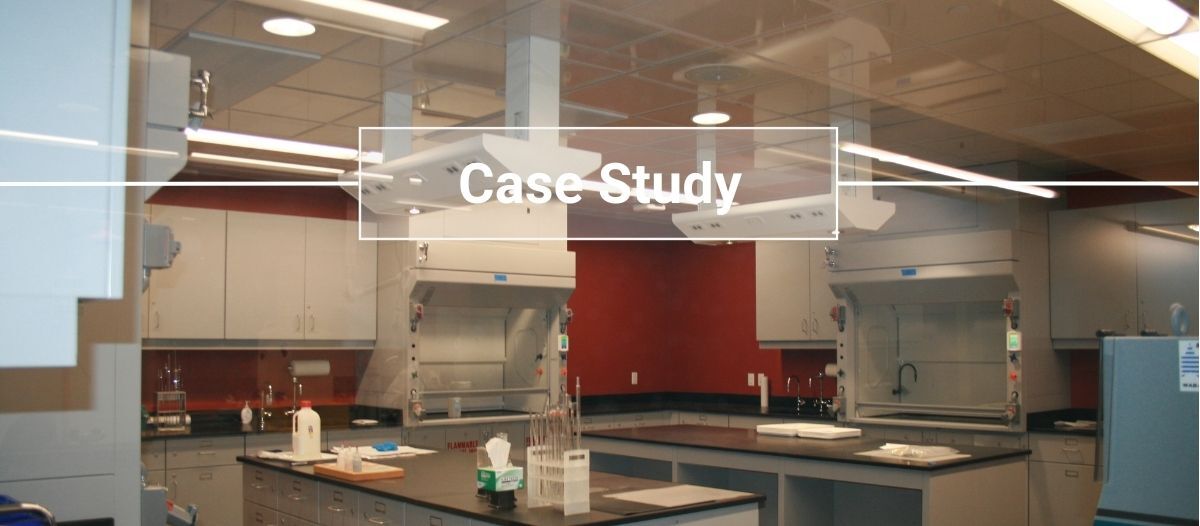
The ERU operated as advertised a few months before the problem began. The ERU drew vast amounts of air for a few seconds, like the initial start of a jet engine, then shut down—then complete building silence. It was quickly determined that the shutdown was caused by an in-duct high-limit pressure switch. This pressure switch acts like a circuit breaker stopping the ductwork from crushing in on itself. The pressure switch is tripped when the negative duct static pressure exceeds more than negative four inches of water column, which is twice its normal operating setpoint. The high limit pressure switch cannot be removed or bypassed because it would cause significant damage if removed. The ERU will not restart until the switch is manually reset. The pressure switch was an easy, but annoying task. However, it was unknown what caused the extremely high negative pressure, consistently causing the shutdown.
The ERU operated as advertised a few months before the problem began. The ERU drew vast amounts of air for a few seconds, like the initial start of a jet engine, then shut down—then complete building silence. It was quickly determined that the shutdown was caused by an in-duct high-limit pressure switch. This pressure switch acts like a circuit breaker stopping the ductwork from crushing in on itself. The pressure switch is tripped when the negative duct static pressure exceeds more than negative four inches of water column, which is twice its normal operating setpoint. The high limit pressure switch cannot be removed or bypassed because it would cause significant damage if removed. The ERU will not restart until the switch is manually reset. The pressure switch was an easy, but annoying task. However, it was unknown what caused the extremely high negative pressure, consistently causing the shutdown.
A major issue
The chemists and scientists working in these labs rely on the fume hoods to exhaust all volatile and toxic chemicals and compounds within their spaces. The malfunctioning ERU was a major issue for the safety of employees and the operation of the facility. Not knowing when the ERU would shut itself down created a critical safety challenge. The problem arose at any time without warning. So, the lab staff needed to constantly monitor their work environment. At times, the ERU would fail multiple times per day.
Multiple causes were initially examined, and most were ruled out. Four suggestions that started the conversation included a faulty outside air bypass damper, lab staff misusing the fume hood equipment, a malfunctioning (fail secure) main branch fire damper, or all duct branches being closed off simultaneously. Initially, the bypass damper was ruled out because it would have registered as a fault in the building automation system (BAS). Likewise, misuse of the equipment could be ruled out because some shutdowns would occur at night when lab staff were not present. The failed secure fire damper was permanently removed, per the engineer of record, as soon as it became a possible cause, but the shutdowns kept happening. Now the only reasonable, albeit highly unlikely, cause was that all the ERU branches closed simultaneously. If this was the case, the closures had the possibility of being recorded on the BAS.
Facility management staff, along with the original installing automation contractor, took an in-depth look into the BAS data. Unfortunately, the data was archived at five-minute intervals, which made it impossible to review what happened in the few seconds it took for the ERU to shut down. Data collection was increased to every second on each branch going into the ERU to ensure there would be enough information the next time it shut down. As further background, each branch is controlled by an in-line duct variable air volume box (VAV box). There are VAV boxes for the supply and exhaust (return) of each room as well as each critical fume hood, there are 140 boxes throughout the building. After the proper data collection parameters were set on more than 60 of the VAV boxes, the ERU ran as designed, with no malfunctions, for almost four months.
As soon as the lab staff began to feel comfortable operating at full capacity, the ERU problems struck again. This time, the FM staff was able to review the BAS data collected from more than 300 data points logging at one second intervals. Over the next two weeks, more than 150 separate files, spreadsheets and graphs were downloaded, deciphered, and analyzed, but there was no indication that all the ERU branches closed simultaneously. There was no obvious answer and all the possible identified causes had been investigated or systematically ruled out.
What was missed?
Something must have been missed. After exhausting all options, WJE reviewed the information with another HVAC and automation contractor. Initially, the third-party contractor proposed inspecting the physical mechanical connection between the outdoor air bypass damper and the electronic actuator motor to ensure it was clamped tightly. If the mechanical connection between the shaft and BAS controlled motor was slipping, the physical damper would close but the BAS would not record it as a problem as initially thought. If this individual outdoor air bypass damper closed abruptly it would result in the described ERU shutdown.
This bypass damper allows for proper duct static pressure in the ductwork while still permitting the exhaust fans to operate at full speed. The exhaust fans are required to operate at full speed to ensure the exhaust chemicals are properly dispersed into the atmosphere. The bypass damper is like a breather hole in a can; if the breather hole is plugged while the can has active suction, the can will crush. To test the mechanical clamp connection WJE personnel placed a pair of vice grips on the shaft of the damper and moved it gently back and forth to verify the clamp was tight. The shaft was securely fastened to the motor, but after the vice grips were released, the actuator motor started closing the damper on its own, creating the exact fan shutdown as previously witnessed. WJE then notified the installing mechanical contractor of their findings to escalate a potential repair. The mechanical contractor ran the actuator through its cycles, and they stated there was no problem with it. They also mentioned that the damper shaft had teeth marks on it from the vice grips, which was against, standard procedure and it could cause permanent damage, but desperate times called for desperate measures.
With no solution found, WJE staff discussed their findings with the damper actuator manufacturer and other experts. Upon consultation with the manufacturer, it was evident that the actuator should not change position with any shaft movement. The manufacturer’s technical support suggested tapping on the case of the damper actuator to determine if there was a loose connection inside their equipment. When the case of the damper actuator was lightly tapped on, the same results were achieved — an ERU shutdown. Finally, there was a solid lead after 25 shutdowns and eight months of investigation.
The manufacturer explained that the specific spring-return actuator installed would close (cause an ERU shutdown) if there was a loose internal connection. Luckily, there was a five-year warranty on the actuator, so a warranty claim was arranged. The new actuator was installed by the original mechanical contractor six weeks after a possible cause of the shutdown was identified. During replacement of the actuator, the mechanical contractor discovered water inside the exterior junction box and flexible conduit of the actuator. The water issue was resolved, and new wiring was installed by the original automation contractor in all locations exposed to standing water.
Problem solved, or not?
Three months after the new actuator was installed, the ERU struck back with multiple devastating shutdowns over several days. After the final shutdown, the replacement warranty actuator was unresponsive, causing all lab exhaust hoods and HVAC to be out of commission until another actuator could be sourced and installed. The mechanical contractor stated the new actuator would take two weeks to arrive and there was no way to get it sooner, but WJE produced a solution to use another non-critical actuator from the ERU in the meantime to get the highly critical system back in operation.
It seemed unlikely that replacing the actuator every three months at a yearly cost of $12,000, would be acceptable. WJE decided to contact the manufacturer again for other solutions. They suggested that there could be a missing ground wire between the power source and the controller, in the original wiring, which they commonly referred to as a “four-wire configuration.” This resolution was relayed to the installing automation contractor, but their response, without field investigation, was that the actuator would not operate unless it was installed per the stated “four-wire configuration.” Instead of inspection, the automation contractor suggested there was too much torque being applied to the actuator causing failure. WJE tested the torque applied to the actuator and it was significantly below the damper actuator’s maximum allowable threshold. All signs pointed to a potential wiring problem.
The one-wire fix
The fourth wire is a potentially unnecessary ground that tech support stated caused an undefined range of problems if not installed. To ensure the fourth wire had been installed, a physical examination of the automation wiring needed to be performed. WJE FM staff found that the fourth wire was placed into the terminal block but not clamped and secured properly. So, the wire was properly reconnected and the ERU has run problem-free for the past two years.
So why did the original actuator fail intermittently, and its warranty replacement fail completely? The answer remains a mystery, but FM staff concluded that the missed connection—an earth ground—resulted in the actuators internal circuit board having possible ground fault issues. The actuator was more reliable during the warm, humid months. WJE concluded that during the region’s summer months, the fourth wire did not have issues simply because of high humidity. It facilitated what can be considered a “mist effect” assisting the improperly clamped wire.

Ryan Keesbury, FMP, is the facilities manager of the Northbrook, Illinois USA headquarters of Wiss, Janney, Elstner Associates, a global firm of engineers, architects, and materials scientists. Since joining WJE in 2004, Keesbury has worked on a variety of materials testing and evaluation projects before assuming the facilities management role. In addition, he helps perform equipment calibration and verifications to maintain laboratory accreditation for WJE’s Janney Technical Center.
References
Image courtesy of Wiss, Janney, Elstner Associates
Read more on Facility Operations or related topics Case Study , Maintenance Sourcing and Operational and Capital Budgeting
Explore All FMJ Topics