Membership
 Network
 Regional Sites & Affiliates


 Events
 Participate
 Resources

 Training
 Credentials
 Government


 Content Channels
 Tools
Tools


 Business Overview





Case Study: Beyond Relocation
Creating measurable workplace well-being outcomes in the hybrid era

As organizations adapt to hybrid work, facility management leaders face a growing challenge: justifying workplace investment while ensuring offices continue to support productivity, well-being, collaboration and talent retention. Traditional measures such as occupancy alone no longer provide a sufficient picture of workplace effectiveness. Instead, organizations focus on how physical environments influence employee experience and business performance.
A growing body of workplace research suggests that employee well-being, environmental quality and access to different work settings are closely linked to engagement and performance. The question for FMs is no longer whether workplaces matter, but rather how workplaces can be designed, operated and measured to deliver meaningful outcomes.
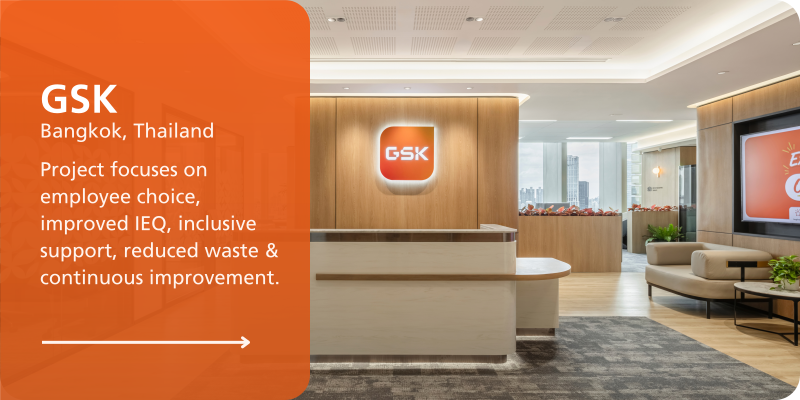
The experience of a recently completed workplace transformation project in Bangkok provides several lessons that can be applied globally. Rather than focusing on the design itself, the project highlights practical strategies FMs can use to align workplace investment with organizational goals. The workplace occupies approximately 1,100 square meters within a Grade A office tower and was developed around principles of well-being, flexibility, environmental performance and data-driven operations.
 Start with behaviors, not space
Many workplace projects begin with questions about desks, meeting rooms and square footage. More successful projects start by understanding how people actually work.
Hybrid work has fundamentally changed the relationship between employees and the office. Individual focused work can often be performed remotely, while offices increasingly serve as locations for collaboration, learning, mentoring, social connection and culture building.
FMs should therefore evaluate the activities occurring within the workplace before determining space allocation. Key questions include:
-
What percentage of time is spent in focused work versus collaboration?
-
How often are employees participating in virtual meetings from the office?
-
Which activities require dedicated physical environments?
-
What spaces are consistently underutilized?
In the Bangkok project, a variety of work settings were introduced, including focus rooms, private phone booths, collaboration zones, meeting spaces of different sizes, training rooms, wellness areas and flexible workstations.
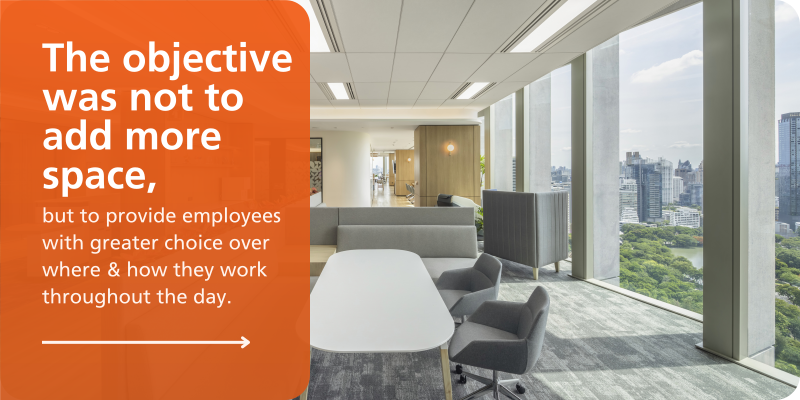
For FMs, the lesson is simple: design around activities and user needs rather than fixed workplace ratios.
Treat environmental quality as an operational metric
Employee expectations regarding workplace conditions have changed significantly. Air quality, thermal comfort, acoustics, lighting quality and access to natural elements are now viewed as essential workplace features rather than optional enhancements.
Many organizations monitor environmental performance primarily through building systems data. However, leading workplace teams are combining environmental monitoring with employee feedback to identify gaps between measured conditions and occupant perception.
Several environmental strategies implemented within the Bangkok project illustrate this approach:
-
continuous air quality monitoring
-
enhanced thermal comfort systems
-
acoustic treatments supporting concentration and confidentiality
-
responsive lighting aligned with occupant needs
-
extensive access to daylight and external views
-
biophilic design elements integrated throughout the workplace
FMs can apply similar principles regardless of building size or budget by establishing regular measurements for:
-
indoor air quality
-
carbon dioxide levels
-
temperature consistency
-
relative humidity
-
occupant comfort satisfaction
-
acoustic performance
The most effective workplace strategies combine objective building performance data with subjective employee experience measures.
Use workplace data to support better decisions
One of the most significant shifts in FM is the growing ability to collect operational workplace data.
In many organizations, real estate decisions historically relied on periodic surveys, observations and utilization studies. New workplace platforms allow facility teams to access near real-time information on occupancy patterns, workstation use, meeting room demand, environmental performance and user behavior.
The Bangkok workplace incorporated a smart workplace platform capable of integrating occupancy analytics, air quality monitoring, lighting controls, acoustic management systems and collaboration technology. This provides facility leaders with ongoing operational insights rather than relying solely on annual reviews.
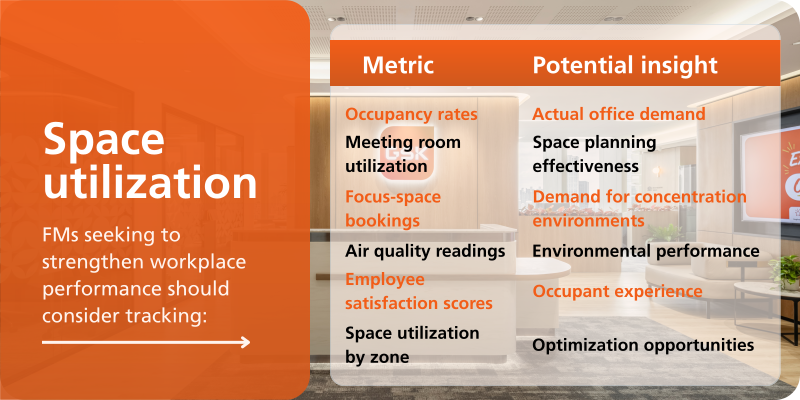
Data is most valuable when linked to decision-making. The goal is not simply to create dashboards, but to identify actions that improve workplace effectiveness.
Design for neurodiversity & inclusion
Workforces are more diverse, and workplace environments should support a variety of working styles, cognitive preferences and life circumstances.
Historically, many offices were optimized around a single working model. Modern workplace strategies recognize that employees need access to different environments throughout the day.
Examples of inclusive workplace features implemented in the Bangkok project include:
-
wellness rooms
-
lactation facilities
-
quiet and restorative spaces
-
focus areas supporting concentrated work
-
flexible collaboration environments
These elements support different employee needs, including neurodivergent workers, caregivers and individuals requiring periods of privacy or recovery during the workday.
FMs should assess whether current workplaces provide sufficient diversity of settings and review utilization data to understand which spaces employees value most.
Balance sustainability & workplace performance
Sustainability objectives and workplace well-being goals are often pursued separately. Increasingly, organizations are discovering that many initiatives support both.
The Bangkok project incorporated low-volatile organic compound (VOC) materials, green-certified flooring, furniture reuse strategies, and systems intended to improve environmental conditions while reducing waste. Existing furniture and fitness equipment were retained wherever possible, reducing material consumption associated with the relocation.
This approach highlights a broader opportunity for FMs.
Workplace projects can simultaneously support:
-
carbon reduction goals
-
circular economy principles
-
indoor environmental quality (IEQ)
-
employee well-being objectives
-
long-term operational efficiency
Rather than evaluating sustainability and employee experience independently, FM leaders should look for strategies that generate benefits across both areas.
Measure success after occupancy
 Many workplace projects conclude when construction ends. In reality, the most important evaluation period begins once employees move in.
Post-occupancy reviews provide an opportunity to understand whether workplace investments are achieving intended outcomes. These reviews should extend beyond technical building performance and include user experience measures.
A structured post-occupancy assessment may include:
-
employee satisfaction surveys
-
utilization studies
-
IEQ data
-
collaboration effectiveness feedback
-
workplace service evaluations
-
maintenance and operational performance metrics
The objective is continuous improvement rather than validation. Organizations that regularly evaluate workplace performance are better positioned to adapt as workforce expectations continue to evolve.
Key lessons for FMs
The workplace is expected to serve multiple purposes simultaneously: supporting well-being, productivity, collaboration, learning, sustainability and organizational culture. Achieving these objectives requires FMs to move beyond traditional space management and adopt a more evidence-based approach.
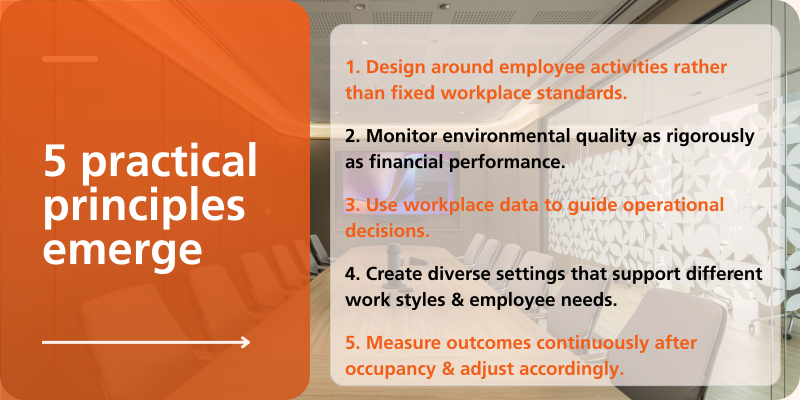
Five practical principles emerge:
Conclusion
The role of FM is expanding. FMs are no longer only responsible for maintaining buildings and services. They are responsible for helping organizations create workplaces that support health, productivity, flexibility, sustainability and culture.
In the hybrid era, the workplace must earn its purpose. Employees need environments that offer clear value compared with remote work, and organizations need evidence that workplace investments are delivering results.
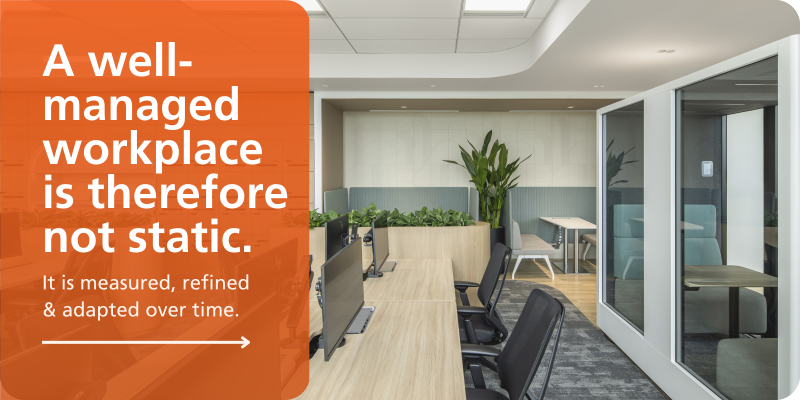 By focusing on work patterns, environmental quality, data, inclusion, sustainability and post-occupancy evaluation, FMs can create workplaces that perform better for both people and organizations.
The most effective workplaces will not be defined by a single design trend or technology solution. They will be defined by how well they respond to real employee needs, how clearly they support organizational goals, and how consistently they improve through evidence-based FM.

Arnald Ng, CFM is director, real estate & project delivery at GSK. Ng is a corporate real estate and workplace leader with more than two decades of experience delivering large‑scale real estate strategy, capital projects, and workplace transformation across the Asia‑Pacific region. She has held leadership roles across the life sciences, financial services, technology and NGO sectors, managing complex, multi‑country portfolios and advising senior executives on real estate investment, optimization and workplace performance. Ng is deeply engaged in the facility management profession and is an IFMA qualified instructor.
References
All images courtesy of Conexus/GSK.
Read more on Facility Operations , Sustainability and Real Estate or related topics Sustainable Facility , Workplace Utilization , Operations and Space design and planning
Explore All FMJ Topics