
 Membership
 Network
 Regional Sites & Affiliates


 Events
 Participate
 Resources

 Training
 Credentials
 Government


 Content Channels
 Tools
Tools


 Business Overview





Case Study: Cross-platform Mobile Access
Using NFC wallets without rip-and-replace
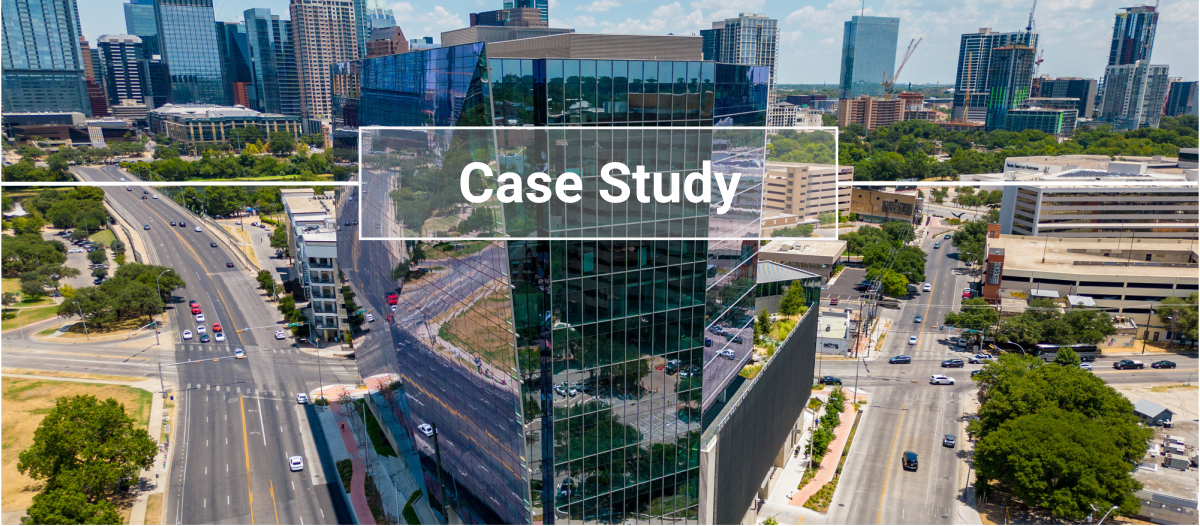
At a Class AA commercial property in Austin, Texas, USA, employees and tenants no longer reach for a plastic badge on their way through the door. RiverSouth, developed by Stream Realty Partners and QuadReal, is the first building to enable seamless NFC access across major digital wallet providers, supporting both employee badges in Apple Wallet and corporate badges in Google Wallet. For facility managers overseeing commercial portfolios, the deployment proved that cross-platform mobile wallet access can be layered on existing building access technology without replacing existing, readers, credentials or access control systems. The deployment offers a replicable model for FMs waiting to see how a full cross-platform rollout works in practice.
Stream Realty Partners and QuadReal developed RiverSouth with the goal of enriching the digital-first lifestyles of building occupants, giving employees and tenants an experience that reflects how they already carry and use their devices. Making mobile access available across all major wallet providers, rather than a single one, was central to that goal, ensuring no occupant would have to think about whether their phone was supported before they could move through the building.
 No hardware replacement required
SwiftConnect drove the deployment by using its connected access network platform to integrate the building’s existing access control system: rf IDEAS terminals for parking garage entry, Wavelynx readers and credentials for building access, and Vecos smart lockers with mobile access in Apple and Google wallets and RiverSouth’s existing building app. By unifying everything behind the scenes, the deployment is an example of how to combine existing technologies and wallet-based access credentials so that the upgrade path to mobile is practical for properties that have already committed capital to their access infrastructure.
At RiverSouth, mobile credentials are issued remotely and added directly to users’ digital wallets. Permissions are centrally managed and updated in real time, which means access rights can be adjusted or revoked without any physical interaction with the credential. For FM and security teams managing tenant turnover or contractor access across a multitenant building, this kind of remote provisioning reduces both the administrative burden and the lag time between a change in occupancy and a change in access.
Every base building touchpoint, 1 device
Employees and tenants at RiverSouth can use their iPhone, Apple Watch or Android device to access the parking garage, elevator destination dispatch kiosks, smart lockers and amenities including the gym. Mobile credentials are stored securely on the device and provisioned directly to Apple Wallet or Google Wallet:
-
tenants use the existing RiverSouth app to receive mobile credentials
-
credentials are provisioned directly to Apple Wallet or Google Wallet
-
users tap their iPhone, Apple Watch or Android device to Wavelynx readers to unlock access points
-
permissions are centrally managed and updated in real time
-
credentials are stored securely on the mobile device
Integration built for mixed environments
The piece of the RiverSouth model most relevant to facility managers working with multiple vendor technologies in an environment is the integration layer itself.
A neutral connected access network platform operates independently of any single access control provider, credential technology or reader manufacturer to network the building’s credential technologies, mobile platforms, building apps, physical access systems, and identity providers through a centrally managed layer. With this approach, a property does not need to standardize on one hardware ecosystem or vendor to offer a consistent mobile access experience across all its access points.
The RiverSouth deployment reflects a connected access network platform’s core design intent: to integrate with what a building already has, and to create an access experience that feels effortless to the people using it every day. In practice, that means a commercial property manager working with existing access control systems and related technologies can add wallet-based mobile credentials and centrally manage the entire credential life cycle.
Best practices for FMs
|
Sustainability & operational cost
RiverSouth can issue mobile credentials remotely to a user’s device, reducing plastic card production as part of the access management life cycle. For properties with sustainability reporting commitments, the reduction in physical credential production also contributes to measurable environmental outcomes, an increasingly visible consideration for property owners and tenants whose terms include green building criteria.
A replicable model for commercial buildings
The introduction of corporate badges in the RiverSouth mobile app is part of the real estate partners’ ongoing commitment to improve the building environment and create unparalleled user experiences. For the FM community, RiverSouth functions as a reference deployment: a Class AA commercial building that has resolved the cross-platform wallet question for tenant access to the building and its resources, using an integration platform that preserves the existing hardware investment. These parameters are recognizable to any facility team evaluating a mobile access upgrade that does not include a ground-up technology refresh.

References
Top image via Getty Images.
Read more on Facility Technology & Data Management and Risk Management or related topics Physical Security , Accessibility and Facility Technology
Explore All FMJ TopicsRelated articles
-

Artificial Intelligence in FM
The stakeholder’s perspectiveBy Dr. Jake Smithwick & Dr. Kenneth Sullivan & Nneka Ubi05.01.2024 -

Don’t Drop the Ball
How a CMMS can make or break an FM organization’s successBy Michael Carmean09.17.2024 -

Beware of Growing Cyberthreats
Why it’s time for stronger facility cybersecurityBy Andrew Harris & Eric Headington10.30.2024