 Membership
 Network
 Regional Sites & Affiliates


 Events
 Participate
 Resources

 Training
 Credentials
 Government


 Content Channels
 Tools
Tools


 Business Overview





Case Study: Turning a Compliance Problem Into an Operational Win
A unique approach to facility retrofits
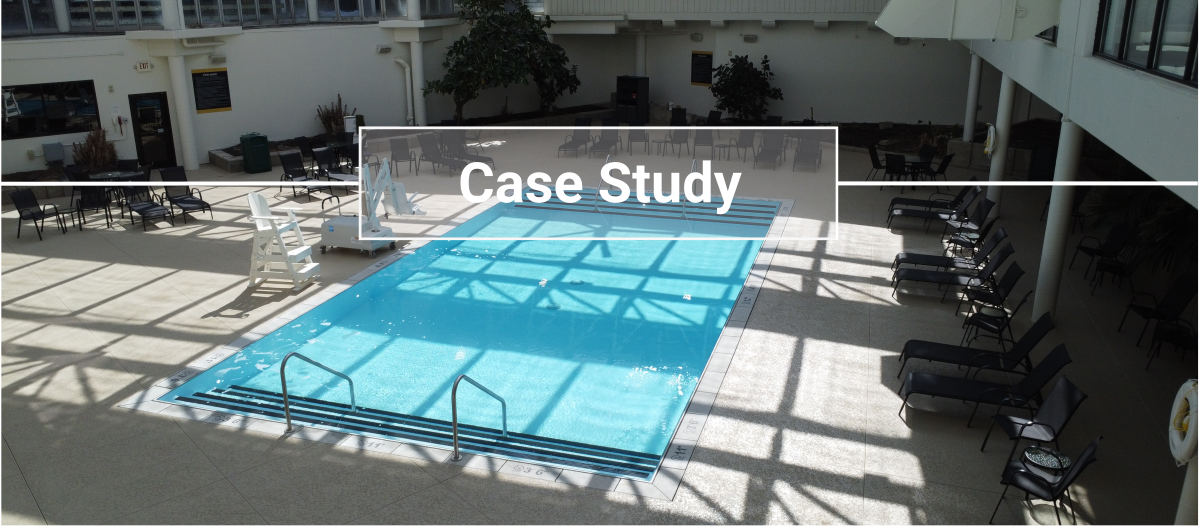
Facility managers face familiar challenges such as aging buildings and systems that no longer meet modern codes. But when something falls out of compliance, especially in high-traffic spaces like hotel pools, compliance does not just create paperwork, it creates costly, disruptive problems.
Pool projects in particular can be complicated. They often involve strict safety and accessibility requirements, structural concerns and the added pressure of keeping guest areas open and operational. The size, depth and layout of a pool can trigger additional requirements, such as lifeguard staffing, which means ongoing labor costs and added liability.
At one hotel, this was the case: the pool and pool area needed to be reduced to avoid additional staffing. The solution resulted in less disruption for guests and staff, lower long-term costs and a pool that fit the facility’s needs.
In other words, it was not just compliance; it was smart problem-solving.
A better way at a Kentucky hotelA hotel in Louisville, Kentucky, USA, needed to upgrade its pool to meet compliance standards: it was large enough that a new code regulation now required lifeguards on duty, adding ongoing costs that soared well beyond the initial construction budget. What started as a small code change quickly became a long-term operational challenge. At first, it was assumed the pool would have to be torn out and rebuilt; but the project team found an alternative solution: modify the pool by reducing its overall size. After pouring a new, smaller pool within the old design, the team opted to fill in the voids using spray foam instead of traditional concrete. Spray foam was chosen over concrete for several key reasons. Using concrete to reduce the pool size would have added significant weight to the structure, increased the risk of settlement and required extra structural reinforcement. Concrete forming, pouring and curing also would have extended the project timeline. In contrast, spray foam provided a lightweight solution that could be installed quickly, shaped precisely to the existing structure and tailored to the new pool boundaries. As an added benefit, the foam around the pool provided insulation, keeping the water temperatures stable year round. This approach avoided demolition, reduced structural stress, shortened the construction timeline and completely changed the direction of the project — turning a costly rebuild into a smart, high-impact retrofit.
|
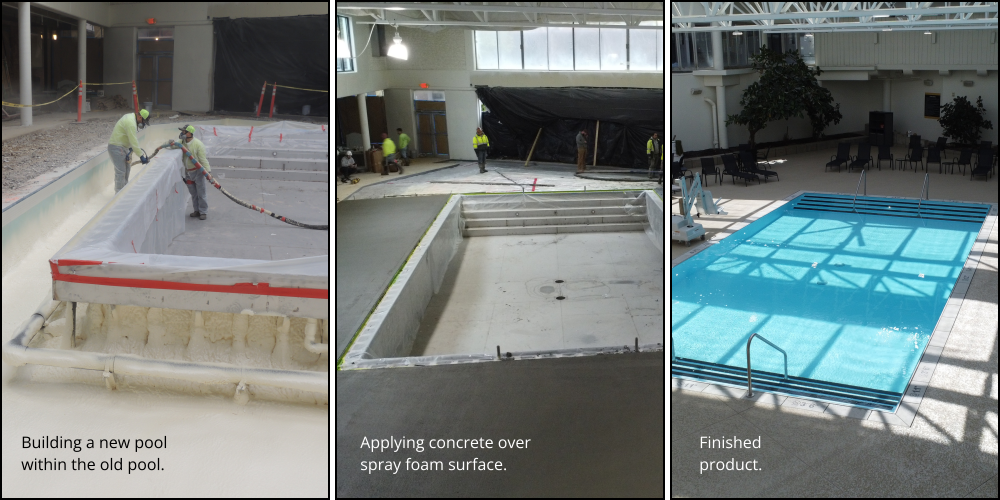
Why spray foam works well for unique retrofit projects
When dealing with retrofit projects, especially those involving older concrete structures, traditional construction methods do not always make things easier. They can sometimes create more problems than they solve.
Spray foam offers a level of flexibility that is hard to obtain with standard materials in situations like correcting slopes or adjusting depths within tight tolerances. Spray foam expands to fill gaps/voids and naturally conforms to the space where it is applied, creating a uniform and stable application. From a structural perspective, spray foam weighs less than traditional materials, so it provides support and stabilizations without adding unnecessary load.
It can also reduce the application timeline because of how quickly it can be applied and cured. This is especially important in places where downtime directly impacts revenue.
Spray foam really proves its value by solving multiple problems in one pass, or application.
Here are some additional, practical ways spray foam is being used in facilities:
Slab lifting & stabilization (interior & exterior)
Warehouse floors, sidewalks, loading docks or drive lanes. Over time, the soil underneath these surfaces can settle or wash out, which causes the concrete to sink or become uneven.
Traditionally, the fix has been to tear it out and replace it — but that takes time, creates disruption and drives up costs.
Spray foam offers a much more efficient alternative. It expands to fill the voids underneath, stabilizes the ground and can lift the slab back into place with a high level of precision. Most importantly, it avoids the downtime that comes with demolition and curing.
Parking decks & elevated structures
Spray foam is lightweight, so it does not add stress to the structure when injected. For issues like joint settlement, hidden voids and water intrusion, it can be installed without shutting down large sections of the facility, and it stabilizes the problem without requiring invasive structural work.
Under-slab void filling
Voids can form from soil erosion, water movement or poor compaction. And if they are not addressed, they can lead to cracking, settlement or even structural failure over time.
Spray foam flows into irregular spaces and fully expands to fill them. It creates consistent support underneath the slab and can be installed through small access points, which keeps the process efficient and minimally disruptive.
Roof retrofits (especially low-slope & metal roofs)
In roofing applications, spray foam is often used to improve drainage by adding slope, eliminate standing water, and significantly improve insulation and energy efficiency.
It is lightweight compared to traditional solutions; can often be applied directly over existing systems; and when paired with coatings, it creates a seamless, durable surface.
Insulation retrofits
In industrial and commercial settings, spray foam is used in places such as cold storage facilities, food processing plants and large warehouses. In these environments, temperature control and energy efficiency are not just nice to have — they are critical to daily operations.
Spray foam (both open cell and closed cell) offers a high insulation value (R-Value), which helps maintain consistent temperatures and reduces the strain on HVAC systems. It also eliminates gaps and leaks in one step instead of requiring multiple materials or processes. Ultimately, all of this leads to lower energy costs and more efficient overall performance.
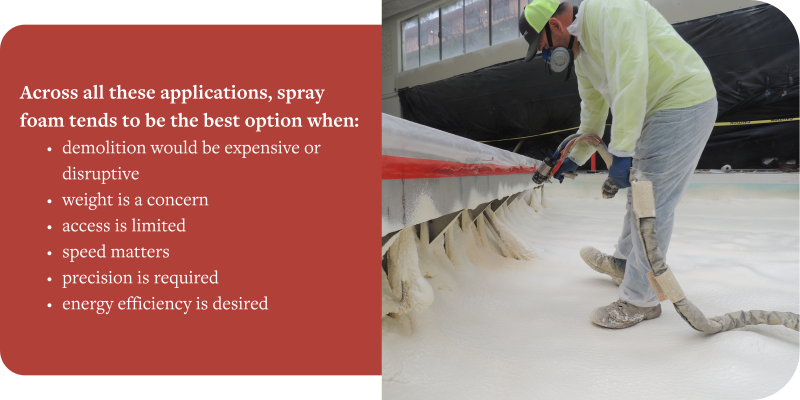 Spray foam is an efficient, problem-solving tool in retrofit construction and ongoing maintenance.
For FMs, it provides the opportunity to extend the life of existing assets, avoid unnecessary rebuilds, and reduce both capital costs and operational disruption all at the same time.
A simple process
For those dealing with similar challenges, here is a straightforward approach to evaluating options.
First, start with a thorough assessment by evaluating structural condition, compliance gaps and operations impacts such as staffing, maintenance and liability requirements.
Bringing in the right experts early (engineers, inspectors and specialists) can make a big difference.
Think about weight. This is one of the most overlooked factors in structural repairs. Adding heavy materials, especially concrete, can make problems worse over time by increasing stress on soils and structural systems.
On the other hand, using lighter materials helps protect the structure, reduce long-term risk and extend the life of the asset.
Next, think about daily operations. For facilities that rely on daily operations, like hotels or commercial spaces, downtime is not just inconvenient; it is expensive.
It is best to find solutions that reduce closure time, allow for phased work if needed and get the area back in service as quickly as possible.
In the Kentucky hotel project, minimizing guest disruption ended up being one of the biggest wins.
Lastly, plan long term. Quick fixes might solve the issue temporarily, but they often lead to repeated problems down the road.
A strong solution should address the root cause — whether that is soil movement or voids — while also improving overall stability and reducing future maintenance needs.
What the data shows
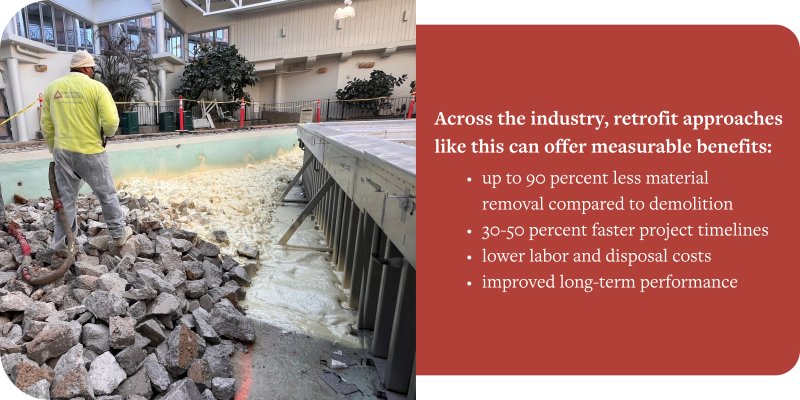 And in this specific case, avoiding the removal of more than a million pounds of concrete also meant a major reduction in transportation and landfill impact.
Environmental benefits
Sustainability is becoming more important in FM decisions. Retrofit solutions help reduce construction waste, lower carbon emissions from hauling and materials, and make better use of existing structures instead of replacing them.
So, it is not just a financial win — it is an environmental one, too.
Managing risk & quality
While this approach has clear benefits, it still requires careful planning and execution.
That means using proven materials that fit the application, working with experienced installers, and testing and verifying results both during and after installation.
It is also important to keep good documentation, so there is a clear record moving forward.
Key takeaways
This project highlights a few important lessons:
-
Demolition is not always necessary
-
Lighter materials can solve heavy problems
-
Faster projects often mean lower overall costs
-
Less disruption can be just as valuable as cost savings
Spray foam can work any place where there is settling, voids or uneven surfaces, such as:
-
parking garages
-
warehouse floors
-
industrial facilities
-
sidewalks and slabs
Conclusion
Facility managers are constantly balancing three things: cost, compliance and day-to-day operations. The Kentucky hotel project shows that, with the right approach, those goals do not have to compete with each other.
Instead of going straight to demolition, the team chose to stabilize and retrofit, which saved time, reduced costs, avoided major disruption and delivered a long-lasting solution.
This project also highlights the value of selecting materials that allow for flexibility in both design and execution. Spray foam enabled the project team to solve multiple challenges at once — structural stabilization, compliance correction and operational optimization — without the need for a full rebuild.
The bigger takeaway is simple: Sometimes the best solution is to take a step back and look at the problem from a different angle.
In many cases, the smartest solution is not the most obvious one — it is the one that gets the job done while keeping everything else running smoothly.

Haley J. Burge is a business development and operations professional with Spray-Tec, Inc., a commercial roofing, insulation and coatings contractor located in Shelbyville, Kentucky. With a passion for building relationships and helping property owners make informed decisions about their facilities, she works closely with building owners, facility managers, property management companies, architects and industry partners to develop practical solutions for roofing, insulation, and building envelope challenges. In addition to her role at Spray-Tec, Burge is actively involved in several professional and community organizations, including NAWIC (National Association of Women in Construction), IFMA, and other industry groups focused on education, leadership and workforce development. She enjoys connecting people, creating strategic partnerships, and promoting opportunities that strengthen the construction industry.
References
All images courtesy of Spray-Tec, Inc.
Read more on Facility Operations and Project Management or related topics Case Study , Project Management and Operations and Maintenance Planning
Explore All FMJ Topics