
 Membership
 Network
 Regional Sites & Affiliates


 Events
 Participate
 Resources

 Training
 Credentials
 Government


 Content Channels
 Tools
Tools


 Business Overview





Clocked In
Leveraging the evolution in contactless time tracking
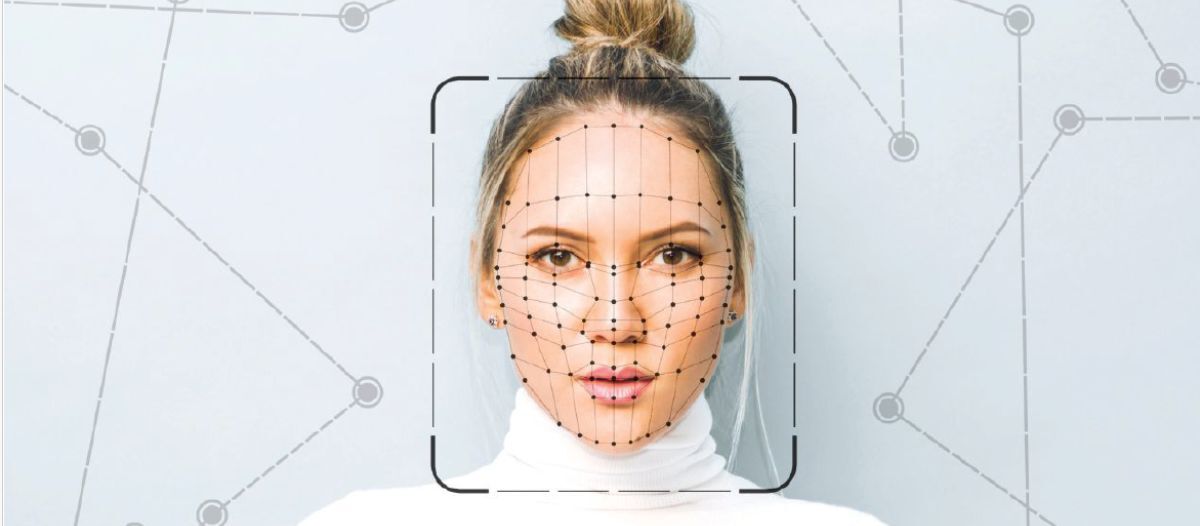
Under the strain of COVID-19, new technologies that employ contactless solutions are quickly advancing in the time and attendance (T&A) space. These contactless solutions, mostly in the form of facial recognition and proxy applications, are rapidly changing the way companies keep track of time and attendance among their workforce.
From advancements in AI products to completely new T&A processes, these paradigm shifts change not just how employees get into buildings but also human capital management needs and data collection practices.
But despite these changes appearing simple, they demand companies understand a whole new way of how identity is recognized and processed. Here is how companies can keep up with the dramatic evolution of contactless time tracking.
From punch cards to contactless tech
Going back to the industrial revolution, traditional time tracking has long been card-based. An employee punches in their start time and exit time on a sheet of paper, which is used by management during payroll.
In the 1990s, T&A became largely software–based, and in the last 10 years this software has dramatically improved. In 2010, this software became cloud-based, resulting in even more ease of access.
Today, T&A technology is expanding rapidly. Using current technology such as calendar and payroll integration, automated time tracking, and Wi-Fi-enabled time clocks, employers can easily supervise their employees while storing their data in a secure location. Who is and is not at work can be viewed in an instant, with a multitude of other data available with the click of a mouse.
The pandemic resulted in even more innovation as the traditional workforce was forced to change. As with many types of technology, T&A technology follows trends demanded by society. Because COVID-19 has forced people into as little contact as possible, current T&A tech is geared towards providing contactless solutions in the office setting.
Biometric technology
Over the last few years, biometric time and attendance technology has seen a major rise in usage. Now, more than ever, organizations are experiencing an increase in facial recognition software being used to keep track of employee work time.
Biometric technology is expansive, but the clear leader in the space is facial recognition software. Because rival biometric technology such as iris recognition, palm vein scan and fingerprint readers require physical contact, facial recognition technology has the advantage – even after the current crisis is over.
Using facial recognition technology, employees can scan their faces when they pass a door or gate, allowing for a contactless means to keep track of when employees come and go. This is good for employers because it reduces the likelihood of time theft in the workplace, improves accuracy and heightens security. In the post-COVID-19 era, this technology could allow workplaces to remain contactless.
However, facial recognition technology has its flaws. There have been a few cases where it struggled when attempting to identify Black and Asian faces, as exemplified in a recent story from the New York Times. But, as with all technology, it is rapidly improving. According to a report from the National Institute of Standards and Technology (NIST), facial recognition technology’s success rate in identifying a person’s photo improved from 95 to 99.8 percent since 2010.
What to expect
Proximity solutions are the other major innovative technology in the T&A space. Alongside biometric technology, it has the highest potential for growth in a post-COVID-19 world.
Modern proximity T&A contactless solutions include proxy cards and mobile apps that allow for easy identity authentication. Proxy cards are the classic solution, where employees can identify themselves by scanning a card. However, these cards are easily lost or misplaced, and different solutions would be more beneficial.
As a result, proximity solutions that integrate mobile applications will likely gain traction in the industry. Because almost everyone carries a smartphone with them wherever they go, mobile phones allow for proximity solutions to become widespread throughout the business world. This even includes web clock time punching, where employees are able to simply tap in and out on their phones, to verify when they clock in and out of their workday.
Going forward, future proximity solutions will become even more contactless as they make use of voice and facial recognition technology. Using facial recognition, employees can punch in and out hands-free. One example of this technology is a facial recognition time clock kiosk application where employees can punch in and out, check their timecards, ask for time off and more.
Best practices
As with any new technology, it can be a challenge to fully integrate new T&A tech within you’re an organization's workforce and utilize its full potential. With that being said, here are a few simple tips that will help ease the transition.
First, get employees on board. This is easier said than done. Change – especially when old ways are so ingrained – can be a shock for anyone. Make sure to emphasize the importance of the new technology to the workforce so they know what the benefits will be once they fully understand and accept the product.
Next, make sure the new processes are explained in as simple a manner as possible. Make the transition as easy as possible so employees do not waste too much time learning a new process. With offices largely empty at this point, take advantage and make sure the new technology is integrated as much as possible when you’re the workforce returns.
COVID-19 has changed the entire business landscape – T&A technology is no exception. As businesses in these trying times, it is an organization’s and facility manager’s duty to tap into this technology to provide a T&A solution that is safe, secure and efficient.

Adam Day brings more than 20 years of product and services marketing expertise to clients, partners and investors. Day has led highly successful marketing efforts and demonstrated results as a proven leader and provides vast knowledge as a subject matter expertise in CRM, PRM, payroll, HR and workforce management
References
Top Image by Getty Images.
Read more on Facility Technology & Data Management and Occupancy & Human Factors or related topics Operational Technology and Work Management Systems
Explore All FMJ TopicsRelated articles
-

Artificial Intelligence in FM
The stakeholder’s perspectiveBy Dr. Jake Smithwick & Dr. Kenneth Sullivan & Nneka Ubi05.01.2024 -
Don’t Drop the Ball
How a CMMS can make or break an FM organization’s successBy Michael Carmean09.17.2024 -
Beware of Growing Cyberthreats
Why it’s time for stronger facility cybersecurityBy Andrew Harris & Eric Headington10.30.2024
