 Membership
 Network
 Regional Sites & Affiliates


 Events
 Participate
 Resources
 Training
 Credentials
 Government


 Content Channels
 Tools
Tools


 Business Overview




Creating Spaces People Respect
Lessons from Japan’s World Cup cleanup tradition

When Japanese fans stayed behind to clean up the stadium after a World Cup match, the world saw a powerful example of respect for shared spaces. The images were memorable: fans pulling blue plastic bags from their pockets and collecting litter, leaving behind a space that looked ready for the next group of fans. For onlookers, the tradition sparked admiration.
 Most facilities would never expect guests, employees or fans to bring bags from home and clean up after themselves. That is not a realistic operating model, nor should it be. But the broader takeaways from this trend are worth considering, especially as global events continue to bring large, diverse groups of people into stadiums, airports, transportation hubs and more.
Facility managers cannot control every user’s behavior, but they can shape the environment that behavior responds to. People notice when a space is clean, functional, welcoming and visibly cared for, and that perception shapes how they treat it in return. The opportunity for FM leaders is to build the kind of environment where care is evident, so respect becomes the natural response. That starts with the basics of cleanliness and extends further — to designing spaces that work for people of all abilities and backgrounds, and supporting the teams who make consistent care possible day after day. Each of these elements plays a distinct role in shaping how people experience, and ultimately treat, a shared space.
Cleanliness is where positive guest experiences begin
Long before a guest enters a space and interacts with a staff member, the facility itself is already communicating. A clean entryway, a well-stocked restroom, maintained common areas, accessible amenities and prompt waste removal all send a message: this space is cared for, and the people who use it matter.
The opposite is also true. Overflowing waste bins, odors, clutter or visible damage can suggest neglect. Even when an FM team is working hard behind the scenes, users often judge the space by what they can see, touch and experience in the moment. And that perception shapes behavior: a neglected environment can unintentionally signal that standards are low, while a well-maintained one reinforces that the space, and the people using it, matter.
This is especially important in high-traffic environments. For an event like the World Cup, facilities may need to serve tens of thousands of people in compressed windows of time. Visitors may come from different countries, speak different languages and have different expectations for public hygiene and service. In these moments, the facility experience becomes part of the broader event experience. Visitors may arrive for the event, but they remember the experience as a whole, including the state of the spaces they move through along the way.
Restrooms are one of the clearest examples of how facilities communicate care. They are personal, necessary and can be viewed by guests as a measure of overall facility quality. When a restroom is clean, fully stocked and easy to navigate, guests feel that their needs have been anticipated. When it falls short, the impact can extend beyond inconvenience.
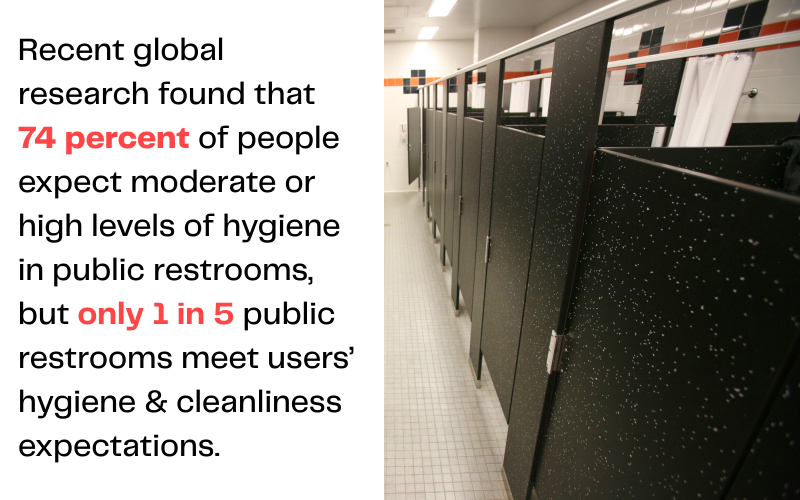 Because restrooms are so visible and frequently used, they often shape broader perceptions of the facility itself. For FM, this makes restroom cleanliness more than an operational requirement. It is part of the facility’s overarching message to users.
A clean restroom says, “You are welcome here.” A stocked dispenser says, “Your needs were considered.” A well-maintained public restroom says, “This environment is valued.” Those details may seem small, but they shape how people feel in a space.
Inclusive hygiene turns shared spaces into welcoming spaces
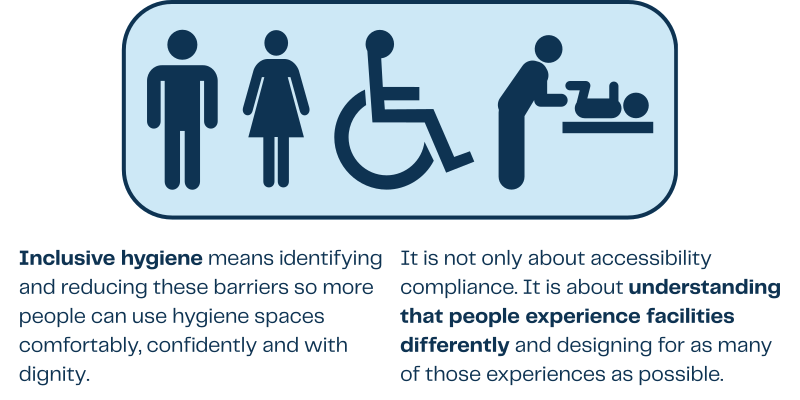
The lesson for FM extends beyond cleanliness alone. A space can only communicate care if it works for the people who use it. In high-traffic facilities, that means recognizing that visitors arrive with different needs, abilities, expectations and circumstances — and designing environments that help as many people as possible feel comfortable, welcome and supported.
Creating positive experiences in these environments requires looking beyond the average user and considering the many different ways people interact with a space. A facility that works fine for one person may create significant barriers for another. A loud air dryer may be a minor annoyance to one person, yet very overwhelming for someone with sensory sensitivities. A hand-towel dispenser that is easy for one user may be difficult for someone with limited hand mobility or arthritis. A soap formulation may be fine for most users but can aggravate a skin condition for others.
This matters more than many FMs may realize.
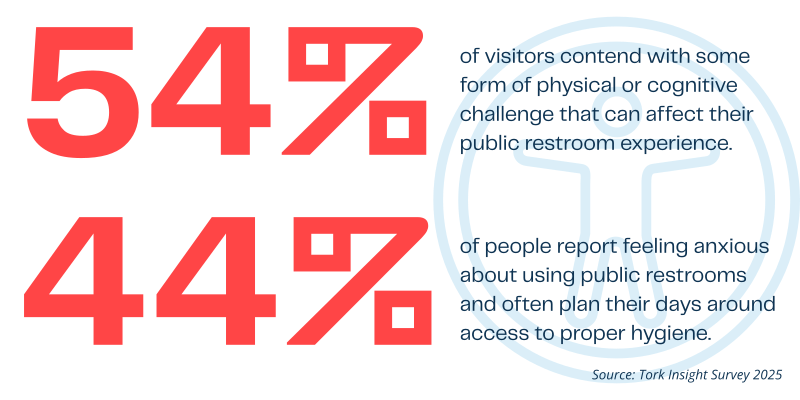
Research shows that 54 percent of venue visitors contend with some form of physical or cognitive challenge that can affect their public restroom experience. Some of these challenges are visible, but many are not. Restroom anxiety is also a significant factor, as 44 percent of people report feeling anxious about using public restrooms and often plan their days around access to proper hygiene. That means hygiene barriers can influence where people go, how long they stay, and how fully they participate in a public experience.
The business and reputational implications are also clear. Over half of people take action after a poor restroom experience. Some spend less time at a venue. Some limit how much they eat or drink to avoid needing the restroom. Others tell friends to avoid the location, leave poor online reviews or decide not to return. For FM, these findings reinforce an important point: hygiene is not simply a back-of-house concern. It shapes the user experience in ways that are emotional, practical and measurable.
Supporting inclusive hygiene can involve a range of practical steps. FM leaders can evaluate whether dispensers are easy to operate and placed at accessible heights. They can provide paper hand-towel options for users who may be sensitive to loud air dryers. They can choose soaps that are gentle on skin for people with skin sensitivities. They can ensure that waste bins, fixtures and amenities are easy to locate and use. In high-traffic venues with diverse visitors, they can use clear, icon-based or multilingual signage to reduce confusion.
When people feel that a facility was designed with their needs in mind, they are more likely to feel respected. That feeling can turn a public restroom from a source of stress into a point of reassurance. It can help a visitor, employee or guest feel that they belong in the space.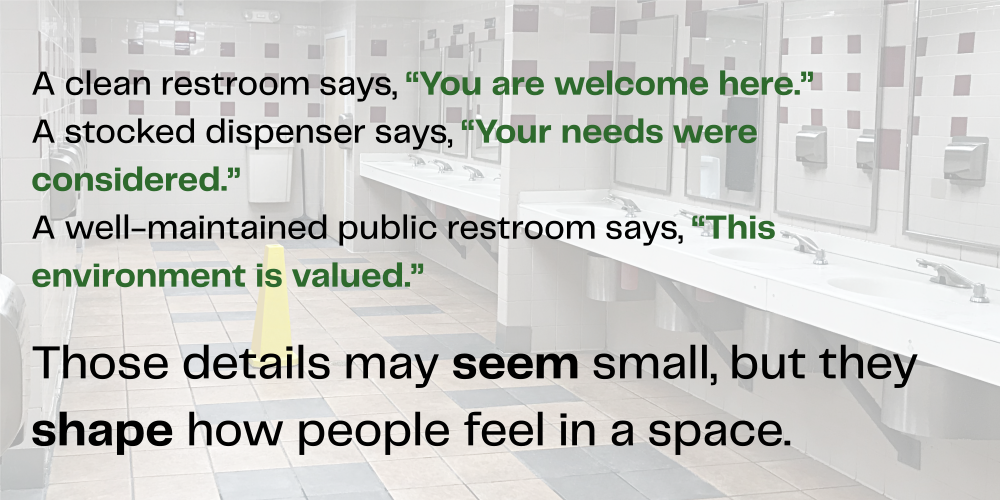
A culture of care depends on people, communication & support
 Designing spaces that meet a wide range of user needs is only part of the equation. The other part is recognizing the teams that make those experiences possible. FMs have an opportunity to elevate the role of custodial staff — not simply as cleaners, but as essential contributors to the comfort, safety and functionality of the spaces people depend on every day. When that contribution is acknowledged, it helps reinforce an important message: maintaining a positive facility experience is skilled, valuable work.
Recognition can take many forms. Signage can thank cleaning teams or remind users that the space is being maintained for everyone. Internal recognition programs can elevate the role of custodial staff within the organization. FM leaders can also leverage cleaning teams’ expertise by involving them in decisions about products and service routines, because they often have the most direct understanding of how a space runs in real life.
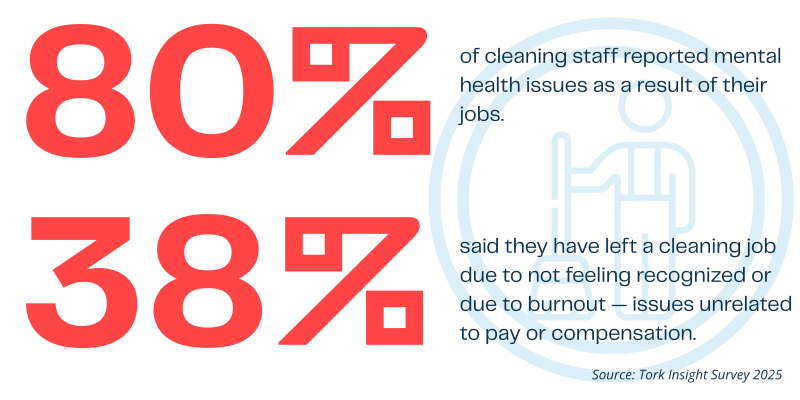
Recognition is not only good for morale. It can influence how users perceive the facility. When people see that other people are taking care, they may be more likely to treat the space and those who maintain it with more respect. This is especially important given the pressures cleaning teams face. Research shows that 80 percent of cleaning staff reported mental health issues as a result of their jobs, and 38 percent said they have left a cleaning job due to not feeling recognized or due to burnout — issues unrelated to pay or compensation. These findings show that supporting cleaning teams is not separate from facility performance. It is central to it.
Communication is another important tool. FMs cannot force respect, but they can share expectations and set a tone. The most effective messages are positive, clear and human. They do not scold guests. They connect individual actions to collective benefit. A message such as, “Help keep this restroom welcoming for the next guest,” is simple, but it reinforces a shared responsibility. “Our cleaning teams work hard to support your experience – thank you for doing your part” recognizes the people behind the space while inviting users to participate in maintaining it. Visual cues, icons and multilingual messaging can also make expectations easier to understand across languages and cultures. The key is to make communication feel like part of the experience rather than a list of rules. At its best, signage and messaging can communicate values: this space is cared for, this space serves everyone and everyone has a role in keeping it that way.
 Of course, a culture of care cannot depend on goodwill alone. Cleaning teams need the right tools, resources and systems to maintain standards consistently, especially when traffic is unpredictable. High-capacity dispensers can reduce the risk of runouts during peak periods. Forward-thinking supply planning can help cleaning stay ahead of demand. Data-driven cleaning systems can help identify which areas need attention most urgently, allowing staff to focus time and resources on where they will have the greatest impact. This is particularly valuable in large or complex facilities where traffic patterns can shift quickly. A stadium concourse may be quiet during play and overwhelmed at halftime. A convention center may have uneven traffic depending on session schedules. In these environments, static routines may not be enough. Technology can support cleaning teams by providing better visibility, reducing unnecessary checks and helping teams respond before small issues become visible problems for users.
When recognition, communication and operational support work together, cleanliness becomes more than a behind-the-scenes function. It becomes a visible expression of care — one that users can see, understand and help preserve.
People care for spaces that show care for them
Most stadium guests will not pull bags from their pockets and clean up after an event. But Japan’s World Cup cleanup tradition still offers an important reminder: the way people treat a space is often shaped by how they experience it. When facilities are well-maintained, recognize the teams who make that possible, and respond to people’s diverse needs, they communicate that the environment, and everyone using it, matters.

Christine FitzPatrick is Regional Brand Activation Manager at Essity, a global leader in hygiene and health, where she leads brand activation and focuses on driving visibility and engagement for the Tork brand across North America.
References
Top image via Getty Images.
Read more on Facility Operations and Occupancy & Human Factors or related topics Operations and Maintenance Planning , Occupant Health and Occupant Safety
Explore All FMJ Topics