 Membership
 Network
 Regional Sites & Affiliates


 Events
 Participate
 Resources

 Training
 Credentials
 Government


 Content Channels
 Tools
Tools


 Business Overview





Data Center Custodial Services
The engineering behind the cleaning

To the untrained eye, cleaning is a janitorial task — a mop, a bucket and a generic spray bottle used to maintain aesthetics. However, in the high-stakes environment of modern data centers, this perception is a dangerous fallacy.
Data centers house trillions of dollars in digital assets, and their stability hinges on operational integrity. In this context, the removal of dust and debris is not about tidiness; it is a mission-critical engineering function known as contamination control.
To truly protect uptime and hardware longevity, data center facility management must move beyond standard janitorial concepts and adopt the rigorous precision found in the pharmaceutical and biotech industries.
By integrating the principles of cGxP (current Good x Practice) — specifically calibration management, threshold control and data integrity — into data center custodial services, FMs transform a cost center into a proactive risk mitigation strategy.
The microscopic battlefield: Understanding the threat profile
To manage contamination effectively, one must first understand the enemy. In a data center, threats are often invisible to the naked eye, ranging from conductive solids to corrosive gases. The science of custodial services is dedicated to meeting stringent environmental standards where even microscopic particulates pose existential threats.
The particulate insurgency
Particles in a data center are measured in microns (10^(-6) meters). The most damaging contaminants are often those lesser than (10^(-6) meters). These microscopic invaders — derived from human skin flakes, clothing fibers, cardboard packaging and construction residue — can easily penetrate standard filters and settle deep inside sensitive electronics.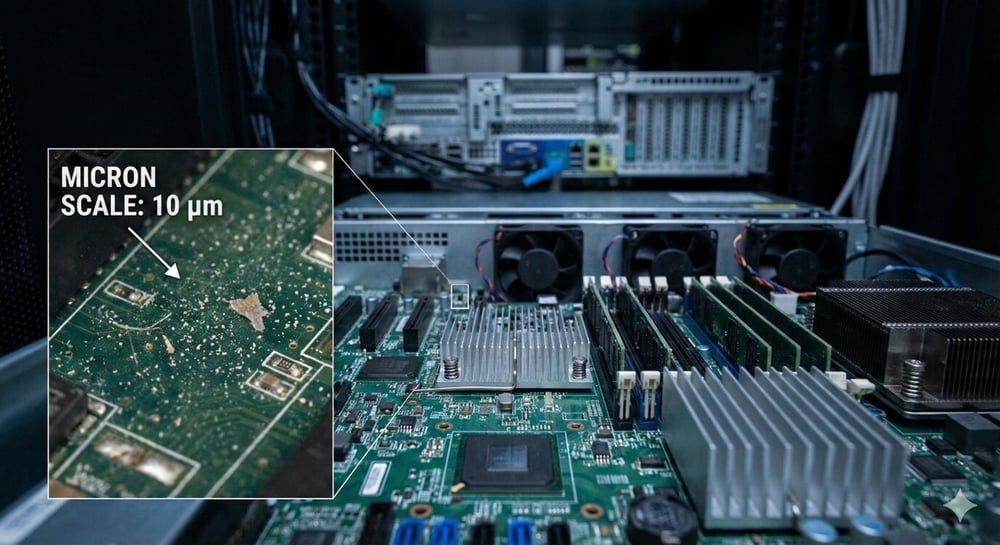
The impact is twofold:
-
-
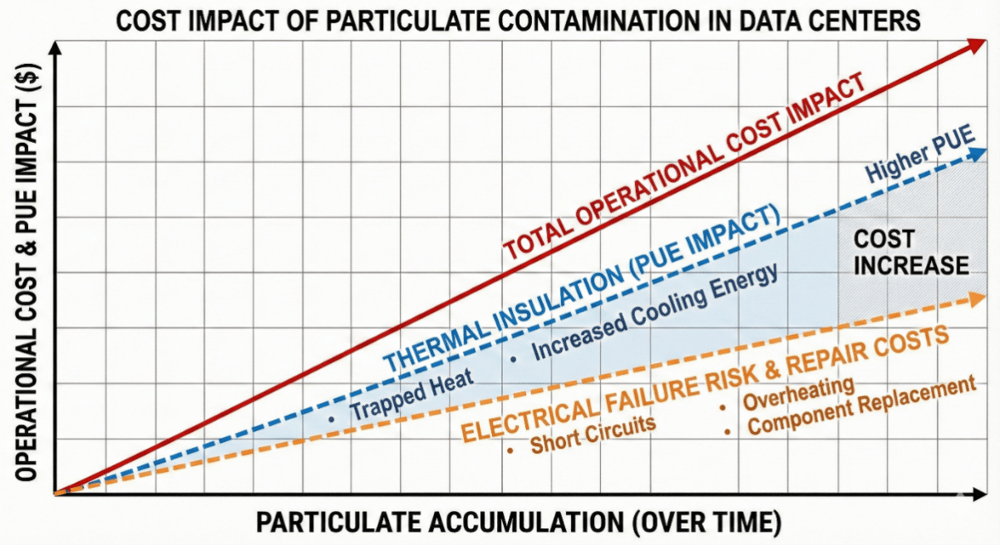
Thermal insulation: When particulate matter settles on server components, heat sinks and ventilation grills, it acts as an insulator. This traps heat, forcing cooling systems to work harder, which directly lowers the facility's power usage effectiveness (PUE) and increases operational costs.
-
Electrical failure: Particles can be conductive, leading to short circuits, or nonconductive, leading to overheating.
-
The zinc whisker phenomenon
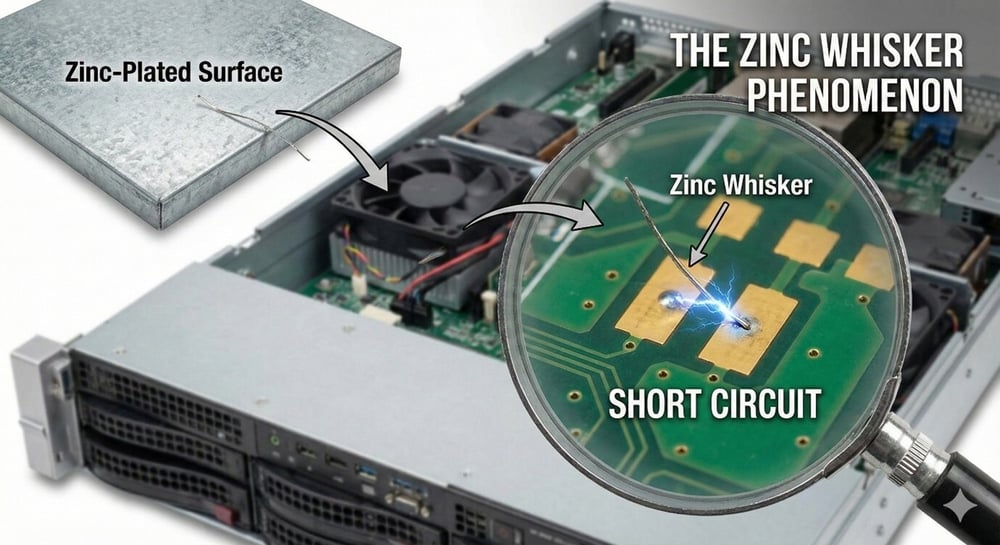
Perhaps the most insidious threat is the zinc whisker. These are metallic, conductive, hair-like crystalline structures that spontaneously grow from zinc-plated surfaces, commonly found on the galvanized steel tiles used in older raised floor systems. Driven by internal stress, these filaments break loose and become airborne. When drawn into server equipment by intake fans, a single whisker spanning two contact points on a circuit board can cause a short circuit, resulting in intermittent signal failures or catastrophic hardware death.
Electrostatic discharge (ESD)
Cleaning in a data center is a physics problem. Friction generated by walking or moving dust can create electrostatic discharge (ESD) via the triboelectric effect. A discharge too small for a human to feel can instantly destroy microscopic internal circuitry or cause latent defects that lead to failure days or weeks later. Therefore, all cleaning protocols must be inextricably linked to ESD mitigation.
Chemical corrosion
The air itself can be a threat. Corrosive gases, such as sulphur dioxide and hydrogen sulphide, react with the thin layers of copper, silver and nickel used on circuit board connectors. This reaction forms an insulating layer of tarnish, increasing electrical resistance and leading to data transmission errors.
The mandate: Global standards & regulatory rigor
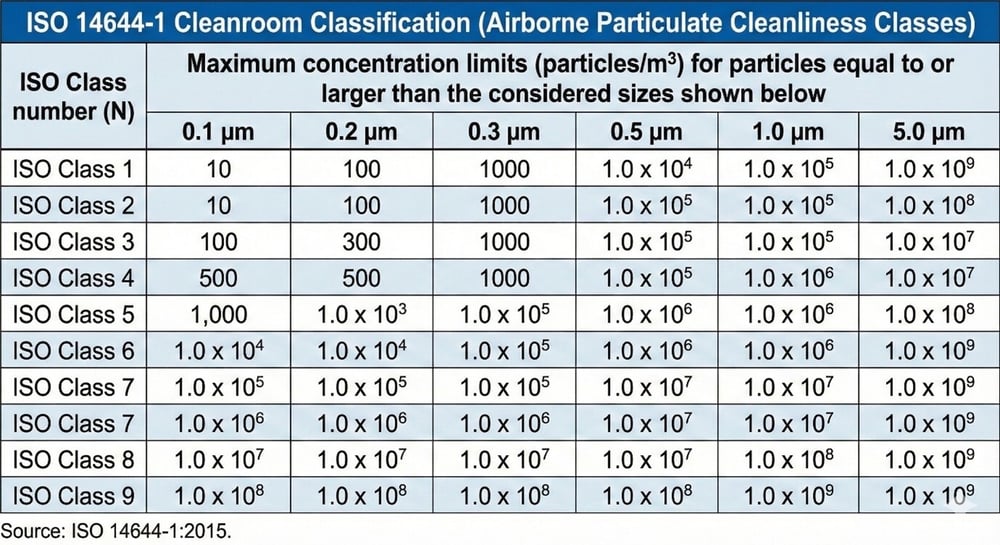
In the cGxP world (pharmaceuticals/biotech), there is a regulatory mandate: every parameter influencing product quality must be demonstrably measured and controlled. Data centers must adopt this same mindset. Effective contamination control is not subjective; it is measured against documented international standards, primarily the ISO 14644-1 Cleanroom Classification.
ISO 14644-1 Framework
This standard classifies a controlled environment based on the quantity and size of airborne particles per cubic meter of air. While semiconductor manufacturing may require ISO Class 1, most modern data halls target ISO Class 8 (or better). This classification ensures an environment that minimizes particle settling on servers while balancing the complexity of air filtration.
The role of calibration & traceability
However, simply aiming for ISO Class 8 is insufficient without a mechanism to prove it. This is where cGxP principles become vital. cGxP regulations mandate that all measurement activities must be documented and traceable.
-
Documented: Every cleaning action, air quality test and sensor adjustment must be formally recorded.
-
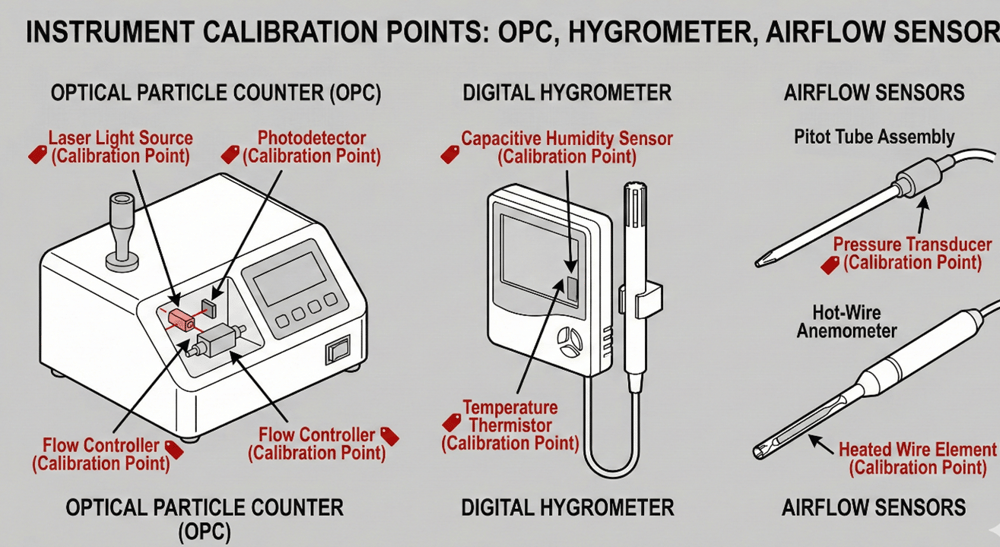
Traceable: The instruments used to validate cleanliness (such as Optical Particle Counters) must be calibrated against standards traceable to national bodies like NIST or NABL.
Just as a pharmaceutical plant maintains a master calibration register (MCR) for its critical equipment, a data center should maintain a register of its environmental monitoring tools (particle counters, hygrometers, airflow sensors). This register must track the instrument's unique ID, criticality, calibration range and acceptance tolerance limits.
 Engineering the clean: Advanced custodial methodologies
Once the standards are defined, the execution must be flawless. Data center cleaning is a rigid procedure designed to prevent recontamination.
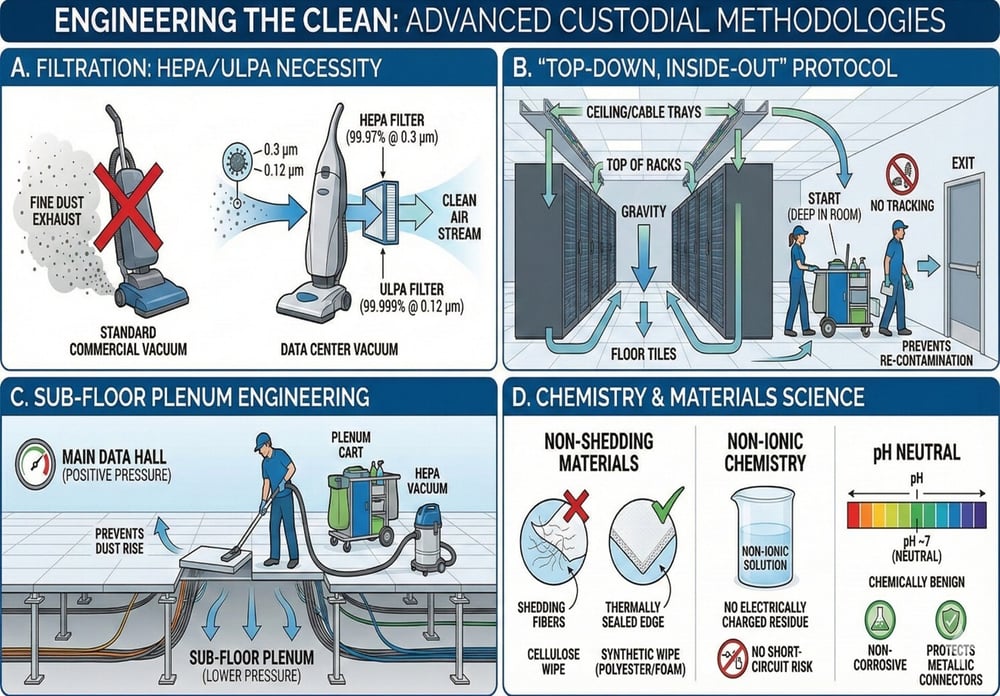
Filtration: The HEPA/ULPA necessity
Standard commercial vacuums are strictly prohibited in a data center environment. They often exhaust fine dust back into the air, worsening the problem. Data center vacuums must utilize High-Efficiency Particulate Air (HEPA) filters, certified to remove at least 99.97 percent of particles as small as 0.3 microns. For ultra-critical areas, ULPA (Ultra-Low Penetration Air) filters are used, achieving 99.999 percent removal at 0.12 microns. This ensures that the fine particulates captured are permanently removed from the critical air stream.
The top-down, inside-out protocol
Gravity dictates the workflow. The top-down approach mandates that cleaning proceeds from the highest surfaces (ceilings, cable trays, tops of racks) to the lowest (floor tiles). This ensures that any debris dislodged during the process settles on uncleaned surfaces below, to be captured in subsequent passes. Simultaneously, the inside-out protocol requires the cleaning path to start deep in the room and move toward the exit, preventing the custodial crew from tracking contaminants across already cleaned areas.
Sub-floor plenum engineering
The plenum beneath a raised floor is often the primary artery for delivering conditioned air. Cleaning this space is a highly specialized engineering task. Technicians must maintain the main data hall at positive pressure relative to the sub-floor area being cleaned. This pressure differential ensures that when floor tiles are removed, dust and contaminants in the plenum are not drawn up into the active equipment area. Specialized sub-floor plenum carts and HEPA vacuums are used to sequentially access and clean structural supports and cable trays.
Chemistry & materials science
The tools used must be as chemically and physically inert as the environment they serve.
-
-
Nonshedding materials: Standard cellulose (paper/cotton) wipes are prohibited because they break down under friction, releasing microscopic fibers — literally creating new contamination. Instead, nonshedding synthetics (polyester or foam), often thermally sealed in a cleanroom, are required.
-
Nonionic chemistry: Cleaning solutions must be nonionic, meaning they leave no electrically charged residue. Ionic residues can become conductive in humid conditions, posing a short-circuit risk.
-
pH neutral: Solutions must be chemically benign (pH near 7). Acidic or alkaline cleaners are corrosive and accelerate the tarnish of metallic connectors.
-
Threshold limits & the science of calibration
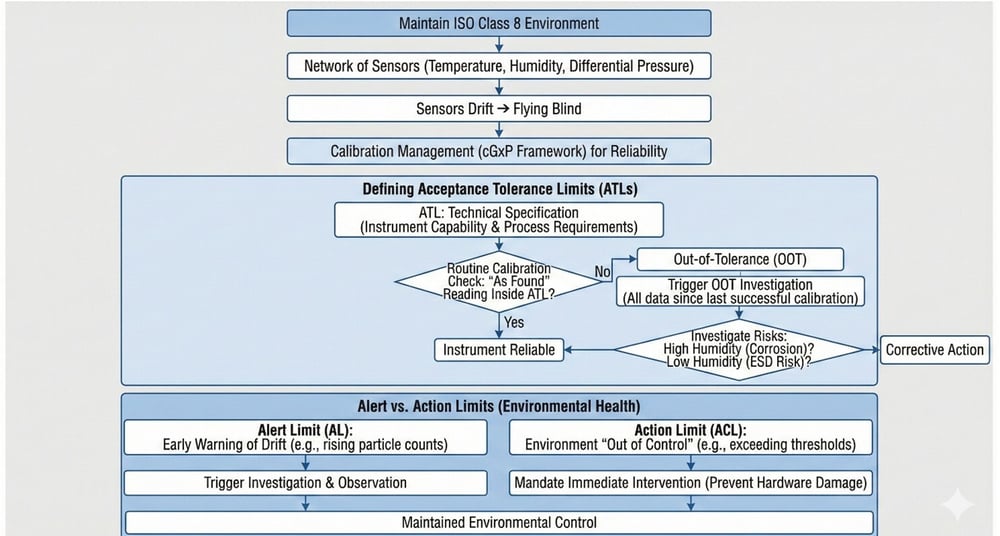
To maintain an ISO Class 8 environment, the facility relies on a network of sensors (temperature, humidity, differential pressure). If these sensors drift, the facility is flying blind. This is where the calibration management concepts from the cGxP sector provide a robust framework for reliability.
Defining acceptance tolerance limits
Every measuring instrument in the data center must have a formally established acceptance tolerance limit (ATL). This is the technical specification derived from the instrument's capability and the process requirements.
-
Compliance: If an instrument's as-found reading during a routine check is outside the ATL, the instrument is out of tolerance (OOT).
-
Consequence: In a cGxP environment, an OOT reading triggers an investigation into all data recorded since the last successful calibration. Data centers should adopt this rigor: if a humidity sensor is found to be OOT, the FM must investigate if the "drift" resulted in a period of high humidity that could have triggered corrosion or low humidity that increased ESD risk.
Alert vs. Action limits
A robust system distinguishes between the instrument's health and the environment's health:
-
Alert limit (AL): Provides an early warning of environmental drift (e.g., particle counts rising but still passing ISO 8). This triggers investigation and observation.
-
Action limit (ACL): The point where the environment is confirmed out of control (e.g., exceeding ISO 8 thresholds). This mandates immediate intervention to prevent hardware damage.
The impact of sensor drift
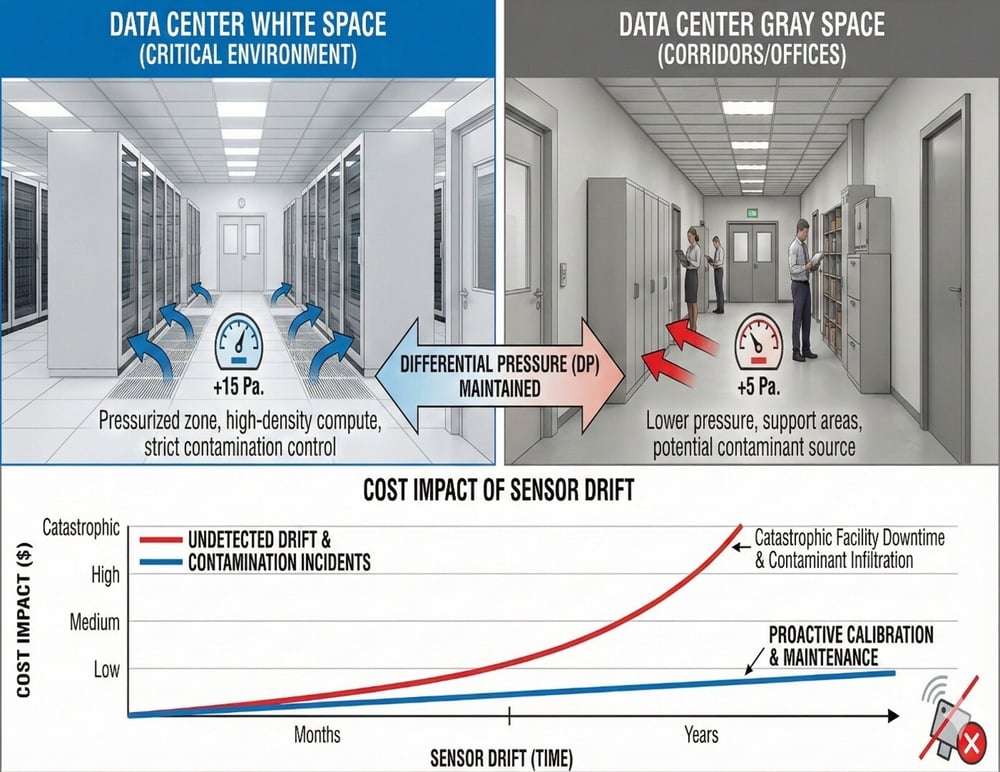
The data center environment relies on precise differential pressure (DP) to prevent contamination ingress. Just as cGxP facilities monitor room-to-room pressure with a tolerance of +/- 1 Pascal, data centers must calibrate their DP gauges to ensure the white space remains pressurized against the gray space (corridors/offices). Failure to maintain calibration can lead to undetected process drift, resulting in contaminant infiltration and catastrophic facility downtime.
 Data integrity: The ALCOA+ standard
In the engineering world, poor documentation invalidates correct work. For a data center's custodial program to be defensible to auditors and clients, the quality of the record is as critical as the cleanliness itself.
FMs must apply the ALCOA+ principles of Data Integrity to custodial logs:
-
Attributable: Who performed the HEPA vacuuming?
-
Legible: Are the particle count logs clear and readable?
-
Contemporaneous: Was the differential pressure recorded at the time of the check or backdated?
-
Original: Is this the primary source data from the Optical Particle Counter?
-
Accurate: Is the data scientifically correct?
Validation through particle counting
The final step in this engineering process is scientific validation. FMs do not look to see if the room is clean; they measure it. This validation relies on a laser-based optical particle counter (OPC). The OPC measures particle concentrations at various points in the room to ensure the final count falls below the maximum threshold for the target ISO Class. This data provides documented scientific proof required to certify the environment is safe for IT assets.
The business case: Investment in precision
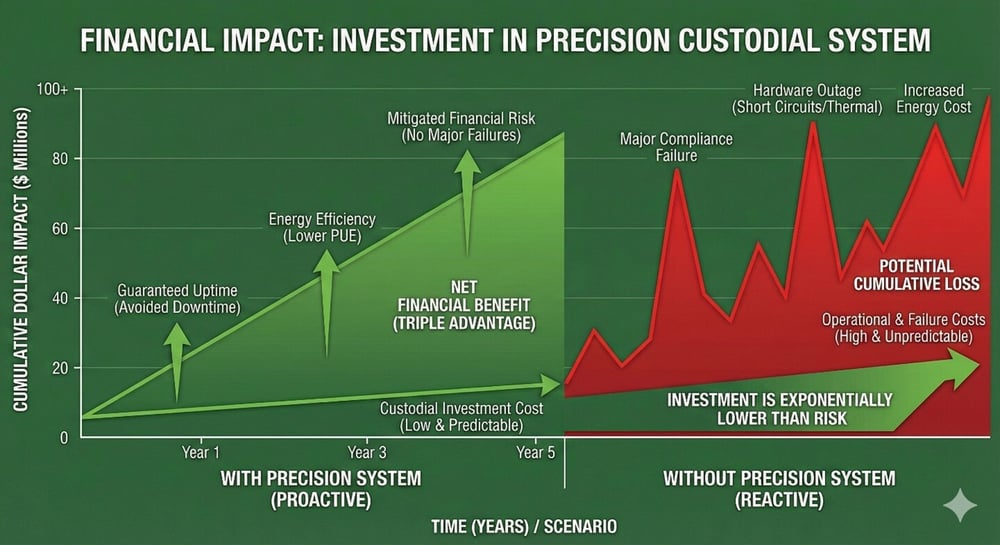
Implementing a formalized, engineering-grade custodial system is a strategic business necessity, not an overhead cost. By focusing on contamination control, the organization achieves a triple advantage:
-
Guaranteed uptime: Ensuring critical facility controls (like cleanroom pressure and particulate levels) remain stable minimizes unplanned downtime caused by short circuits or thermal shutdowns.
-
Energy efficiency: A clean facility is an efficient facility. Removing the "insulating blankets" of dust from servers improves heat transfer and lowers PUE.
-
Mitigation of financial risk: The cost of this investment is exponentially lower than the cost of a single major compliance failure or hardware outage.
 The impact assessment
When contamination control fails or sensors drift, the impact can be quantified using a variation of the cGxP Impact assessment formula:
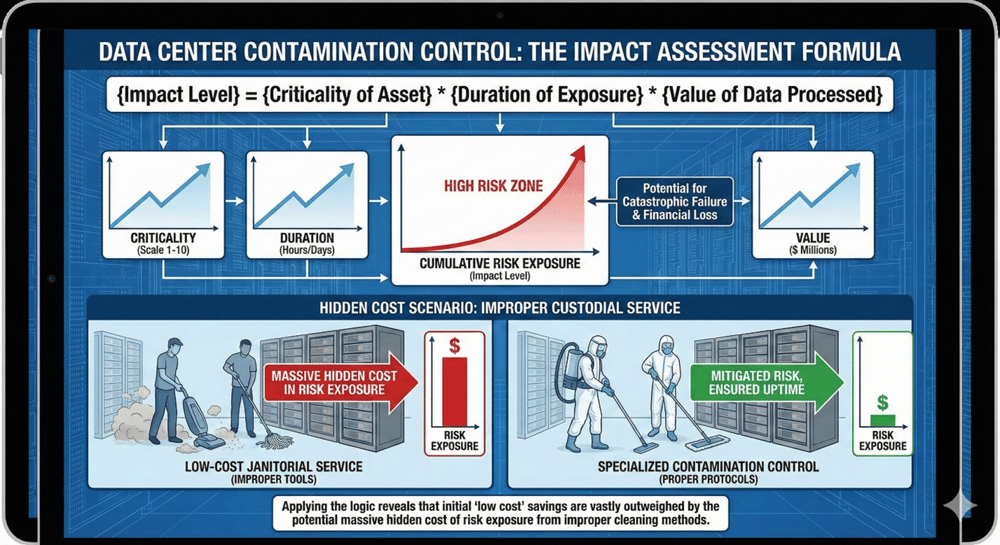 Impact Level = Criticality of Asset × Duration of Exposure × Value of Data Processed
-
Criticality of asset: How vital the exposed hardware is to the overall operation (e.g., core routing infrastructure vs. redundant storage).
-
Duration of exposure: The amount of time the asset is exposed to out-of-tolerance conditions (measured in hours or days).
-
Value of data processed: The financial worth of the data moving through the exposed environment (measured in millions of dollars).
Market situation & business impact
The business and market impact of data center maintenance is severe:
-
Trillions at stake: Data centers house trillions of dollars in digital assets, making operational integrity the absolute baseline for stability.
-
The hidden cost of traditional cleaning: In the current market, opting for standard, low-cost janitorial services creates a massive hidden cost in risk exposure due to improper tools and protocols.
-
Exponential risk vs. predictable investment: An engineering-grade precision custodial system is positioned as a strategic business necessity, not an overhead cost. The predictable cost of investing in proactive contamination control is exponentially lower than the reactive, catastrophic costs of a major compliance failure or hardware outage caused by thermal shutdowns or short circuits.
Ultimately, the impact assessment reveals that treating data center custodial services as standard cleaning, rather than a specialized engineering discipline, exposes the organization to severe financial and operational vulnerabilities.
Conclusion
The days of viewing data center cleaning as a simple housekeeping task are over. The modern data center is a precision environment that demands a precision response. By fusing the science of contamination control — understanding particulates, zinc whiskers and ESD — with the Discipline of cGxP Calibration — traceability, tolerance limits and data integrity — FMs can create a robust engineering protocol.
This approach secures the foundation of the organization’s operations. It ensures that the trillions of dollars in digital assets residing in these facilities are protected not just by walls and firewalls, but by a microscopic shield of engineering rigor. It is not cleaning. It is engineering.

Siddhant Aggarwal is senior manager at LL REMS. Across the real estate life cycle, Aggarwal has carried out the roles of an aggregator, integrator, administrator and coordinator, spanning from design, leasing, fit-outs and operating spaces, whether viewed from the purview of a developer, occupier or tenant. His body of knowledge and exposure that has been earned through PMP, USGBC LEED and engineering in a gamut of varying business environments have catalysed the process of continual improvement, enhancing his overall pedigree.

Dr. Pulak Bhaumik is the CEO, Data Centres – India at Listenlights. In this role, he spearheads all aspects of the organization's data centre vertical in India, driving growth and innovation. An industry stalwart with over 25 years of diverse leadership experience, Dr. Bhaumik is recognized for his thoroughness, attention to detail,and a unique blend of professional rigor with a spiritual perspective — making him an invaluable addition to the Listenlights leadership team. He has successfully led organizations through transformation, operational scale-up, profitability enhancement and high-performing team building, consistently delivering value to stakeholders. Trusted by boards, investors and teams alike, he has been at the forefront of the data centre, corporate real estate and global real estate sectors.

Gerard Fernandes is a seasoned operations leader with over two decades of experience driving efficiency and performance across diverse industries, including advertising, interior design, travel operations, logistics, and aviation. Known for his ability to lead complex, high-volume operations, Fernandes brings a strong blend of strategic thinking and hands-on execution to fast-paced environments. He holds a professional accreditation in retail management from IIM Kolkata, which has further strengthened his understanding of end-to-end operational frameworks. This academic grounding, coupled with his extensive on-ground experience, has equipped Fernandes to implement best practices across varied operational modules and navigate complex business challenges with clarity and confidence.

Parvez Kazi serves as the Chief Executive Officer of LL R.E.M.S (Real Estate Management Services), the Integrated Facilities Management and Real Estate Services arm of the LL Group. With more than 26 years of leadership experience in facilities management, business operations, and service transformation, he is responsible for steering the company’s strategic vision, growth agenda, and operational excellence across India. With a leadership philosophy rooted in agility, collaboration, and accountability, Kazi is committed to redefining real estate and facility management as strategic enablers of business productivity, workplace experience and sustainable infrastructure.
References
All images provided by LL REMS
Read more on Facility Operations and Facility Technology & Data Management or related topics Maintenance Processes and Data strategy and information management
Explore All FMJ Topics